
That earthy sizzle when creminis hit a hot pan is hard to fake. But the right cremini mushroom substitute gets you close, sometimes surprisingly close, if you match the texture and browning behavior instead of just swapping by weight.
Creminis are valued for two things: steady moisture release and a mid-level umami punch. Any swap that can't brown properly will leave your dish tasting steamed and flat.
Pick based on your cooking method first, then flavor second.
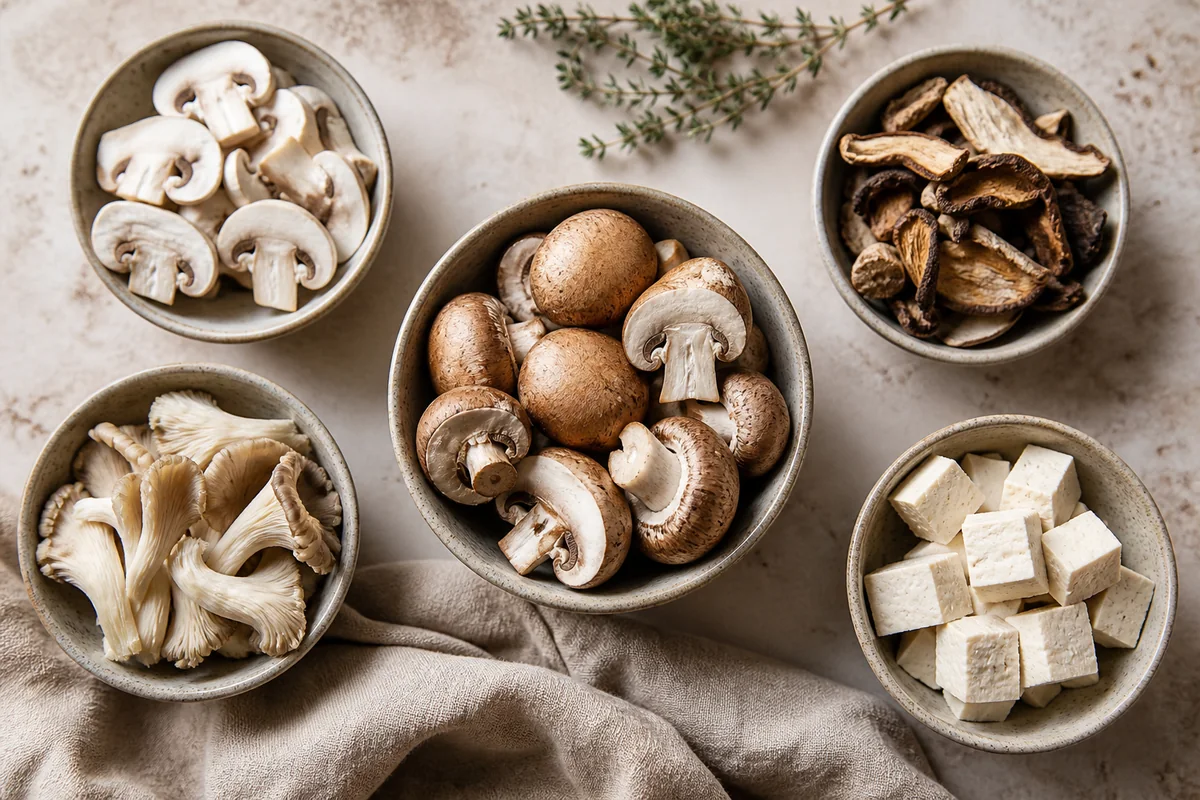
The best cremini mushroom substitutes are shiitake and portobello for earthy umami depth. White button and oyster mushrooms work well in quick-cook dishes. For pantry emergencies, canned mushrooms, dried porcini, and frozen mushrooms all deliver when prepped correctly.
5 Best Cremini Mushroom Substitutes Ranked by Flavor
| # | Substitute | Best For | Ratio | Key Note |
|---|---|---|---|---|
| 1 | Shiitake mushrooms | Both | 1:1 | Remove stems, slice thin |
| 2 | Portobello mushrooms | Both | 1:1 | Chop small, cook dry |
| 3 | White button mushrooms | Cooking | 1:1 | Boost seasoning, brown well |
| 4 | Oyster mushrooms | Cooking | 1:1 | Tear large, cook fast |
| 5 | Canned mushroom pieces | Cooking | ¾:1 | Drain, sauté until dry |
1. Shiitake Mushrooms
Shiitake is the strongest flavor match you'll find for cremini. After browning, the caps develop a deep, savory quality that reads almost identical to a well-cooked cremini in pasta sauces, stir-fries, and braises.
Removing the stems matters. They're woody and won't soften the way the caps do.
If you're drawn to exploring other options beyond shiitake, our guide on choosing a different shiitake swap covers adjacent picks well.
- Slice thickness: Go thin, about 4mm, so moisture cooks off quickly and browning starts within 3-4 minutes.
- Heat level: Use medium-high to high heat; lower heat extends the raw, slightly sulfurous note shiitake carries before browning.
- When it shines: Pasta sauces, risotto, fried rice, and any dish where the mushrooms are a main component.
Skip if: your recipe needs a very quick toss, under 2 minutes of cook time. Shiitake needs real browning to drop its raw edge.
2. Portobello Mushrooms
Portobello is meatier than cremini, which is both its strength and its main drawback. Chopped into small, roughly cremini-sized pieces, it holds up beautifully in sauces and stir-fries without going mushy.
Understanding meaty cap flavor notes helps you decide how much portobello will shift your dish's overall profile.
- Chop size: Cut into pieces no larger than 1.5cm so they cook through and don't stay chewy in the center.
- Moisture: Portobello releases a lot of dark liquid; let it fully evaporate before moving to the next cooking step.
- Best uses: Pasta sauces, grain bowls, meat-free burgers, and slow sautés where texture is expected.
Skip if: you need delicate, fast-cooking pieces. Portobello can stay chewy unless it's chopped small and given enough browning time.
3. White Button Mushrooms
Button mushrooms are the most available swap, but they're noticeably milder. Think of this pale, mild cap as a blank canvas: the flavor it contributes is subtle, so your other ingredients and your browning technique carry more weight.
The fix is simple. Cook them longer than you think necessary, until they're golden and the pan looks nearly dry.
Then season with a pinch of salt and a small dash of soy sauce or Worcestershire to close the umami gap. For dishes where the mushrooms play a supporting role, stir-fries, egg scrambles, mixed vegetable sautés, button mushrooms perform perfectly well without any adjustments.
If you want even more ideas around that mild profile, the page on mild mushroom swaps is worth a look.
Skip if: mushrooms are the star of the dish. In a solo mushroom ragù or a mushroom-forward tart, button mushrooms may taste flat even with heavy seasoning.
4. Oyster Mushrooms
Oyster mushrooms cook faster than cremini and stay tender rather than chewy. That's useful in quick sautés but becomes a problem in anything that simmers for more than 10 minutes.
When deciding on picking the right tender swap, check whether your dish runs short or long on heat.
Oyster vs. Cremini Texture
Works for: quick stir-fries, noodle dishes, fast sautés where delicate texture is welcome
Skip if: long braises, thick stews, or any dish where mushrooms cook beyond 15 minutes
- Tear, don't slice: Tear into pieces about 3-4cm wide so they hold shape during cooking instead of shredding.
- Avoid over-stirring: Let them sit on one side for 90 seconds before flipping; constant movement steams them instead of browning.
- Water management: If they release liquid, raise heat immediately and let it boil off before stirring again.
Skip if: you're making a long-simmer stew. Oyster mushrooms may fall apart and thin out the sauce texture noticeably.
5. Canned Mushroom Pieces
A can of mushrooms is the true emergency swap. They're already cooked, softer than fresh, and packed in liquid that dulls their flavor.
The fix takes under 5 minutes. Drain the can completely, skip rinsing unless they smell tinny, and sauté them in a dry pan over medium-high heat until the remaining moisture is gone and the edges start to color.
- Draining: Press the drained mushrooms briefly with a paper towel to remove extra liquid before they hit the pan.
- Browning: Spread them in a single layer; crowding the pan steams them further instead of drying them out.
- Seasoning order: Add salt only after browning; salting too early pulls more water out and delays the color you need.
- Ratio adjustment: Use ¾ cup of canned pieces for every 1 cup of fresh cremini called for, since they're denser after draining.
Skip if: your recipe needs mushroom pieces that stay springy and distinct. Canned mushrooms soften further with more cooking and won't hold a firm bite.
Making Any Cremini Substitute Work
The single biggest mistake is adding salt before the mushrooms have browned. Salt draws out moisture and turns your pan into a steaming vessel instead of a searing one.
Learn the earthy base flavor you're trying to match, and you'll know instinctively when your substitute has hit the right point.
Every substitute also benefits from being cut to cremini size before cooking. Matching the piece size means your recipe's stated cooking time still applies.
If you're swapping portobello in a dish timed for 6 minutes, chop it small enough to actually cook through in that window.
- Dry pan first: Add mushrooms to a hot, dry pan for 2 minutes before adding butter or oil so surface moisture flashes off quickly.
- One layer only: Spread pieces in a single layer; pile them and they steam, not brown, no matter how high the heat is.
- Umami rescue: If the swap tastes flat after browning, add a small splash of soy sauce or a pinch of dried thyme to bridge the flavor gap.
Frequently Asked Questions
Shiitake mushrooms are the closest match for earthy, savory depth. Remove the stems, slice thin, and brown at high heat for a result that's nearly identical to cremini in most cooked dishes.
You can, but button mushrooms are milder. Brown them well and add a small splash of soy sauce or Worcestershire to recover the umami depth cremini would normally provide.
Drain thoroughly, press dry with a paper towel, then sauté in a single layer over medium-high heat until the edges color. Season only after browning so moisture leaves the pan first.
Yes, soak them in warm water for 20-30 minutes, then chop. The soaking liquid is flavorful but may contain grit, so strain it through a fine mesh before adding it to sauces.
Oyster mushrooms work best for fast, high-heat cooking. Tear them into bite-size pieces, use high heat, and avoid constant stirring so they brown rather than steam.
5 Best Cremini Mushroom Substitutes (Pantry Swaps)
Ingredients
Equipment
Method
- Choose the substitute based on your goal: closest earthy flavor (shiitake/porcini), closest browning texture (portobello/frozen-soaked-dry), or mild coverage (button).
- Use the table’s ratio (1:1, ¾:1, or ½:1). For dried porcini, start lighter because it’s stronger.
- Slice/torn to a similar size as cremini pieces (thin slices for quick browning; bite-size for stews).
- Sauté at high heat until moisture is mostly gone—this is what makes mushroom swaps taste “cremini-like.”
- Taste the dish and adjust salt/umami; if it tastes flat, add a pinch more salt or a small splash of soaking liquid (only if using porcini).
Notes
- Moisture management is the biggest success factor when substituting mushrooms: sauté until the pan is nearly dry before seasoning.
- Match piece size so cooking time stays similar to cremini.
Tried this recipe?
Let us know how it was!
Carrie is a food writer and editor with more than 15 years of experience. She has worked for some of the biggest names in the food industry, including Bon Appétit, Food & Wine, and Martha Stewart Living.
As the Editor in Chief of EpicureDelight, Carrie oversees all of the content on the site. She also manages the team of contributing writers and editors, who help to create delicious recipes, helpful tips, and informative articles that you’ll find on the site.
A native of the Chicago area, Carrie is passionate about all things food. She loves trying new restaurants and experimenting with new recipes in her kitchen. She’s also a graduate of the Culinary Institute of America, so she knows a thing or two about food!



