
That mild, green-oniony freshness is easy to take for granted until you reach the fridge and find an empty spot where the bunch used to be. The good news: several common vegetables and herbs can fill that gap, as long as you pick the swap that matches what green onions are actually doing in your dish.
Green onion substitute choices fall into two camps. Some ingredients replicate the soft allium bite you get when green onions cook into a sauce or stir-fry. Others mimic the bright, grassy finish they add as a garnish. Knowing which role you need makes all the difference.
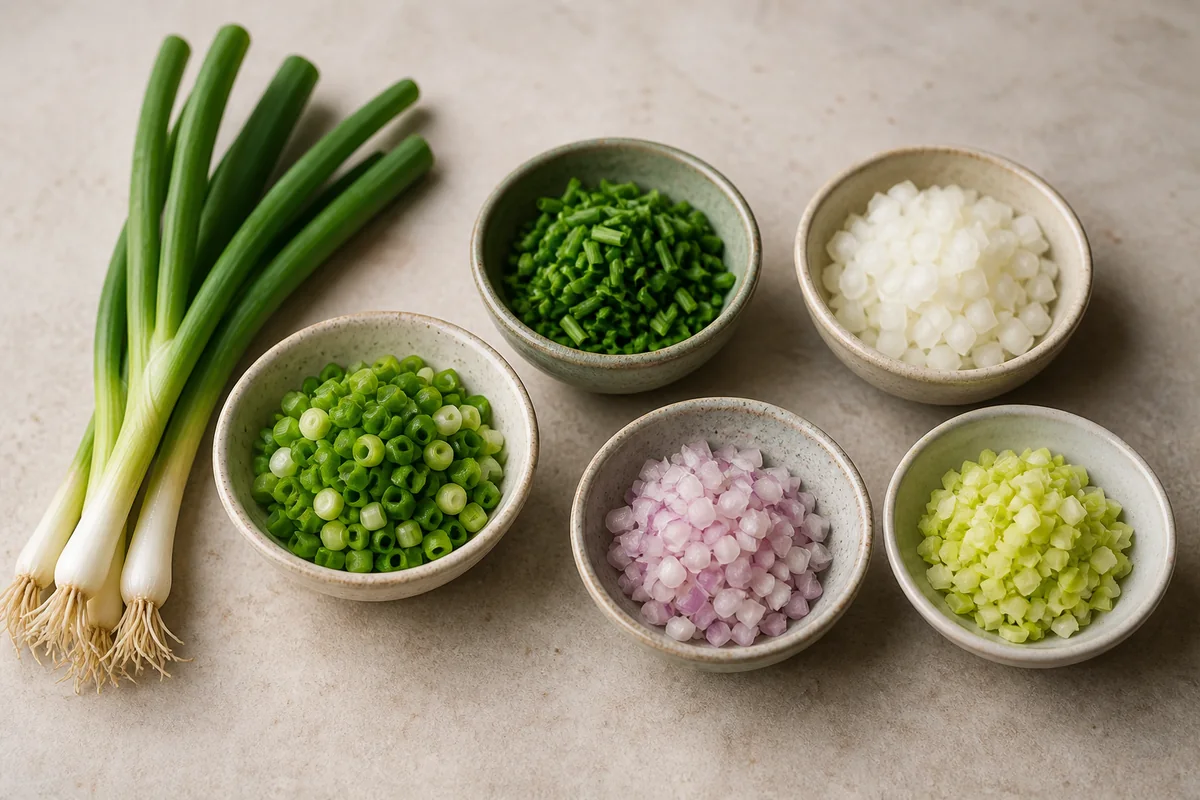
Green onions contribute both a mild onion flavor and a fresh green aroma. Your best swap depends on which of those two jobs matters most in the dish. Leeks and yellow onion cover the allium bite. Chives and garlic chives handle the fresh green finish. Celery leaves work in a pinch for aroma.
5 Best Green Onion Substitutes Ranked by Role
Start with this quick reference, then read the details below for prep tips and timing.
| # | Substitute | Best For | Ratio | Key Note |
|---|---|---|---|---|
| 1 | Leeks | Both | 1:1 | Chop fine, add late |
| 2 | Chives | Garnish | 1:1 | Sprinkle at end only |
| 3 | Garlic chives | Garnish | ¾:1 | Stronger, reduce amount |
| 4 | Yellow onion | Cooking | ¾:1 | Soak 5 min, drain well |
| 5 | Celery leaves | Aroma only | 1:1 | Add after cooking |
Each substitute below covers how to prep it, when to add it, and where it falls short.
1. Leeks
Leeks are the closest match when you need green onion's soft allium note in a cooked dish. The white and pale green parts taste mild and sweet, especially when finely chopped and added near the end of cooking.
If you're swapping in leeks for swapping allium bases, keep pieces small so they integrate cleanly instead of reading as a separate vegetable.
- Best use: Soups, stir-fries, fried rice, and egg dishes where green onions cook in
- Prep tip: Slice thin crosswise, then chop smaller so no piece is wider than a green onion ring
- Flavor note: Slightly earthier than green onion, but the difference fades once heat hits them
- Ratio: Use 1:1; the flavor is mild enough to match volume for volume
Wondering how long your leeks will last before you need them? Check this guide on layered allium storage so you're not left short again.
Skip if: you need a bright "green" aroma in a raw garnish. Leeks don't deliver that grassy freshness uncooked.
2. Chives
Chives are the go-to when the recipe calls for green onion as a finishing herb rather than a cooked ingredient. They bring that familiar delicate herb bite without much cooking tolerance, so timing is everything.
- Best use: Potato dishes, creamy soups, omelets, dips, and anything where green onion is sprinkled on top
- Add timing: Scatter over the finished dish right before serving, never during cooking
- Flavor note: Lighter than green onion, slightly more herb-forward and less sharp
- Ratio: 1:1 by volume works; snip directly over the bowl for the freshest result
Skip if: your recipe needs onion bite that holds up through long simmering. Chives go limp and flavorless fast once heat gets to them.
3. Garlic Chives
Garlic chives look almost identical to regular chives but carry a noticeable garlic undertone that standard green onions don't have. Use them the same way you'd use chives, but start at ¾ of the amount your recipe calls for and taste before adding more.
Add them at the very end, just like regular chives. Heat strips their aroma quickly, so they're purely a finishing herb here.
If you're already using garlic elsewhere in the dish, that combined punch can tip the flavor too far, so cut back by a full half instead of just a quarter.
For reference on mild layered allium flavor, green onions sit much closer to chives than to garlic chives. That gap matters in delicate dishes.
Skip if: the recipe has a light sauce or mild seafood where garlic notes will dominate what should be a subtle finish.
4. Yellow Onion
Yellow onion is the most common pantry option, but it needs a bit of prep to come close to green onion's gentler bite. Raw yellow onion is sharp.
Thinly sliced and soaked in cold water for 5 minutes, it softens enough to work in most cooked applications without overpowering the dish.
If you're already exploring swapping bold alliums for milder ones, the same logic applies here in reverse: you're taming yellow onion down toward green onion territory.
Yellow Onion
Works for: stir-fries, sauces, and soups where you need cooked allium body, not fresh herb fragrance
Skip if: the recipe relies on green onion's fresh green aroma, or if it's a raw garnish situation
- Prep method: Slice as thin as possible, then soak in cold water for 5 minutes and drain well before using
- Where to add: Early in cooking for savory depth, or soaked-raw in salsas and fresh toppings
- Ratio: Start at ¾ of the green onion amount and adjust once you taste
5. Celery Leaves
Celery leaves don't taste like onion at all, but they fill a specific gap: the fresh, green, slightly vegetal aroma that green onions add when scattered on top of a finished dish. If the allium flavor is coming from somewhere else in the recipe, celery leaves can handle the freshness job on their own.
| Use | Ratio | Notes |
|---|---|---|
| Soup garnish | 1:1 | Add after ladling; keeps color and brightness |
| Grain bowls | 1:1 | Toss in at the end; pairs with other alliums in the bowl |
| Stir-fry finish | 1:1 | Scatter over plated dish, not into the hot wok |
- Prep tip: Use only the small inner leaves; outer stalks are tougher and more bitter
- Flavor note: Distinctly vegetal, so they work best when blended with other flavors rather than used solo
Skip if: you expect no celery flavor. These leaves read noticeably vegetal, and some people find that distracting in dishes where green onion would be subtle.
Making Green Onion Substitutes Work
The swap that works in a stir-fry often fails as a garnish, and vice versa. Picking by role, which is what green onion is actually doing in the recipe, saves you from a swap that's technically correct but still tastes off.
For dishes where you need both functions at once, combining a small amount of soaked yellow onion (for bite) with snipped chives (for freshness) often gets you closest. When you're researching our top scallion picks, the same role-first logic applies there too.
- Chop size matters: Smaller pieces blend into the dish faster and feel closer to green onion's texture; large chunks of any substitute will stand out
- Timing controls intensity: Add sharp substitutes early so heat tames them; add delicate ones like chives at the very end to keep aroma alive
- Taste as you go: Start with a smaller amount, stir or toss, then taste before adding the full swap; you can always add more, not less
Frequently Asked Questions
Snipped chives are the closest match for garnish use. They deliver the same fresh, mild onion finish and look nearly identical scattered over a finished dish.
Yes, but slice it very thin and soak in cold water for 5 minutes first. That step softens the sharpness and brings it closer to green onion's milder bite.
Soak thin slices in cold water for 5 minutes, then drain well. A small splash of lemon juice or vinegar in the soaking water speeds the process even further.
Always add them after cooking. Both chives and garlic chives lose their aroma quickly with heat, so they're best sprinkled on the finished dish.
Celery leaves work well for pure freshness. Chop the small inner leaves finely and scatter them at the end; they add brightness even without allium flavor.
5 Best Green Onion Substitutes You Can Trust
Ingredients
Equipment
Method
- Decide what you need green onion for: garnish-freshness, mild onion bite in cooking, or color/texture.
- Choose the substitute that matches that role from the list, then use the stated ratio as your starting point.
- If the substitute is sharper (onion), use thinner slices and/or soak briefly in cold water to reduce bite.
- Add most substitutes early if they’re chopped small, but save chives/garlic chives for the end if you want maximum freshness.
- Taste and fine-tune: add a pinch of salt or a drop of vinegar/lemon to brighten if the swap tastes flat.
Notes
- Intensity varies by variety, so start with the ratio and adjust after tasting.
- For stir-fries and soups, smaller chop sizes read closer to green onion texture.
Tried this recipe?
Let us know how it was!
Carrie is a food writer and editor with more than 15 years of experience. She has worked for some of the biggest names in the food industry, including Bon Appétit, Food & Wine, and Martha Stewart Living.
As the Editor in Chief of EpicureDelight, Carrie oversees all of the content on the site. She also manages the team of contributing writers and editors, who help to create delicious recipes, helpful tips, and informative articles that you’ll find on the site.
A native of the Chicago area, Carrie is passionate about all things food. She loves trying new restaurants and experimenting with new recipes in her kitchen. She’s also a graduate of the Culinary Institute of America, so she knows a thing or two about food!



