
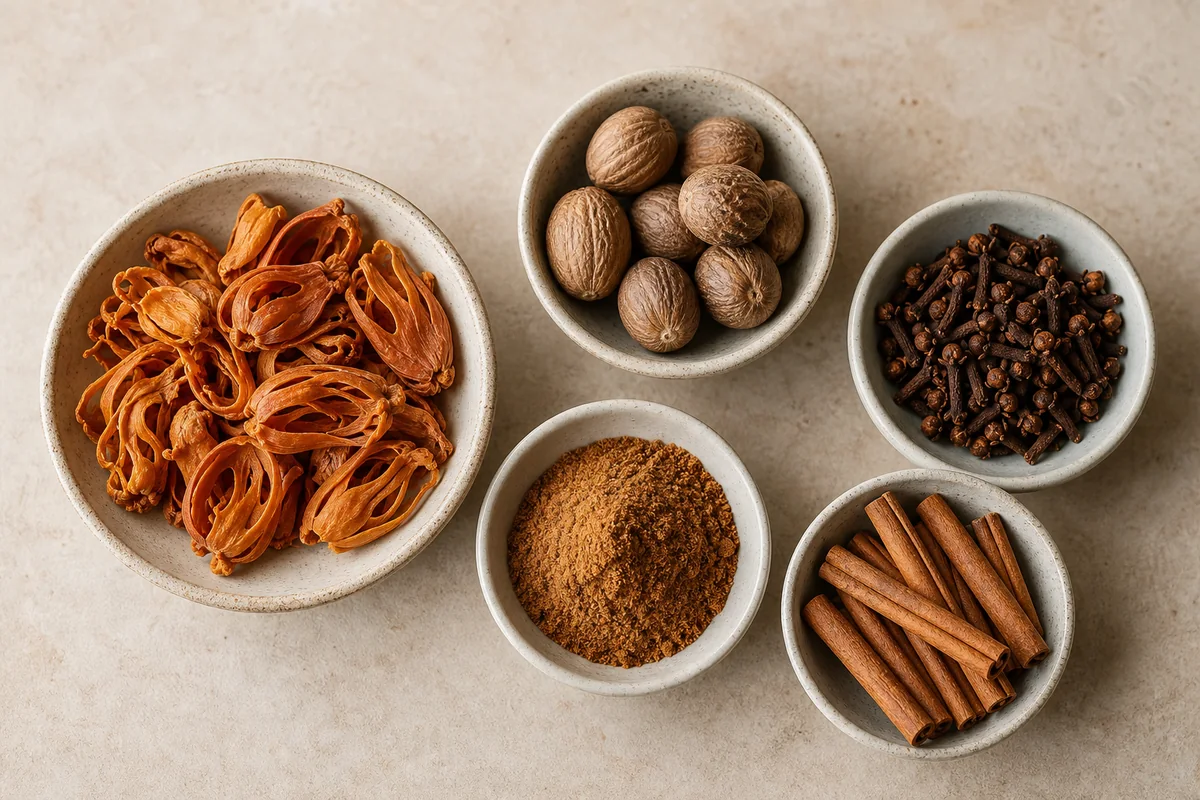
Mace is the papery outer layer of a nutmeg seed, and its flavor sits somewhere between warm spice and gentle sweetness. It's quieter than nutmeg, less sharp than cloves, and just aromatic enough to notice when it's missing.
Finding a good mace substitute means thinking about what the spice is doing: adding background warmth in a béchamel, or carrying sweetness through a holiday cake batter.
The right swap depends heavily on context. A pinch of nutmeg works fine in most savory dishes.
Baking needs a slightly more deliberate approach because sweetness compounds as things cook.
The table below lists ratios and quick notes for each option. Start on the low end of every ratio and adjust after your first taste.
Ground nutmeg is the closest single-spice swap for mace, used at a 1:1 ratio (reduce slightly if too sweet). Allspice and cardamom work well at reduced amounts. Pumpkin pie spice and cloves are pantry fallbacks that need careful scaling down.
Mace Substitutes: The Best Ratios to Use
| # | Substitute | Best For | Ratio | Key Note |
|---|---|---|---|---|
| 1 | Nutmeg (ground) | Both | 1:1 | Reduce 10-20% if too sweet |
| 2 | Nutmeg + cinnamon | Baking | 1:1 + 1/16 tsp | Tiny cinnamon amount only |
| 3 | Allspice (ground) | Both | ¾:1 | More complex; start low |
| 4 | Cardamom (ground) | Baking | ½:1 | Floral; goes dominant fast |
| 5 | Pumpkin pie spice | Baking | ¾:1 | Already blended; scale down |
The ratios above are starting points, not fixed rules. Blends like pumpkin pie spice already carry cinnamon and ginger, so they amplify faster than single spices.
Start 10-15% below the listed ratio for anything you haven't tried before.
5 Mace Substitutes Ranked by Flavor Closeness
1. Nutmeg (Ground)
Ground nutmeg is the obvious first choice because mace and nutmeg come from the same plant. Nutmeg is slightly stronger and a touch more resinous, but the difference is small enough that most recipes won't notice.
Use it at a 1:1 ratio to start. If the dish tastes sweeter than expected, pull back by 10-20% on the next attempt, especially in custards or cream sauces where the spice has nowhere to hide.
- Baking: Swap 1:1 in cakes, muffins, and quick breads; taste the batter before baking
- Savory: Works well in béchamel, mashed potatoes, and spiced meat dishes at 1:1
- Adjust: Reduce by ¼ teaspoon per tablespoon if the aroma feels too sharp after mixing
- Storage tip: ground nutmeg's aging window is shorter than most people expect, so check freshness before swapping
Skip if: your recipe is extremely delicate and can't tolerate nutmeg's slightly heavier resin note.
2. Nutmeg + Pinch of Cinnamon
Mace has a gentle lift that plain nutmeg sometimes misses. Adding a tiny amount of cinnamon restores that lift without turning the dish into a spice cake.
The ratio is 1 teaspoon nutmeg + 1/16 teaspoon cinnamon for every 1 teaspoon of mace. That cinnamon amount sounds tiny because it is.
Understanding warm bark spice flavor helps explain why even a small addition shifts the whole aroma noticeably.
- Start low: Begin at 1/16 teaspoon cinnamon per 1 teaspoon nutmeg; you can always add more
- Baked goods: Smell the batter after mixing; if it smells flat, add another pinch
- Avoid: Do not exceed ⅛ teaspoon cinnamon or it will outrun the nutmeg completely
Skip if: the recipe is a savory cream sauce or a delicate fish dish where cinnamon would feel wrong.
3. Allspice (Ground)
Allspice carries pepper, clove, and a hint of cinnamon all at once. It's more layered than mace, which makes it great for holiday baking but slightly risky in simple recipes where mace plays a quiet background role.
Allspice in Baking
Works for: spice cakes, gingerbread, fruit pies, muffins with warm spice profiles
Skip if: the recipe is subtle and mace is just a whisper of background warmth
Allspice in Savory Dishes
Works for: braised meats, Jamaican-style spice rubs, hearty stews, spiced rice
Skip if: the dish is mild or cream-based, where allspice's complexity reads as "off"
Use ¾ the amount of mace called for. For more on single-spice swaps in this family, the warm spice swap options page covers allspice replacements in both directions.
- Start ratio: ¾ teaspoon allspice per 1 teaspoon mace; increase only if the aroma disappears after baking
- Too fruity? Reduce by another ⅛ teaspoon and add a small pinch of nutmeg to round it out
- Savory use: Bloom briefly in warm oil before adding other ingredients to soften allspice's edge
Skip if: your recipe needs a clean, single-note spice warmth. Allspice is never subtle.
4. Cardamom (Ground)
Cardamom brings aromatic warmth without adding much sweetness, which makes it useful when you want mace's perfume but not a sweeter dish. The tradeoff is that it leans floral and slightly citrusy rather than warm-resinous.
When comparing the cardamom versus nutmeg profiles, cardamom reads brighter and more fragrant. That brightness can be a good match for spiced breads and chai-style drinks, but it diverges quickly from mace's earthy warmth.
- Ratio: Use ½ teaspoon cardamom for every 1 teaspoon mace; do not start higher
- Best uses: Sweet breads, spiced shortbread, rice pudding, hot spiced drinks
- Watch the aroma: If the batter smells perfumy before baking, you've added too much
- Savory note: Cardamom works in spiced lamb or lentil dishes but is a different flavor direction than mace
Skip if: you dislike floral or citrus-forward spices. Cardamom won't disappear into a dish the way mace does.
5. Pumpkin Pie Spice (Blend)
Pumpkin pie spice is a convenient swap because it already contains nutmeg and cinnamon, two of the closest mace neighbors. The problem is the ginger and clove.
Those add sharpness that mace never has.
Start at ¾ of the mace amount. Blends intensify during baking, and if your mix is heavy on clove or ginger, the result can taste more like a spiced pie than whatever you intended.
For context on how blends behave over time, storing baked spice goods is worth a quick read if freshness is a factor.
- Starting ratio: ¾ teaspoon blend per 1 teaspoon mace; never begin at 1:1
- Too sweet? Reduce by ⅛ teaspoon and taste again before adding more
- Too spicy? Drop to ½ teaspoon and add a small separate pinch of plain nutmeg
- Best applications: Pumpkin breads, muffins, spiced holiday cakes, oatmeal bakes
Skip if: your pumpkin pie spice blend is especially heavy on clove or ginger. Check the label before you commit.
Making Mace Substitutes Work (Without Overthinking)
Spices compound as they cook, and mace is mild enough that its substitutes can easily overshoot if you start at full strength. The general rule is simple: go low first, then adjust before the dish is fully committed.
For anything involving a sauce or braised dish, sharp warm spice flavors are much easier to control when you bloom the spice in warm fat before adding liquid. That step takes 20 seconds and prevents a lot of bitterness.
If you're working with a blend and want to compare other options, choosing an alternative blend may open up a few savory directions worth considering.
- Start below ratio: Use 80-90% of the listed amount, then taste and add a pinch if needed
- Bloom when possible: For cloves, allspice, or blends in savory dishes, stir into warm butter or oil for 20-30 seconds before combining with other ingredients
- Adjust at the right stage: In baking, check batter aroma before baking; in sauces, taste after simmering 5 minutes, not right after adding
Frequently Asked Questions
Ground nutmeg is the closest match. Use it at a 1:1 ratio, then reduce by 10-20% if your baked good tastes sweeter than expected.
Start with the same amount as mace. Nutmeg is slightly stronger, so reduce by about ¼ teaspoon per tablespoon if the aroma seems heavy.
Yes, but only at ¼ the amount of mace. Cloves are much stronger and will overpower delicate recipes if you use a full substitution ratio.
Ground nutmeg works best in savory applications like béchamel and spiced meats. Allspice is a good second option for heartier stews and braises.
Yes. Spices intensify during baking, so a ratio that smells right in the raw batter may taste stronger in the finished product. Always start slightly low.
5 Best Mace Substitutes (Honest Picks)
Ingredients
Equipment
Method
- Identify how mace is used: small warm aroma in baking, or a supporting spice in savory sauces.
- Choose the substitute with the closest “warm + slightly sweet + aromatic” profile from the table, then start with the listed ratio (slightly under for blends).
- If using a strong spice (cloves, five-spice), bloom it by mixing into warm butter, milk, or cooking liquid for 20–30 seconds before adding to the recipe.
- Taste and adjust at the first opportunity: add a pinch more for aroma, or reduce if your dish becomes too sweet or sharp.
- For baking, re-check after baking: spices intensify as they bake, so it’s safer to start lower and build.
Notes
- Mace is mild and aromatic; most substitutes work best when you start slightly low and adjust.
- Ground spices intensify during baking and can shift from “warm” to “sharp” if overused.
Tried this recipe?
Let us know how it was!
Carrie is a food writer and editor with more than 15 years of experience. She has worked for some of the biggest names in the food industry, including Bon Appétit, Food & Wine, and Martha Stewart Living.
As the Editor in Chief of EpicureDelight, Carrie oversees all of the content on the site. She also manages the team of contributing writers and editors, who help to create delicious recipes, helpful tips, and informative articles that you’ll find on the site.
A native of the Chicago area, Carrie is passionate about all things food. She loves trying new restaurants and experimenting with new recipes in her kitchen. She’s also a graduate of the Culinary Institute of America, so she knows a thing or two about food!



