That bright green bottle of melon liqueur does a lot of heavy lifting. It brings sweetness, fruity aroma, and a gentle alcohol body that ties cocktails and baked glazes together.
Finding a good melon liqueur substitute comes down to matching three things: melon-forward aroma, sugar level, and alcohol strength. Get all three close and most recipes won't notice the swap.
Melon liqueur adds fruity aroma, sweetness, and mild alcohol body to drinks and desserts. The closest swaps are another commercial melon liqueur or cantaloupe-infused vodka. For baking without alcohol, use melon extract diluted with water. Always taste and adjust sweetness before serving.
5 Best Melon Liqueur Substitutes Ranked by Aroma Match
The table below gives you the starting ratio for each option before you read the details.
| # | Substitute | Best For | Ratio | Key Note |
|---|---|---|---|---|
| 1 | Midori-style melon liqueur | Both | 1:1 | Closest melon aroma |
| 2 | Cantaloupe-infused vodka | Both | 1:1 | Sweeten slightly to match |
| 3 | White rum + melon syrup | Both | 1:1 | Cook syrup before mixing |
| 4 | Peach schnapps | Both | 1:1 | Peach-forward, not melon |
| 5 | Pineapple juice + vodka | Both | ¾:1 | Reduce added sugar |
1. Midori-Style Melon Liqueur
Any commercial melon liqueur beyond your usual brand is the easiest swap. The melon aromatics and sugar levels are close enough that most cocktail recipes need no other adjustment.
Look for a label that says 20-21% ABV to stay in range with standard Midori. If the bottle reads higher, start at 80% of the original measure and taste.
You can also read up on the full range of swapping out Midori if you're working through a specific branded recipe.
- Label check: Confirm it lists melon or muskmelon flavoring, not just "melon-type."
- Sweetness: If your swap tastes thinner, stir in 1 teaspoon simple syrup per 2 oz and re-taste.
- Best in: Cocktails first; baking glazes second where exact ABV matters less.
Skip if: The bottle's ABV is notably higher than your original and the recipe is delicate. Reduce by 10-25% and taste before committing.
2. Cantaloupe-Infused Vodka
Homemade cantaloupe-infused vodka is the sharpest aroma match when a commercial swap isn't available.
The key difference from bottled liqueur is sugar. Infused vodka carries almost none, so the melon note comes through clean but dry.
That's useful in some cocktails, but you'll need to add sweetness in most applications. A look at the flavor profile of melon liqueur explains why that sugar layer matters more than people expect.
- Straining: Use a fine-mesh sieve lined with cheesecloth; press lightly to avoid cloudiness.
- Sweetness fix: Add 1-2 teaspoon of simple syrup per 2 oz of infused vodka to hit liqueur-level sweetness.
- Best uses: Melon martinis, frozen drinks, and any recipe where melon aroma is the star.
Skip if: You have no sweetener on hand. This swap tastes too dry unless the recipe already carries enough sugar.
3. White Rum + Melon Syrup
White rum gives body and mild sweetness, and the melon syrup carries the fruit character. Together they act more like a liqueur than either ingredient does alone.
This light-bodied spirit is neutral enough to let the melon syrup lead, which is exactly what you want. For the syrup, blend ½ cup ripe cantaloupe with ¼ cup sugar, warm gently for 2-3 minutes, and strain.
White Rum + Melon Syrup
Works for: cocktails, glazes, and anywhere you need alcohol plus fruit sweetness
Skip if: your recipe is rum-sensitive or light-colored; the spirit adds a faint caramel note
Pure Melon Juice
Works for: alcohol-free mocktails and baking glazes where alcohol isn't needed
Skip if: the recipe needs ABV for balance or mouthfeel; juice goes watery fast
- Step 1: Make syrup as above and cool it fully before mixing.
- Step 2: Combine 1 part rum with 1 part cooled syrup for a 1:1 liqueur replacement.
- Sweetness: Taste first; if it's too sharp, add ½ teaspoon more syrup, not more rum.
Skip if: Your recipe is rum-averse or very light-colored. Peach schnapps or extract is cleaner there.
4. Peach Schnapps
Peach schnapps isn't melon, but it's the closest fruit-forward liqueur most home bars already have. The sweetness level and ABV are similar to standard melon liqueur, so the swap is almost drop-in.
If you want to explore other options in this category, the full list of schnapps-style swaps covers the range well.
- Ratio: Use 1:1 in cocktails; reduce to 80% in baking since schnapps can read sweeter in heat.
- Flavor shift: Expect a peach-forward note rather than melon; citrus juice can sharpen it back.
- Best uses: Punches, spritzers, and dessert sauces where exact melon identity isn't critical.
Peach Schnapps
Works for: fruit-forward cocktails and supporting-flavor bakes where sweetness matters more than melon identity
Skip if: the recipe is named around melon flavor; the peach note will stand out
Skip if: You need true melon flavor as the identity of the dish. Schnapps works best as a supporting player.
5. Pineapple Juice + Vodka
This is your emergency swap when the pantry is nearly bare. Pineapple juice adds bright acidity and natural sweetness.
Vodka brings the alcohol back.
Because pineapple juice is already fairly sweet, you need to think about swapping that acid-sweet balance before adding sugar elsewhere in the recipe. Start at ¾ of the original melon liqueur measure, then taste.
- Ratio: 2 parts pineapple juice + 1 part vodka, used at ¾ the original melon liqueur amount.
- Sugar reduction: Cut any other added sugar in the recipe by 1-2 teaspoon to avoid oversweetness.
- Best uses: Tropical cocktails, baking glazes, and mocktail bases (omit vodka for alcohol-free).
- Baking tip: Reduce extra liquid by 1 tablespoon per ¼ cup of juice to keep batter thickness on track.
Skip if: Your recipe already contains fruit juice or runs sweet. Stacking both pushes the sugar well past the original.
Making Melon Liqueur Substitutes Work
Match aroma first, sweetness second, and alcohol level third. That order matters because off-flavors are harder to fix than off-sweetness.
A quick look at herbal liqueur options can help if your recipe balances sweet against bitter notes, and if you're ever choosing between floral options, picking a floral liqueur base is worth reading before you commit.
- Cocktails vs. baking: In drinks, match ABV and sweetness closely. In baking, focus on moisture and sugar; exact ABV rarely matters.
- Sweetness control: Add simple syrup in ½ teaspoon increments. Always stir and taste after each addition before adding more.
- Taste-and-fix: Let the mixed drink or batter rest 5 minutes. Melon aroma blooms as the mixture settles, and you'll get a truer read then.
Frequently Asked Questions
Another commercial melon liqueur is the closest match at a 1:1 ratio. If that's unavailable, cantaloupe-infused vodka with 1-2 teaspoon of simple syrup per 2 oz is the next best option.
Yes. Infuse the vodka with cantaloupe for 24-48 hours, strain, then add simple syrup to taste. Start with 1 teaspoon per 2 oz and increase in small steps.
Melon-flavored extract diluted with water is the cleanest option for baking. Use ¼ teaspoon extract per 2 tablespoon water to approximate the liquid and flavor without alcohol.
It can. Reduce other liquid in the recipe by 1 tablespoon for every ¼ cup of juice you add. This keeps texture close to the original.
For too sweet, add a small squeeze of lemon juice and taste again. For too weak on aroma, stir in a drop of melon extract and let the mix rest 5 minutes before adjusting further.
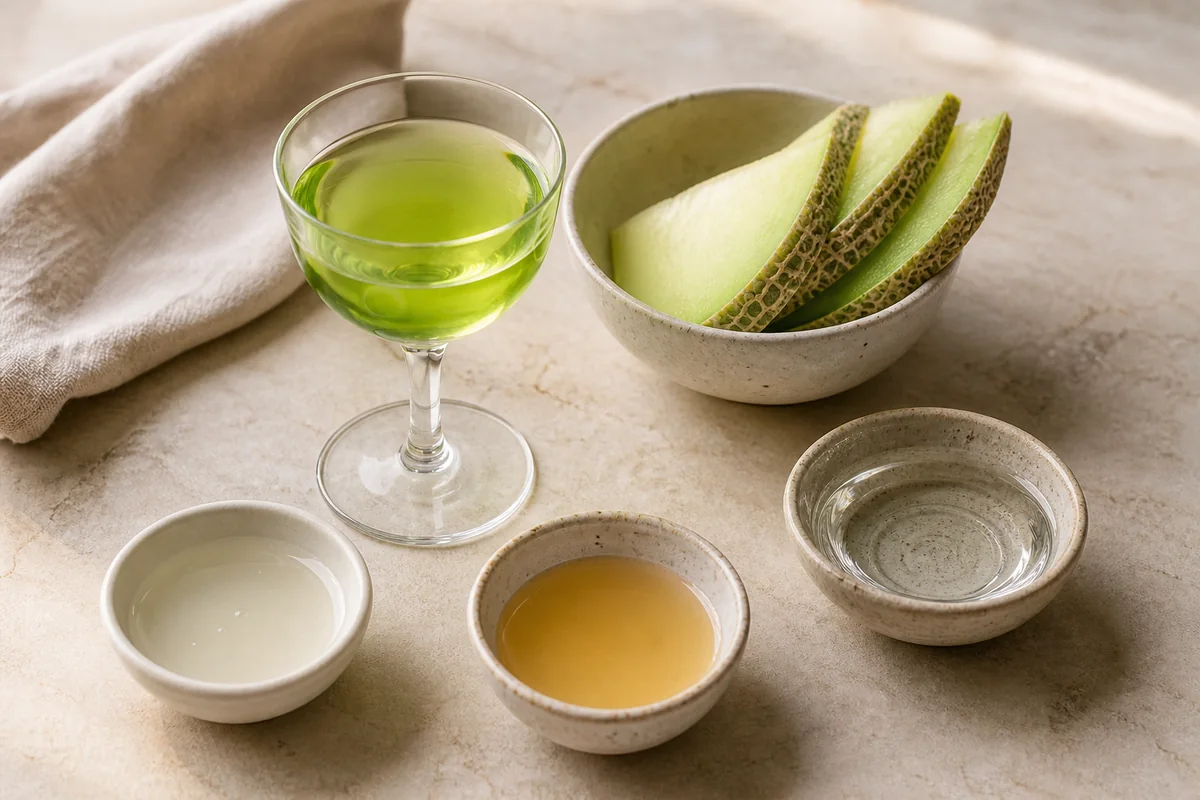
5 Best Melon Liqueur Substitutes (That Actually Work)
Ingredients
Equipment
Method
- Choose the substitute that matches your goal: closest melon aroma (melon liqueur or cantaloupe-infused vodka) or “closest sweetness” (schnapps + syrup).
- Start with the table ratio (1:1 where possible). For higher-ABV or stronger syrup options, reduce by 10–25% first.
- For drinks, taste after mixing: add a splash of juice or a small pinch of sugar to match the sweetness of the original.
- For baking, account for extra water from fruit juices/syrups by reducing added liquid or sugar slightly.
- Let it rest 5 minutes and re-taste—melon aromatics change as the mixture sits.
Notes
- If your recipe depends on alcohol for aroma, choose infused vodka or schnapps/rums rather than pure juice.
- If you’re substituting in baking, prioritize concentrated melon flavor (extract/syrup) to avoid excess moisture.
Tried this recipe?
Let us know how it was!
Carrie is a food writer and editor with more than 15 years of experience. She has worked for some of the biggest names in the food industry, including Bon Appétit, Food & Wine, and Martha Stewart Living.
As the Editor in Chief of EpicureDelight, Carrie oversees all of the content on the site. She also manages the team of contributing writers and editors, who help to create delicious recipes, helpful tips, and informative articles that you’ll find on the site.
A native of the Chicago area, Carrie is passionate about all things food. She loves trying new restaurants and experimenting with new recipes in her kitchen. She’s also a graduate of the Culinary Institute of America, so she knows a thing or two about food!