
That sharp, briny smell when a jar of pickles cracks open? Most of it comes from one small packet of pickling spice.
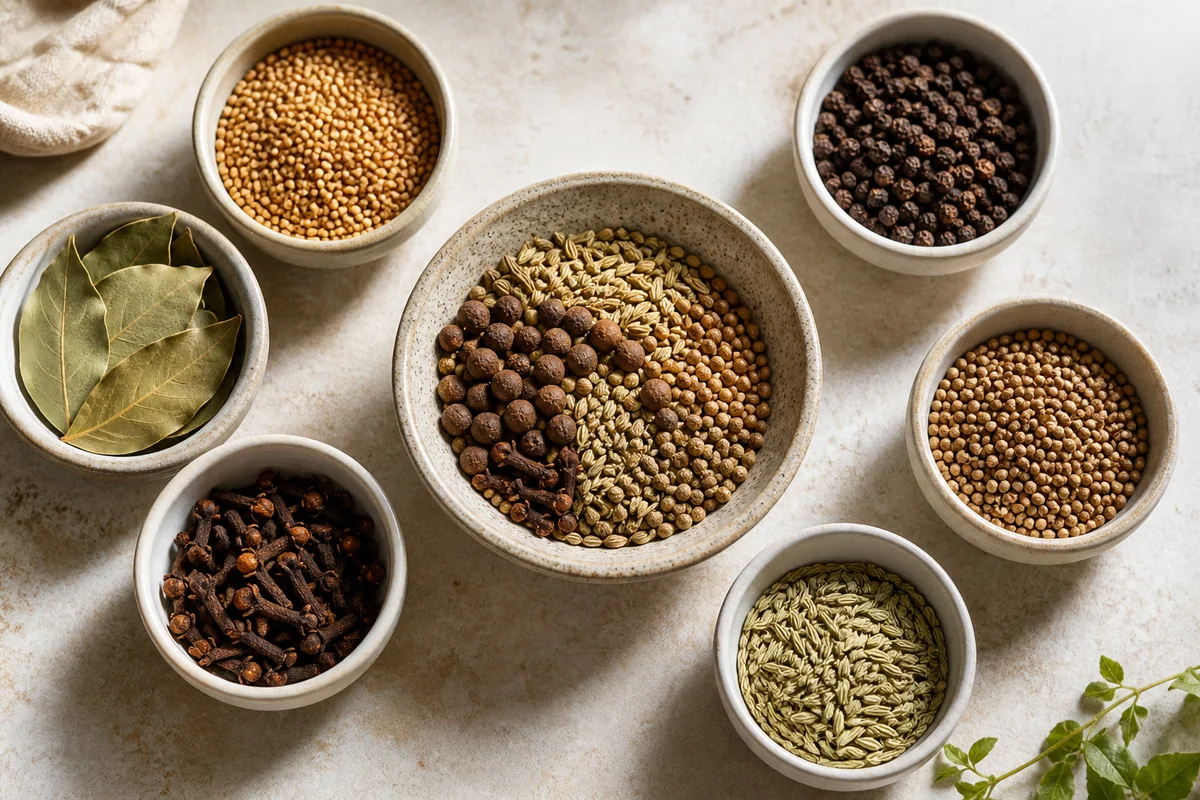
It is a blend of mustard seeds, dill seeds, allspice, peppercorns, and a few warm extras, and when it is missing from your pantry, the brine falls flat fast. The good news: a solid pickling spice substitute is almost always hiding in your spice drawer already.
The key is matching two things at once. You need the signature "pickled" bite from mustard or pepper, and the warm backdrop from allspice, coriander, or bay.
Get both, and your brine will taste right without changing cook times or jar ratios.
A good pickling spice substitute needs two things: bite (mustard seed, pepper, or dill seed) and warmth (allspice, coriander, or cinnamon). The closest all-around swap is a whole-spice blend of mustard seed, dill seed, coriander, and allspice at a 1:1 ratio. For sweet pickles, add a small amount of cinnamon or ginger.
5 Best Pickling Spice Substitutes (Plus the Ratios to Use)
Every substitute below works at a specific ratio, and a few need a small technique tweak to bloom properly. Whole spices crushed lightly before hitting the brine release aroma faster, and intense spices like cloves need a lower starting point than the label suggests.
Scan the table first, then read the section for your chosen swap.
| # | Substitute | Best For | Ratio | Key Note |
|---|---|---|---|---|
| 1 | Mustard + dill + coriander + allspice | Both | 1:1 | Closest overall match |
| 2 | Mustard + allspice + black pepper + bay leaf | Both | 1:1 | Great for hot brines |
| 3 | Allspice + black pepper + crushed garlic | Savory | ¾:1 | Reduce; garlic dominates |
| 4 | Ginger + cinnamon | Sweet | 1:1 | Use sparingly; very bold |
| 5 | Dill seed + mustard seed only | Both | 1:1 | Simpler, clean aroma |
Intensity varies more here than in most spice swaps. Start conservatively with any substitute that uses cloves, cinnamon, or garlic, then taste the brine after a 5-minute bloom before adding more.
1. Mustard + Dill + Coriander + Allspice
This is the closest blend you can assemble from scratch. Mustard seed and dill seed carry the signature pickled aroma that most people recognize immediately. Allspice and coriander add the warm, slightly citrusy backbone that keeps it from tasting flat.
Use equal parts of all four seeds and lightly crush them before adding to your brine. If you want to understand coriander's flavor profile before committing, it leans citrus-floral, which works well here.
Use this blend at a 1:1 ratio in any classic pickle recipe.
- Crush the seeds: Use the flat of a knife or a quick pulse in a grinder. Cracked seeds bloom faster in hot brine.
- Hot brine preferred: Pour hot brine directly over the blend in the jar. Cold-pack works, but give it an extra day to develop.
- Balance check: If the allspice reads too strong, pull it back by half and add a pinch more dill seed.
Skip if: your recipe is a sweet-style pickle, like bread-and-butter. This blend reads more savory and may taste less sweet than the original.
2. Mustard + Allspice + Black Pepper + Bay Leaf
This is the peppery version, and it is the one we reach for first when making half-sour pickles or spiced brines. Black pepper adds sharp heat that mustard seed alone cannot deliver. Allspice rounds it out, and bay leaf ties the aromatics together with a faint herbal note.
For peppery bite options, black pepper is your anchor here, so do not skip or halve it. Use this blend at 1:1, and drop the full bay leaf directly into the jar before sealing.
- Bay leaf tip: One leaf per jar is enough. Two makes the brine slightly medicinal.
- Pepper ratio: Use whole peppercorns, not ground. Ground pepper clouds the brine and can turn bitter.
- Strength control: If the brine tastes sharp after blooming, add 1 teaspoon of sugar to balance without changing the spice load.
Skip if: you cannot find bay leaf. You can leave it out, but the blend loses about a third of its depth. At that point, substitute 1 or 2 blend.
3. Allspice + Black Pepper + Crushed Garlic
This swap leans savory and works well when the recipe already has some sweetness built in, like a pickle with sugar or apple cider vinegar. Allspice and black pepper do the heavy aromatic work. Garlic adds a sharp, brine-friendly edge that can mimic the complexity of a full spice packet.
Keep garlic in check. One small crushed clove per quart of brine is enough.
If you are swapping allspice out too, the flavor will drift noticeably, so try to keep it in this particular blend. Use the blend at a ¾:1 ratio because garlic punches above its weight.
This blend is not traditional, but it works surprisingly well for garlicky dill pickles where the garlic is already expected. The pepper leads, the allspice warms the mid-note, and garlic finishes with a savory snap.
Skip if: your recipe must stay garlic-free, or if you are making pickled fruit. Garlic will be clearly noticeable, and it does not play well with sweet or fruit-forward brines.
4. Ginger + Cinnamon (Use a Light Hand)
Cinnamon moves fast in hot brine. A full teaspoon can turn a jar of pickles into something closer to mulled wine than a condiment.
This blend works, but only when you treat it more like a seasoning than a spice packet.
Cinnamon's warm flavor notes pair naturally with bread-and-butter pickles or pickled peaches. Ginger adds brightness and a mild heat that mimics the pepper bite of a standard blend. Start with half the amount called for in the original recipe and bloom briefly before tasting.
Classic Pickle Style
Works for: sweet bread-and-butter pickles, pickled beets, pickled peaches
Skip if: you are making dill pickles or any savory brine
Sweet Pickle Style
Works for: relishes, sweet onions, lightly spiced pickled vegetables
Skip if: your recipe has no added sugar, the spices will read out of place
- Starting ratio: Use ½ teaspoon cinnamon and ½ teaspoon ground ginger per quart of brine, then scale up after tasting.
- Bloom briefly: 2 minutes in warm brine is enough. Over-steeping cinnamon turns the liquid bitter.
- Add pepper: A few whole peppercorns alongside this blend restore some of the savory bite the blend lacks on its own.
Skip if: you are making classic dill pickles. Cinnamon and ginger read as baking spices in that context, and no amount of adjusting will fix it.
5. Dill Seed + Mustard Seed Only
Think of this as the stripped-down version. You keep the two seeds most responsible for that "this tastes pickled" moment, and you lose the warm-spice complexity that allspice, coriander, and pepper normally add.
The result is cleaner and simpler, which is not a bad thing for mild vegetables.
If you want to understand choosing a mustard seed swap, this section is a good starting point, because mustard seed is the one you least want to lose in any pickling brine. Use this blend at a 1:1 ratio.
| Use | Ratio | Notes |
|---|---|---|
| Classic dill pickles | 1:1 | Works cleanly; add 2-3 peppercorns for bite |
| Pickled vegetables | 1:1 | Mild and clean; no adjustments needed |
| Relishes | ¾:1 | Reduce slightly; relishes concentrate flavor |
| Spiced brines | Add allspice | Add ¼ teaspoon allspice to restore warm note |
- Compensate for warmth: Add a pinch of allspice or one clove to recover some of the depth this minimal blend lacks.
- Crush both seeds: Lightly cracked seeds bloom in about half the time of whole seeds.
Skip if: the recipe specifically calls for a complex, brand-style pickling spice with many layers. This blend will taste noticeably simpler.
Making Your Pickling Spice Substitute Taste Right
The single biggest mistake people make is adding spices cold and not tasting until the jar is sealed. For any of these blends, bloom the spices in warm brine for 3 to 5 minutes, then taste before filling the jars.
If you know the warm, peppery character you are aiming for, you will know immediately if the blend needs more pepper or a touch more sweetness. You can also use a good bay leaf alternative in the brine to add herbal depth if your blend feels one-dimensional.
- Crush whole spices: A quick press with the flat of a knife is enough to crack seeds and release oils faster into the brine.
- Bloom time: 3 to 5 minutes in warm brine (not boiling) is the sweet spot. Boiling degrades delicate top notes like dill.
- Fix a harsh brine: If a clove-heavy or pepper-heavy brine tastes sharp, add 1 teaspoon of apple cider vinegar and 1 teaspoon of sugar to soften without diluting the spice character.
Frequently Asked Questions
You can, but use about half the amount. Ground spices release much faster and can turn the brine muddy or overpowering if used at the same volume as whole spices.
The mustard seed, dill seed, coriander, and allspice blend is the closest match. It delivers the same sharp-warm aroma without relying on any single dominant spice.
Cut the cinnamon to half the amount and add a few whole peppercorns. The pepper bite pulls the blend back toward savory and keeps it brine-appropriate.
Leaving them in is fine for refrigerator pickles. For shelf-stable canning, strain or use a spice bag so you can control steeping time and prevent over-spicing.
Yes, and we recommend it. Combining the dill-mustard base with a small amount of allspice and one peppercorn gives you a more complete result than either alone.
5 Best Pickling Spice Substitutes in Every Recipe
Ingredients
Equipment
Method
- Choose the substitute that matches your recipe style: classic (mustard + dill seed + allspice) vs. sweet (add cinnamon/ginger).
- Match the amount using the ratio for your closest option; if using an intense spice-only swap (like cloves), start at the reduced ratio.
- If your substitute has whole spices, lightly crush them so the brine releases flavor faster.
- Simmer or bloom the spices briefly in the brine (or pour over hot brine) to carry aroma into the jar.
- Taste the brine after blooming; adjust with a pinch of pepper for bite or a tiny pinch of sugar for sweetness balance.
Notes
- Whole-spice swaps bloom slower than ground mixes—crush or simmer briefly for best flavor.
- If the swap includes cinnamon/ginger or cloves, use the listed reduced ratio to avoid overpowering.
Tried this recipe?
Let us know how it was!
Carrie is a food writer and editor with more than 15 years of experience. She has worked for some of the biggest names in the food industry, including Bon Appétit, Food & Wine, and Martha Stewart Living.
As the Editor in Chief of EpicureDelight, Carrie oversees all of the content on the site. She also manages the team of contributing writers and editors, who help to create delicious recipes, helpful tips, and informative articles that you’ll find on the site.
A native of the Chicago area, Carrie is passionate about all things food. She loves trying new restaurants and experimenting with new recipes in her kitchen. She’s also a graduate of the Culinary Institute of America, so she knows a thing or two about food!



