
Those paper-thin layers that shatter into a thousand flakes? They come from cold butter trapped inside folded dough, steaming up and pushing the pastry apart in the oven.
That's a hard thing to replicate from a pantry standby. But the right puff pastry substitute gets you close enough that most people won't notice.
The trick is matching your swap to your dish. Crisp and shatter-thin?
Reach for phyllo. Flaky lift with some puff?
Rough puff or crescent dough. Tender crust for a tart?
Pie dough handles that well.
No puff pastry on hand? Rough puff pastry is the closest swap for laminated flake. Phyllo dough works for crisp layers. Crescent roll dough is the fastest option for turnovers. Pie dough and biscuit dough cover tender crust needs when puff height isn't required.
5 Best Puff Pastry Swaps (Pick the Closest Texture)
Your choice comes down to one question: do you need laminated layers or just a flaky, buttery crust? Laminated means fat folded into dough so it puffs up in distinct layers.
Structural lift means dough that rises from baking powder, yeast, or steam but doesn't separate into fine sheets.
The table below maps each swap to its texture goal. Check the "Best For" column first.
Then read the full item section for handling tips before you bake.
One note on wet fillings: if your recipe has juicy fruit or a sauce-heavy center, thicken it before it goes into any layered substitute. Soggy layers are almost always a filling problem, not a dough problem.
| # | Substitute | Best For | Ratio | Key Note |
|---|---|---|---|---|
| 1 | Rough Puff Pastry | ★ Closest Match | 1:1 | Keep butter cold throughout |
| 2 | Phyllo Dough | Crisp Layers | 1:1 | Brush every sheet with fat |
| 3 | Crescent Roll Dough | Quick Bakes | 1:1 | Press seams firmly before filling |
| 4 | All-Butter Pie Dough | Tarts & Lids | 1:1 | Pre-chill for less shrink |
| 5 | Biscuit Dough | Emergency Swap | 1:1 | Even thickness is key |
1. Rough Puff Pastry
Rough puff is the one swap that actually replicates puff pastry's mechanics. You cut cold butter into chunks, fold it into the dough in stages, and chill between folds.
The butter steams up in the oven and pushes the layers apart, just like the store-bought version does.
The result is slightly less uniform than commercial puff pastry, but the flake and lift are genuinely close. It's also a good way to use up classic butter-forward flavor in any recipe that calls for the original.
- Best for: Turnovers, vol-au-vents, palmiers, sausage rolls
- Butter temp: Keep butter cold enough to see distinct pieces in the dough before folding
- Folding: Do at least 3 folds with a 15-minute fridge rest between each
- Thickness: Roll to about 3mm for good puff without gummy centers
Skip if you have under 45 minutes. Rushing the folds without chilling produces greasy, flat layers.
2. Phyllo Dough
Phyllo bakes into something completely different from puff pastry, but it works beautifully when you want a crisp, shattery shell rather than a pillowy rise. Stack at least 6 sheets, brush each one with melted butter, and you get enough structure for most pastry uses.
Butter-application swaps work here if you don't have a pastry brush. A folded paper towel or a spoon spread thin works well enough.
Phyllo vs. Puff Pastry
Works for: Crisp-layered tarts, baklava-style pastries, savory wraps, appetizer cups
Skip if: You want a soft, steam-pillowy interior or tall visible puff layers
- Layer count: Use 8-10 sheets for a base, 6 for a topping or lid
- Fat type: Melted butter gives the crispest result; olive oil works for savory bakes
- Soggy fix: Thicken any wet filling before it goes inside, or pre-bake the base for 5 minutes
- Handling: Keep unused sheets covered with a damp towel so they don't dry out and crack
3. Crescent Roll Dough
Crescent dough is what you grab when speed matters. It already has fat layered into it, and it bakes up with a soft flake and a little puff.
Press the perforated seams together, flatten the sheet evenly, and it holds fillings well enough for most hand pies and turnovers.
- Best for: Mini turnovers, baked bites, sweet rolls, quick tart shells
- Seam sealing: Press with fingers, then press again with a fork for extra hold
- Bake temp: Follow the package temp (usually 375°F), not puff pastry's higher temp
- Egg wash: A quick egg wash helps the surface brown evenly and stay sealed
Skip if you need dramatic, tall puff layers. Crescent dough rises maybe half as high as commercial puff pastry.
4. All-Butter Pie Dough
Pie dough doesn't puff. That's the honest truth of it.
What it does is bake into a tender, flaky crust with good structure, which makes it a solid swap for tarts, open-faced pastries, and baked lids where height isn't the point.
Keep the dough thin, around 2-3mm, and keep it cold right up until it goes into the oven. If you're swapping the flour type in a homemade version, a lower-protein flour gives a more tender result.
- Best for: Tart shells, galettes, pot pie lids, hand pies needing a sturdy edge
- Pre-bake: Blind-bake for wet fillings at 375°F for 12-15 minutes with weights
- Shrinkage: Rest the lined tart pan in the fridge for 20 minutes before baking
- Doneness: Look for a golden underside, not just a browned top
Skip if you need a pastry shell that puffs up into visible layers. Pie dough stays flat and dense by comparison.
5. Biscuit Dough
Biscuit dough is the fastest emergency swap in this list. It's buttery, it bakes through quickly, and it's forgiving when you don't have time to think.
The texture is soft-flaky rather than crisp-shatter, and there's no real lamination happening.
Roll it to an even thickness, about 6-8mm, so the center cooks through before the top gets too brown. If you're topping a pot pie or cobbler-style bake, it's nearly as good as the original.
| Use | Ratio | Notes |
|---|---|---|
| Pot pie topping | 1:1 | Drop or roll; press edges to seal against the dish |
| Hand pie wrapper | 1:1 | Roll thin, fill lightly, pinch edges with a fork |
| Tart base | 1:1 | Pre-bake at 400°F for 8 min before adding filling |
Skip if you need a glassy, crisp exterior. Biscuit dough stays soft and matte on top, even when fully baked.
Making Any Puff Pastry Substitute Work
The biggest variable with any swap isn't the dough itself. It's oven heat and edge control.
Every substitute in this list performs better when the oven is fully preheated and the baking surface is already hot.
Before you bake, think about choosing the right cutter for your dough thickness. Clean edges on hand pies and tarts help layers stay defined rather than pinching shut and turning doughy.
If you're working with homemade rough puff, storing it correctly between folding sessions keeps the butter layers intact.
- Oven temp: Start at 400-425°F for layered swaps (phyllo, rough puff, crescent). Drop to 375°F for pie dough and biscuit dough, which need more time to cook through without burning the exterior.
- Edge sealing: Press and crimp all edges before the pan goes in. Wet fillings create steam pressure that blows open poorly-sealed edges, which then leaks and burns on the pan.
- Doneness check: Tap the bottom of the pastry. A hollow sound means it's cooked through. A soft press means the center is still raw. Tent with foil if the top browns before the bottom sets.
Frequently Asked Questions
Rough puff pastry is the closest match. It uses the same cold-butter folding method and produces real steam-driven layers when baked at high heat.
Yes, but keep unused sheets under a damp towel while you work. Brush each layer with melted butter immediately before stacking to prevent cracking.
It works for most casual bakes, but expect less height and a softer texture. Press all seams firmly and use the package's recommended bake temperature.
Thicken the filling before it goes in, and crimp edges twice with a fork. Wet fillings produce steam that pushes through any weak seal point.
Yes. Thaw in the fridge overnight, not at room temperature. Warm dough is harder to handle and the butter layers melt before the oven can do its work.
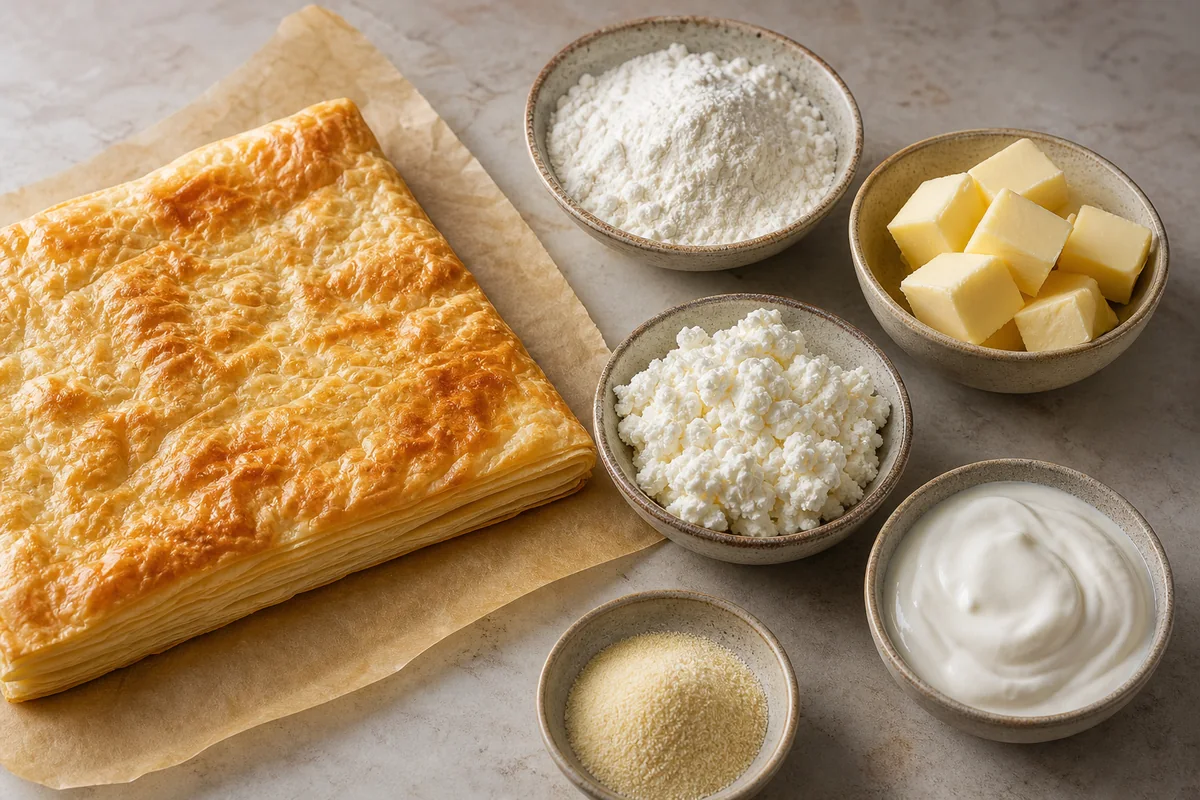
5 Best Puff Pastry Substitutes (Easy Swaps)
Ingredients
Equipment
Method
- Choose your goal: crisp layers (phyllo), classic flake (rough puff), quick lift (crescent), tender crust (pie dough), or fastest bake (biscuits).
- Use the table’s closest-match substitute and apply the handling tip (press seams, brush layers, keep butter cold, or seal edges).
- Adjust baking behavior: puff-style bakes benefit from hot oven and edge sealing; biscuit/pie swaps may need slightly longer bake for doneness.
- Check early: if the top browns too fast, tent lightly with foil while the center finishes.
- Let rest before cutting to reduce soggy layers—especially for phyllo and crescent swaps.
Notes
- Pick based on the texture you need: shattering crisp (phyllo) vs. buttery lift (rough puff) vs. tender crust (pie dough) vs. quickest lift (biscuits).
- Always seal edges on swaps that can leak (crescent and biscuit styles).
Tried this recipe?
Let us know how it was!
Carrie is a food writer and editor with more than 15 years of experience. She has worked for some of the biggest names in the food industry, including Bon Appétit, Food & Wine, and Martha Stewart Living.
As the Editor in Chief of EpicureDelight, Carrie oversees all of the content on the site. She also manages the team of contributing writers and editors, who help to create delicious recipes, helpful tips, and informative articles that you’ll find on the site.
A native of the Chicago area, Carrie is passionate about all things food. She loves trying new restaurants and experimenting with new recipes in her kitchen. She’s also a graduate of the Culinary Institute of America, so she knows a thing or two about food!



