Swiss chard is one of those greens that does double duty. The leaves wilt soft and fast, while the stems stay firm and slightly sweet, and that combination is harder to replicate than most people expect.
A straight swap with any leafy green will get you close, but the swiss chard substitute you pick should match your cook time and moisture budget, not just the color on the plate.
Swiss chard has tender leaves and firmer stems that cook at different rates. Fast-wilting greens like spinach work for quick dishes but release water. Hardy greens like kale and collards need more time but hold their shape better in braises and soups.
The table below maps each swap to a cooking style so you can decide at a glance. After that, each item gets its own guidance for prep, timing, and moisture.
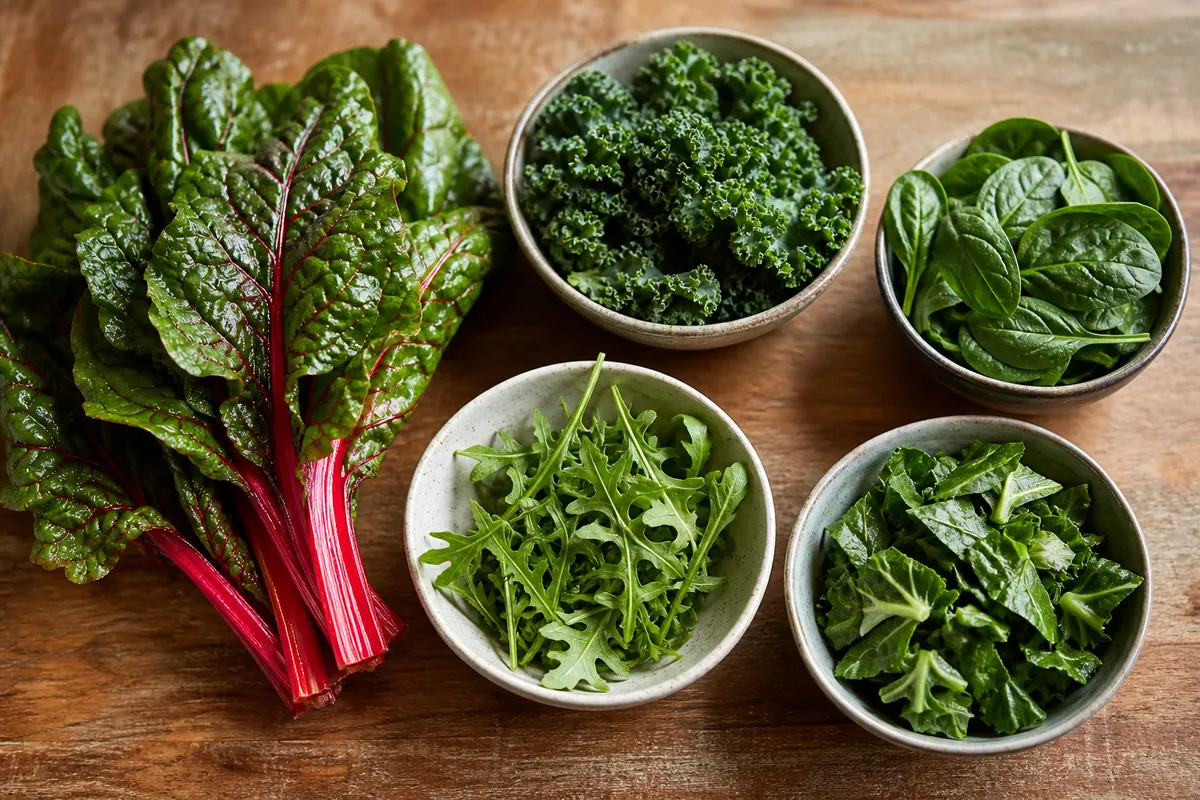
5 Best Swiss Chard Substitutes Ranked by Use Case
| # | Substitute | Best For | Ratio | Key Note |
|---|---|---|---|---|
| 1 | Kale (Lacinato) | Sauté / Braise | 1:1 | Slice thin; cook longer |
| 2 | Spinach (baby) | Quick wilt / Sauce | 1:1 | Drain well; add last |
| 3 | Collard greens | Soup / Braise | 1:1 | Remove ribs; simmer longer |
| 4 | Mustard greens | Sauté / Soup | 1:1 | Finish with acid or sugar |
| 5 | Beet greens | Quick sauté | 1:1 | Cook stems first; brief wilt |
1. Kale (Lacinato/Tuscan)
Lacinato kale is the closest thing to Swiss chard in a skillet. It has real leaf body and a mild earthiness that doesn't fight the other ingredients, though it stays chewier unless you prep it right.
Slice the leaves into thin strips and pull out the tough center ribs before cooking. In a sauté, kale needs roughly 2-4 more minutes than chard to reach the same tender bite.
If you're building a pasta or a grain bowl, that extra time is easy to manage, and the Tuscan kale options page has more detail on timing across different dishes.
- Prep: Strip ribs and slice leaves into 1-inch ribbons for even cooking
- Timing: Add to pan 3-4 minutes before you'd add chard; taste for tenderness
- Moisture: Kale releases less water than spinach, so sauces stay concentrated
Skip if: you need a very tender, fast-wilting green and don't have time for extra cooking.
2. Spinach (Baby), Well-Drained
Baby spinach is the fastest swap on this list. It wilts in under 90 seconds and has a mild flavor that disappears into soups, pasta sauces, and egg dishes without argument.
The one real problem is water. Spinach holds a surprising amount of moisture, and if you skip storing and drying spinach correctly before cooking, it will puddle in your pan and thin out sauces or baked fillings.
Press it in a clean towel or sauté it in a dry pan first, then drain before adding to the dish.
- Prep: Rinse, then press dry with paper towels or a cloth
- Timing: Add in the last 30-90 seconds; it wilts almost immediately
- Baking fix: Squeeze handfuls over the sink before folding into casseroles or frittatas
Skip if: your recipe is a baked filling or a thick sauce that can't absorb extra liquid.
3. Collard Greens, Ribs Removed
Collards are the right call when your recipe has time to simmer. They're thicker and tougher than chard, but once they soften they hold their shape well in soups and braises without turning to mush.
If you're leaning toward choosing sturdy braising greens, collards are a dependable anchor. Remove the ribs completely and chop the leaves small.
Smaller pieces reach the same tenderness faster, and they absorb braising liquid evenly.
- Prep: Pull ribs out by folding the leaf in half and tearing; chop into 1-inch pieces
- Timing: Simmer 10-20 minutes depending on leaf thickness; test with a fork
- Flavor: Collards are mildly bitter; a splash of apple cider vinegar at the end balances them
Skip if: you need a 10-minute cook and can't pre-blanch or pre-simmer the greens.
4. Mustard Greens, Balanced for Bite
Mustard greens work well as a swiss chard alternative in soups and quick sautés, but they bring a peppery sharpness that chard doesn't have. That sharpness is easy to manage if you know it's coming.
The peppery notes in these sharp, leafy greens mellow significantly with heat and acid. Add a squeeze of lemon or a small pinch of sugar at the end, and the harsh edge rounds out without disappearing completely.
Swiss Chard
Works for: mild dishes, kid-friendly meals, cream sauces
Skip if: you need a bold, peppery flavor to carry the dish
Mustard Greens
Works for: soups, bean dishes, sautés with garlic and vinegar
Skip if: your recipe needs a neutral, mellow green base
- Prep: Remove thick ribs; chop into medium pieces so they cook evenly
- Timing: Cook 5-8 minutes over medium heat until edges soften
- Finish: A squeeze of lemon or ½ teaspoon sugar tames the sharpest bite
Skip if: the dish is meant for mild, crowd-pleasing flavors and you can't balance with acid.
5. Beet Greens, Chopped
Beet greens are underused and genuinely good. They taste mildly earthy and a little sweet, which lands closer to Swiss chard than most people expect.
If you've bought fresh beets recently, the tops are already sitting in your kitchen.
Separate the stems from the leaves before cooking. The stems need 1-2 extra minutes in the pan, just like chard ribs.
Add them first, then layer the leaves on top and let everything wilt together. A brief sauté of 3-4 minutes total keeps the flavor clean.
Cook them longer and they tip toward a muddier, more bitter note that works against the dish. You can also fold beet greens into dishes where swapping hearty greens makes sense, since their texture holds up similarly in quick braises.
Skip if: the dish needs a completely neutral green and can't accommodate any sweet-earth flavor.
Making the Substitute Work (Timing + Moisture Fixes)
Two variables will determine whether your swap succeeds: cook time and moisture. Get both wrong and even the right substitute will undermine the dish.
- Start with stems: For kale, collards, or beet greens, add stems to the pan 2-3 minutes before leaves so everything reaches tenderness at the same time
- Control moisture: After wilting spinach or any wet green, remove excess liquid with a paper towel press or reduce the sauce by 1-2 tablespoons over high heat
- Taste before finishing: Hardy greens like collards or mustard can carry bitterness; add acid (lemon, vinegar) or salt after tenderizing, not before, so you're seasoning the final texture
For baked dishes specifically, the moisture rule is non-negotiable. Wet greens in a quiche or casserole filling will make the center soggy.
Press spinach or well-wilted kale in a clean towel until almost no water comes out, then use it. Knowing how long fresh kale stays viable also helps you plan ahead so your swap greens are at peak texture when you need them.
If you're working with mustard or turnip greens and need more ideas, swapping peppery greens covers additional options worth knowing.
Frequently Asked Questions
Lacinato kale is the closest match for sautéed chard. Slice it thin, remove the ribs, and cook it 2-4 minutes longer than you'd cook chard.
Yes, but add spinach in the last 60-90 seconds so it doesn't overcook and release excess water. For thicker soups, press it dry before adding.
Kale or well-squeezed spinach are your safest bets. Both hold structure after pre-cooking, and squeezing removes enough moisture to prevent a soggy filling.
Yes. The stems on both are much tougher than chard ribs and won't soften in the same cook time. Remove them or add them to the pan 2-3 minutes early.
Add 3-6 minutes for kale or collards compared to chard. Test by pressing a leaf with a fork; it should bend easily with no resistance at the center.
5 Best Swiss Chard Substitutes (Honest Picks)
Ingredients
Equipment
Method
- Decide what you’re making: quick sauté/wilt (choose spinach) or longer braise/simmer (choose kale/collards/mustard).
- Use the listed 1:1 ratios; if the substitute is wetter (spinach), dry it well or it will thin your sauce.
- Prepare texture: trim tough ribs on kale/collards, and slice thicker greens so they cook at the same pace as chard.
- Adjust timing: cook tougher greens 2–6 minutes longer depending on leaf thickness; add quicker greens at the end.
- Taste-finish: add acid (lemon/vinegar) to brighten peppery swaps, or a pinch of salt to deepen mild ones.
Notes
- Ratios are for cooked volume in most dishes.
- If your recipe is soup/stew, reduce simmering time for fast-wilting greens to avoid overcooking.
Tried this recipe?
Let us know how it was!
Carrie is a food writer and editor with more than 15 years of experience. She has worked for some of the biggest names in the food industry, including Bon Appétit, Food & Wine, and Martha Stewart Living.
As the Editor in Chief of EpicureDelight, Carrie oversees all of the content on the site. She also manages the team of contributing writers and editors, who help to create delicious recipes, helpful tips, and informative articles that you’ll find on the site.
A native of the Chicago area, Carrie is passionate about all things food. She loves trying new restaurants and experimenting with new recipes in her kitchen. She’s also a graduate of the Culinary Institute of America, so she knows a thing or two about food!