
Swiss cheese has a specific job in most recipes: melt smoothly, add a mild nutty sweetness, and stay out of the way of stronger flavors. Finding the right swiss cheese substitute comes down to knowing which of those jobs matters most in your dish.
Emmental and Gruyère are the closest matches for both melt and flavor. Jarlsberg works best for cold sandwiches. Mild cheddar and provolone are reliable melters with minor flavor differences. Mozzarella is the emergency backup-add a pinch of mustard powder to close the flavor gap.
For hot dishes, melt quality is the priority. For cold boards or deli-style sandwiches, flavor and texture come first.
5 Swiss Cheese Substitutes That Melt Like the Real Thing
Not every cheese swap works in every context. The table below is a fast-scan guide.
For hot applications like gratins or paninis, lean toward Emmental or Gruyère. For everyday sandwiches, smooth provolone options or Jarlsberg hold up just as well with far less fuss.
| # | Substitute | Best For | Ratio | Key Note |
|---|---|---|---|---|
| 1 | Emmental | Both | 1:1 | Closest flavor + melt |
| 2 | Gruyère | Hot | 1:1 | Richer, deeper flavor |
| 3 | Jarlsberg | Cold | 1:1 | Mild, buttery, Swiss-style |
| 4 | Mild Cheddar | Both | 1:1 | Sharper; slice thin |
| 5 | Provolone | Both | 1:1 | Mild melt, no nuttiness |
1. Emmental
Emmental is the cheese most people are actually eating when they think they're eating Swiss. It shares the same signature holes, the same pale yellow color, and that mild, nutty note that makes Swiss so versatile in cooking.
Use it 1:1 by weight.
- Best for: Hot sandwiches, casseroles, fondue, and any baked dish calling for Swiss
- Flavor/melt: Melts smoothly with minimal greasiness; flavor is slightly fruitier than Swiss but very close
- How to use: Slice thin for sandwiches; grate for gratin or baked dishes to get even coverage
Skip if: you want something milder and less nutty than Swiss-Emmental actually leans slightly stronger on the nuttiness.
2. Gruyère
Gruyère melts better than almost any other cheese in this list. It stays smooth under heat, doesn't break into greasy pools, and adds a savory depth that works especially well in gratins and French onion soup.
If you want help picking a Gruyère swap when that's also unavailable, that's worth a separate look.
Gruyère vs Swiss
Works for: gratins, baked pasta, hot sandwiches, and any recipe where melt performance matters most
Skip if: the dish is delicate or you need Swiss's lighter, subtler flavor profile
- Best uses: French onion soup, croque monsieur, quiche, and cheese sauces
- Flavor tip: Gruyère is noticeably more savory; pair it with a mild component like roasted onion to balance it
- Application: Grate it for even melting; avoid thick slices which can pool unevenly under heat
3. Jarlsberg
Jarlsberg is a Norwegian cheese made to look and taste a lot like Swiss. It has the holes, the mild flavor, and a slightly buttery sweetness that makes it excellent for cold boards and deli sandwiches.
If you're already a Jarlsberg fan, swapping in Jarlsberg for Swiss is a genuinely seamless move.
- Best for: Cold sandwiches, charcuterie boards, wraps, and snack platters
- How to slice: Cut thin-Jarlsberg has a slightly softer texture than Swiss and can feel heavy in thick slices
- What it tastes like: Milder and creamier than Swiss, with a hint of sweetness and almost no sharpness
Skip if: you need the classic nutty edge of Swiss for a hot recipe, or you're melting cheese over a baked dish where Jarlsberg's milder profile will get lost.
4. Mild Cheddar
Mild cheddar melts reliably and is probably already in your fridge. The trade-off is flavor: even mild cheddar is tangier and slightly sharper than Swiss, so it changes the character of the dish a little.
If you need more options in the cheddar direction, choosing a white cheddar version is worth considering for a cleaner, less yellow result.
- Best for: Grilled sandwiches, mac and cheese, and quesadillas where Swiss's nuttiness isn't the star
- Reduce sharpness: Grate and blend with an equal part provolone or mozzarella to dial the tang back
- Application tip: Use thinner slices than you would Swiss-cheddar concentrates flavor more quickly under heat
Skip if: you only have sharp or extra-sharp cheddar on hand and the dish calls for a mild, background cheese.
5. Provolone
Provolone is a mild, elastic cheese that melts smoothly and browns evenly under heat. It doesn't have Swiss's nuttiness, but it won't fight other flavors either.
For a deeper look at how it performs in other applications, this stretchy cheese guide covers storage and shelf behavior that affects melt quality.
| Use | Ratio | Notes |
|---|---|---|
| Hot sandwich | 1:1 | Slice thin; provolone melts fast under medium heat |
| Baked dish | 1:1 | Grate for even coverage; layer with Gruyère for more depth |
| Cold sandwich | 1:1 | Works fine sliced; expect a milder, creamier bite than Swiss |
- Flavor expectations: Mild and slightly smoky in aged versions; younger provolone is almost neutral
- Best prep: Grate for baking; slice thin for sandwiches to avoid a rubbery layer
- Seasoning tip: Add a small amount of Dijon to the sandwich or dish to replicate Swiss's savory edge
Skip if: the recipe depends on Swiss's nutty character-provolone will produce a blander result that may underwhelm.
Making Swiss Cheese Substitutes Work (Melt + Flavor Tips)
The biggest mistake when swapping cheese is treating all melters the same. Melt-first cheeses like Gruyère and provolone behave differently from flavor-forward ones like other Emmental-style swaps, and slice thickness changes everything.
Grating almost always gives you more even melt in baked dishes. If you want to understand the base flavor you're working from, storing Swiss correctly also affects how it performs before you even start substituting.
- Grate for baking: Grated cheese distributes evenly across the dish and avoids greasy pockets that thick slices can create
- Slice thin for sandwiches: Thin slices melt faster and give better mouthfeel than thick ones, especially with firmer substitutes like cheddar
- Season up mild swaps: Add a pinch of mustard powder or a small spoon of Dijon to dishes using mozzarella or young provolone to recover some of Swiss's savory quality
Frequently Asked Questions
Emmental is the closest match for both flavor and melt behavior. Gruyère runs a close second and actually melts more smoothly, but it delivers a stronger, more savory taste.
Yes, mild cheddar works in most baked dishes. It melts well but tastes sharper, so use it grated and consider blending with provolone to soften the tang.
Jarlsberg is the top pick for cold sandwiches. It has a similar holey texture, mild flavor, and buttery finish that reads as Swiss without any noticeable difference.
Add a small pinch of salt and a tiny amount of mustard powder to the dish. These two additions push mozzarella's flavor closer to Swiss's mild savory-nutty profile.
Grate for baked dishes-it melts evenly and prevents greasy separation. Slice thin for sandwiches so the cheese softens quickly without turning rubbery.
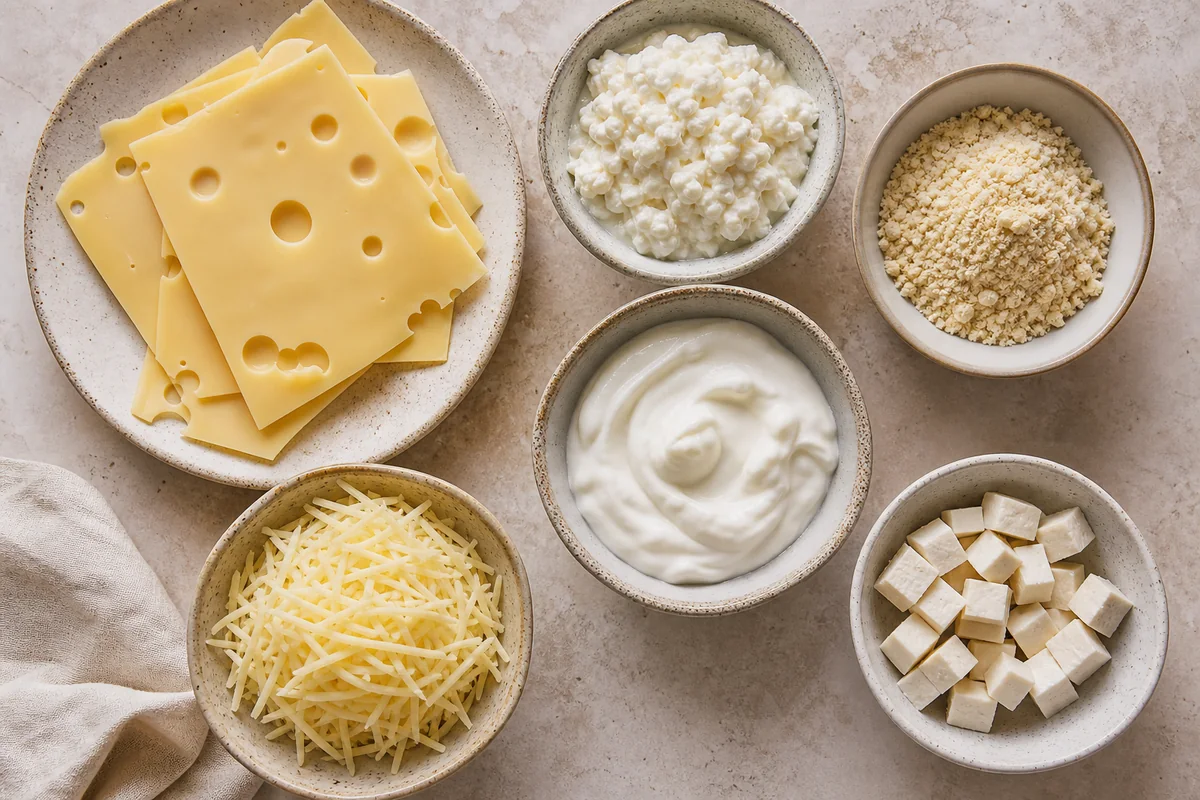
5 Best Swiss Cheese Substitutes (Easy Swaps)
Ingredients
Equipment
Method
- Match your use case: for hot melting (sandwiches/gratins), prioritize Gruyère/Emmental first; for mild melt, choose Provolone or Mozzarella.
- Use the table ratios (generally 1:1). If the substitute is sharper (cheddar) or milder (mozzarella), adjust by slice thickness or a small salt/seasoning tweak.
- For baking/gratin-style dishes, grate the cheese so it melts evenly and avoids greasy pockets.
- For cold sandwiches, slice thin and let the cheese sit 2–3 minutes to soften slightly for better mouthfeel.
- Taste after the first bite and refine: more salt for mild swaps, or balance sharpness with a sweeter component (e.g., caramelized onions).
Notes
- For recipes where Swiss must melt smoothly, choose Emmental/Gruyère/Provolone over drier or very sharp cheeses.
- If you’re replacing Swiss in a delicate flavor application (light sandwiches), start with mild swaps first (Emmental/Jarlsberg/Provolone).
Tried this recipe?
Let us know how it was!
Carrie is a food writer and editor with more than 15 years of experience. She has worked for some of the biggest names in the food industry, including Bon Appétit, Food & Wine, and Martha Stewart Living.
As the Editor in Chief of EpicureDelight, Carrie oversees all of the content on the site. She also manages the team of contributing writers and editors, who help to create delicious recipes, helpful tips, and informative articles that you’ll find on the site.
A native of the Chicago area, Carrie is passionate about all things food. She loves trying new restaurants and experimenting with new recipes in her kitchen. She’s also a graduate of the Culinary Institute of America, so she knows a thing or two about food!



