
Tomme cheese has a way of making a dish feel settled. Its mild tang, semi-firm body, and easy melt bring everything together without calling too much attention to itself.
When you can't find it, the right tomme cheese substitute depends entirely on what the cheese is doing in your recipe.
Tomme is a semi-firm, mildly tangy cheese with reliable melt. For gratins and sandwiches, pick Fontina or Gruyère. For baking structure, use Emmental or mild Cheddar. For the boldest flavor match, a washed-rind cheese like Reblochon is closest to tomme's earthy character.
The biggest mistake is picking a substitute purely by texture and ignoring melt behavior. A cheese that slices like tomme may still pool, separate, or taste flat once heat is applied.
5 Best Tomme Cheese Substitutes (Match the Melt + Flavor)
Each option below is sorted by how it performs under heat. The table gives you the quick view.
Every H3 section that follows includes a "Skip if" note for the most common failure modes.
| # | Substitute | Best For | Ratio | Key Note |
|---|---|---|---|---|
| 1 | Fontina | Melt & Gratin | 1:1 | Smoothest melt match |
| 2 | Gruyère | Browning & Bake | 1:1 | Nutty, browns well |
| 3 | Emmental / Swiss | Topping & Bake | 1:1 | Mild, elastic stretch |
| 4 | Reblochon-style | Flavor & Fondue | 1:1 | Boldest earthy match |
| 5 | Cheddar (mild) | Baking & Emergency | 1:1 | Sharp; keep heat low |
Provolone also earns a mention for sandwich use, covered in its own section below.
1. Fontina
Fontina is the substitute we reach for first when the recipe calls for a straight melt. Its semi-soft texture and buttery pull sit close to what tomme does in a gratin or grilled sandwich.
When you're swapping a melting cheese, Fontina almost never disappoints.
- Shred it: Pre-shredded Fontina clumps; grate it yourself for even melt coverage.
- Browning: It browns lightly but won't develop as deep a crust as Gruyère.
- Sauce thickness: Fontina produces a creamy, cohesive sauce without breaking.
Skip if: your recipe depends on a pronounced tang or funky rind note-Fontina reads milder than most washed-rind tomme styles.
2. Gruyère
Gruyère is the go-to when browning matters as much as melt. It develops a deep golden crust in the oven, and its savory, slightly nutty character pairs well with potato gratins, onion soups, and baked pasta.
For broader firm-cheese swapping options, it often tops the list.
- Flavor: Nutty and savory; bolder than tomme but not overpowering in most baked dishes.
- Browning: Develops a firm, golden top layer that tomme fans will recognize.
- Shredding: Grate medium-fine to prevent clumping at the edges of a gratin dish.
- Clump prevention: Toss shreds with a pinch of cornstarch before layering into sauces.
Skip if: the dish is delicate-a light cream sauce, for example, where Gruyère's nuttiness can dominate.
3. Emmental / Swiss
Swiss-style cheese is the quietest substitute on this list. It melts with a clean, elastic stretch that works well as a bake-finish topping or inside a layered casserole.
Its mild flavor profile is worth understanding before you commit, so reading up on how Swiss cheese tastes helps set expectations.
- Mildness: Less tangy than tomme; add a small squeeze of lemon or a pinch of mustard powder to the recipe to recover some sharpness.
- Grating: Always grate-slices melt unevenly and can leave rubbery patches in a baked dish.
- Seasoning: If the dish tastes flat after substituting, adjust salt first before adding more cheese.
Skip if: tomme's earthy tang is the point of the dish-Swiss-style will taste noticeably cleaner and blander.
4. Reblochon-Style Washed-Rind
When tomme's earthy, slightly barnyard quality is what the recipe actually needs, a washed-rind cheese like Reblochon gets closest. It has the same semi-soft body and the same tendency to melt into a creamy, pungent pool.
Use it in a tartiflette, a warm tart, or any dish where the bold cheese choice is the feature, not the background.
The one adjustment to make is quantity. Washed-rind cheeses carry more flavor per gram than tomme does, so start with about 80% of the called-for amount and taste before adding more.
If the rind smells very strong, trim it before baking and the finished dish will stay balanced.
Skip if: you're feeding a crowd with mixed preferences-washed-rind flavor can dominate and polarize.
5. Cheddar
Mild or medium cheddar is the emergency tomme cheese substitute most people already have. It works best in baked dishes where tomme is one of several cheeses, not the star.
For situations where cheddar still isn't right, check out our top pale-cheddar picks for a softer flavor direction.
Mild / Medium Cheddar
Works for: baked mac, savory pies, gratins where you want structure and easy availability
Skip if: the recipe needs mellow, delicate flavor-cheddar's sharpness can overshadow other ingredients
- Which type: Choose mild or medium-extra-sharp cheddar separates easily and tastes too aggressive.
- Shredding: Shred fine and let it come to room temperature before it goes into the oven.
- Sauce pairing: A splash of cream or béchamel base keeps cheddar smooth and prevents graininess.
- Reducing sharpness: Balance cheddar's bite with a small amount of honey or caramelized onion in the same dish.
6. Provolone
Provolone is the most predictable sandwich substitute on this list. It melts in a smooth, even sheet and won't pool or break under moderate heat.
If you're folding provolone into a recipe that needs more acidity, swapping mild Italian cheese with a small adjustment is worth reading first.
- Sandwich performance: Melts flat and even; ideal for pressed sandwiches and paninis where tomme would normally go.
- Flavor gentleness: Provolone is milder than tomme-add a light smear of Dijon or a few capers to bring acidity back into the dish.
- Adding tang: A drizzle of white wine vinegar in the recipe liquid can mimic tomme's mild sharpness without changing the texture.
Skip if: you need tomme's earthy depth in a baked dish-provolone reads smooth but flat in the oven.
Making Your Tomme Substitute Work (No Grain, No Flat Flavor)
The difference between a good substitution and a disappointing one usually comes down to three technique points. Shredding is the first.
Pre-grating your substitute cheese and letting it sit at room temperature for 15 minutes before it hits heat makes an enormous difference in how evenly it melts. If you're working with a firmer cheese like Gruyère, a light toss with cornstarch keeps it from clumping.
For recipes where the flavor lands flat, balance is faster than adding more cheese-a small adjustment to the seasoning in the sauce does the job. If you want to understand how this buttery semi-soft differs from harder options, that context helps you calibrate.
- Shred size: Medium-fine shreds melt faster and more evenly than thick slices; coarse shreds can leave dry patches on top.
- Moisture adjustment: If your substitute seems drier than tomme, add 1-2 tablespoons of warm cream or stock to the sauce base before the cheese goes in.
- Finish-time control: For a browned top, pull the dish 2 minutes before fully set and let carry-over heat finish it-this prevents oily separation at the surface.
Frequently Asked Questions
Fontina is the closest match for melt behavior. It stays cohesive, doesn't separate easily, and produces a creamy pull similar to tomme in gratins and grilled sandwiches.
Yes, mild or medium cheddar works in most baked recipes. Shred it fine, keep heat moderate, and add a small amount of cream to prevent the grainy texture that sharper cheddars can produce.
Choose Gruyère if you want a browned, firm top crust with nutty flavor. Choose Fontina if you want a creamier, smoother melt with a more neutral taste.
Yes, all five substitutes listed here work at a 1:1 ratio by weight. The one exception is washed-rind cheese like Reblochon-start at 80% and taste before adding more.
Shred the cheese fine, bring it to room temperature first, and melt it into a warm liquid base rather than onto a dry surface. High direct heat is the main cause of separation.
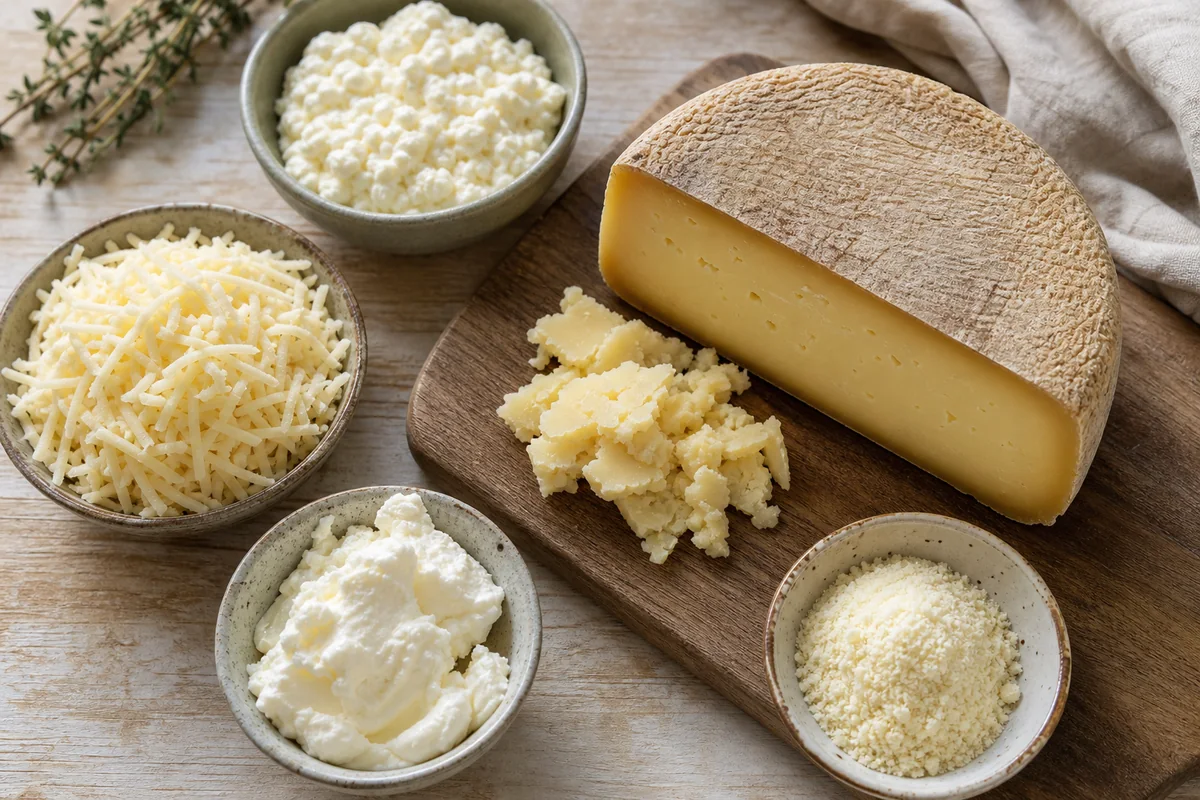
5 Best Tomme Cheese Substitutes for Any Recipe
Ingredients
Equipment
Method
- Identify your use-case: sandwich/char, melt-and-brown (gratin), or baking where you need structure.
- Pick the substitute with the closest melt goal (Fontina/Gruyère/Swiss) or the closest flavor style (washed-rind like Reblochon).
- Use the table ratio (typically 1:1 by weight for all listed options) and shred for faster, more even melt.
- If the substitute is drier/harsher than tomme, add a small amount of recipe moisture (sauce, stock, or milk) to prevent grainy texture.
- Taste-test at the end and adjust salt/tang in small increments—cheese substitutes often differ most there.
Notes
- For the smoothest melt, choose semi-soft melting cheeses and shred before using.
- If your dish needs browning, prefer Gruyère or Swiss-style cheeses that color well.
Tried this recipe?
Let us know how it was!
Carrie is a food writer and editor with more than 15 years of experience. She has worked for some of the biggest names in the food industry, including Bon Appétit, Food & Wine, and Martha Stewart Living.
As the Editor in Chief of EpicureDelight, Carrie oversees all of the content on the site. She also manages the team of contributing writers and editors, who help to create delicious recipes, helpful tips, and informative articles that you’ll find on the site.
A native of the Chicago area, Carrie is passionate about all things food. She loves trying new restaurants and experimenting with new recipes in her kitchen. She’s also a graduate of the Culinary Institute of America, so she knows a thing or two about food!



