
That satisfying chew in a grain salad or warm bowl often comes from one ingredient doing quiet, consistent work. Wheat berries earn that role because they stay firm after cooking, hold their shape through dressing, and carry a mild nuttiness that doesn't need much help. When you can't find them, the goal is matching those two traits: chew and flavor.
Most swaps land on one trait but miss the other. Barley gets the chew right but tastes earthier.
Bulgur nails the flavor but softens fast. Knowing where each substitute falls short helps you pick one that actually fits your dish.
The best wheat berries substitute depends on how much chew your dish needs. Farro is the closest match for both texture and flavor. Hulled barley and spelt berries are solid runners-up. For speed, bulgur works in a pinch but softens faster.
5 Best Wheat Berries Substitutes Ranked by Chew and Flavor
Each substitute below is ranked by how closely it matches the chew and mildly nutty quality of wheat berries. The table gives you a quick reference before you commit to one.
| # | Substitute | Best For | Ratio | Key Note |
|---|---|---|---|---|
| 1 | Farro (whole/pearled) | Both | 1:1 | Watch pearled-cooks faster |
| 2 | Hulled Barley | Both | 1:1 | Earthier; stop at firm-tender |
| 3 | Spelt Berries | Both | 1:1 | Closest wheat-family flavor |
| 4 | Buckwheat Groats | Warm Bowls | ¾:1 | Tender, not chewy-wheat |
| 5 | Brown Rice | Both | 1:1 | Softer; add crunchy element |
1. Farro (Whole or Pearled)
Farro is the swap most cooks reach for first, and it deserves that reputation. It stays pleasantly chewy when cooked to firm-tender and carries a mild nutty, wheaty flavor that sits close enough to wheat berries that most people won't notice the difference in a salad.
Whole farro takes 45 to 60 minutes. Pearled farro trims that to 25 to 35 minutes, so it needs more attention.
For a deeper look at how farro's flavor profile behaves across dishes, that breakdown is worth a read before you season.
Whole Farro
Works for: salads, grain bowls, meal-prep batches that sit in dressing
Skip if: you're short on time (whole farro needs a full simmer)
Pearled Farro
Works for: weeknight bowls and quick-assemble salads
Skip if: you need the longest-lasting chew after dressing
- Ratio: Use 1:1 cooked farro for cooked wheat berries
- Texture target: Pull it off heat while the grain still has some resistance; it softens slightly as it rests
- Flavor note: Mild and wheaty; add a pinch of salt to the cooking water to bring it forward
- Skip if: You need a gluten-free grain; farro contains gluten
2. Hulled Barley
Hulled barley is the less-obvious choice, but it earns its place here. When you cook it carefully and stop at firm-tender, the chew is close to wheat berries.
If you need to swap away from barley as well, choosing a different hearty grain is straightforward with our top barley picks as a starting point.
- Best use: Warm grain bowls, roasted vegetable sides, and hearty soups
- Texture target: Firm-tender with a slight springiness; fully soft barley loses its appeal fast
- Flavor note: Deeper and slightly toasty compared with wheat berries; pairs well with bold vinaigrettes
- Cook time: About 45 to 60 minutes with no soaking required
- Skip if: Your recipe relies on a mild, neutral grain base; barley has a more pronounced earthy note
3. Spelt Berries
Spelt berries sit inside the wheat family, and that shows. The flavor is nutty and wheaty in a way that tracks almost exactly with wheat berries.
If you want a direct side-by-side of how they compare before committing, the spelt-versus-wheat breakdown covers the key differences on texture and nutrition.
- Ratio: 1:1 cooked; treat them like wheat berries in every recipe step
- Soaking: Optional, but an overnight soak cuts cook time by about 15 minutes
- Texture: Firm-tender, slightly springy; cooks to a very similar bite as wheat berries when monitored
- Best for: Cold grain salads, warm bowls, and any recipe where wheat-adjacent flavor matters
- Skip if: You have wheat sensitivity or are avoiding wheat-family grains entirely
4. Buckwheat Groats
Buckwheat groats are the outlier on this list: gluten-free, faster to cook, and noticeably more tender than wheat berries. The flavor is nutty and distinctly toasted, which can work well in hearty bowls when you want body without the full wheat chew.
Use a bit less than your wheat berry quantity since groats absorb liquid quickly and can tip into mush if you're not watching.
The berry-swap options section of our site has related context on pairing earthy flavors if you're building a more complex bowl.
| Use | Ratio | Notes |
|---|---|---|
| Warm grain bowl | ¾:1 | Buckwheat groats; toast dry before simmering for deeper flavor |
| Salad mix-in | ½:1 | Buckwheat groats; chill fully and add at the last minute |
| Side dish | ¾:1 | Buckwheat groats; combine with firmer ingredient for contrast |
- Texture: Tender rather than chewy; mix with a crunchy element to compensate
- Cook time: 15 to 20 minutes; check early to avoid over-softening
- Flavor note: Toasted and nutty, less wheaty; a bold dressing or acid helps bridge the gap
- Skip if: You specifically need the firm, long-lasting chew wheat berries provide
5. Brown Rice (Whole Grain)
Brown rice is the most accessible option here. It's mild, which means it takes on whatever dressing or seasoning you use without fighting back.
The texture is softer than wheat berries, especially after a night in the fridge, so it works better in warm bowls than in a cold salad meant to last three days. For anyone keeping track of storing cooked brown rice safely, fridge life matters here more than with firmer grains.
- Best role: Warm grain bowls, quick weeknight sides, mix-ins with roasted vegetables
- Texture fix: Chill thoroughly before adding dressing to slow breakdown
- Crunch add-in: Toasted seeds or raw shaved vegetables help compensate for the softer bite
- Flavor note: Neutral; season the cooking water and the finished dish to build depth
- Skip if: You need a grain with lasting, distinct chew through multiple servings
Making a Wheat Berries Substitute Work
The biggest mistake with any grain swap is pulling it off the heat too early or too late. Every substitute on this list performs best at a specific firmness window, and missing that window by even five minutes changes the whole texture of a dish.
When your swap is naturally softer than wheat berries (buckwheat or rice), reduce the amount by 2 to 4 tablespoons per cup and rinse with cold water to stop cooking fast. Pairing your grain with a punchy well-preserved tangy dressing also helps mask texture differences that would otherwise stand out.
If you need flour-based wheat swaps for baking instead, picking the right flour alternative is a separate decision worth making carefully.
- Firmness target: Grains should push back when bitten; if they squash flat, they've gone too far
- Chill before mixing: For cold salads, cool grains fully on a sheet pan before combining with dressing or other ingredients
- Dressing timing: Add dressing just before serving when using softer substitutes; for firmer ones like farro or spelt, dressing ahead is fine and actually improves flavor
Frequently Asked Questions
Farro is the closest match for chew and mild wheaty flavor at a 1:1 ratio. Whole farro holds up best; pearled farro works too but softens faster under dressing.
Both farro and hulled barley take 45 to 60 minutes without soaking. Pearled farro cooks in 25 to 35 minutes. Start tasting at the low end and pull when grains are firm but not hard.
Yes, but bulgur softens quickly once dressed. Use coarse or medium bulgur, chill it fully before mixing, and add dressing right before serving to slow breakdown.
Spelt berries are the closest in flavor because they're in the wheat family. Farro is a near-equal second, with a slightly milder and less complex taste.
Yes for softer grains like buckwheat and brown rice. Rinse with cold water after cooking, spread on a sheet pan to cool, then refrigerate before combining with other ingredients.
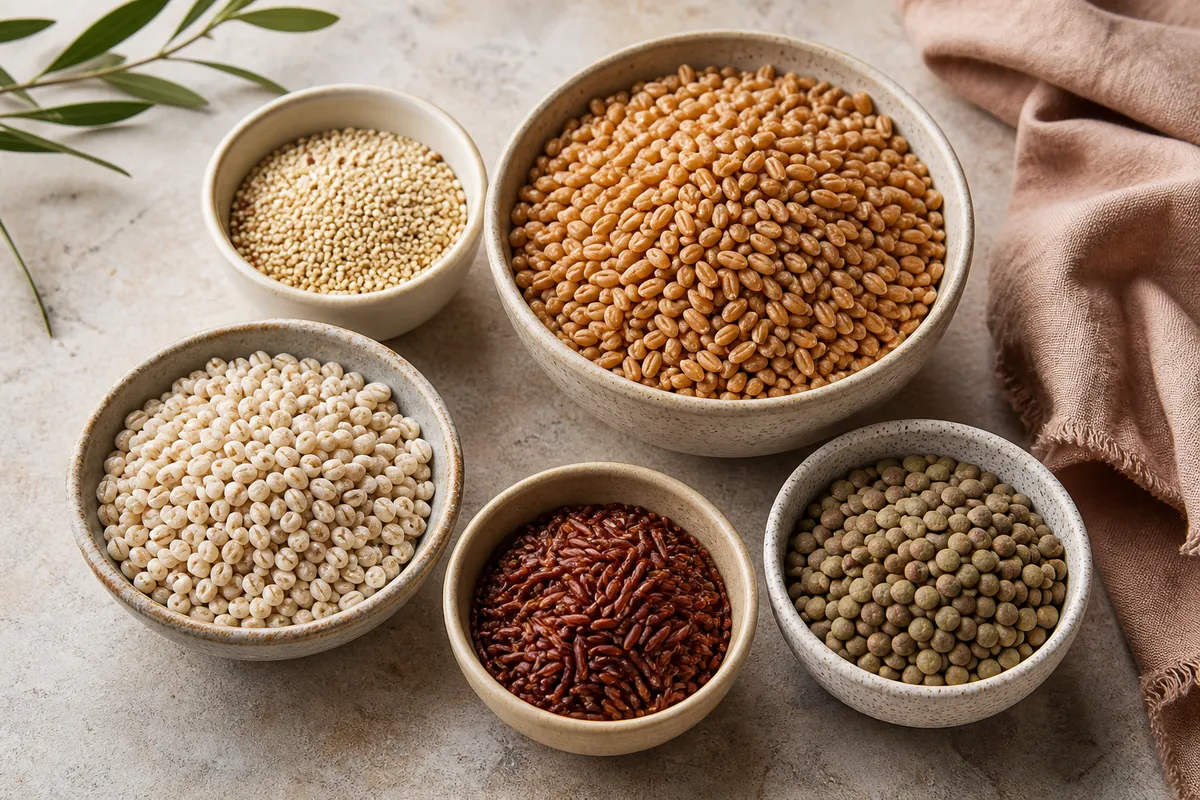
5 Best Wheat Berries Substitutes (Honest Picks)
Ingredients
Equipment
Method
- Identify your dish (salad, side, or hearty bowl) and whether you need chew that holds up after dressing.
- Start with the ratio for the substitute you chose (use the table ratios as your baseline).
- Cook to “firm-tender”: the grains should stay distinct and chewable, not blow past al dente.
- If the swap is softer than wheat berries (e.g., bulgur or rice), reduce the amount slightly and rinse/chill before mixing.
- Taste and adjust: add salt to bring out the nutty flavor, and add a crunchy component to mimic wheat-berry firmness.
Notes
- For best texture, aim for firm-tender grains that still have bite after cooling.
- If your recipe uses soaking for wheat berries, you can often skip soaking for hulled barley but not for farro/spelt.
Tried this recipe?
Let us know how it was!
Carrie is a food writer and editor with more than 15 years of experience. She has worked for some of the biggest names in the food industry, including Bon Appétit, Food & Wine, and Martha Stewart Living.
As the Editor in Chief of EpicureDelight, Carrie oversees all of the content on the site. She also manages the team of contributing writers and editors, who help to create delicious recipes, helpful tips, and informative articles that you’ll find on the site.
A native of the Chicago area, Carrie is passionate about all things food. She loves trying new restaurants and experimenting with new recipes in her kitchen. She’s also a graduate of the Culinary Institute of America, so she knows a thing or two about food!



