
Coconut vinegar has a gentleness that most vinegars don't. Its tang is soft, almost rounded, and it lets coconut milk, aromatics, and spices stay in front instead of getting buried under acid.
Finding a good coconut vinegar substitute means matching that softness first and worrying about everything else second.
The five swaps below are chosen specifically for mild acidity. Some are true 1:1 replacements.
Others need a small adjustment before they behave correctly.
Unseasoned rice vinegar is the closest match for coconut vinegar's mild tang. White wine vinegar and champagne vinegar are solid runner-ups. Apple cider vinegar works but brings fruitiness. Lime juice and diluted white vinegar are reliable emergency options with minor flavor trade-offs.
5 Best Coconut Vinegar Substitutes (Ranked by Mildness)
There's a fast-reference table below to help you pick at a glance. Each substitute is ranked by how close it stays to coconut vinegar's gentle acidity, with notes on the ratio and where it works best.
| # | Substitute | Best For | Ratio | Key Note |
|---|---|---|---|---|
| 1 | Rice Vinegar (unseasoned) | Both | 1:1 | Cleanest flavor match |
| 2 | White Wine Vinegar | Both | ¾:1 | Slightly brighter bite |
| 3 | Apple Cider Vinegar | Both | ¾:1 | Fruity-balance with spice |
| 4 | Lime Juice + Water | Dressings | 1:1 | Citrus, not vinegar |
| 5 | Champagne Vinegar | Both | 1:1 | Delicate, mild finish |
1. Rice Vinegar (Unseasoned)
Unseasoned rice vinegar is the go-to swap because the flavor profile overlaps almost exactly. It has the same clean, gentle acidity that coconut vinegar is known for, and it won't push back against coconut milk or spiced sauces.
If you're choosing a swap for everyday use, this is where most cooks land-and for good reason, since it's also widely available and inexpensive.
Use it anywhere you'd normally reach for a mild Asian vinegar as your base.
- Ratio: 1:1, no adjustment needed in most recipes
- Flavor: Mild and clean; won't compete with aromatics or coconut
- Best for sauces: Works in dipping sauces, stir-fry sauces, and cooked glazes
- Best for pickles: Quick-pickle cucumbers and carrots come out balanced, not sharp
Skip if: you need that faint, almost caramel-fruit undertone that coconut vinegar carries. Rice vinegar can read flatter in very minimalist recipes where that depth is the whole point.
2. White Wine Vinegar
White wine vinegar is a step up in brightness from coconut vinegar, but it's still a reasonable swap in most cooked applications. The slight sharpness it brings mellows after even a brief simmer, which makes it reliable for pan sauces and warm marinades.
- Ratio: Start at ¾:1, then nudge up to 1:1 if the dish needs more tang
- Taming sharpness: Simmer for 30-60 seconds, or stir in a small pinch of sugar
- Best for: Warm marinades, vinaigrettes for cooked vegetables, and braising liquids
If you're wondering about other sharp-vinegar options, the broader sharp vinegar swaps page covers several alternatives worth bookmarking.
Skip if: the dish is a very light, no-cook dressing where you want the mildest possible tang. White wine vinegar can taste noticeably brighter than coconut vinegar in raw applications.
3. Apple Cider Vinegar (ACV)
Apple cider vinegar works, but it brings its own personality. The fruitiness is pleasant in dishes that already have sweetness or warm spices, like a curry base or a spiced pickle brine.
It becomes a problem when the recipe is coconut-forward and you want the acidity to stay neutral. The fruity fermented notes of ACV can shift the whole tone of a simple dressing.
- Ratio: ¾:1, so use slightly less than the coconut vinegar called for
- Reducing fruitiness: Add a small pinch of sugar to shift the perception, or dilute with 1 teaspoon water per tablespoon
- Best for: Spiced marinades, bold sauces, pickles with chili or ginger already in the mix
Skip if: the recipe is a coconut-forward dessert or a very clean, subtle sauce. ACV's fruitiness doesn't belong there, and swapping it in will change the dish noticeably. You can also check swapping away from ACV if you need to go the other direction.
4. Lime Juice + Water
Lime juice is not vinegar, and it won't behave exactly like one. That said, it is a practical stand-in for coconut vinegar in no-cook uses, where you need brightness and tang without any cooking chemistry involved.
The acidity is real. It just comes from citric acid instead of acetic acid, so the flavor arc is different.
Vinegar Acidity
Works for: pickles, cooked reductions, long-simmered sauces
Skip if: you want zero trace of fermented flavor in a fresh salad
Citrus Acidity (Lime)
Works for: dressings, raw slaws, quick marinades under 30 minutes
Skip if: your recipe involves long cooking or a reduction
- Ratio: 1:1 fresh lime juice; add 1 teaspoon water per tablespoon if the citrus reads too bright
- Best for: Salad dressings, cold marinades, Thai-inspired dipping sauces
- Avoid: Cooked glazes and reductions where lime can turn harsh and bitter
Skip if: you need vinegar-style acidity in a cooked glaze or reduction. Lime juice sharpens under prolonged heat and can taste unpleasant in ways that coconut vinegar never would.
5. Champagne Vinegar
Champagne vinegar is the gentlest option on this list. It sits closer to coconut vinegar on the mildness scale than any other pantry vinegar, and it has a clean, rounded finish that works especially well in vinaigrettes and delicate pan sauces.
If you're working around a soft-acid recipe and want something that won't overpower it, this is the one to reach for.
Use it at a 1:1 ratio. It doesn't need dilution in most cases.
| Use | Ratio | Notes |
|---|---|---|
| Vinaigrette (2 tbsp) | 2 tablespoon champagne vinegar | Straight swap, no dilution |
| Quick pickle brine (¼ cup) | ¼ cup champagne vinegar | Mild result; add a pinch of salt to sharpen |
| Pan sauce (1 tbsp) | 1 tablespoon champagne vinegar | Deglaze, then reduce 30 sec |
Skip if: champagne vinegar isn't in your pantry and you need an emergency swap right now. In that case, move back to unseasoned rice vinegar. It's easier to find and just as forgiving.
Making Coconut Vinegar Substitutes Work
The single best habit when swapping any vinegar is to taste early. Add about three-quarters of the amount the recipe calls for, taste, then add more in small increments rather than all at once.
That approach works whether you're using a mild swap like rice vinegar or a sharper one like diluted white vinegar. For baking, acidity affects leavening, so you also want to understand the underlying flavor profile of what you're replacing before you commit.
- Adjusting sharpness: If the substitute tastes harsh, add water in 1 teaspoon increments or stir in a pinch of sugar to soften the edge
- Balancing sweetness and salt: Stronger vinegars can make a dish taste flat in other dimensions-taste for salt and sweetness after you add the substitute, not just before
- Baking vs. sauces: In baking, stay conservative and use rice vinegar or champagne vinegar; in sauces and pickles, white wine vinegar or ACV both work as long as you simmer briefly and taste as you go
For bottles that have been sitting in the pantry a while, it's worth checking how long mild vinegars keep before you substitute with an old bottle that may have lost its edge.
Frequently Asked Questions
Unseasoned rice vinegar is the closest match at a straight 1:1 ratio. It has the same mild, clean acidity and won't compete with coconut or aromatic flavors.
Use half the amount of white vinegar the recipe calls for, then add an equal amount of water. Taste and adjust from there.
Yes, but only in no-cook or short-cook applications like dressings and quick marinades. Lime juice turns harsh in long cooking or reductions.
It can, but use ¾ of the amount and expect a slight fruity note. In spiced baked goods, this is usually undetectable. In delicate coconut desserts, it may show.
Reduce the substitute by 1-2 teaspoons and add a small pinch of sugar. Simmer the sauce for 30-60 seconds to let residual sharpness mellow before tasting again.
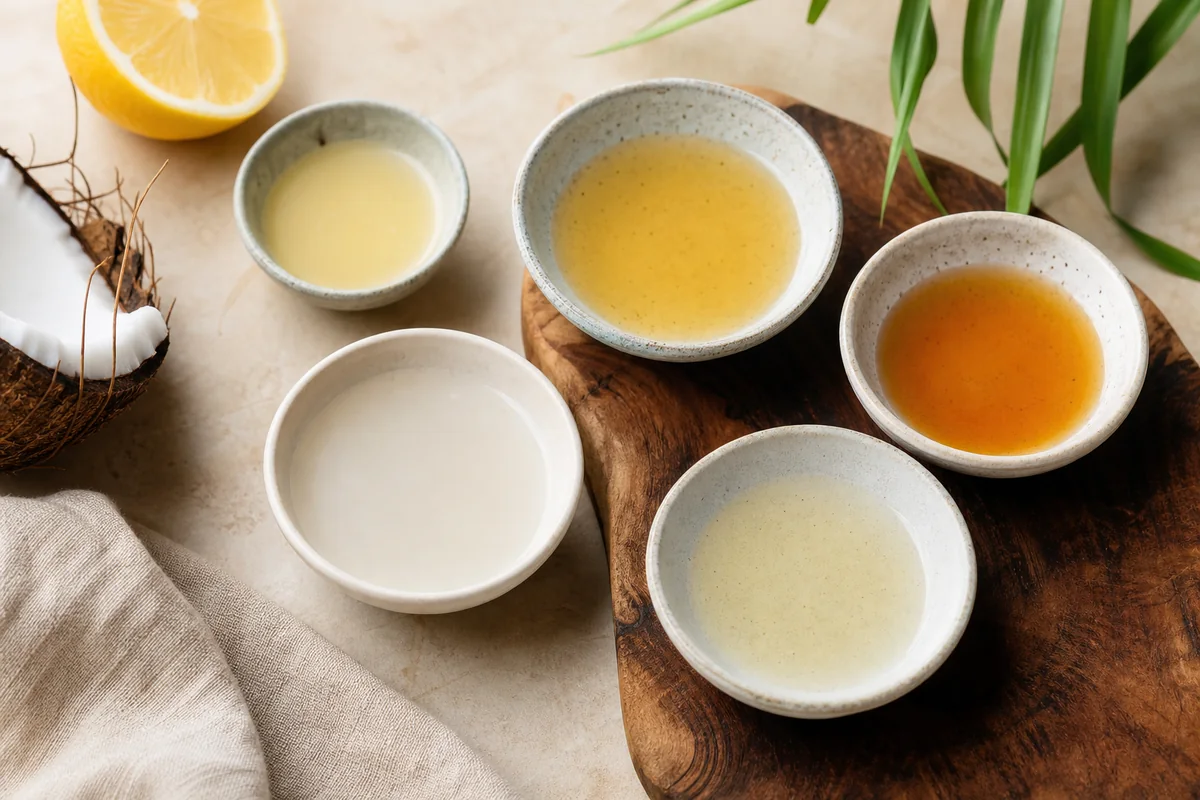
5 Best Coconut Vinegar Substitutes (Tested)
Ingredients
Equipment
Method
- Choose a substitute that matches your dish: for sauces/pickles, pick rice vinegar or white wine vinegar; for dressings, lime juice + water can work well.
- Measure using the listed ratio, then taste—especially if your substitute is stronger (white vinegar) or fruitier (ACV).
- If the substitute tastes too sharp, dilute with an equal amount of water or reduce it further and add a pinch of sugar.
- If you need more tang after tasting, add in small increments (1–2 teaspoons per ¼ cup) to avoid overshooting.
- Use immediately for no-cook dishes; for cooked sauces, simmer 30–60 seconds so the sharpness mellows.
Notes
- For baking: reduce the substitute slightly if it tastes harsher than coconut vinegar, then compensate with sweetness if needed.
- Start conservative with strong vinegars; you can always add more acidity.
Tried this recipe?
Let us know how it was!
Carrie is a food writer and editor with more than 15 years of experience. She has worked for some of the biggest names in the food industry, including Bon Appétit, Food & Wine, and Martha Stewart Living.
As the Editor in Chief of EpicureDelight, Carrie oversees all of the content on the site. She also manages the team of contributing writers and editors, who help to create delicious recipes, helpful tips, and informative articles that you’ll find on the site.
A native of the Chicago area, Carrie is passionate about all things food. She loves trying new restaurants and experimenting with new recipes in her kitchen. She’s also a graduate of the Culinary Institute of America, so she knows a thing or two about food!



