
That sharp, pale-gold spoonful does a lot of quiet work in a recipe. A dijon mustard substitute needs to replicate three things at once: a clean vinegary tang, a smooth spreadable body, and that low-burn heat that sits behind the flavor without announcing itself.
Most swaps land on one or two of those qualities, rarely all three. A small acidity or sweetness tweak almost always closes the gap.
Whole-grain mustard with a splash of white wine vinegar is the closest swap for most recipes. Yellow mustard plus vinegar works 1:1 in dressings. For emulsification, a mayo-vinegar-mustard powder blend holds sauces together well. Adjust acidity in small drops and rest the mixture 2-5 minutes before tasting.
5 Best Dijon Mustard Substitutes Ranked by Use
Every substitute below matches a different job Dijon does. Check the table first, then read the detail under each item.
| # | Substitute | Best For | Ratio | Key Note |
|---|---|---|---|---|
| 1 | Whole-grain mustard + white wine vinegar | Both | 1:1 | Add vinegar in drops |
| 2 | Yellow mustard + white wine vinegar | Both | 1:1 | Smoothest color match |
| 3 | Mustard powder paste + water + vinegar | Cooking | 1:1 | Rest 3-5 min to hydrate |
| 4 | Horseradish sauce + honey | Cooking | ¾:1 | Pungent, not mustard-like |
| 5 | Spicy mustard + vinegar | Both | ¾:1 | Use less, taste first |
1. Whole-Grain Mustard
Whole-grain mustard shares Dijon's mustard base and carries similar tang. It just has texture: those whole seeds stay visible and slightly chewy in the finished dish.
For vinaigrettes and pan sauces, that rarely matters.
If you need a smooth pourable dressing, the seeds can feel out of place. Otherwise, this is the most flavor-accurate swap available.
If you're weighing options here, picking whole-grain over others is usually the right call for sauces.
- Ratio: Use 1:1 in place of Dijon, no other changes needed as a starting point.
- Vinegar addition: Add white wine vinegar in ¼ teaspoon drops until the tang matches Dijon's edge.
- Best uses: Vinaigrettes, mustard glazes, roast chicken, grain salads.
- Sweetness tweak: A small pinch of sugar smooths any bitterness from the seeds.
Texture check: if the recipe is a creamy emulsified sauce and smoothness matters, blend the mustard briefly or strain it through a fine sieve before adding.
Skip if: your recipe needs a completely smooth, seed-free texture. Yellow mustard with vinegar is the better call there.
2. Yellow Mustard + White Wine Vinegar
Yellow mustard is milder than Dijon and slightly sweeter. The sharp fermented acidity of white wine vinegar is what closes that gap.
Together they land close to Dijon's character for most recipes.
Yellow Mustard + Vinegar
Works for: vinaigrettes, sandwich spreads, marinades, and any recipe that needs Dijon's color and body
Skip if: the recipe relies on Dijon's refined sharpness in a delicate cream sauce, where the flavor reads flat
- Ratio: Start with 1 teaspoon yellow mustard for every 1 teaspoon Dijon called for.
- Vinegar level: Add ¼ teaspoon white wine vinegar per teaspoon of mustard, tasting as you go.
- Avoid bitterness: Don't exceed ½ teaspoon vinegar per teaspoon mustard; over-acidifying tips it bitter rather than tangy.
Try swapping yellow mustard in dressings first; it blends in seamlessly and rarely alters the overall dish.
Skip if: you need Dijon's smooth, polished tang in a reduction sauce. Use mustard powder paste instead.
3. Mustard Powder Paste
Mustard powder gives you the most control. You set the sharpness by adjusting water and vinegar ratios, and the paste is completely smooth, which matters in refined sauces or emulsified dressings.
Understanding the difference between mustard flour and mustard powder helps here, since finer-ground powder hydrates more evenly.
- Mix ratio: Combine 1 teaspoon mustard powder with 1 teaspoon cold water to form a thick paste, then add 2-3 drops of white wine vinegar.
- Use ratio: Replace Dijon 1:1 once the paste is formed and rested.
- Rest time: Let the paste sit 3-5 minutes before tasting. The enzymes need time to develop and the powdery edge disappears.
- Consistency check: The paste should hold its shape on a spoon. If it runs, add a little more powder.
Skip if: you're in a rush and can't let it rest. A gritty, under-hydrated paste will stand out in a dressing. Whole-grain mustard with vinegar is faster.
4. Horseradish Sauce + Honey
Horseradish sauce brings a forward, sinus-clearing heat that approximates Dijon's kick in savory applications. The creamy pungent spread is noticeably different from mustard in base flavor, so honey is the key moderator.
For context on how the two products differ, the prepared vs. sauce comparison is worth a quick look before you reach for the jar.
- Ratio: Use ¾ teaspoon horseradish sauce for every 1 teaspoon Dijon, then taste before adding more.
- Honey balance: Add a small drop of this floral sweetener per teaspoon of horseradish to pull back harsh heat.
- Best uses: Beef roasts, steak sauces, hearty grain bowls, and robust vinaigrettes.
- Adjustment tip: If it still tastes sharp after honey, add a pinch of salt to round it further.
Skip if: the dish is light or sweet, like a honey-lemon vinaigrette. Horseradish will overpower delicate flavor profiles.
5. Spicy Mustard + Vinegar
Spicy mustards, including brown mustard and some Creole-style varieties, already have more heat than Dijon. They also tend to have a coarser texture and a more peppery finish.
The risk with a straight swap is heat overshoot.
Vinegar actually helps here, not by adding more sharpness, but by spreading the flavor so the heat reads cleaner rather than just hot. Starting under the Dijon amount gives you room to correct.
- Ratio: Start with ¾ teaspoon spicy mustard for every 1 teaspoon Dijon. Taste before adding more.
- Vinegar addition: Add ¼ teaspoon white wine vinegar per ¾ teaspoon mustard to keep tang present without amplifying heat.
- Taste-adjust workflow: Mix, rest 1-2 minutes, taste in context (on a cracker or in a small sauce spoonful). Adjust up only after tasting.
- Brand note: Heat level varies significantly by brand. A darker brown mustard runs hotter than a spicy deli variety.
Skip if: your recipe relies on Dijon for emulsification in a creamy dressing. The texture of most spicy mustards is too coarse. Use the mayo-vinegar-powder blend instead.
Making Dijon Mustard Substitutes Taste Right
No swap is a drop-in copy. You're approximating a combination of tang, mild heat, and smooth body, and each recipe weighs those qualities differently.
A vinaigrette wants tang and emulsification above all. A marinade needs heat and acid.
A cream sauce needs body and restraint. When choosing a mayo-based swap for the latter, start lean and build up slowly.
- Step 1 - Start ratio: Begin at the recommended ratio (usually 1:1) and measure carefully. Don't eyeball it, especially with horseradish or spicy mustard.
- Step 2 - Adjust acidity and sweetness: Add white wine vinegar in ¼ teaspoon increments for more tang, or a small pinch of honey or sugar if the swap tastes harsh or bitter.
- Step 3 - Rest and re-taste in the dish: Let the mixture sit 2-5 minutes, then taste it inside the actual recipe (in a small portion of the dressing or sauce) rather than on its own.
Frequently Asked Questions
Whole-grain mustard with a few drops of white wine vinegar is the best match. It emulsifies the dressing and keeps the tang close to Dijon's without changing the flavor profile noticeably.
Yes, and it works well in most recipes. Use a 1:1 ratio and add about ¼ teaspoon white wine vinegar per teaspoon of mustard to sharpen the flavor.
Mix equal parts powder and cold water into a thick paste, then add 2-3 drops of white wine vinegar. Let it rest 3-5 minutes before using so the flavor rounds out properly.
A blend of mayonnaise, a drop of white wine vinegar, and mustard powder holds emulsification well. Rest it 2-5 minutes before incorporating so it thickens and the mustard flavor blooms.
Add a small pinch of honey or sugar to pull back the heat, then re-taste. A small amount of salt also rounds harsh edges without dulling the overall flavor.
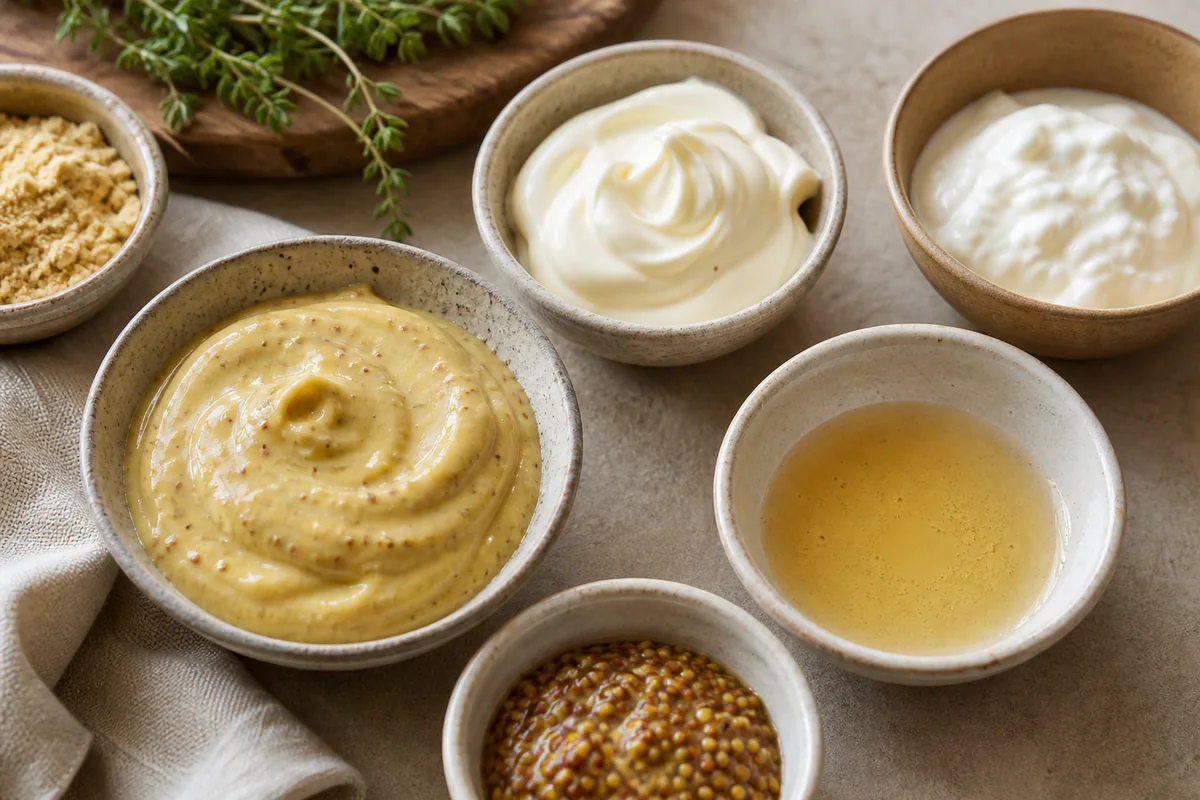
5 Best Dijon Mustard Substitutes (Tested Swaps)
Ingredients
Equipment
Method
- Decide what you need Dijon for: tang (vinaigrette/sauce), emulsifying (mayonnaise-based dressings), or mild heat (marinade/roast).
- Pick the closest match from the substitute list and start with the given ratio (usually 1:1).
- Sharpen or round the flavor: add vinegar a few drops at a time for tang, or a tiny pinch of sugar/honey to tame bitterness.
- Let the mixture sit 2–5 minutes (especially for dressings) so it emulsifies and tastes more like Dijon.
- Taste and adjust salt/acid before adding to your final sauce or dressing.
Notes
- For recipes that rely on Dijon’s emulsifying power, prioritize mustard + vinegar or mayo + vinegar + mustard powder.
- If your swap tastes too harsh, dilute slightly and add a small sweetness pinch to smooth.
Tried this recipe?
Let us know how it was!
Carrie is a food writer and editor with more than 15 years of experience. She has worked for some of the biggest names in the food industry, including Bon Appétit, Food & Wine, and Martha Stewart Living.
As the Editor in Chief of EpicureDelight, Carrie oversees all of the content on the site. She also manages the team of contributing writers and editors, who help to create delicious recipes, helpful tips, and informative articles that you’ll find on the site.
A native of the Chicago area, Carrie is passionate about all things food. She loves trying new restaurants and experimenting with new recipes in her kitchen. She’s also a graduate of the Culinary Institute of America, so she knows a thing or two about food!



