
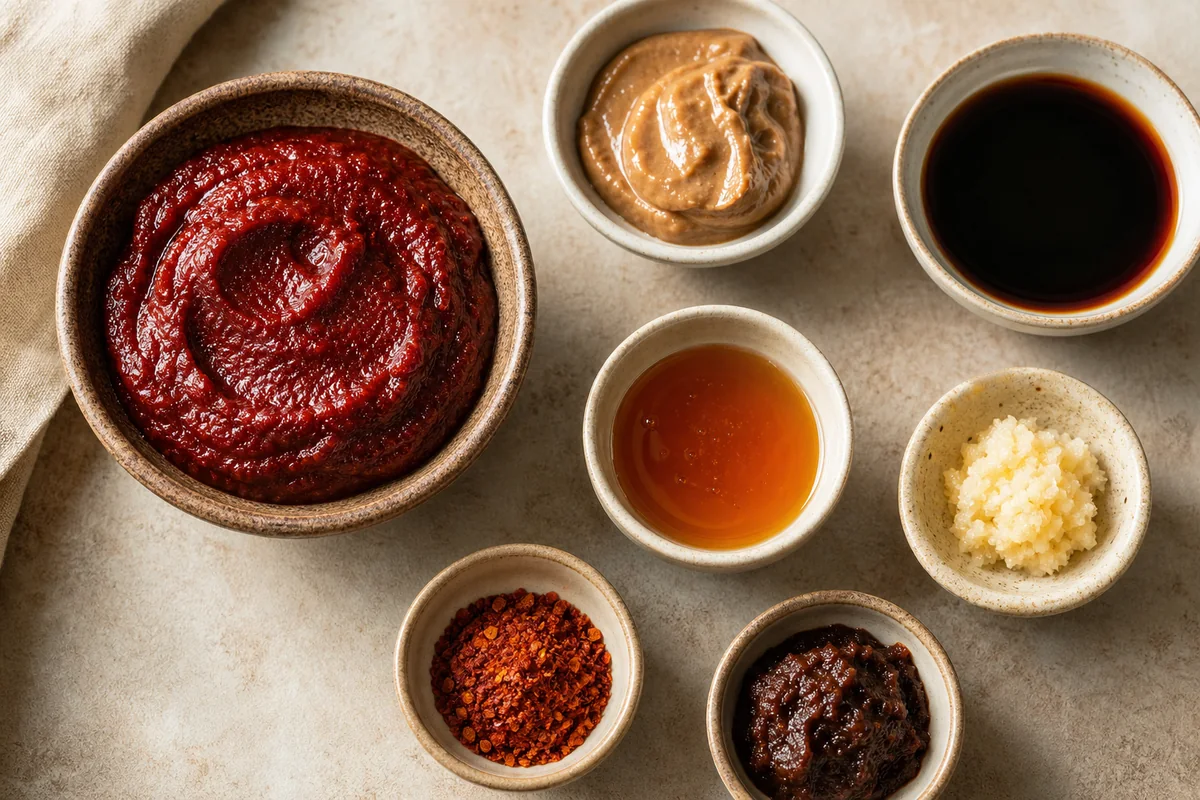
That thick, brick-red paste does a lot of heavy lifting. A good gochujang substitute has to cover at least three things at once: the mild fermented depth from soybean, the low-burn chili heat, and the rounded sweetness that keeps it from tasting raw or sharp.
Most swaps fail because they only hit one or two of those notes. The fix is usually small: a half-teaspoon of honey, a splash of soy, or a quick 60-second simmer to mellow acidity.
Knowing which adjustment to make saves the dish.
The best gochujang substitutes keep the sweet-savory-heat balance intact. Ssamjang is the closest for fermented depth. Doubanjiang with honey and miso with gochugaru are strong pantry builds. For speed, ketchup with soy and chili flakes covers glazes well.
5 Best Gochujang Substitutes Ranked by Flavor Match
The swaps below are ordered by how closely they mirror gochujang's fermented, sweet, and spicy profile. Each one needs a small adjustment to land right, so check the ratio column before adding straight from the jar.
| # | Substitute | Best For | Ratio | Key Note |
|---|---|---|---|---|
| 1 | Ssamjang (thinned) | Both | 1:1 | Add water, small sweetener |
| 2 | Doubanjiang + honey | Both | 1:1 | Sweeten to cut harsh bite |
| 3 | Miso + gochugaru + sugar | Both | 1:1 | Mix well before adding |
| 4 | Tomato paste + gochugaru + soy | Savory | 1:1 | Brief cook mellows acidity |
| 5 | Harissa + soy + maple | Both | 1:1 | Watch smoky intensity |
1. Ssamjang (Thinned)
Ssamjang is the most naturally aligned swap here. It is made from doenjang (fermented soybean paste) and gochujang itself, which means the fermented backbone is already there.
The main difference is that ssamjang is saltier and thicker, so it needs thinning before it behaves like gochujang in sauces or marinades.
Start by thinning the paste with a teaspoon of water or sesame oil per tablespoon of ssamjang. Taste it before adding sweetener.
Often just a half-teaspoon of honey is enough to restore gochujang's slightly sweet edge.
- Flavor match: High - fermented umami and chili heat are both present
- How to thin: Add 1 teaspoon water or sesame oil per 1 tablespoon ssamjang
- Best for marinades: Yes - use it 1:1 after thinning
- Best for glazes: Add ½ teaspoon honey first, then glaze as usual
Ssamjang (Thinned)
Works for: marinades, dipping sauces, stir-fry bases, bibimbap bowls
Skip if: your recipe needs a notably sweet glaze - add honey or it will taste saltier than expected
2. Doubanjiang + Honey
Doubanjiang is a fermented chili-bean paste used in Sichuan cooking. It shares gochujang's fermented soybean and chili-heat character, but the heat is sharper and the sweetness is almost zero.
Adding honey brings it closer to gochujang's profile without masking the fermented depth. If you want more context on when this paste works and when it falls short, bean-paste swap options covers the full picture.
- Ratio: 1 tablespoon doubanjiang + ½ teaspoon honey per tablespoon of gochujang needed
- Add brown sugar instead of honey for a slightly deeper, less floral sweetness
- Too thick? Stir in ½ teaspoon water to loosen before adding to the dish
- Best uses: Stir-fries, braises, noodle sauces - anywhere gochujang provides background heat
- Taste adjustment: Add sweetener a little at a time; doubanjiang bitterness fades with heat
Skip if you cannot handle strong chili-bean bitterness. Choose the miso-based blend instead.
3. Miso + Gochugaru + Brown Sugar
This is the best option when your pantry has no Korean condiments but you do have miso. Miso handles the fermented savory base that gochujang depends on.
Gochugaru adds the clean, slightly fruity chili heat. Brown sugar restores the sweetness that prevents the whole thing from tasting like straight chili paste.
The blend is looser than store-bought gochujang until you work it into a hot pan. Give it 30 seconds of heat and it tightens up nicely.
- Mix ratio: 2 teaspoon white or yellow miso + 1 teaspoon gochugaru + ½ teaspoon brown sugar
- No gochugaru? Use ½ teaspoon regular chili flakes - the Korean chili swaps page covers this in detail
- Texture tip: Stir into 1 teaspoon sesame oil first so it blends smoothly into sauces
- Best uses: Marinades, rice bowls, stir-fry glazes, soups with strong existing flavor
Skip this if you need a paste that's already thick straight from mixing. It firms up with heat, but starts loose.
4. Tomato Paste + Gochugaru + Soy Sauce
This swap is tangier than the others. Tomato paste adds body and a deep red color that visually mimics gochujang, and if you need to branch out from tomato-based swaps entirely, there are other options worth checking.
Soy sauce covers the savory gap that tomato paste alone can't fill. A half-teaspoon of sugar softens the acidity so the dish doesn't pull sour.
Cook the paste blend in a dry pan for 45-60 seconds before adding to your recipe. That brief heat mellows the raw tomato flavor and brings out a deeper, slightly caramelized note.
If you're short on soy, picking a soy replacement that still carries umami keeps this blend on track.
| Use | Ratio | Notes |
|---|---|---|
| Marinade | 1 tablespoon tomato paste + 1 teaspoon soy + ½ teaspoon gochugaru | Add ½ teaspoon sugar; marinate 10 min |
| Stir-fry glaze | Same blend above | Cook in pan 45 sec before adding protein |
| Dipping sauce | Add 1 teaspoon rice vinegar | Thin with water to a pourable consistency |
Skip this if your dish is a delicate soup or broth. Tomato tang can overpower mild bases.
Choose the miso blend instead.
5. Harissa + Soy + Maple
Harissa is a North African chili paste with real body and heat. It is not fermented the way gochujang is, but it has enough complexity from cumin, coriander, and chili to stand in.
The main adjustment is balancing its smokier, spicier edge with sweetness and umami. A teaspoon of soy sauce and a half-teaspoon of maple syrup per tablespoon of harissa gets it close.
This combination works especially well on roasted vegetables, grilled proteins, and glazes where the smoky note reads as intentional. Use it the same way you would gochujang in a glaze: brush on, roast until sticky.
If you are comparing this across a range of choosing non-Korean chili options, harissa consistently ranks well for depth. Skip it if smoky flavors are a problem for you or your dish.
Gochujang's heat is cleaner, and harissa's spice blend can shift the flavor profile noticeably.
Making Gochujang Substitutes Taste Like the Real Thing
The ratio is just a starting point. Every substitute needs at least one small corrective step before it reads like gochujang.
The flavor profile of gochugaru is a useful reference when you're calibrating heat level in any of these blends.
- Balance sweetness first: If the swap tastes sharp or salty, add honey or brown sugar in ¼ teaspoon increments before adding more liquid. Sweetness corrects faster than dilution.
- Control heat carefully: Chili pastes vary in intensity. Start with 75% of the called-for amount, then taste and add more. You can always increase heat; you can't pull it back.
- Match the texture to the use: For marinades, the substitute should coat a spoon loosely. For glazes, it should be thicker. Simmer thin blends for 60 seconds to reduce; add a few drops of water to loosen thick ones.
If the substitute still tastes flat after adjusting sweetness and heat, a few drops of rice vinegar or a pinch of garlic powder usually closes the gap.
Frequently Asked Questions
Start at 1:1, then taste. Most substitutes need a sweetness adjustment - add ½ teaspoon honey if the marinade tastes too sharp or flat before you commit to the full amount.
Miso with gochugaru and brown sugar is the most reliable option. It builds a balanced sweet-savory-heat base that holds up in a hot wok without turning bitter.
Add a small amount of honey or brown sugar and a few drops of rice vinegar. Sweetness offsets both saltiness and bitterness faster than diluting the paste with water.
Mix 1 teaspoon chili flakes, 1 teaspoon soy sauce, and ½ teaspoon honey. It lacks fermented depth but covers the sweet-heat-savory triangle well enough for glazes or quick stir-fries.
Yes, noticeably. Ketchup lacks fermented depth, so the swap works for glazes but not marinades. Cooking the ketchup-soy-chili blend briefly in a pan reduces the raw sweetness.
5 Best Gochujang Substitutes (Flavor-Matched)
Ingredients
Equipment
Method
- Pick the swap closest to your dish: want deep fermented umami (use ssamjang or doubanjiang blend); want sweet-spicy tang (use miso/chili/sugar or tomato paste blend).
- Use the 1:1 ratio as a starting point, then adjust texture: add a splash of water if too thick, or simmer briefly to thicken.
- Balance flavor in the dish: if it tastes too sharp/bitter, add a small amount of honey or brown sugar; if it’s too mild, add chili flakes (gochugaru) a pinch at a time.
- Taste and finish: for marinades, let it sit 5–10 minutes; for glazes, brush and cook until glossy.
Notes
- Best results come from matching gochujang’s three notes: fermented umami, sweet tang, and chili heat.
- If your substitute is thinner than gochujang, reduce it in a pan for 1–2 minutes before mixing into the sauce.
Tried this recipe?
Let us know how it was!
Carrie is a food writer and editor with more than 15 years of experience. She has worked for some of the biggest names in the food industry, including Bon Appétit, Food & Wine, and Martha Stewart Living.
As the Editor in Chief of EpicureDelight, Carrie oversees all of the content on the site. She also manages the team of contributing writers and editors, who help to create delicious recipes, helpful tips, and informative articles that you’ll find on the site.
A native of the Chicago area, Carrie is passionate about all things food. She loves trying new restaurants and experimenting with new recipes in her kitchen. She’s also a graduate of the Culinary Institute of America, so she knows a thing or two about food!



