
Lupin flour has a habit of doing two jobs at once: it thickens batter like a starch and adds protein like a legume. Finding the right lupin flour substitute means deciding which of those jobs matters more for your recipe.
The flour itself is high in both protein and fiber, which makes batters denser and gives baked goods a firm, sturdy crumb. Because most alternatives don't share that exact ratio, your best swap depends on whether you're after gluten-free structure, a protein lift, or just the closest browning behavior.
Most protein flours also absorb water differently, so a quick hydration check after mixing is always worth it.
One more thing before you pick: confirm the substitute is safe for your diet. Some swaps are legume-based, some are nut-based, and allergies vary.
The best lupin flour swaps are chickpea flour and soy flour for protein and structure, oat flour for a softer crumb, almond flour for fat-driven tenderness, and a tapioca blend for neutral GF texture. Match your swap to the recipe's job: structure first, or softness first.
5 Best Lupin Flour Substitutes Ranked for Baking
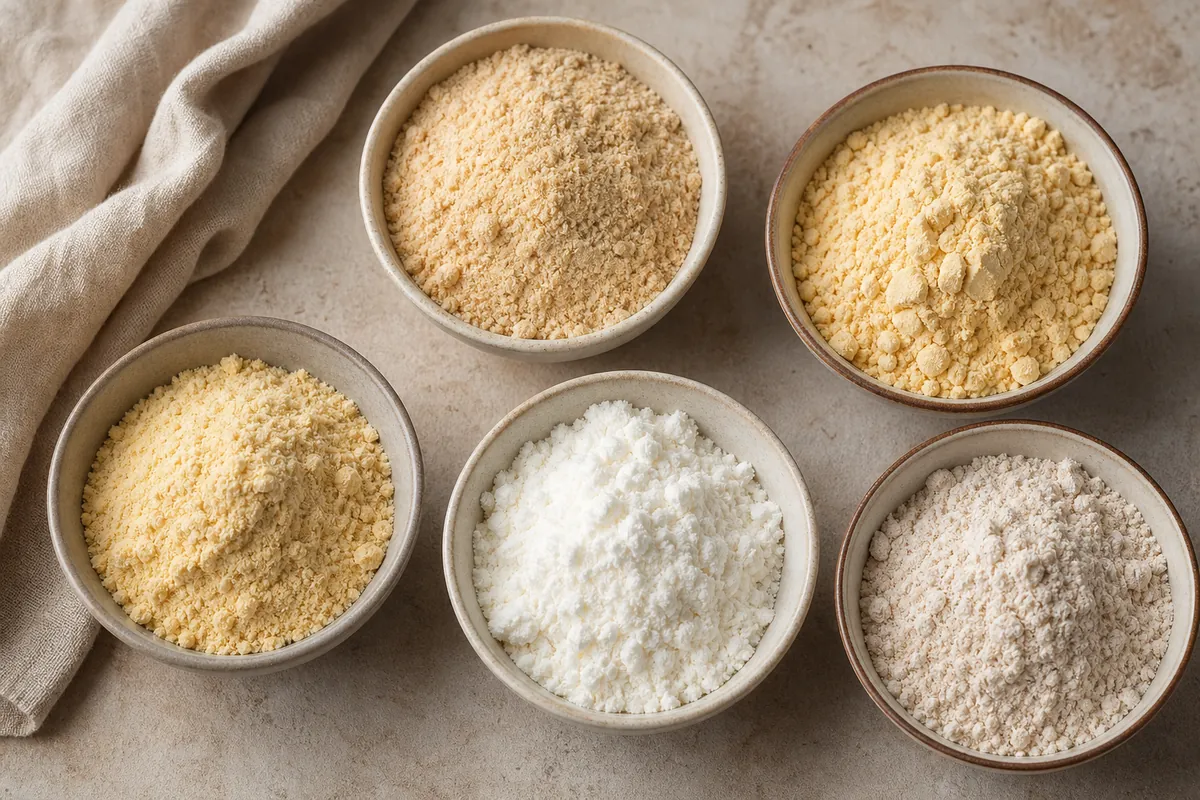
Each substitute below is matched by its best job: protein lift, GF structure, or neutral texture. Use the table to pick fast, then read the sections for adjustments.
| # | Substitute | Best For | Ratio | Key Note |
|---|---|---|---|---|
| 1 | Chickpea Flour | Both | 1:1 | Nutty; thickens well |
| 2 | Soy Flour (defatted) | Both | 1:1 | High protein; beany risk |
| 3 | Oat Flour | Both | 1:1 | Tender crumb; browns fast |
| 4 | Almond Flour | Baking | ¾:1 | Fat-rich; needs binder |
| 5 | Tapioca Starch Blend | GF Only | 1:1 | Neutral; low protein |
1. Chickpea Flour
Chickpea flour is the closest match in behavior. It thickens batter at a similar rate to lupin and binds well in dense, low-moisture recipes.
The flavor is earthy and slightly nutty, which works well in savory bakes and strongly flavored sweets like brownies or spiced bars, but can show through in pale or delicate sponges.
Use it at a 1:1 ratio by weight. After mixing, check batter thickness.
If it's too stiff, add water 1 tablespoon at a time until it loosens. For GF bakers, GF flour swap options can round out a chickpea-based blend if you need a lighter crumb.
- Flavor: Nutty and earthy, less mild than oat flour
- Texture result: Dense, firm crumb with good binding
- Best uses: Thick batters, dense cookies, brownies, gluten-free bars
Skip if: you're avoiding legumes or your recipe is very light in color and flavor, where chickpea taste will stand out.
2. Soy Flour (Defatted)
Defatted soy flour matches lupin's protein content more closely than any other common flour. It firms up batters fast and adds real structural support to cookies and dense cakes.
The tradeoff is a noticeable beany undertone that can linger in plain or lightly flavored bakes. Pairing it with cocoa, spice, or vanilla usually handles that.
Soy Flour vs. Lupin Flour
Works for: protein bars, dense cakes, spiced cookies, anything with a bold flavor base
Skip if: recipe is plain vanilla, nut-free context requires it, or you have a soy allergy
Swap at 1:1 by weight. Then rest the batter for 5 to 10 minutes.
If it thickens too much, loosen with 1 to 2 tablespoons of liquid. When deciding between this and chickpea flour, choosing between bean-based flours comes down mostly to flavor tolerance.
- Texture: Firms and thickens batter quickly; very similar to lupin
- Best uses: Cookies, protein bars, dense cakes
- Flavor tip: Add ½ teaspoon vanilla or 1 tablespoon cocoa to mute beany notes
3. Oat Flour
Oat flour is the easiest swap when you want a soft, moist result rather than a firm, dense one. It swaps 1:1 by weight and doesn't bring any legume flavor, which makes it a clean choice for sweet recipes.
The crumb comes out more tender than lupin-based bakes, and it browns a little faster in the oven.
Check batter consistency after mixing. If it thickens past what you expect, add 1 tablespoon of extra liquid per cup of batter.
That small fix keeps the texture on track. For any recipe where the dense, earthy base of lupin is part of the appeal, oat flour won't fully replicate it.
- Browning: Slightly faster than lupin; start checking 3 minutes early
- Crumb: More tender and moist, less sturdy
- Best uses: Muffins, pancakes, soft drop cookies
Skip if: oats aren't safe for your diet or you need the protein density that lupin provides.
4. Almond Flour
Almond flour works differently from lupin because fat, not fiber, drives its texture. It produces a tender, slightly moist crumb that is great for quick breads, tender cookies, and cheesecake-style bases.
Start with ¾ the weight of lupin called for in the recipe, because almond flour is denser and richer.
The buttery, mild nuttiness of almond flour is noticeable but usually pleasant in sweet bakes. If the batter feels dry at the ¾ ratio, nudge it to ⅞:1 or add 1 to 2 teaspoons of liquid.
Structure is the main gap here: without gluten or high fiber, almond flour batters can spread or crumble. Adding an extra egg or 1 teaspoon of psyllium husk helps.
- Fat behavior: Use blanched, finely ground for the smoothest result
- Dry batter fix: Increase to ⅞:1 or add liquid in small increments
- Binder tip: Add an egg or 1 teaspoon psyllium husk when structure is needed
Skip if: you have a nut allergy or your recipe needs a neutral-flavored base.
5. Tapioca Starch Blend
This is the go-to move when you need a quick, neutral GF substitute and you're not worried about matching lupin's protein. Tapioca starch alone is too sticky, so blending it with another flour gives you chew plus structure.
The ratio is simple: use the same total flour weight as lupin, split evenly.
| Use | Ratio | Notes |
|---|---|---|
| GF cookies/bars | ½ tapioca + ½ chickpea | Chewy, earthy; holds together well |
| GF muffins/pancakes | ½ tapioca + ½ oat flour | Soft crumb; neutral flavor |
| Quick GF blend | ½ tapioca + ½ GF blend | Most neutral result overall |
Rest the mixed batter for 5 minutes before baking. That short wait lets the tapioca hydrate and reduces any gritty texture.
For a deeper look at how tapioca compares to other GF binders, the tapioca versus other GF binders breakdown is worth a read before you experiment.
- Best for: GF cookies, bars, and flatbreads needing neutral flavor
- Chew level: Higher than lupin; reduce tapioca to ⅓ if you want less
- Protein note: Very low protein-this swap is texture-focused only
Skip if: you need a protein-equivalent replacement. This blend handles structure, not nutrition.
Making Lupin Flour Substitutes Work
Every flour swap behaves a little differently once liquid hits it. The key habit is to mix, then pause.
Most protein and starch flours need 5 to 10 minutes to fully hydrate before you can judge batter thickness. If you skip that rest, you may add too much liquid early and end up with a batter that spreads flat.
For whole wheat swaps, wheat-based flour options hydrate faster than most GF alternatives, so the rest time can be shorter there.
- Consistency fix: If batter is too thick after resting, add liquid 1 tablespoon at a time; if too loose, add 1 tablespoon of the same substitute flour
- Rest time: 5 minutes for starch blends, up to 10 minutes for chickpea or soy flour
- Doneness check: Start testing 2 to 4 minutes early when using oat or almond flour, both brown faster than lupin
Frequently Asked Questions
Most swaps work at 1:1 by weight, but almond flour is the exception at ¾:1. Always check batter consistency after resting 5 minutes before adjusting further.
Chickpea flour and oat flour are the strongest GF choices. The tapioca starch blend works well too, but it is texture-focused and won't replace protein content.
Both can, especially in plain or lightly flavored recipes. Adding vanilla extract or cocoa powder usually masks the beany note effectively.
Add liquid 1 tablespoon at a time after the 5-minute rest. Chickpea and soy flour absorb water quickly, so small additions go a long way.
Soy and chickpea flour come closest to lupin's protein levels. Oat and almond flour offer moderate fiber but noticeably less protein per gram than lupin.
5 Best Lupin Flour Substitutes for Any Recipe
Ingredients
Equipment
Method
- Identify your goal: structure/protein (choose soy or chickpea) or tenderness/moisture (choose oat or almond).
- Use the listed ratio, then mix and rest 5–10 minutes so the alternative hydrates and thickens like lupin.
- If the batter looks looser than expected, add 1–2 tablespoons of the same substitute flour; if too dry, add 1–2 tablespoons of liquid.
- Bake as directed, but start checking 2–4 minutes early because oat/almond can brown faster.
- Taste-test the baked crumb: if flavor is too strong/bean-like, reduce the substitute slightly next time or pair with vanilla/cocoa.
Notes
- For lupin’s bitterness: if your recipe contains sweet elements, most substitutes blend well; add 1–2 extra teaspoons sugar/honey if the swap tastes sharper.
- When substituting protein flours (soy/chickpea), expect a denser crumb than wheat.
Tried this recipe?
Let us know how it was!
Carrie is a food writer and editor with more than 15 years of experience. She has worked for some of the biggest names in the food industry, including Bon Appétit, Food & Wine, and Martha Stewart Living.
As the Editor in Chief of EpicureDelight, Carrie oversees all of the content on the site. She also manages the team of contributing writers and editors, who help to create delicious recipes, helpful tips, and informative articles that you’ll find on the site.
A native of the Chicago area, Carrie is passionate about all things food. She loves trying new restaurants and experimenting with new recipes in her kitchen. She’s also a graduate of the Culinary Institute of America, so she knows a thing or two about food!



