
Massaman curry paste has a flavor you can't easily fake: sweet, faintly smoky, warm with cinnamon and cardamom, and just mellow enough that even heat-shy eaters enjoy it. When you're mid-recipe and the jar is empty, the goal isn't to find a perfect clone.
The goal is to get close enough that your curry still tastes intentional, not improvised.
The good news is that several pastes and powder blends already share massaman's base aromatics. Most just need a small sweetness-and-tang correction to bridge the gap.
Understanding the difference between paste versus powder options helps you pick the right starting point before you even open a jar.
Massaman curry paste substitute options range from nearly identical Thai curry bases to pantry-emergency blends. Each one in this list comes with a ratio and a fast flavor-balancing step so your curry doesn't end up tasting like something else entirely.
Thai panang curry paste is the closest swap at a 1:1 ratio, thanks to its peanutty, thick, savory-sweet character. Thai red curry paste also works 1:1 but needs a little palm sugar to soften. Brighter pastes like tom yum and powder-based blends need a ¾:1 ratio plus sweetness and tang correction.
5 Best Massaman Curry Paste Substitutes (With Easy Ratios)
These five options cover the most common pantry situations, from a nearly perfect Thai paste swap to a true last-resort blend. The table below shows the ratios at a glance before you read each section in detail.
| # | Substitute | Best For | Ratio | Key Note |
|---|---|---|---|---|
| 1 | Thai Red Curry Paste | Both | 1:1 | Add palm sugar to mellow |
| 2 | Panang Curry Paste | Both | 1:1 | Peanutty; least correction needed |
| 3 | Tom Yum Curry Paste | Cooking | ¾:1 | Sweeten to cut brightness |
| 4 | Massaman Curry Powder + Oil | Cooking | 1:1 | Bloom in oil first |
| 5 | Garlic-Chili Paste + Curry Powder | Cooking | 1:1 | DIY; add tamarind and sugar |
1. Thai Red Curry Paste
Thai red curry paste is the easiest grab-and-go swap because it already carries the core Thai aromatics: galangal, lemongrass, shrimp paste, and chili. At a 1:1 ratio it gives you the right curry-base structure, though the flavor runs sharper and hotter than massaman's gentle warmth.
The fix is simple. A teaspoon of blooming the paste in oil deepens the flavor before you add liquid, and a small addition of palm sugar plus a splash of tamarind pulls the heat back into massaman territory.
Thai Red Curry Paste
Works for: Everyday massaman-style curry when you need full Thai aromatics and don't mind a touch more heat
Skip if: You need a truly mild, nutty massaman feel without any chili sharpness, even after sweetening
- Ratio: Use 1:1 to start, then taste after 5 minutes of simmering
- Bloom: Fry paste in 1-2 tablespoons of oil for 30-60 seconds over medium heat before adding coconut milk
- Sweeten: Add 1 teaspoon palm sugar per 2 tablespoons of paste to soften the sharp edges
- Tang: A small squeeze of tamarind paste (about ½ teaspoon) keeps it from tasting flat
2. Panang Curry Paste
Panang is the substitute that needs the least work. It leans thick, peanutty, and savory-sweet already, which puts it closer to massaman's character than any other Thai paste on a grocery shelf.
The panang flavor profile naturally skews nuttier and less citrus-forward, so the gap between it and massaman is narrow. Use it at 1:1, let it simmer for 5 minutes in coconut milk, and only add palm sugar if the dish still tastes sharp.
- Ratio: 1:1 with no reduction needed at the start
- Bloom: Fry in oil for 30 seconds, just as you would with massaman paste
- Taste check: Simmer 5 minutes in coconut milk before adding sweetness; panang may already be balanced enough
- Optional add: Half a teaspoon of tamarind if your dish needs a light tangy edge
Skip if your recipe relies on a bright lemongrass note. Panang skews nuttier and can mute citrus-forward aromas that some massaman recipes depend on.
3. Tom Yum Curry Paste
Tom yum paste has the Thai aromatics you want, but it leads with lemongrass and lime in a way that massaman does not. That brightness is its strength in soups and is exactly what you need to tone down here.
Before reaching for it, it helps to understand the two Thai soup base styles so you know just how tangy this paste runs. Use ¾ of the amount called for and correct aggressively with palm sugar.
- Ratio: Use ¾:1 (so if the recipe calls for 2 tablespoons, start with 1.5 tablespoons)
- Bloom: 30 seconds in oil before adding liquid; this settles some of the sharp edges
- Sweeten: Add 1-2 teaspoons palm sugar to pull back the citrus brightness
- Nutty correction: Stir in 1 teaspoon peanut butter or a pinch of toasted ground coriander to push toward massaman's warmer profile
Skip if you're sensitive to sour notes. Even with sweetening, tom yum paste can read too tangy for a mellow massaman-style curry.
4. Massaman Curry Powder + Oil
Dry powder won't behave like a paste, but it can still build a convincing massaman-style base if you treat it right. The key is that the powder needs fat and heat before any liquid goes in.
Whisk the powder into warm oil for 20-30 seconds over medium heat. That brief bloom releases the fat-soluble aromatics and removes the flat, dusty taste that dry powder often carries into a finished dish.
Massaman Curry Powder + Oil
Works for: Pantry-only situations where no paste is available and you have a massaman-labeled powder blend
Skip if: Your powder is labeled "green curry" or runs very hot, as it won't replicate massaman's sweet-savory warmth
- Ratio: 1:1 by tablespoon as a starting point; reduce slightly if the powder is very potent
- Bloom method: Add powder to 1 tablespoon of neutral oil, stir constantly for 20-30 seconds before adding coconut milk or broth
- Sweeten and salt: Add 1 teaspoon palm sugar and 1 teaspoon fish sauce (or soy sauce) per 2 tablespoons of powder to round the base
- Simmer: Give it at least 8-10 minutes in liquid; powder integrates more slowly than paste
5. Garlic-Chili Paste + Curry Powder
This is the true last-resort move, and it works better than it sounds if you build the flavor in layers. The garlic-chili paste provides body and heat; the curry powder adds the warm-spice framework that massaman relies on.
| Use | Ratio | Notes |
|---|---|---|
| Standard curry base | 1 tablespoon chili paste + 1 tablespoon curry powder | Bloom together in oil; add 1 teaspoon palm sugar |
| Larger batch (4 servings) | 2 tablespoon chili paste + 2 tablespoon curry powder | Add 1 teaspoon tamarind + 2 teaspoon palm sugar to balance |
| Mild version | ½ tablespoon chili paste + 1.5 tablespoon curry powder | Reduce heat; add extra coconut milk to soften |
When choosing which chili paste to use, picking the right heat level matters more than the brand. A mild garlic-chili paste keeps the DIY blend manageable without heavy dilution.
- Bloom: Combine chili paste and curry powder in 1 tablespoon oil; stir 30 seconds over medium heat
- Balance: Add palm sugar and tamarind early, before the coconut milk, so they have time to integrate
- Taste after simmering: Adjust with fish sauce or soy sauce if the base tastes flat or one-dimensional
Skip if you can't tolerate any chili heat. This blend runs spicy by default, and diluting it heavily enough to fix that tends to also wash out the flavor.
Making Any Massaman Curry Paste Substitute Taste Right
The three things that define massaman's flavor are warm-spice sweetness, a mellow savory depth, and just enough tang to keep it from tasting heavy. Most substitutes land short on sweetness, which is why palm sugar is almost always the first correction.
Understanding warm spice alternatives can also help you fine-tune powder-based swaps that lack massaman's cinnamon-cardamom backbone. If you're working with a powder blend, knowing the full range of swapping dry curry powders gives you more options for building that base.
- Bloom every time: Whether you're using paste or powder, fry it in 1-2 tablespoons of oil for 30-60 seconds before adding any liquid. This step is non-negotiable for aroma.
- Add sweetness and tang together: Stir in 1 teaspoon of palm sugar and ½ teaspoon of tamarind paste (or a small splash of apple cider vinegar) as soon as you add coconut milk. Adding both at the same time keeps either one from dominating.
- Simmer and taste at the 5-10 minute mark: That's when the substitute has fully hydrated and integrated. Adjust salt with fish sauce or soy sauce, and if the curry still tastes sharp, add a second small pinch of palm sugar rather than more liquid.
Frequently Asked Questions
Panang curry paste is the closest match. It shares massaman's peanutty, savory-sweet character and usually needs only a small palm sugar adjustment to land correctly.
Use 1:1 for panang or Thai red curry paste. Use ¾:1 for brighter pastes like tom yum or stronger powders like madras, then taste and adjust.
Yes. Blooming for 30-60 seconds in oil releases fat-soluble aromatics and removes the raw, flat taste that both paste and powder carry straight from the container.
Add palm sugar in small increments (½ teaspoon at a time) and more coconut milk. Simmering an extra 5 minutes after each addition smooths the sharpness without diluting the dish.
Massaman curry powder mixed with a neutral oil is the best option for baking. It distributes evenly into batters or doughs where a wet paste would add unwanted moisture.
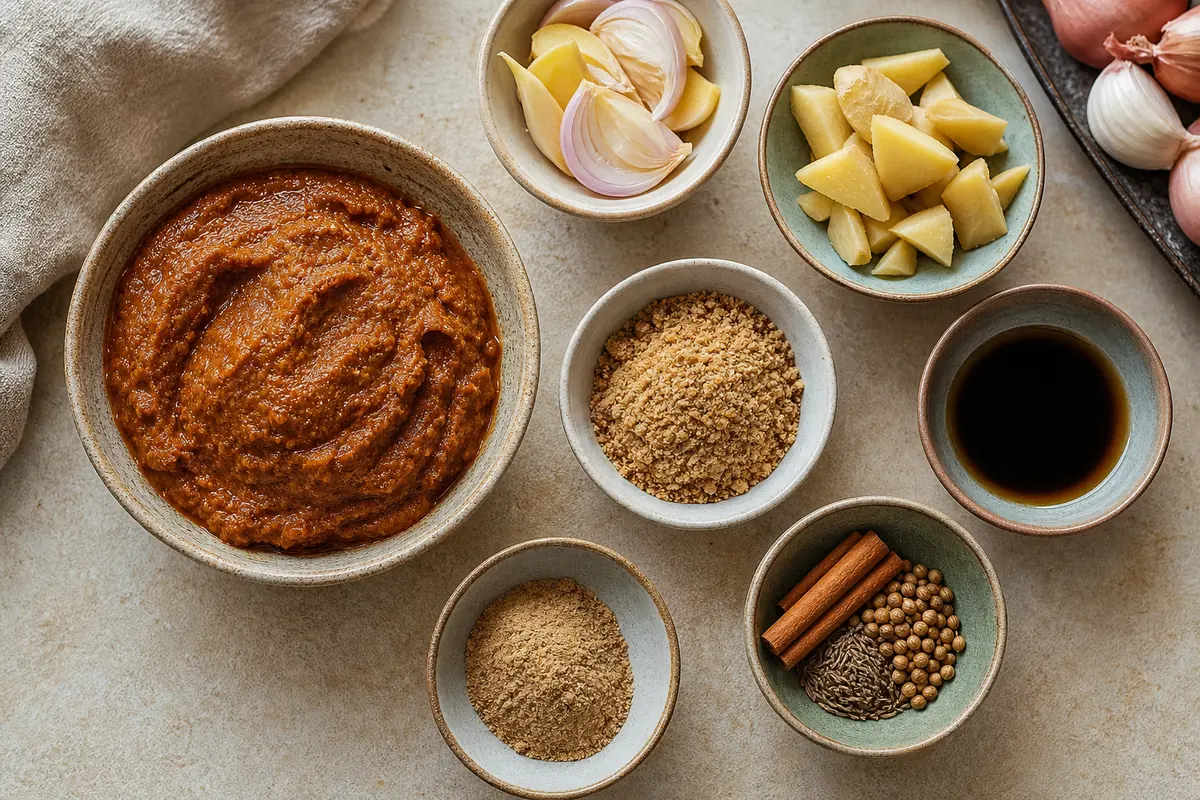
5 Best Massaman Curry Paste Substitutes for Home Cooks
Ingredients
Equipment
Method
- Choose the closest match: Thai red or panang curry paste for the most authentic curry-base feel.
- Use the ratio from the table (1:1 for best matches; ¾:1 for brighter or less massaman-like options).
- Bloom the paste in 1–2 tablespoons oil for 30–60 seconds (or stir powder into warm oil) before adding coconut milk/broth.
- Balance like massaman: add a small amount of sweetness (palm sugar) and a tangy note (tamarind or vinegar) until the curry tastes mellow, not sharp.
- Taste after simmering 5–10 minutes; adjust saltiness with fish sauce or soy sauce to land the savory-sweet profile.
Notes
- Massaman’s signature is sweet-savory depth with warm spices; if your substitute tastes too hot or tangy, correct with sweetness and salt.
- Paste substitutes generally behave better than spice powders because they already contain aromatics.
Tried this recipe?
Let us know how it was!
Carrie is a food writer and editor with more than 15 years of experience. She has worked for some of the biggest names in the food industry, including Bon Appétit, Food & Wine, and Martha Stewart Living.
As the Editor in Chief of EpicureDelight, Carrie oversees all of the content on the site. She also manages the team of contributing writers and editors, who help to create delicious recipes, helpful tips, and informative articles that you’ll find on the site.
A native of the Chicago area, Carrie is passionate about all things food. She loves trying new restaurants and experimenting with new recipes in her kitchen. She’s also a graduate of the Culinary Institute of America, so she knows a thing or two about food!



