
Sorghum flour has a quiet usefulness in gluten-free baking. It absorbs moisture steadily, gives muffins and cakes a mild whole-grain structure, and binds reasonably well without turning dense.
The problem is it behaves differently from most gluten-free flours. Choosing the right sorghum flour substitute means matching that behavior, not just swapping by volume.
The closest replacements are flours that can handle similar hydration and hold a crumb together. Some need a binder added; some need the quantity trimmed.
Below is a tested breakdown of what works and when.
Sorghum flour is moderately absorbent with decent binding and a mild flavor. The best substitutes are gluten-free all-purpose blends (1:1, closest match), brown rice flour (1:1, neutral crumb), and oat flour (¾:1, chewier). Always adjust hydration by the tablespoon and rest batter 5-10 minutes.
5 Best Sorghum Flour Substitutes Ranked by Baking Behavior
These five options cover the most common baking needs. Ratios below are starting points.
Batter feel and crumb cues matter more than exact numbers, so adjust from there.
| # | Substitute | Best For | Ratio | Key Note |
|---|---|---|---|---|
| 1 | GF All-Purpose Blend | Both | 1:1 | Closest overall match |
| 2 | Brown Rice Flour (fine) | Both | 1:1 | Neutral, add liquid if thick |
| 3 | Oat Flour (GF if needed) | Baking | ¾:1 | Chewier, reduce amount |
| 4 | Tapioca + Rice Blend | Baking | ¾+1/4:1 | Tender bakes, watch gummy |
| 5 | Teff Flour | Baking | ½:1 | Strong flavor, blend it |
1. Gluten-Free All-Purpose Blend
A good gluten-free all-purpose blend with xanthan or guar already built in is the most dependable replacement here. It matches sorghum's structure because the starch base handles crumb set and the binder handles what gluten normally would.
Many recipe developers who worry about grain-free flour swaps default to this for exactly that reason.
- Ratio: 1:1 by weight, measured on a scale for accuracy
- Hydration: If batter reads thicker than expected, add 1-2 tablespoon liquid per cup and stir before adding more
- Binder check: Confirm your blend includes xanthan or guar; without one, baked goods tend to crumble at the center
- Timing: Rest batter 5 minutes after mixing so the gums can hydrate evenly
Skip if your specific blend doesn't list xanthan or guar gum on the label and your recipe depends on binding, because results will likely crumble.
2. Brown Rice Flour (Finely Milled)
Brown rice flour is one of the most widely stocked gluten-free flours, and finely milled versions keep crumb texture close to sorghum. Coarse grinds are the main trap here.
They can leave a sandy finish that no amount of mixing will fix.
- Ratio: 1:1 by weight for cookies, muffins, and quick breads
- Hydration: Sorghum absorbs slightly more liquid, so if your batter looks tight, add 1 tablespoon at a time until consistency feels right
- Grittiness fix: Sift the flour once before measuring to break up any clumped particles
- Structure tip: For cakes, pair with ¼ teaspoon xanthan gum per cup if your recipe has no other binder
When swapping in rice flour becomes your regular habit, look for brands labeled "superfine" rather than standard grind. Skip if you only have coarse brown rice flour and no way to sift or re-grind it, because the sandy finish is hard to mask.
3. Oat Flour (Certified GF If Required)
Oat flour gives a chewier, slightly denser crumb than sorghum, which is good for cookies and hearty muffins but less ideal for delicate cakes. The key adjustment is quantity.
Using the full 1:1 amount tends to compact the batter and slow the rise.
- Ratio: Use ¾ cup oat flour for every 1 cup of sorghum flour called for
- Rest time: Mix batter, then let it sit 5-10 minutes so the oat flour fully absorbs liquid before baking
- Hydration: If batter tightens after resting, loosen it with 1 tablespoon liquid increments, not a full splash
- Label check: If the recipe is strictly gluten-free, look for certified GF oat flour to avoid cross-contamination
The shelf stability of whole-grain flours matters here too. Oat flour goes rancid faster than sorghum, so store it sealed in the freezer if you bake infrequently.
Skip if you need a very tender, feather-light crumb. Oat flour reads noticeably heavier than sorghum in that context.
4. Tapioca Starch and Rice Flour Blend
Combining tapioca starch and rice flour solves a specific problem. Sorghum has natural moisture-holding behavior that single-flour substitutes sometimes miss.
Tapioca pulls in moisture and adds tenderness; rice flour gives the structural base.
Too Much Tapioca (Over ¼ ratio)
Works for: ultra-soft cookies where dense-chew is acceptable
Skip if: your recipe already uses arrowroot or another starch
Too Little Tapioca (Under ⅛ ratio)
Works for: drier, crispier textures like shortbread or crackers
Skip if: you want moisture retention in quick breads or muffins
The target blend is ¾ rice flour to ¼ tapioca starch by total weight. Understanding starch and gum comparisons helps when deciding whether the tapioca is doing enough binding on its own.
- Blend ratio: 75g rice flour plus 25g tapioca starch to replace 100g sorghum flour
- Hydration: Start with the recipe's liquid as written; add 1 tablespoon only if dough feels crumbly
- Mixing note: Whisk the two flours together thoroughly before adding wet ingredients
Skip if your recipe already has arrowroot, cornstarch, or multiple binders, because layering starches pushes centers toward gummy.
5. Teff Flour
Teff is a whole-grain gluten-free flour with a flavor that reads earthy and faintly sweet, noticeably stronger than sorghum's mild tone. That flavor suits chocolate bakes, spiced cookies, and dense quick breads, but it can dominate vanilla or citrus recipes.
The smart approach is a partial swap. Use teff for half the sorghum weight and fill the rest with a neutral flour like finely milled brown rice.
- Ratio: ½ cup teff plus ½ cup brown rice flour to replace 1 cup sorghum flour
- Texture: Slightly denser than sorghum; if rise looks low, add ⅛ teaspoon extra leavening
- Flavor match: Best in spiced muffins, banana bread, and chocolate chip cookies where earthiness reads as depth
- Full swap caution: A 1:1 full teff swap works structurally but the flavor shift is significant
Knowing the mild, slightly grainy character of sorghum makes the teff contrast clearer when you're deciding how much to blend in. Skip if your recipe is a delicate vanilla cake or lemon loaf, because teff's earthiness tends to muddy those flavors.
Making Sorghum Flour Substitutes Work
The single most useful habit is measuring by weight instead of cups. Gluten-free flours pack and settle differently, so volume measures can be off by 15-20% from batch to batch.
A kitchen scale costs very little and eliminates the most common reason baked goods turn out dry. For standard flour storage tips, the same cool-dry-sealed rules apply to every substitute listed here.
- Ratio check first: Apply the listed ratio, mix, then assess batter thickness before adding any extra liquid
- Hydration adjustment: Add liquid 1 tablespoon at a time, stir, and rest 5 minutes before deciding if more is needed
- Crumb cues after baking: Dry or crumbly means add 1-2 tablespoon liquid next round; gummy or dense centers mean reduce starch or extend bake time by 4-5 minutes
For recipes that use a mild plant-based binder alongside the flour, guar gum is worth keeping on hand as a fallback when a premade blend isn't available.
Frequently Asked Questions
A gluten-free all-purpose blend that includes xanthan or guar gum is the closest match. It replicates sorghum's structure and binding behavior at a straight 1:1 swap by weight.
Only if your substitute flour has no binder. Plain rice or oat flour lacks binding, so add ¼ teaspoon xanthan or guar gum per cup to prevent crumbling.
Coarse-ground brown rice flour is the usual culprit. Switch to a superfine or finely milled version and sift once before measuring to reduce that texture.
Use ¾ the amount of oat flour, then rest batter 5 minutes before checking thickness. Add liquid 1 tablespoon at a time if the batter looks tighter than expected.
Yes, but blend it. Use half teff and half brown rice flour instead of a full swap. Teff's earthy flavor suits spiced or chocolate recipes better than plain or vanilla ones.
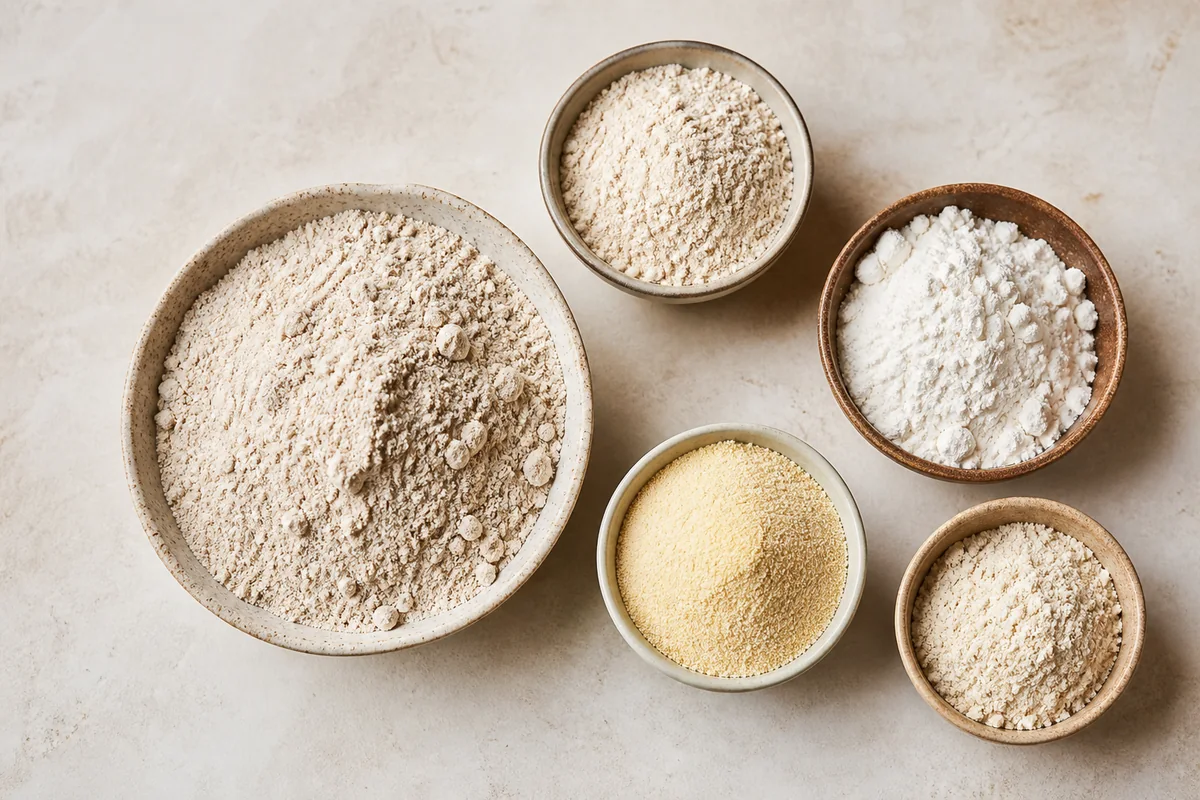
5 Best Sorghum Flour Substitutes (Tested Swaps)
Ingredients
Method
- Identify your bake type (cookies/muffins vs. quick bread vs. thick batter) and choose the substitute that matches the needed structure.
- Start with the listed ratio; if the batter/dough feels noticeably thicker than usual, add water or milk 1 tablespoon at a time.
- For grittier flours, whisk/strain the flour to break up clumps before mixing to prevent sandy texture.
- Bake as directed, then check crumb: if it’s dry or crumbly, add 1–2 tablespoon liquid next time; if gummy, reduce starch or bake a few minutes longer.
- If using binders (like xanthan/guar blends), mix thoroughly and rest batter 5–10 minutes so hydration evens out.
Notes
- Sorghum flour behaves moderately absorbent—expect to fine-tune hydration by 1–2 tablespoon per cup.
- For the closest baked texture, prioritize blends with xanthan/guar or combine rice flour with a small amount of starch.
Tried this recipe?
Let us know how it was!
Carrie is a food writer and editor with more than 15 years of experience. She has worked for some of the biggest names in the food industry, including Bon Appétit, Food & Wine, and Martha Stewart Living.
As the Editor in Chief of EpicureDelight, Carrie oversees all of the content on the site. She also manages the team of contributing writers and editors, who help to create delicious recipes, helpful tips, and informative articles that you’ll find on the site.
A native of the Chicago area, Carrie is passionate about all things food. She loves trying new restaurants and experimenting with new recipes in her kitchen. She’s also a graduate of the Culinary Institute of America, so she knows a thing or two about food!



