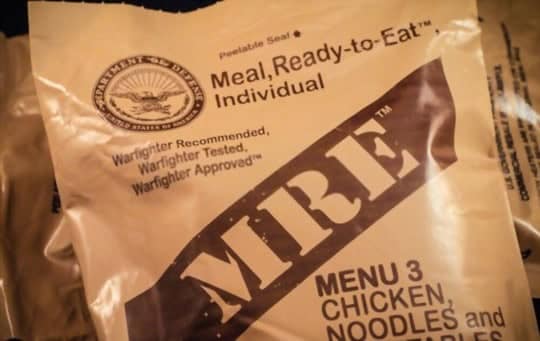
Unopened evaporated milk keeps through the printed best-by date when the can is sound and stored in a cool, dry cupboard.
After opening, transfer the milk to a covered glass or plastic container, refrigerate it at 40°F or below, and use it within about 3 to 5 days.
Discard the milk sooner if it sat at room temperature for more than 2 hours, smells sour, shows mold, or forms curds that do not blend back in.
A bulging, leaking, deeply rusted, or badly dented can should not be opened.
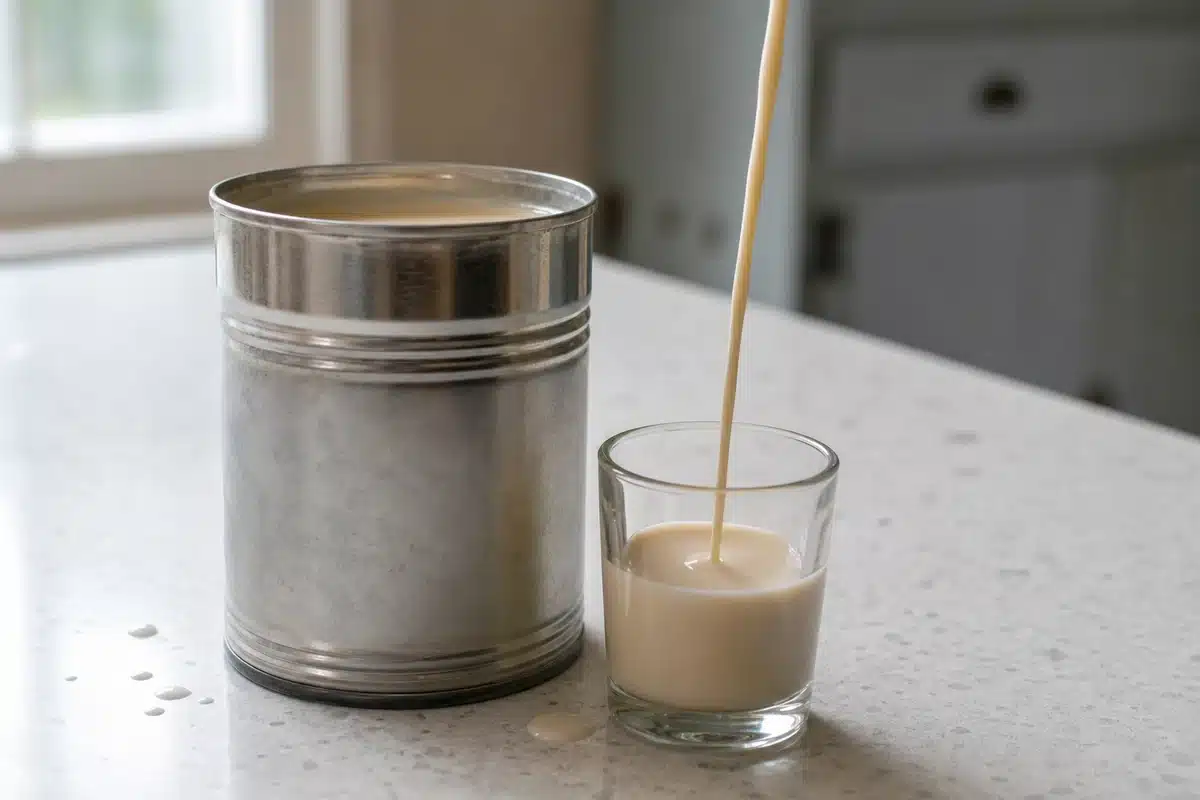
Unopened evaporated milk is shelf-stable, but opened evaporated milk belongs in the fridge and should be used within a few days. Bulging cans, sour smell, mold, or curdling override the printed date.
How Long Does Evaporated Milk Last in Each State?
| State | Storage | Practical limit | What decides |
|---|---|---|---|
| Unopened can | Cool, dry cupboard | Through the printed best-by date | Sound can and intact seal |
| Opened milk | Refrigerator at 40°F or below | About 3 to 5 days | Clean transfer and continuous chilling |
| Reconstituted milk | Refrigerator at 40°F or below | Treat like fresh milk | Label guidance and cold storage |
| Milk left out | Room temperature | 2 hours, or 1 hour above 90°F | Time outside refrigeration |
Start with the state of the milk, not the purchase date. Opening the can changes a sterile pantry product into perishable dairy.
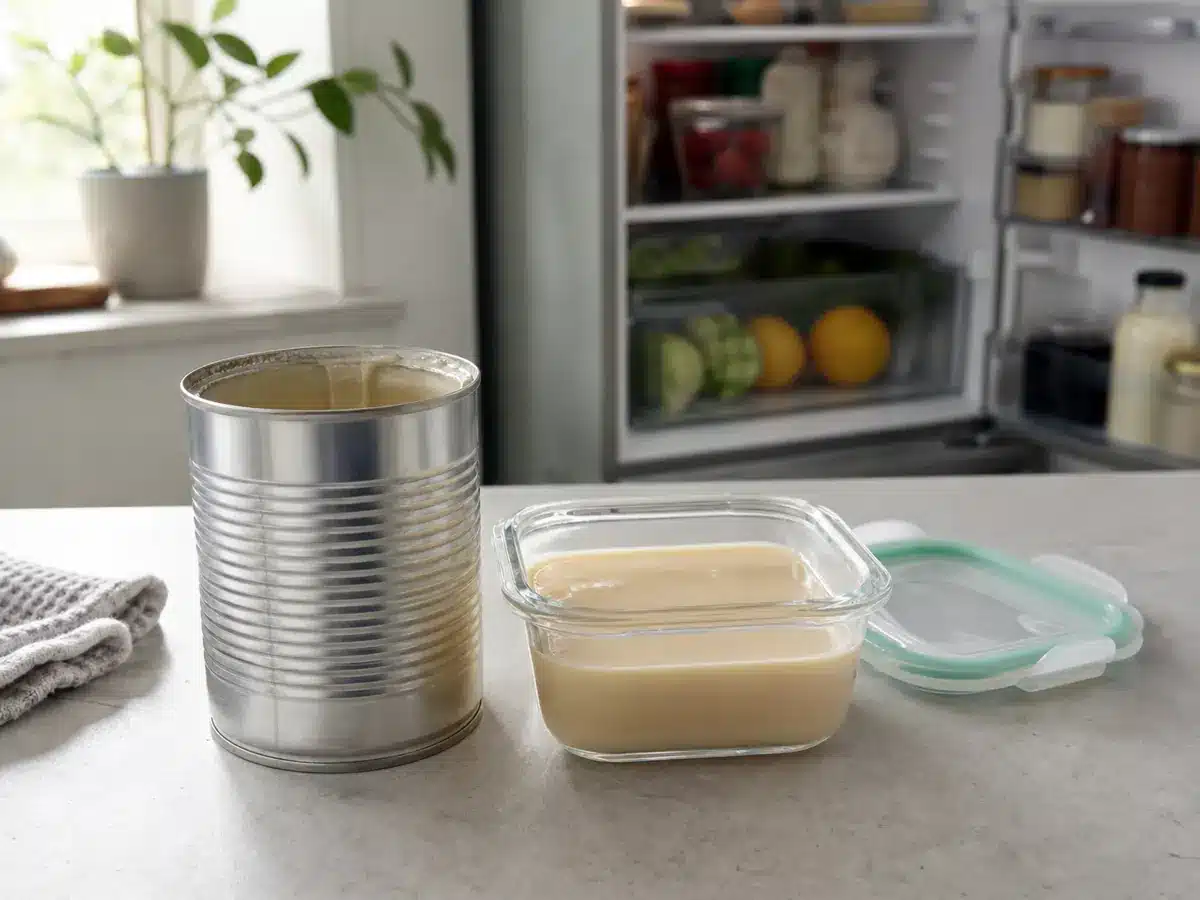
A best-by date describes expected quality in an unopened package. It does not cancel visible damage, so discard a swollen can or one leaking around the seam even when its date is months away.
A small dent on the flat side is different from a deep crease on the top, bottom, or side seam. Damage on a seam can break the seal, so do not judge that can by smell after opening.
Concentrated canned milk also differs from dry milk powder. Powder stays stable by removing far more water, so use the separate powdered milk storage clock for a dry package.
Evaporated milk is unsweetened and should not be confused with sweetened condensed milk. The sugar changes the product, so use the separate sweet canned-milk clock for that can.
Reconstituted evaporated milk has another state. When you add an equal amount of water for drinking or cereal, the milk loses its concentrated body and should be handled like regular milk.
Mix only what the meal needs, keep it cold, and follow the package directions instead of giving the diluted pitcher a fresh 3-to-5-day clock.
Why Does the Clock Change When the Can Opens?
Commercial heat processing makes the sealed can shelf-stable.
The intact seal keeps new microbes out
The protection ends once the lid is cut and air, a can opener, or a spoon can introduce new microbes.
Refrigeration slows that growth but does not restore the seal. This is why an opened can has a short refrigerator life even though the same milk sat safely in the pantry before opening.
Pour the unused portion into clean glass or food-safe plastic, cover it, and write the opening date on the lid. A shallow container also chills the milk faster than a warm can left open on the refrigerator door.
The refrigerator cannot restore the seal
Do not rely on the can's original best-by date after opening. The 3-to-5-day refrigerator clock has started, even when the milk still looks smooth on day one.
Keep the container on an interior shelf where the temperature stays steady. The door warms each time it opens, which is a poor place for a small amount of leftover dairy.
Repeatedly warming the container for coffee or cooking shortens the useful window. Measure what you need, return the rest to the cold shelf, and never pour a warmed portion back.
The open metal can is also a poor storage container because it cannot be sealed well and gives you no clean place to mark the date. Transfer does not make the milk last longer by itself.
A covered container protects the milk from refrigerator odors, spills, and utensils that may touch the exposed rim.
What Do Spoilage Signs Look and Smell Like?
Usually normal
A thin skin, slight settling, or a darker cream color can come from heating and storage. Stir once and check whether the texture becomes even.
Discard the milk
Sour or yeasty odor, mold, sliminess, or lumps that remain after stirring point to spoilage. Do not taste the milk to confirm.
Discard the can
Bulging ends, leakage, severe rust, or a deep dent on a seam can mean the package failed. Keep the can closed and throw it away.
Fresh evaporated milk smells mildly cooked and looks creamier than regular milk. That beige color comes from commercial heating and concentration, so it is not a defect by itself.
A little settling may disappear after a gentle shake, but a sour odor or stubborn curds signals a different change. Check the milk in good light before it goes into a dark sauce or batter.
Color alone needs context. Evaporated milk naturally looks beige because heat changes the milk sugars and proteins, while pink, green, or patchy discoloration is not normal.
Heat can also make good evaporated milk thicken in a sauce. Judge the milk before cooking, while it is still in a clean glass.
If smooth milk curdles only after lemon juice, tomato, or strong heat enters the pan, the recipe may have caused the change. Sour milk or fixed lumps in the storage container should still be discarded.
When the storage history is unclear, discard the milk. Cooking cannot make a questionable dairy product a sensible choice.
Can You Freeze Leftover Evaporated Milk?
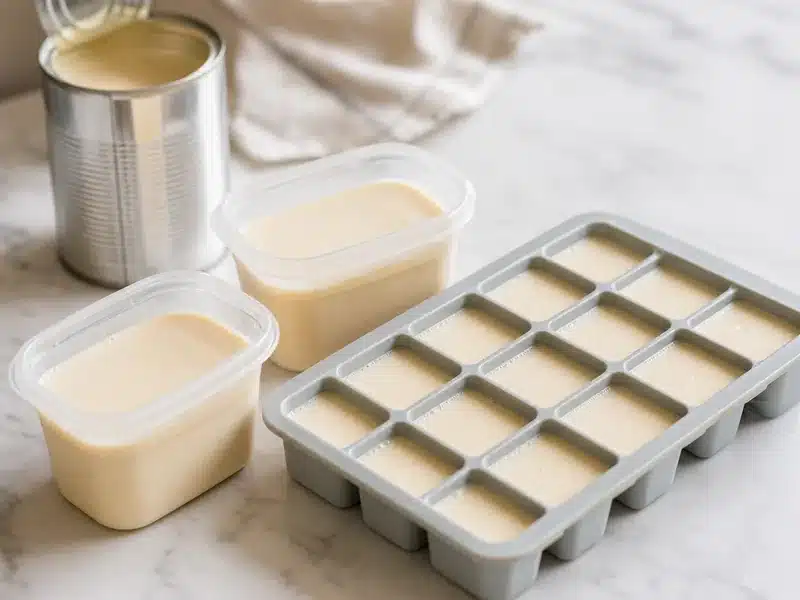
You can freeze evaporated milk, but it often separates and turns watery after thawing.
Nestlé does not recommend freezing it when the original creamy texture matters.
Measure before freezing
If waste is the alternative, freeze small measured portions in a sealed container and leave room for expansion. Thaw them in the refrigerator, then whisk before use.
Label each portion with its volume before freezing. A measured ¼ cup can go straight into a sauce plan without thawing more milk than the recipe needs.
Use thawed milk where heat can hide separation
Thawed milk works better in soup, sauce, batter, or mashed potatoes than in coffee. Heat and mixing hide some separation, while a cold drink exposes every grainy edge.
Freezing pauses the short storage plan. It does not reset milk that spent several days in the refrigerator.
Freeze a fresh leftover soon after opening.
If the milk is already on day four, plan a cooked use that day instead of moving an uncertain portion to the freezer.
What Should You Do With a Can Opened Yesterday?
An opened-yesterday can is usually still inside the refrigerator window if it was chilled promptly. Confirm the time and storage before planning a use.
- Check that the milk went into the refrigerator within 2 hours.
- Look for a covered glass or plastic container rather than an open can.
- Smell the milk and stir once to check whether minor separation disappears.
- Use a clean spoon and return the container to the refrigerator at once.
- Plan to finish it by day 3 to 5 after opening.
Choose a cooked use that needs the amount you have. If the milk has already failed a check, replace it with an option from the milk swaps instead of trying to hide the flavor.
For coffee or cereal, richer milk options preserve a lighter texture better than thawed, separated evaporated milk.
For a sauce or dessert, compare creamier backups with sweet canned-milk swaps. One replaces richness, while the other also adds sugar.
If the pantry has only dry dairy, choose from milk-powder replacements based on the recipe, then reconstitute only the amount you need.
For dairy-free cooking, soy milk alternatives bring more protein. Coconut milk alternatives better match richness but may change the flavor.
Do not pour unused milk back into a recipe can after measuring. A spoon that touched batter or soup can carry food into the clean refrigerated portion.
Plan the amount around one dish instead of saving several tiny leftovers. A half cup can enrich mashed potatoes or soup, while a few tablespoons can loosen a pan sauce.
Once the milk enters a cooked dish, store that finished food by its own ingredients and cooling time.
Broader food shelf-life rules can help when several refrigerator items lost their labels or dates. For this can, the short opened-dairy clock remains the deciding rule.
Sources
- Carnation evaporated milk frequently asked questions on refrigeration, clean transfer, and freezing quality.
- University of Kentucky recommended food storage times for opened evaporated milk.
- USDA leftovers and food safety guidance for the 2-hour room-temperature rule.
Frequently Asked Questions
The date marks peak quality rather than a universal safety cutoff. Replace the can if it is swollen, leaking, deeply rusted, badly dented, or far past the date.
Treat it like fresh milk and follow the package directions. Adding water removes the concentration advantage and does not extend refrigerator life.
Yes, if you transfer the frozen cubes to a sealed freezer container. Use them in cooked dishes where slight separation will not matter.
A covered food-safe container is the better choice. It seals cleanly, protects the milk from odors, and gives you space to write the opening date.

Carrie is a food writer and editor with more than 15 years of experience. She has worked for some of the biggest names in the food industry, including Bon Appétit, Food & Wine, and Martha Stewart Living.
As the Editor in Chief of EpicureDelight, Carrie oversees all of the content on the site. She also manages the team of contributing writers and editors, who help to create delicious recipes, helpful tips, and informative articles that you’ll find on the site.
A native of the Chicago area, Carrie is passionate about all things food. She loves trying new restaurants and experimenting with new recipes in her kitchen. She’s also a graduate of the Culinary Institute of America, so she knows a thing or two about food!