Commercial marshmallows generally keep their best quality for about 2 to 4 months in airtight storage, while the printed best-by date remains the package-specific guide.
After opening, aim to use them within about 1 month for the softest texture.
Hard or sticky marshmallows are usually stale rather than unsafe.
Discard the bag if you see mold, smell an off odor, find signs of insects, or know moisture contaminated the candy.
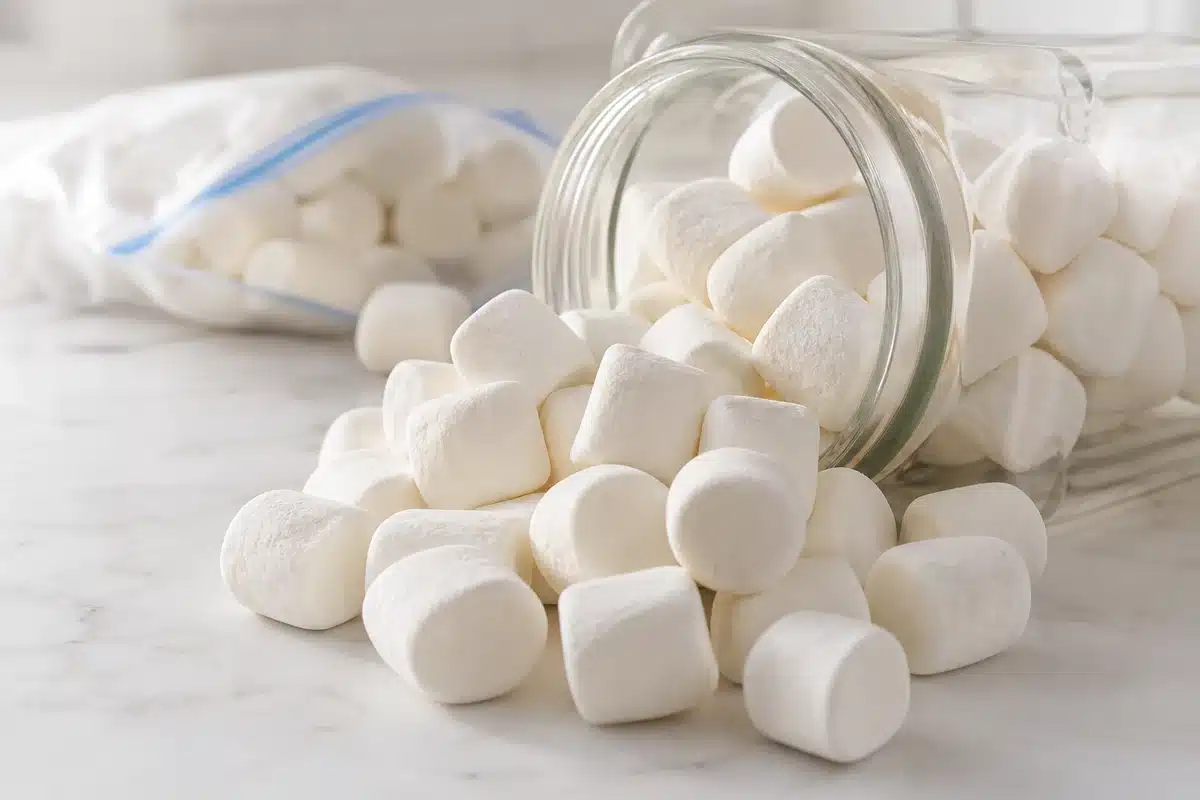
Marshmallows are still usable when they are dry, soft enough, and smell normally sweet. Stale marshmallows can still melt, but mold, wet clumps, pests, or sour odor mean the bag should be discarded.
How Long Do Marshmallows Last?
A printed best-by date is the first guide because recipes and packaging differ by brand. Extension storage charts give commercial marshmallows about 2 to 4 months at 70°F when they are kept airtight.
Opening the bag speeds texture loss because room air can move in and out.
One month is a practical target for soft marshmallows, though a well-sealed bag may stay pleasant longer.
| State | Best-quality guide | Main risk | Best action |
|---|---|---|---|
| Factory-sealed bag | Use the printed best-by date | Heat or package damage | Store cool and dry |
| Opened commercial bag | Aim for about 1 month of soft texture | Drying or humidity | Move to an airtight bag |
| General cupboard guide | About 2 to 4 months at 70°F | Quality fades over time | Check texture and package date |
| Homemade marshmallows | Follow the recipe's storage limit | More moisture and no factory seal | Use sooner than commercial candy |
Why Do Marshmallows Turn Hard or Sticky?
The 2-to-4-month range describes best quality, not a moment when every marshmallow becomes dangerous. Heat, humidity, a loose clip, and crumbs inside the bag can shorten it.
Commercial marshmallows contain a large amount of sugar and relatively little free water. That structure supports pantry storage, but the exposed surface still trades moisture with the room.
Dry air pulls water out
Mini marshmallows dry faster than large ones because more surface area meets the air.
Check an opened mini bag earlier when softness matters for topping cocoa or decorating.
Do not borrow the clock from a dry brownie mix package or from low-moisture hard candy. Marshmallows hold a soft foam, so texture changes are part of the storage decision.
Humid air dissolves the sugar surface
Moist air makes the outside tacky, then glues pieces together. A light starch coating slows contact between pieces, but it cannot remove water that has already pooled in the bag.
How Can You Tell Whether Marshmallows Have Gone Bad?
Texture changes tell you how the candy exchanged moisture with the room. They do not all carry the same risk.
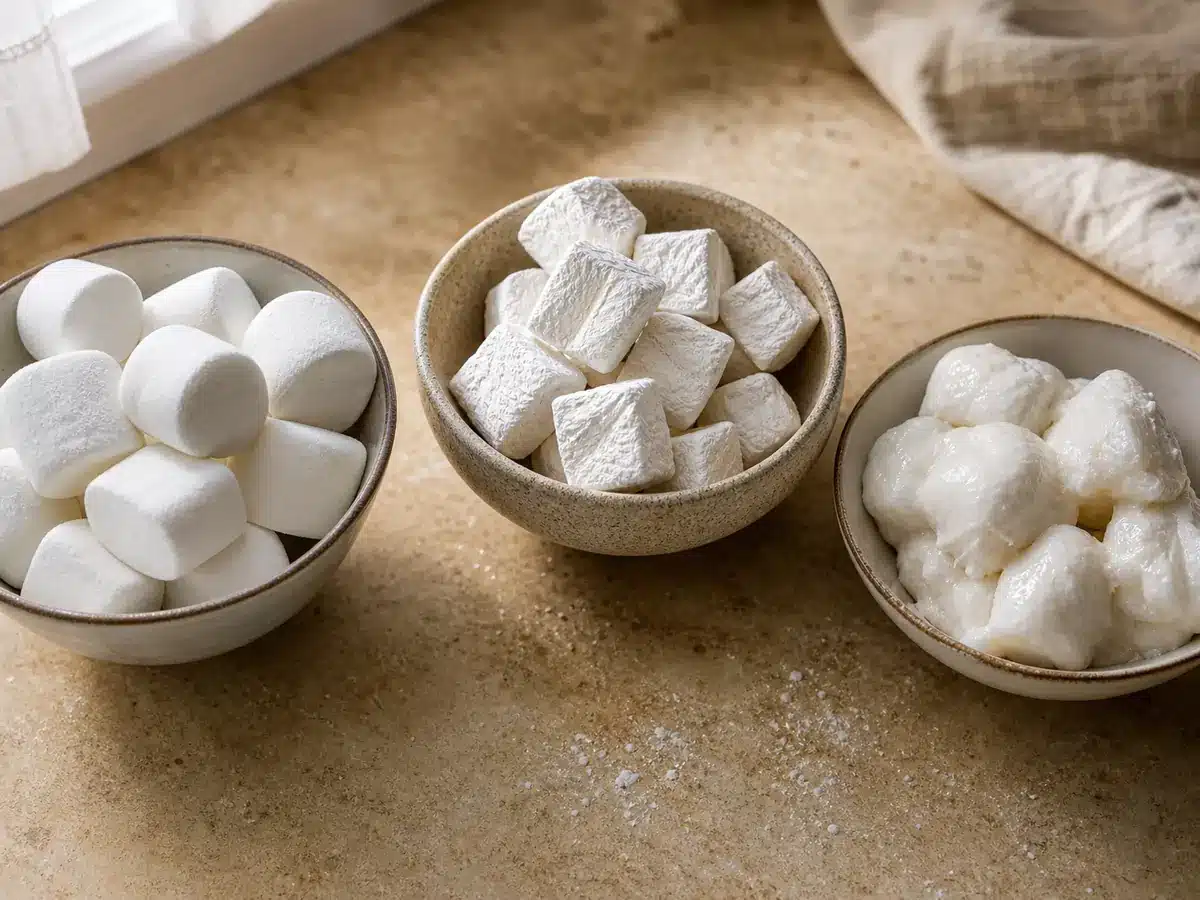
- Hard and dry means the marshmallows lost water to the air. They may be unpleasant to eat plain but can still melt if they smell normal.
- Sticky and clumped means the surface absorbed humidity. Separate clean pieces for melting, but discard the bag if liquid entered.
- Fuzzy or colored growth means discard. Do not pick out one bad piece and keep the rest.
- Insects, webbing, or droppings contaminate the exposed package even when some pieces still look clean.
- A sour or musty odor is not normal sugar aging and should end the check before tasting.
A toasted brown patch is different from storage discoloration because heat created it during cooking. Uneven color inside an untouched bag needs more caution, especially when it appears with moisture or odor.
Sticky syrup at the bottom of a bag means more water entered than a light surface tack. Discard the package when you cannot explain that liquid or when several pieces have begun breaking down.
Do not taste a marshmallow that shows a true spoilage sign. Sugar slows many changes, but it cannot make a wet or moldy package acceptable.
How Should You Store an Open Bag of Marshmallows?
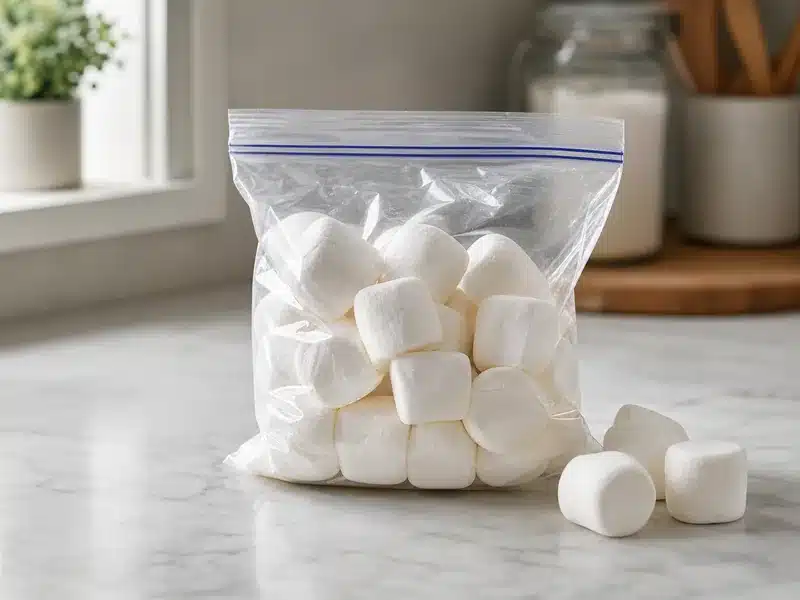
Keep opened marshmallows in a cool cupboard inside a clean airtight zipper bag or container.
Close the bag inside a second container
Remove crumbs from the opening, press out excess air without crushing the pieces, and close the seal fully. A rigid container around a torn or weak bag adds protection from pantry odors and pests.
Keep the package away from steam and heat
Choose a cabinet away from the stove, dishwasher, and direct sun. Warm air speeds moisture movement, while steam can make the sugar surface sticky in one cooking session.
Use only a light starch dusting in humid weather
If clean pieces begin sticking, dust them lightly with cornstarch or a suitable option from the cornstarch swaps, then reseal the bag after the surface dries.
Use only a small amount of starch. A heavy coating leaves a powdery taste and does not repair marshmallows that already absorbed liquid.
Keep the container free of bread slices or other homemade softening tricks. Added food brings new moisture and microbes into a candy package designed to stay dry.
The refrigerator often creates condensation when the cold bag returns to a warm room. It is useful only when a specific product or recipe requires cold storage and the package stays sealed during warming.
General food shelf-life rules help with nearby baking ingredients, but marshmallows need a moisture-focused check rather than a refrigerator clock.
How Can You Use Stale Marshmallows?
| Use | Works when | Main limit |
|---|---|---|
| Hot cocoa | Pieces are dry but clean | Very hard pieces soften slowly |
| Cereal treats | Pieces melt over low heat | Sticky pieces can scorch |
| Baked topping | Surface and odor are normal | Old pieces brown unevenly |
| Chocolate dip | Texture is the only defect | Coating does not hide spoilage |
| Eating plain | Pieces remain soft | Stale texture stays obvious |
Stale marshmallows can still work when heat will melt their structure.
Check the smell and surface first, then choose a use where softness is rebuilt instead of expected.
Hot cocoa made with fresh cocoa powder softens dry mini marshmallows on contact. Rice cereal treats melt the candy with fat, though very hard pieces need low heat and more stirring.
Chocolate sauce or fondue hides minor dryness once the candy dissolves. If the marshmallow will be coated instead, check the separate chocolate-chip storage clock before keeping the finished treat.
Sticky pieces can melt as long as they stayed clean and dry. Hard pieces may melt unevenly, so cut large marshmallows and stir before increasing the heat.
Clean, soft pieces that need to be used quickly also fit no-bake chocolate desserts better than another month in an opened bag.
Never rescue moldy candy by cooking it. If you need to finish a recipe after discarding the bag, the marshmallow swap ranks replacements by use.
Can You Freeze Marshmallows?
Freeze marshmallows only when you bought more than you can use within the quality window. Portion them into an airtight freezer bag so you can remove a small amount without thawing the whole package.
Portion before the bag freezes
Divide the candy by recipe amount and press excess air from each bag. Small portions prevent the full supply from warming every time a cup of cocoa needs a handful.
Thaw while the seal stays closed
Let the closed bag reach room temperature before opening it. The sealed thaw keeps warm, humid air from condensing on the cold sugar surface and turning the pieces sticky.
Frozen marshmallows may feel firmer after thawing, but melting uses are forgiving. Label the bag so it does not become an undated package at the back of the freezer.
How Long Do Homemade Marshmallows Last?
Homemade batches lack the factory seal and controlled coating of commercial candy. Their softness can change within days when the recipe holds more water or the kitchen is humid.
The finished texture also depends on the gelling system. Check the age and storage of the dry ingredient against gelatin shelf life, but start the marshmallow's clock after the cooked mixture sets and is cut.
Dust cut sides with the recipe's starch-and-sugar coating, then store the pieces in one shallow layer or between parchment. A clean knife and dry container reduce the crumbs and moisture that can make a fresh batch weep.
Fruit purée, jam, or a soft filling adds water and can shorten the window. Chocolate-dipped pieces also take on the storage needs of the coating, so follow the shortest clock in the finished candy.
Use the recipe's stated limit when it is shorter than general guidance. Discard a homemade batch that develops liquid, mold, pests, or an off odor even when the center still feels soft.
Sources
- University of California pantry storage chart for the 2-to-4-month quality range and airtight storage.
- Purdue Extension pantry storage chart for a 2-to-3-month quality range at 70°F.
Frequently Asked Questions
The date marks expected quality. Check the seal, storage history, texture, odor, color, and signs of pests before deciding.
A cool cupboard is usually better for commercial marshmallows. Refrigeration can create surface condensation unless the package stays tightly sealed.
Usually not. Their moisture, egg ingredients, coating, and packaging vary, so follow the recipe's storage instruction and use them sooner.
Dry but clean marshmallows can work after slow melting. Discard any bag with mold, pests, liquid contamination, or an off odor.

Carrie is a food writer and editor with more than 15 years of experience. She has worked for some of the biggest names in the food industry, including Bon Appétit, Food & Wine, and Martha Stewart Living.
As the Editor in Chief of EpicureDelight, Carrie oversees all of the content on the site. She also manages the team of contributing writers and editors, who help to create delicious recipes, helpful tips, and informative articles that you’ll find on the site.
A native of the Chicago area, Carrie is passionate about all things food. She loves trying new restaurants and experimenting with new recipes in her kitchen. She’s also a graduate of the Culinary Institute of America, so she knows a thing or two about food!