Brown sugar keeps indefinitely for safety when it stays dry and free of contamination, but it is best used within about two years for quality. Its most common problem is hardening, which means moisture escaped rather than the sugar spoiled.
Store it in a clean airtight container in a cool, dry pantry. Discard it if you find mold, insects, water damage, or an odor that came from another food or chemical.

Dry, clean brown sugar does not have a firm safety expiration. Use about two years as a quality guide, and treat hardening as a moisture problem unless other spoilage signs appear.
How Long Does Brown Sugar Last?
There is no useful single date for every bag. A factory-sealed package, a clipped paper bag, and a gasket jar face different amounts of air, humidity, odor, and pest exposure.
Utah State University Extension says commercial sugars keep indefinitely because they resist microbial growth. It also gives about two years as a best-by guide for quality rather than a sudden safety cutoff.
| State | Practical quality guide | Action |
|---|---|---|
| Factory sealed and dry | Best within about two years | Keep in a cool, dry pantry |
| Open in an airtight jar | Best within about two years | Check softness, odor, and cleanliness |
| Open in a loose bag | May harden much sooner | Move it to a sealed container |
| Hard but clean | Quality loss, not automatic spoilage | Soften or break before measuring |
| Wet, moldy, infested, or foul-smelling | Not worth saving | Discard the sugar and clean the area |
A printed best-by date helps you rotate pantry stock, but it does not make dry sugar unsafe the next day. The date matters more for soft texture, fresh molasses aroma, and predictable measuring.
Light and dark brown sugar follow the same storage rule. Dark brown sugar contains more molasses flavor, so stale odors or moisture loss may be easier to notice in its stronger aroma and stickier texture.
Plain granulated sugar stays dry rather than soft, which creates a different quality problem. See the broader sugar shelf-life guide when the package is white sugar rather than brown.
Why Does Brown Sugar Turn Hard?
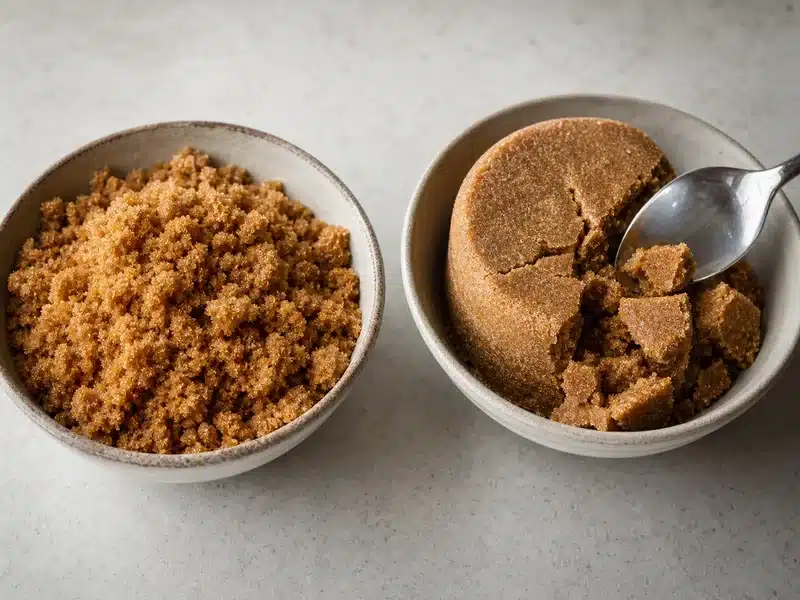
Brown sugar is made of sugar crystals coated with molasses. That coating holds moisture and makes the crystals cling, which is why a fresh handful packs into a mound.
When exposed to dry air, the molasses coating loses water and the crystals lock together. The block may feel like a brick, yet it can still smell clean and taste normal.
- Rehydrate it overnight when texture matters. Seal the block with a prepared food-safe terracotta sugar saver. A bread slice also works, but remove it once the sugar softens so it cannot crumble or mold.
- Warm only the amount you need for a quick fix. Cover it with a barely damp paper towel and microwave in short bursts. Break the clump between bursts, then stop before steam creates wet pockets.
- Crush or grate it when it will dissolve. This works in a sauce or drink, but it is less reliable in cookies because a packed-cup measure depends on even moisture and fine clumps.
Hot sugar can burn. Let a warmed portion cool enough to handle before measuring it, and never pour extra water into the whole storage container.
If you need a different sweetener instead of repairing the sugar, brown sugar substitutes explains which options replace sweetness, molasses flavor, and moisture.
How Should You Store Brown Sugar?
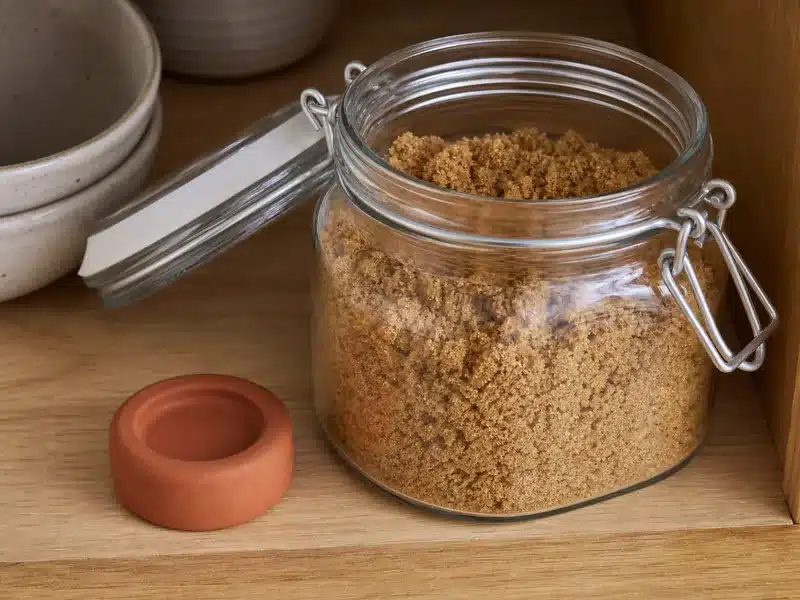
A good container must stop dry room air from taking moisture and humid air from creating wet clumps. It must also block pantry odors and insects.
- Choose a true seal such as a gasket jar or a container with a tight snap lid.
- Match the container size so little empty air remains after the sugar level drops.
- Use a dry clean scoop because water, butter, and flour crumbs introduce new problems.
- Keep it away from heat above the oven, dishwasher, or sunny window.
- Label the fill date so older sugar gets used before a new package.
Test a clamp or gasket before trusting it. Close the empty container on a strip of paper.
If the paper slides out with no resistance, the seal may not protect soft sugar well.
Do not pour a fresh bag over old sugar without checking the bottom. Hidden damp clumps or pantry pests can contaminate the new package.
Seal the sugar as soon as the bag opens. A folded paper bag or loose clip slows spills, but it does not stop moisture exchange.
Molasses gives brown sugar its flavor and much of its moisture behavior. If your separate molasses bottle runs out, our molasses substitutes guide covers recipe replacements rather than pantry storage.
Brown sugar does not need refrigeration. A pantry gives stable access without the condensation risk that appears when a cold container meets warm humid air.
Refrigerator air is also dry, so a poor seal can harden sugar faster. Strong food odors may enter a container that is not truly airtight.
Freezing can preserve a large backup supply when the container is moisture-proof, but it does not add meaningful safety to dry sugar. Leave the sealed package at room temperature before opening so condensation forms outside rather than on the crystals.
Do not open cold sugar in a humid kitchen. Let the sealed container reach room temperature first, then check that the lid and sugar remain dry.
Powdered sugar has its own clumping and odor issues because fine particles carry starch. Use the powdered sugar shelf-life guide for that package.
A clean old package may be safe, yet its moisture level can change measuring, mixing, and the finished texture. Fix the sugar before it enters the bowl.
Very dry crystals may not cling when pressed. Soften the sugar, fluff it, and then pack the measuring cup unless the recipe gives a weight.
Weighing is more repeatable than forcing hard chunks into a cup. Break all lumps before placing sugar on a scale so hidden air gaps do not affect the result.
Large hard pieces dissolve unevenly and leave sweet spots. Moisture changes can also affect how sugar mixes with butter and how the dough holds water.
Do not add random spoonfuls of water to the dough to repair dry sugar. Soften the sugar separately so the recipe's liquid balance stays controlled.
Check for odor absorption first. Clean sugar with a mild aroma can still work in a strongly flavored sauce, but delicate cookies may lose some expected depth.
A fresh package is the simplest choice when flavor matters and the old sugar has sat loosely covered for years. Safety and best baking quality are different decisions.
When Should You Throw Brown Sugar Away?
Hardness alone is not a discard sign. Throw the sugar away when something entered the package or it absorbed an unsafe or unpleasant contaminant.
Fuzzy growth or a musty wet patch means moisture reached the sugar. Do not scrape off the surface because growth can extend farther than the visible spot.
- Discard visible mold anywhere in the package.
- Discard pantry insect evidence such as live bugs, larvae, webbing, or debris.
- Discard water-damaged sugar when a leak, wet scoop, or flooded shelf caused unknown moisture exposure.
- Discard strong foreign odors from cleaners, smoke, onions, or rotten food.
Do not taste a package that already shows mold or pests. Bag an infested package before removal, clean the shelf, and inspect nearby flour, cereal, and dry goods so the next container does not face the same problem.
Sources
- Utah State University Extension, sugar storage, quality dates, and resistance to microbial growth
- Utah State University Extension, airtight storage and methods for softening brown sugar
Dry brown sugar resists microbial growth, but water, mold, pests, and foreign odors can make a package unusable. Inspect it before use.
It can be when it stayed dry, clean, and sealed. The date is mainly a quality guide, so check texture, odor, and contamination.
No. A clean hard block usually lost moisture and can be softened, grated, or dissolved depending on the recipe.
No. A cool dry pantry and an airtight container are normally better because refrigeration can add odor and condensation problems.
A bread slice can soften sugar overnight, but remove it after the sugar softens. Leaving food in the jar creates a new mold risk.

Carrie is a food writer and editor with more than 15 years of experience. She has worked for some of the biggest names in the food industry, including Bon Appétit, Food & Wine, and Martha Stewart Living.
As the Editor in Chief of EpicureDelight, Carrie oversees all of the content on the site. She also manages the team of contributing writers and editors, who help to create delicious recipes, helpful tips, and informative articles that you’ll find on the site.
A native of the Chicago area, Carrie is passionate about all things food. She loves trying new restaurants and experimenting with new recipes in her kitchen. She’s also a graduate of the Culinary Institute of America, so she knows a thing or two about food!