
The best fish sauce substitute for most recipes is soy sauce plus a little lime juice or rice vinegar. Replace 1 tablespoon fish sauce with 1 tablespoon soy sauce, then add ¼ teaspoon acid when the dish needs a sharper finish.
Choose coconut aminos for a milder fish-free option, diluted anchovy paste for the closest seafood depth, and oyster sauce only when a thicker sweeter texture fits. Every substitute below includes a starting ratio, best use, and point where it fails.

Soy sauce plus lime is the strongest all-purpose fish sauce replacement, but the dish decides the final pick. Use less of thick or sweet substitutes, dissolve anchovy paste, and check Worcestershire labels when fish avoidance matters.
What Are the 5 Best Fish Sauce Substitutes?
Use this table when the pan is already hot. The ratio is a starting point because broth, curry paste, salted stock, and serving size can change how much salt the finished dish can hold.
| # | Substitute | Start with | Best for | Main limit |
|---|---|---|---|---|
| 1 | Soy sauce plus lime | 1 tablespoon plus ¼ teaspoon acid | Stir-fries, soups, noodles, marinades | Darker and less seafood-like |
| 2 | Coconut aminos | 1 tablespoon plus 1 teaspoon | Mild fish-free sauces | Sweeter and less salty |
| 3 | Oyster sauce | ½ tablespoon, then dilute | Glazes and cooked stir-fries | Thick, sweet, and contains shellfish |
| 4 | Anchovy paste blend | ½ teaspoon paste plus 1 tablespoon liquid | Closest seafood flavor in cooked food | Easy to overpower a small batch |
| 5 | Worcestershire sauce | 2 teaspoons | Marinades, braises, meat sauces | Tangy, spiced, and often contains anchovy |
Soy-lime earns the first place because it leaves thickness under the cook's control. The other rows solve narrower needs and should not replace the default merely to create variety.
Soy sauce plus lime or rice vinegar covers the widest range of cooked dishes without forcing a thicker texture or added sweetness.
Pick a lower row only when it solves a real constraint. A fish-free bowl, glossy glaze, seafood-forward curry, or spiced meat marinade asks for a different compromise.
How Do You Match a Fish Sauce Substitute to the Dish?
Fish sauce puts four effects into a thin spoonful. It adds salt, fermented savoriness, seafood aroma, and a sharp finish that keeps sweet or rich food from tasting flat.
No substitute matches all four perfectly. Plain soy sauce misses the seafood note, coconut aminos brings sweetness, oyster sauce changes body, and anchovy paste needs liquid before it can spread evenly.
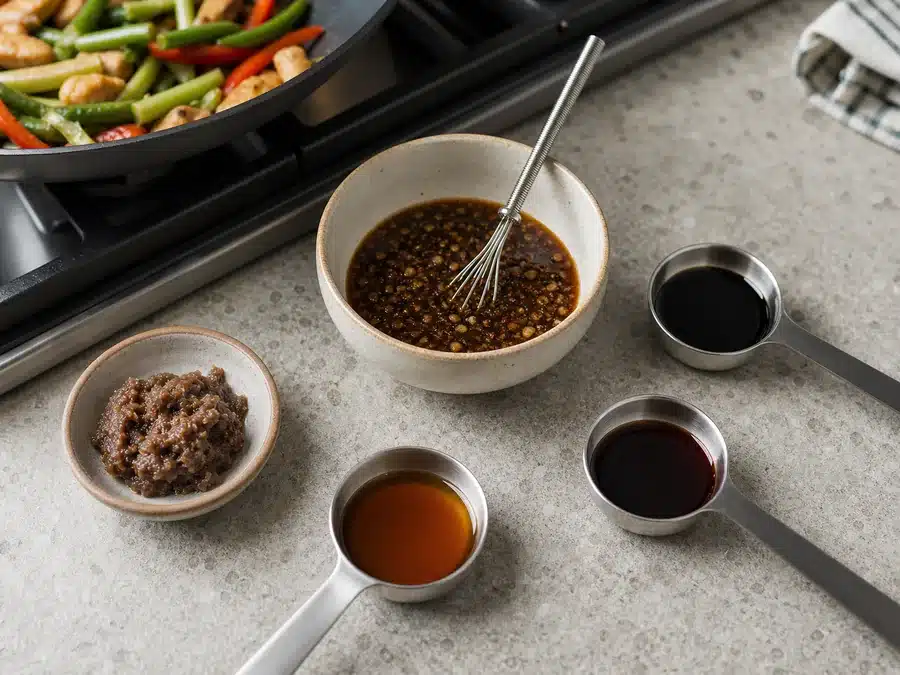
Cooked dishes hide more differences
A stir-fry, curry, stew, or marinade can absorb a darker color and let aromatics support a weaker fermented note. That makes soy sauce, oyster sauce, and Worcestershire more forgiving after heat.
If an old bottle started this search, inspect its seal, contents, and storage history first. A naturally strong aroma is not the same as mold, contamination, or a failed bottle.
Raw sauces expose every tradeoff
A clear dipping sauce reveals dark color, thick body, sweetness, and spice immediately. Mix the substitute separately with acid, sugar, garlic, and chile before adding it to the full bowl.
The tamarind, salt, and sweetness balance described in our pad Thai flavor guide shows why a substitute must work with the whole sauce rather than copy one salty note.
1. Soy Sauce Plus Lime
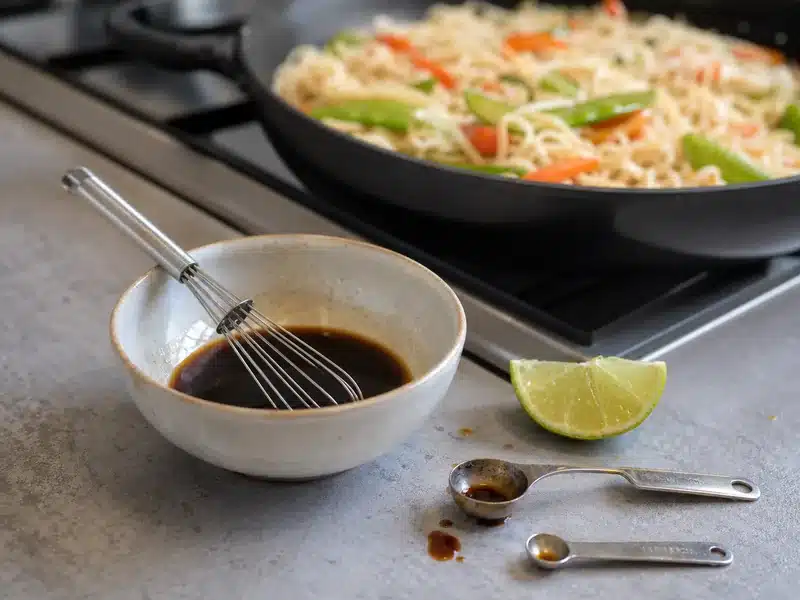
Use 1 tablespoon soy sauce plus ¼ teaspoon lime juice or rice vinegar for 1 tablespoon fish sauce. This is the best overall swap for soups, noodles, fried rice, stir-fries, and marinades.
Start with the soy sauce at a 1:1 ratio, add acid in quarter-teaspoon steps, then taste the finished dish before adding sugar or more salt.
Add the mix while the dish can spread and mellow it. For fried rice, distribute it around the hot pan rather than soaking one patch of grains.
If the replacement bottle has been open for a long time, check how soy sauce keeps to separate normal flavor fading from contamination.
A related guide to soy sauce replacements can help when soy itself is unavailable. Do not stack a second substitute without recalculating salt and liquid.
Soy sauce can brown pale broth, rice, and noodles faster than fish sauce. It also lacks the fermented seafood note, so adding more may make the dish salty without making it taste closer.
Failure point: clear raw dipping sauces where color and seafood aroma are visible. Use a lighter soy sauce, start below the full amount, and build acid before salt.
2. Coconut Aminos
A chile-lime sauce can turn noticeably sweet when coconut aminos replaces fish sauce. That sweetness is the main clue for how to use this milder fish-free option.
Start with 1 tablespoon plus 1 teaspoon coconut aminos for 1 tablespoon fish sauce. It contains less salt than many soy sauces, so the slightly larger amount covers liquid and mild savoriness.
Use coconut aminos in rice bowls, light marinades, vegetable stir-fries, and dipping sauces that already contain strong acid. It works well when fish and soy avoidance matter, provided the label fits the diner's needs.
Coconut aminos replacements show how sweetness and salinity vary when that bottle is also missing.
Add lime juice or rice vinegar first when the sauce tastes soft and sweet. Salt only after the acid is mixed through because brightness can make the existing salt easier to notice.
Failure point: assertive Thai or Vietnamese sauces that need fermented seafood aroma against chile and herbs. Coconut aminos can make those sauces pleasant, but not especially close.
3. Oyster Sauce
Oyster sauce is a thick cooked-food substitute, not a universal liquid swap. Start with ½ tablespoon oyster sauce for 1 tablespoon fish sauce, then loosen it with water, unsalted broth, or lime juice.
| Good fit | Poor fit | Reason |
|---|---|---|
| Beef or vegetable stir-fry | Clear soup | Glossy body suits the pan but clouds broth |
| Cooked glaze | Thin dipping sauce | Sweet thickness belongs in a coating |
| Rich noodle sauce | Light herb dressing | Dark color and shellfish flavor dominate fresh herbs |
Thin the oyster sauce before it enters the pan so one sticky lump does not over-season a small area. Add acid after tasting because many brands already contain sugar.
If fried rice shares the table with salty food, check the balance of the fried rice side dishes before adding the full oyster-sauce amount.
Failure point: raw, clear, or very light sauces. It also contains shellfish, so check the label and use an option from the oyster sauce alternatives when allergy or diet rules exclude it.
4. Anchovy Paste Blend
Anchovy paste mixed with liquid gets closest to the seafood flavor in fish sauce. The paste is much more concentrated and thick, so it must disappear into a measured base before use.
- Measure ½ teaspoon paste. This is enough for the starting blend.
- Add 1 tablespoon liquid. Use water or unsalted broth, or soy sauce only when the dish still needs salt.
- Whisk until smooth. Break up every visible streak before adding half of the blend to the food.
This ratio replaces about 1 tablespoon fish sauce in curry, braise, stew, fried rice, or a cooked marinade. Taste after half the blend because stock, curry paste, and salted aromatics may already carry enough seasoning.
An anchovy paste substitute can replace the paste itself, but each choice moves farther from the original seafood profile.
Failure point: a clear cold sauce where undissolved paste or a strong anchovy hit is easy to detect. Once a small dish turns too fishy, dilution is usually the only clean repair.
5. Worcestershire Sauce
Worcestershire is practical in meat marinades, braises, stews, and dark pan sauces. Use 2 teaspoons for each tablespoon of fish sauce, then taste before adding the final teaspoon.
Many traditional versions contain anchovies, so they are not fish-free. Vegan formulas exist, but their salt, sweetness, and fermented depth can differ from the standard bottle.
If the label does not fit, pick a Worcestershire replacement and recalculate the ratio from the selected product.
Vinegar, tamarind, molasses, and warm spices make Worcestershire more complex than fish sauce. Those notes suit beef and rich sauces but can pull a Thai herb dressing away from its intended flavor.
Failure point: clean dipping sauces and pale broths. Dilute with water or broth rather than adding more when the first taste is already tangy.
Three Pantry Sauces Are Pinch Options, Not Equal Swaps
Liquid aminos, Maggi seasoning, and hoisin can fill one part of the missing job. None earns a top-five place because each creates a strong new problem in common fish-sauce dishes.
Liquid aminos
Adds salt and savoriness but needs acid and still lacks seafood aroma.
Maggi seasoning
Starts stronger and darker, so use drops in soup, rice, or a meat marinade.
Hoisin sauce
Adds sweetness and body that belong in a sticky glaze, not a thin dressing.
Start below the fish sauce amount and mix through the full dish before adding more. A concentrated seasoning can overpower a small batch faster than it restores depth.
How Do You Fix a Fish Sauce Substitute?
Taste the finished mixture rather than a spoonful of substitute by itself. Rice, noodles, broth, meat, sugar, and herbs can absorb or expose different parts of the replacement.
| Symptom | First correction | Avoid |
|---|---|---|
| Too salty | Unsalted liquid or more food volume | Adding sugar before dilution |
| Too sweet | Lime juice or rice vinegar | More soy sauce immediately |
| Too flat | Acid, then a small savory addition | One large extra pour |
| Too thick | Water or unsalted broth | Extra oil that makes a greasy sauce |
| Too dark | Use less next round and restore liquid | Trying to bleach the finished dish |
Dissolved white miso alternatives can support a flat fish-free sauce when soy is allowed. Add one correction, stir thoroughly, and taste again before changing another axis.
Which Fish Sauce Substitute Fits Each Dish?
Curry, soup, and braise
Use soy-lime for the safest default or anchovy blend for the closest seafood depth. Add either early enough to spread, then finish acid near the end.
Fried rice and stir-fry
Soy-lime, coconut aminos, and diluted oyster sauce all work because heat and browning can absorb their differences. A stir-fry meal plan can also show whether the rest of the plate already carries salt or sweetness.
Marinade and meat sauce
Worcestershire suits dark meat and long cooked sauces, while oyster sauce gives a glossy coating. Reduce other sugar before adding either to a sweet marinade.
Cold dressing or dipping sauce
Use soy-lime at less than the full amount and build slowly. Raw sauces expose every change in color, thickness, spice, and seafood aroma.
The best substitute is the one whose weakness the dish can absorb. Stop adjusting when the sauce tastes balanced with the food, not when the replacement tastes identical by itself.
Yes in a savory cooked dish that already contains acid. In a dipping sauce, the missing brightness will be more obvious.
Use a label-checked fish-free option such as soy sauce or coconut aminos. Avoid oyster sauce and verify Worcestershire ingredients.
Miso adds fermented savoriness but also thickens the dish. Dissolve a small amount in water and add acid when the recipe needs a thin sharp sauce.
Soy sauce plus a small amount of lime or rice vinegar is the easiest choice. Add it around the hot pan so it spreads before soaking the rice.
You can omit a small amount, but the dish may lose salt and fermented depth. Taste the full recipe before deciding whether it needs a replacement.

Carrie is a food writer and editor with more than 15 years of experience. She has worked for some of the biggest names in the food industry, including Bon Appétit, Food & Wine, and Martha Stewart Living.
As the Editor in Chief of EpicureDelight, Carrie oversees all of the content on the site. She also manages the team of contributing writers and editors, who help to create delicious recipes, helpful tips, and informative articles that you’ll find on the site.
A native of the Chicago area, Carrie is passionate about all things food. She loves trying new restaurants and experimenting with new recipes in her kitchen. She’s also a graduate of the Culinary Institute of America, so she knows a thing or two about food!



