Firm cured shallots usually keep about one month in a cool, dry, ventilated place. A very fresh bulb may last longer in ideal cold storage, while a warm humid kitchen can cut that time sharply.
Peeled or sliced shallots need refrigeration and are best used within about seven days. Wet soft layers, mold, or a rotten sulfur smell mean the bulb has gone bad.

Whole cured shallots keep about a month when they stay cool, dark, dry, and ventilated. Peeling or cutting removes their protective skin and starts a shorter refrigerator clock.
How Long Do Shallots Last?
A good storage shallot rustles when you handle its papery skin. The bulb feels firm for its size, the neck is dry and closed, and the root plate has no damp patch.
Plan on about 30 days in ordinary home storage. Utah State University gives dry onions a similar cool-place range, while its shallot guidance stresses a fully dried skin and a cool, dry environment.
Commercial cold rooms can hold sound bulbs much longer than a household pantry. They control temperature, humidity, and airflow closely, so those long limits do not describe a basket beside a warm stove.
Shallots sold with green flexible tops have not developed the same dry protective neck. Treat those fresh shallots more like green onions and refrigerate them.
Damage at purchase also shortens the clock. A crushed side or cut root plate gives moisture and microbes a path through the dry wrapper.
- Choose bulbs that feel firm and heavy with tight dry skins.
- Skip shallots with wet necks, leaking spots, or deep bruises.
- Separate any damaged bulb so it cannot wet the rest of the basket.
- Use first a sound shallot with a torn wrapper or small dry sprout.
Do not wash whole cured shallots before storage. Water can settle beneath loose skin and turn a protective dry layer into a damp pocket.
Whole cured shallots last longest in a cool, dry, ventilated place. Heat, trapped moisture, and poor airflow shorten that clock.
Shallots continue to breathe after harvest. An open basket, mesh bag, or slatted crate lets that moisture leave instead of collecting around the necks.
Choose a dark shelf away from the oven, dishwasher, boiler, and direct sun. A temperature near 50°F to 60°F is better than a hot countertop, though many homes cannot hold that range year-round.
Spread the bulbs in a shallow layer when possible. A deep pile hides a leaking shallot and limits air around the bulbs at the bottom.
Never seal whole shallots in an unvented plastic bag. Trapped humidity encourages rooting, mold, and soft neck rot.
Above the range of a cool pantry, shallots lose water faster and leave dormancy sooner. Check them weekly for softness and move the sound bulbs into meals before sprouting spreads.
Keep them away from potatoes. Both foods release moisture, and the closed cabinet that seems tidy can become too humid for either one.
The refrigerator is useful during hot humid weather, but the bulbs still need dry airflow. Put them in a paper or mesh bag rather than a sealed produce drawer bag.
Expect the skins to feel drier and the odor to reach nearby food. Keep shallots away from uncovered butter, fruit, and leftovers that absorb allium aromas.
A refrigerator drawer used for damp leafy greens is a poor match. Use a drier area and inspect the bag for condensation.
When Should You Throw Shallots Away?
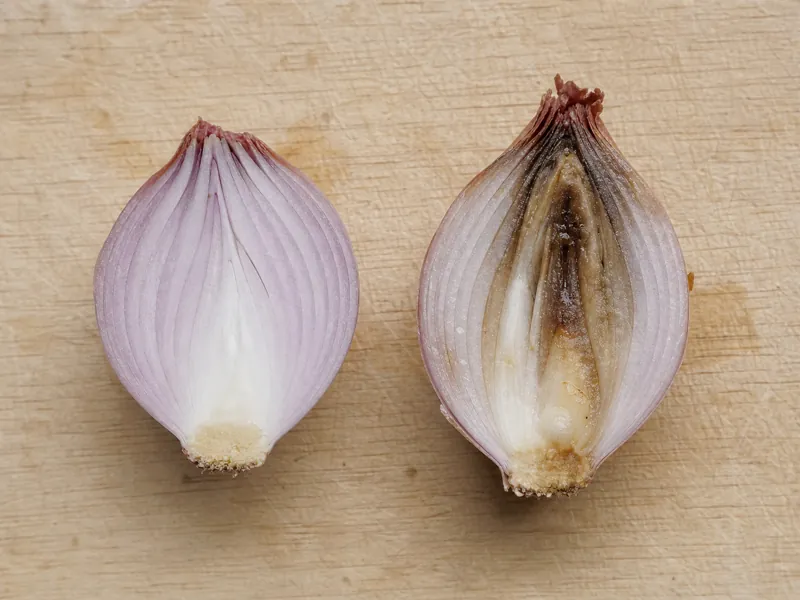
A shallot can look acceptable from one side while decay moves down from the neck. Squeeze gently near both ends before peeling, then inspect the first clean layer.
Sound flesh feels crisp and looks white to pale purple. A watery brown channel, slippery layer, or hollow soft center shows breakdown beneath the wrapper.
- Keep a dry firm bulb after peeling away loose skin and checking the center.
- Use a firm sprouted shallot soon after removing the green shoot.
- Discard a wet or collapsed bulb with slime, root-plate mold, leaking liquid, or a rotten odor.
Do not trim around a deep wet rot and use the remaining rings raw. Moist layered bulbs can hide damage beyond the visible brown area.
A sharp onion smell is normal after cutting. A sour, fermented, or garbage-like sulfur odor is not the clean tear-producing aroma of a sound shallot.
Powdery black or green growth around the root plate is mold. Discard that shallot and inspect every bulb that touched it.
Dry flakes in the basket are normal. Sticky skins or a wet stain under the basket point to a leaking bulb that needs immediate removal.
How Long Do Peeled or Cut Shallots Last?
Cutting a shallot opens moist cells and releases sulfur compounds. The exposed surface dries, absorbs odors, and gives microbes easier access than the intact papery skin did.
Put peeled, sliced, or chopped shallots into a clean airtight container. Use raw cut shallots within about seven days, and discard them sooner if they become slimy or smell rotten.
A sealed container keeps the cut face from drying into a tough skin. It also keeps shallot odor from spreading through cheese, milk, and other uncovered food.
| State | Useful window | Handling cue |
|---|---|---|
| Peeled whole | Up to about 7 days | Seal dry in a clean container |
| Sliced or chopped | Up to about 7 days | Keep cold and use earlier for raw dishes |
| Cooked shallots | 3 to 4 days | Cool promptly in a shallow container |
| Frozen chopped | Best quality for several months | Use directly in cooked food |
Label the container with the cutting date. A forgotten chopped shallot can remain pungent even after its texture has turned soft, so smell alone does not set the clock.
Cooked shallots follow the short rule for refrigerated leftovers. Chill the dish within two hours, or within one hour when the room is above 90°F.
Do not return shallots from a serving bowl to the clean storage container. Contact with hands, raw meat juices, or a used utensil can change the safety decision.
Can You Eat Sprouted Shallots?
A green shoot means the bulb has left dormancy and started using its stored sugars. The shallot may taste sharper, feel less juicy, and soften sooner.
Peel the bulb and cut it lengthwise through the shoot. Remove a thick green center when its flavor seems bitter, then use the firm outer layers in a cooked dish.
Plan to use nearby bulbs soon because they shared the same warm or humid conditions. Improve the airflow rather than moving one sprouted shallot into a sealed box.
A soft neck, leaking base, or slimy center changes the decision. The new growth does not make the damaged bulb sound again.
Long roots paired with wet papery skin also show too much moisture. Inspect the root plate for mold before deciding whether any bulb remains usable.
Do not confuse a dry green shoot with surface mold. A shoot has plant structure and grows from the center, while mold forms fuzzy or powdery patches on damaged tissue.
Can You Freeze Shallots?
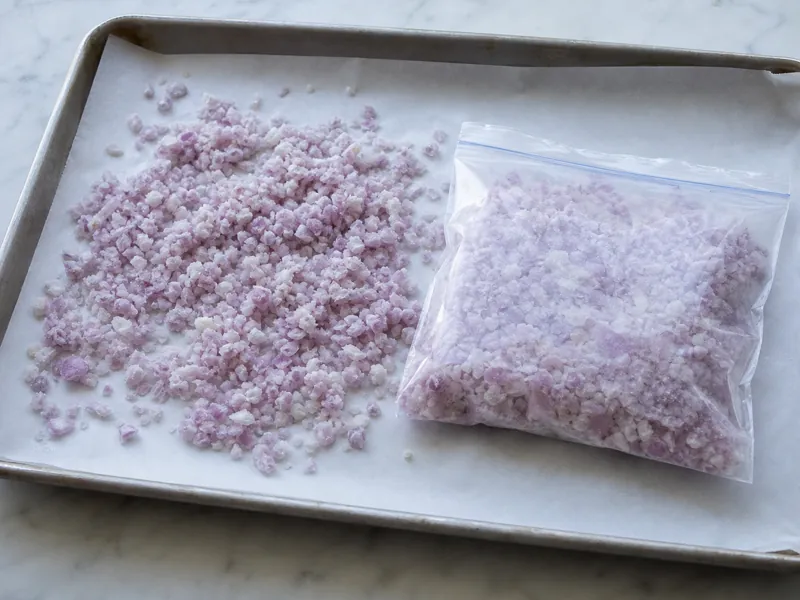
Freezing breaks the crisp layers, so thawed shallots become soft and watery. That change matters in a raw salad but disappears more easily in soup, sauce, stuffing, or a sauteed base.
Freeze only firm clean bulbs. A shallot with mold, slime, or wet rot should be discarded rather than preserved.
- Peel and inspect. Remove dry skins and reject any damaged inner layer.
- Chop for the future dish. Small pieces can go straight into a hot pan.
- Dry the cut surface. Loose water joins the pieces into a block.
- Freeze in one layer. A short tray freeze keeps the portions separate.
- Bag in meal-size amounts. Press out extra air and return the bag to the freezer.
Cook the shallots from frozen when a little extra water will steam away. For a dry topping or raw garnish, use a fresh bulb instead.
Portioning prevents repeated thawing. Each trip through a warm kitchen adds condensation and weakens the remaining pieces.
Red onions can provide a similar allium bite when the freezer is empty, but their larger pieces and stronger color change delicate sauces. Scallions work better when the dish needs a fresh green finish.
Sources
- Utah State University Extension, shallot harvest and dry storage guidance
- Utah State University Extension, onion selection and cut-storage guidance
- University of Minnesota Extension, home vegetable storage conditions
- FoodSafety.gov, refrigeration and two-hour produce handling guidance
Only when the jar has wide openings or a ventilated lid. A closed jar traps the moisture that a dry bulb needs to release.
Sprouting can consume the center and leave dry hollow layers. Use the remaining firm flesh only when it smells clean and has no wet rot.
No, water dilutes flavor and creates a wet storage surface. Keep peeled bulbs dry in a sealed refrigerator container.
Yes, both prefer dry ventilation when they are whole and cured. Leave enough space to spot a leaking bulb before it wets the garlic.
Pickle only firm sound shallots from a tested method. Acid does not make a moldy, slimy, or rotten bulb safe to keep.

Carrie is a food writer and editor with more than 15 years of experience. She has worked for some of the biggest names in the food industry, including Bon Appétit, Food & Wine, and Martha Stewart Living.
As the Editor in Chief of EpicureDelight, Carrie oversees all of the content on the site. She also manages the team of contributing writers and editors, who help to create delicious recipes, helpful tips, and informative articles that you’ll find on the site.
A native of the Chicago area, Carrie is passionate about all things food. She loves trying new restaurants and experimenting with new recipes in her kitchen. She’s also a graduate of the Culinary Institute of America, so she knows a thing or two about food!