
That purple-edged bite in a Greek salad or taco topping? It comes from red onion.
When you're out of it, the right red onion substitute depends on one thing first: is your dish raw or cooked?
Raw dishes need a swap with similar pungency and some color presence. Cooked dishes are more forgiving because heat softens every allium's sharp edge and brings out sweetness fast.
For raw dishes, yellow onion or shallot are the closest swaps. For cooked dishes, white onion or leek work well. Scallions cover fresh, light toppings. Soak sharp onions in cold water for 10 minutes to reduce bite, and add a small acid boost to brighten without red color.
5 Best Red Onion Swaps (for Salads, Cooking, and Baking)
The table below covers all five substitutes with ratios and primary uses. Pick the row that fits your dish, then read the full section for cut tips and timing.
| # | Substitute | Best For | Ratio | Key Note |
|---|---|---|---|---|
| 1 | Yellow Onion | Both | 1:1 | Closest overall flavor |
| 2 | Shallot | Both | ¾:1 | Milder, sweeter bite |
| 3 | White Onion | Cooked | 1:1 | Soak first if raw |
| 4 | Scallions | Raw | 1:1 | Light fresh crunch |
| 5 | Leek | Cooked | 1:1 | Best caramelized |
Knowing how long this purple allium lasts can also help you plan-sometimes you have half a bulb that still works fine. And if you're completely without any fresh onion, dried flake alternatives are worth knowing about too.
1. Yellow Onion
Yellow onion is the first place to look. The flavor profile is close enough to red onion that most cooked dishes won't notice the difference at all.
For raw use, slice it thin and soak in cold water for about 10 minutes. That step pulls out a good bit of the sharpness without stripping all the onion character.
If you're choosing a milder yellow variety, Vidalia or sweet onions come even closer to red onion's gentler edge.
- Best dishes: Stir-fries, soups, roasted vegetables, grain salads, and sandwiches
- Cut tip: Thin half-moons mimic red onion's texture; a rough chop makes it milder in bite
- Flavor tweak: Add a small splash of red wine vinegar to raw preparations to get some of that red-onion tang back
Skip if: You need the purple color for a plated salad or a visually striking dish.
2. Shallot
Shallot is sweeter and softer than red onion, and it works in situations where you want onion presence without the punch. It is especially good in dressings, quick pickles, and pan sauces.
When looking at the garlic-shallot tradeoff, shallots sit closer to onion in flavor, making them an easier 1-to-1 stand-in for mild red onion recipes. Start at ¾ the amount, taste, and add more if you want more onion depth.
- When to use it: Dressings, vinaigrettes, quick pickles, and sautéed vegetable dishes
- Ratio guidance: Begin with ¾ of the red onion amount; scale up by small increments
- Cooked behavior: Shallots soften and sweeten quickly, going almost jammy after just a few minutes on medium heat
Skip if: Your recipe needs red onion's sharp edge to cut through rich or fatty ingredients.
3. White Onion
White onion is sharper than red onion, so going straight for raw use can overwhelm a dish fast. The good news is that the fix is simple.
White Onion vs. Red Onion
Works for: Cooked salsas, soups, fajitas, and any dish where the onion gets heat
Skip if: The recipe is a delicate raw preparation like fresh pico de gallo where you cannot soak or cook
Soak thinly sliced white onion in cold water for 10 minutes before using it raw. That one step drops the pungency noticeably.
You can also learn about the milder purple bite that makes red onion easier in raw dishes, which helps explain why white onion needs this extra step.
- Bite level: Sharper than red onion raw; mellows significantly when cooked
- Soak option: Cold water for 10 minutes, then drain and pat dry before adding to salads
- Best method: Thin slices raw after soaking, or diced and cooked until translucent for full flavor release
4. Scallions (Spring Onion)
Scallions are the fastest swap when you want fresh onion flavor without much bite. They work in toppings, tacos, noodle bowls, and any dish where red onion appears mainly as a finishing element.
For the full range of mild onion swaps, scallions sit at the lighter end of the spectrum.
Use the white and light-green parts for the most onion-forward flavor. The darker green tops are better reserved as a garnish only.
- Best use: Raw toppings, grain bowls, tacos, quick stir-fry finishes
- Cut tip: Slice thinly on a bias for more surface area and better flavor release
- Cooked note: They wilt very fast, so add them at the end of cooking if you want texture
Skip if: You need the structural texture of onion layers or a bold purple color in a composed salad.
5. Leek (Cooked-Only Best)
Leeks are sweeter and softer than any other substitute here, and they work best when heat is involved. Think of them as a "melt-in" allium swap for caramelized onions, soups, gratins, or braises.
Slice into thin half-moons and cook over medium heat until fully tender. They break down into something silky rather than holding texture.
For a similar small onion with good sweetness, picking a sweet, flat-style onion is another cooked-dish option worth comparing.
| Use | Ratio | Notes |
|---|---|---|
| Caramelized topping | 1:1 | Leek; cook on low heat 20+ min until golden |
| Soup base | 1:1 | Leek; sweat first, then build broth around it |
| Roasted veg mix | 1:1 | Leek; toss with oil and roast at 400°F until edges brown |
- Best approach: Low and slow cooking, which draws out natural sweetness
- How to slice: Halve lengthwise, rinse between layers, then cut into thin half-moons
- Texture expectation: Soft and silky, not crunchy-leeks do not hold up raw
Skip if: Your recipe calls for raw onion crunch or you need a sharp, punchy allium bite.
Making Your Red Onion Substitute Taste Right
The most common mistake is picking the right substitute but using it wrong. A yellow onion at full dice is bolder than red onion sliced thin, even though they're close in flavor.
Matching the cut and treatment to your dish matters as much as the ingredient choice.
For raw dishes, a small acid addition-lemon juice or a splash of vinegar-can compensate for missing red onion tang. For cooked dishes, a slightly longer sauté time pulls more sweetness out of any substitute.
The gentle sweetness of slow-cooked alliums is actually easier to build than most cooks expect.
- Cut size and timing: Smaller dice increases perceived sharpness; larger pieces and longer cooking mellow any allium, so adjust both based on how bold you want the final flavor
- Bite balancing: Soak sharp substitutes (white onion especially) in cold water for 10 minutes, or add a few drops of lemon juice or red wine vinegar to raw dishes to replace that tangy edge
- Tasting checklist: After adding your substitute, taste for sharpness (adjust with acid or soaking), sweetness (adjust with cook time), and salt (onion substitutes sometimes need a small pinch more to open up)
Frequently Asked Questions
Yes. Slice it thin and soak in cold water for 10 minutes to reduce sharpness. Add a small splash of red wine vinegar to get closer to red onion's tang.
Soak thin slices in cold water for 10 minutes, then drain and pat dry. That step removes most of the harsh edge without stripping the onion flavor.
Leek is the best pick. It caramelizes into a sweeter, softer result than red onion and works well in braises, gratins, and soups.
Yes, at a ¾:1 ratio. Shallots have similar water content to red onion, so the swap does not change moisture levels in savory baked dishes.
Use scallions for raw or lightly cooked toppings-they are faster and lighter. Use leeks only if the topping gets cooked fully, since raw leeks taste flat.
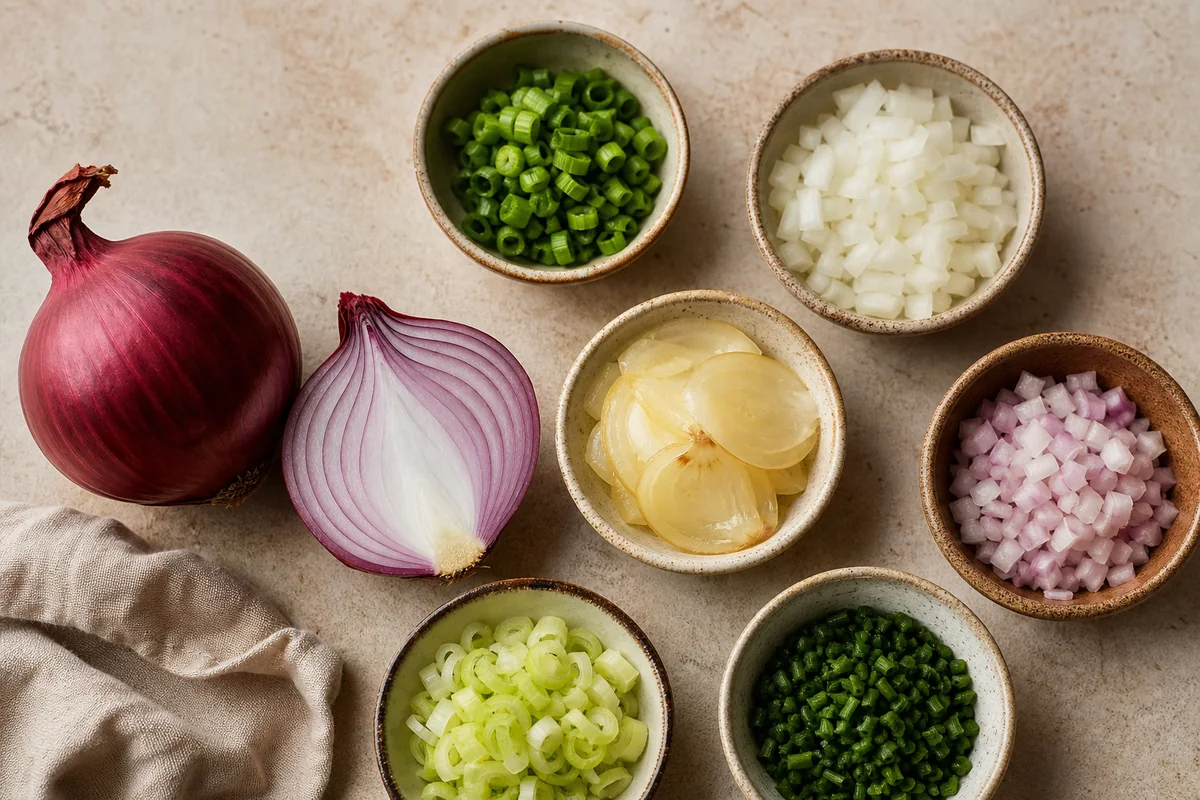
5 Best Red Onion Substitutes (That Actually Work)
Ingredients
Equipment
Method
- Decide how you’re using onion: raw for crunch/color, or cooked for sweetness and softness.
- Choose the closest substitute from the table and use the listed ratio (e.g., 1:1 or ¾:1).
- Adjust bite: soak sharp onions (white onion) in cold water for ~10 minutes or cook them slightly longer.
- Adjust color: for raw dishes, cut the substitute smaller and mix with a pinch of acid (lemon/vinegar) to brighten.
- Taste after the first batch/addition; if it’s too mild, add more onion volume, and if too sharp, chop smaller or soak.
Notes
- For raw use, prioritize yellow onion or shallot for the closest balance of sweetness and bite.
- For cooked dishes, leeks and onions caramelize differently—start with slightly smaller pieces and cook until soft.
Tried this recipe?
Let us know how it was!
Carrie is a food writer and editor with more than 15 years of experience. She has worked for some of the biggest names in the food industry, including Bon Appétit, Food & Wine, and Martha Stewart Living.
As the Editor in Chief of EpicureDelight, Carrie oversees all of the content on the site. She also manages the team of contributing writers and editors, who help to create delicious recipes, helpful tips, and informative articles that you’ll find on the site.
A native of the Chicago area, Carrie is passionate about all things food. She loves trying new restaurants and experimenting with new recipes in her kitchen. She’s also a graduate of the Culinary Institute of America, so she knows a thing or two about food!



