
The best mayonnaise substitute for tuna salad is plain full-fat Greek yogurt. Start with 2 tablespoons for one drained 5-ounce can of tuna, then add another teaspoon only if the fish still looks dry.
Greek yogurt keeps the familiar creamy body and adds enough tang to replace part of mayonnaise's flavor. Avocado, hummus, silken tofu, and an olive oil dressing also work, but each one changes how the salad tastes, holds together, and keeps.

The best mayo substitute in tuna salad depends on whether you need tang, richness, or a lighter texture. Greek yogurt is closest for creamy tang, avocado is richest, and hummus works when you want a savory spread.
Which Mayo Substitute Fits Your Tuna Salad?
| # | Substitute | Starting amount | Best use | Main tradeoff |
|---|---|---|---|---|
| 1 | Full-fat Greek yogurt | 2 tablespoons | Classic sandwiches and wraps | Tangier than mayonnaise |
| 2 | Mashed avocado | 2 tablespoons | Same-day bowls and toast | Browns during storage |
| 3 | Plain hummus | 1 ½ tablespoons | Firm sandwich filling | Earthy chickpea flavor |
| 4 | Blended silken tofu | 2 tablespoons | Mild, dairy-free salad | Needs acid and seasoning |
| 5 | Olive oil, lemon, and Dijon | 1 tablespoon dressing | Greens, beans, or toast | Loose rather than creamy |
Pick the substitute by the job mayonnaise normally does in your bowl. A sandwich needs a firm binder, while tuna served over greens can handle a looser dressing.
The amounts below are starting points for one well-drained 5-ounce can. Tuna packed in water often needs a little more binder than tuna packed in oil.

Drain watery ingredients before you judge the ratio. Pickles, relish, tomatoes, and freshly washed celery can loosen a good binder within minutes.
Sandwiches and wraps need grip
Greek yogurt and hummus hold flakes together without running into the bread. Chill the mixed salad before packing it, and keep tomato slices outside the filling until serving.
Bowls and lettuce cups can stay loose
Avocado or the olive oil dressing can coat tuna without creating a firm paste. That softer texture works when greens, beans, or toast support the salad instead of squeezing it between two bread slices.
1. Greek Yogurt for the Closest Classic Texture
Choose full-fat Greek yogurt when you want a tuna sandwich that still tastes close to the mayonnaise version.
Full-fat Greek yogurt is the best all-purpose choice because it is thick enough to coat tuna without pooling at the bottom of the bowl. Use 2 tablespoons first, fold gently, and wait a minute before adding more.
The yogurt tastes sharper than mayonnaise. A small dab of Dijon, a pinch of salt, and black pepper round out that tang without covering the tuna.
Nonfat Greek yogurt also binds the fish, but its leaner texture can feel chalky. If that is the only kind you have, stir in 1 teaspoon olive oil before adding it to the tuna.
Water-packed tuna needs a firm squeeze after draining because liquid hides between the flakes. Press it gently with the back of a fork, then loosen the fish before the yogurt goes in.
This swap works especially well with celery, dill, scallions, and a little mustard. If you want a split binder, mix 1 tablespoon yogurt with 1 tablespoon mayonnaise for a milder change.
2. Avocado Makes a Rich Bowl but Browns in Storage
Ripe avocado gives tuna salad a soft, buttery body without dairy. Mash 2 tablespoons until smooth, then season it with lemon or lime because avocado alone can mute the fish.
Use avocado in a bowl, lettuce cup, or open sandwich that you plan to eat the same day. The green flesh darkens after it meets air, so it is a poor choice for a lunch that must look fresh tomorrow.
Acid slows that browning but does not stop it. Pressing wrap against the surface helps more than adding extra avocado, which can make the tuna heavy and pasty.
Lime juice or a close acidic swap keeps the flavor bright, while strong vinegar can make avocado taste sharp and thin. Add the acid in ¼-teaspoon steps because a small tuna batch changes quickly.
Avocado also brings a stronger flavor than mayonnaise. Readers who already know mayo flavor should expect less eggy tang and more mellow richness.
3. Hummus for a Firm, Savory Sandwich Filling
Plain hummus holds tuna in a compact layer that stays inside bread or a wrap. Begin with 1 ½ tablespoons because hummus is denser than mayonnaise and can make the fish feel dry if you use too much.
A teaspoon of lemon juice or pickle brine loosens the mixture without turning it oily. Garlic-heavy or roasted pepper hummus works, but it changes the whole flavor of the salad rather than acting as a quiet binder.
Hummus pairs well with cucumber, parsley, chopped olives, or shredded carrot. Skip large amounts of relish since both ingredients already bring a strong savory note.
Tahini in the hummus gives the filling a faint sesame finish. That works with lemon and herbs, but it can fight sweet pickle relish or a heavily seasoned tuna pouch.
Choose classic hummus when you want the tuna to remain recognizable. Beet hummus changes the color, while roasted garlic hummus can overpower a mild can before the celery and pepper have a chance to add contrast.
Taste the hummus before salting the tuna. Many tubs already contain salt, garlic, and lemon, so seasoning the fish first can leave the finished sandwich much saltier than the mayonnaise version.
Spread a thin layer of hummus on the bread before adding the tuna only when the filling still feels dry. A thick layer on both bread and fish can turn one sandwich dense, especially after chilling.
For meal prep, pack cucumber and tomato separately. Hummus holds the tuna firmly, but water from cut vegetables can still run through the filling and soften a wrap by lunchtime.
4. Silken Tofu When You Want a Neutral Base
Silken tofu becomes creamy only after it is blended smooth. Drain off the surface water, blend a small portion, and measure 2 tablespoons of the purée for one can of tuna.
The tofu supplies body but very little seasoning. Build the missing mayonnaise character with acid, mustard, salt, and pepper.
- Drain surface water from the tofu and blend a small portion until no curds remain.
- Whisk 2 tablespoons of purée with 1 teaspoon lemon juice and ½ teaspoon Dijon or a mild mustard substitute.
- Fold the seasoned binder into the drained tuna without crushing every flake.
- Taste before adding salt, then add 1 teaspoon olive oil only if the mixture feels lean.
Do not crumble soft tofu straight into the bowl. The wet curds break the tuna into a lumpy mixture and release more water as it sits.
Blend only the portion you need because a large blender jar may leave small curds around the blade. A narrow cup and an immersion blender make a smoother two-tablespoon batch.
Tofu binder has a mild flavor, so taste it before the tuna goes in. Correcting the purée first spreads mustard, acid, and pepper evenly without overworking the fish later.
Keep the tofu and tuna cold during preparation. The dairy-free label changes the binder, but it does not change the refrigerator rules for canned fish.
If tofu is the ingredient you need to replace, the ranked smooth tofu backups explain which options blend smoothly and which stay grainy.
5. Olive Oil, Lemon, and Dijon Make a Dressed Tuna Salad
Olive oil or another mild liquid oil coats tuna but does not bind it like mayonnaise. Whisk 2 teaspoons oil with 1 teaspoon lemon juice or a similar acid and ½ teaspoon Dijon, then fold in 1 tablespoon of that dressing.
This version should look glossy and flaky, not creamy. It belongs over greens, white beans, toast, or sliced tomatoes where a loose dressing can season the other ingredients.
Oil-packed tuna needs less added oil. Drain it lightly, make the dressing without extra oil, and use lemon plus Dijon to sharpen what remains in the can.
Whisk the lemon and mustard before slowly adding oil. That short emulsion spreads seasoning across the tuna better than three separate drizzles.
For a sandwich, add chopped celery or a spoonful of mashed white beans to give the filling more grip. More dressing will only make the bread wet.
How Do You Fix Watery or Pasty Tuna Salad?
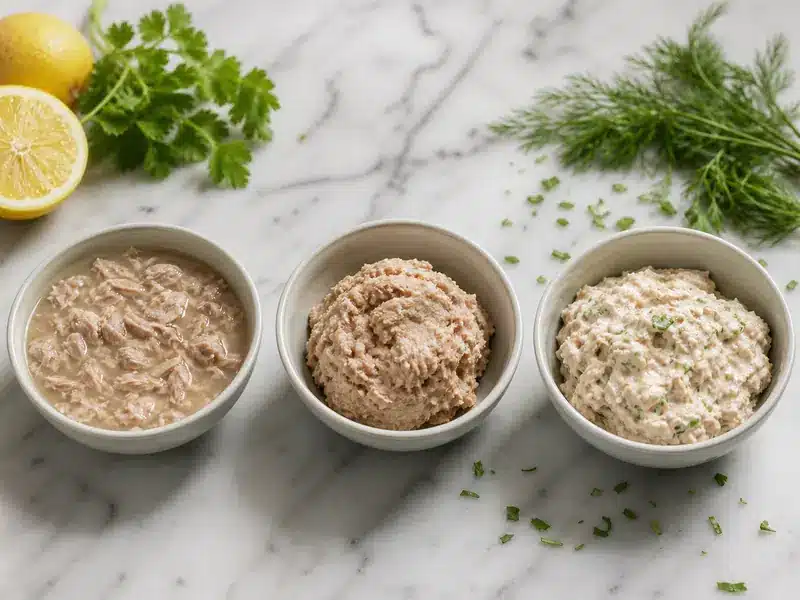
Let the mixed tuna sit for one minute before changing it. Salt draws water from celery, pickles, and onion, so a bowl that looks firm at first can loosen quickly.
Match the correction to what you see rather than adding a random spoonful of binder.
| What you see | Likely cause | Small correction |
|---|---|---|
| Liquid at the bottom | Wet tuna or add-ins | Drain free liquid, then add tuna |
| Dry flakes that will not hold | Too little binder | Add 1 teaspoon at a time |
| Heavy paste | Too much binder | Fold in drained tuna and acid |
| Flat flavor | Richness without contrast | Add mustard or acid before salt |
| Wet sandwich bread | Loose or warm filling | Chill and fill just before serving |
Measure wet add-ins after draining them. One tablespoon of pickle brine can undo the texture that two tablespoons of yogurt created.
Use a clean spoon to lift free liquid from the bottom before correcting the whole bowl. Stirring that liquid back through the tuna can hide the source of the problem and force you to add more binder than the fish needs.
A double batch should not receive double binder at once. Mix three-quarters of the calculated amount, fold from the bottom, and correct the last spoonful only after every flake is coated.
If none of these binders is available, choose from the broader mayonnaise substitute options by thickness first. A thin salad dressing may taste right but still fail between bread slices.
If the salad will sit for more than a quick meal, review tuna salad clock and keep the finished bowl cold. A different binder does not make canned fish shelf-stable.
Frequently Asked Questions
Yes. A half-and-half mix keeps mayonnaise flavor while the yogurt lightens the texture and adds tang.
Mustard seasons tuna but does not provide enough body for a full replacement. Combine it with yogurt, tofu purée, or an olive oil dressing.
Greek yogurt and hummus hold their color and body better than avocado. Keep crunchy add-ins separate if they release water.
It may need only lemon and Dijon if you keep a little oil from the can. Add yogurt or hummus only when you want a firm sandwich filling.
Yes, but that creates a different salad. The tuna swaps rank proteins by texture and use.
Keep the tuna fairly dry before mixing. A wet can makes yogurt, avocado, or hummus taste thinner than it should.

Carrie is a food writer and editor with more than 15 years of experience. She has worked for some of the biggest names in the food industry, including Bon Appétit, Food & Wine, and Martha Stewart Living.
As the Editor in Chief of EpicureDelight, Carrie oversees all of the content on the site. She also manages the team of contributing writers and editors, who help to create delicious recipes, helpful tips, and informative articles that you’ll find on the site.
A native of the Chicago area, Carrie is passionate about all things food. She loves trying new restaurants and experimenting with new recipes in her kitchen. She’s also a graduate of the Culinary Institute of America, so she knows a thing or two about food!



