
Baharat brings a specific kind of depth to a dish - warm from cumin and cinnamon, subtly smoky from paprika, and just sharp enough from black pepper and cloves that you know it's doing real work.
Without a baharat spice blend substitute that covers at least two or three of those notes, your chicken, lamb, or rice will taste under-seasoned even with plenty of salt.
The good news: most of the substitutes below use spices already sitting in your cabinet. Some work as drop-in swaps; others need a 30-second adjustment.
Baharat is a warm, smoky, lightly sweet Middle Eastern blend. For the closest swap, use garam masala with toasted cumin at a 1:1 ratio. For a DIY fix, combine cumin, paprika, and cinnamon. For savory-only dishes, chili powder plus cumin works fast.
5 Best Baharat Spice Blend Substitutes (Flavor-Matched Options)
Every substitute below maps to at least one of baharat's defining notes: warmth, smokiness, sweetness, and spice heat. When you're reading ratios, treat them as a starting floor - add a bit less first, taste, then build.
Baharat can run anywhere from mellow to quite bold depending on the brand, so matching intensity matters as much as matching flavor. If you're also curious about what goes into tasting paprika on its own, that page breaks down the smokiness tier you'd be filling.
For baking in particular, keep an eye on the sweetness side. Some of these substitutes carry more cinnamon or allspice than baharat does, and in a sweet dough or spiced cake, that difference compounds fast.
The savory use case is usually more forgiving.
| # | Substitute | Best For | Ratio | Key Note |
|---|---|---|---|---|
| 1 | Garam Masala + Cumin | Both | 1:1 | Toast cumin first |
| 2 | Lebanese 7-Spice | Both | 1:1 | Use less if very sweet |
| 3 | DIY Cumin + Paprika + Cinnamon | Both | 1:1 | Most accurate of the list |
| 4 | Chili Powder + Cumin | Cooking | ¾:1 | Adds heat, watch balance |
| 5 | Herbes de Provence + Cumin | Cooking | ¾:1 | Herb-forward; needs cumin |
1. Garam Masala + Toasted Cumin
Garam masala is the closest off-the-shelf match for baharat because it shares the same warm spice architecture: cardamom, cloves, black pepper, and cinnamon in varying degrees. Where it falls slightly short is on the savory-earthy side, which is exactly what a quick cumin toast fixes.
Toast ground cumin for 20-30 seconds in a dry pan before stirring it into garam masala, and the two together cover most of baharat's flavor range. For more on what garam masala actually tastes like before you swap it in, check out tasting garam masala - the flavor map there is useful.
- Savory cooking: Use 1:1, stirring into marinades, stews, or spiced rice dishes exactly as you would baharat
- Baking: Works well in spiced breads or cookies - skip the cumin toast if the recipe is very sweet
- Boost warmth: Add a tiny pinch of ground cloves or extra cinnamon if the blend tastes flat after tasting
- Freshness check: If your garam masala has been open for more than a year, the bloom won't recover - use the DIY option instead
Skip if: Your dish needs a prominent smoky note. Garam masala has almost no smokiness, so choose the DIY paprika blend instead.
2. Lebanese 7-Spice
Lebanese 7-spice and baharat overlap heavily - both are built on allspice, cinnamon, and black pepper, and in some regional versions they are essentially the same blend. The risk here is sweetness: a commercially made 7-spice can lean harder on allspice and cinnamon than your recipe expects.
Start with about ¾ of the amount the recipe calls for, taste, and add more once it's rested for a few minutes. If you want to explore what allspice can do on its own inside that profile, that's worth a read.
The rebalancing trick if it's too sweet: a pinch of salt and a half-pinch of black pepper pull it back toward savory fast.
- Savory marinades: Excellent for lamb, beef, and grilled chicken - the overlap is almost seamless
- Rice dishes: Use 1:1 if you've tasted your batch and it isn't overly sweet
- Baking: Works, but reduce by 2 tablespoon per cup of spice called for and taste the batter
- Too candy-like: Add a pinch of garlic powder or cumin to shift the sweetness back into savory territory
Skip if: Your dish already has heavy sweetness from pomegranate molasses, honey, or dates. Don't stack sweet on sweet.
3. DIY: Cumin + Paprika + Cinnamon
This is the most accurate option on the list because you control exactly which notes are dominant. Baharat's warmth comes from cumin and cinnamon, its smokiness from paprika, and its mild background heat from pepper - so mixing your own gets you closest to a specific batch.
If you're curious about what sets ground cumin apart from seeds before you start, that comparison is helpful.
Savory-Leaning Blend
Works for: roasting, marinades, rice, stews
Skip if: you want a baking-ready blend without adjusting
Baking-Leaning Blend
Works for: spiced cakes, pastry doughs, sweet-savory fillings
Skip if: your recipe is fully savory and needs smoky depth
- Base ratio: 2 parts cumin, 1.5 parts smoked paprika, 0.5 parts cinnamon - toast cumin first
- Add smokiness: Increase paprika by ½ teaspoon for roasted vegetables or charred meats
- Sweeten for baking: Reduce paprika by half and add a small pinch of nutmeg
- Heat option: A pinch of black pepper or allspice rounds out the blend for savory applications
Skip if: You're missing paprika or cinnamon entirely. In that case, lean on garam masala or 7-spice as the faster fix.
4. Chili Powder + Ground Cumin
This is the pantry-emergency swap - not the prettiest match, but it keeps your dish from tasting bare when you have nothing else. Chili powder brings heat and a mild earthy tone; cumin adds the warm-savory backbone baharat is known for. The gap is on the sweet-spice side (no cinnamon, no cloves), which you can partially close with one small addition.
More Heat Version
Works for: spiced ground meat, bold stews, chili-adjacent dishes
Skip if: your recipe needs a gentle, sweet-warm background note
More Warmth Version
Works for: roasted chicken, rice dishes, vegetable rubs where heat shouldn't dominate
Skip if: you want smokiness - add a pinch of smoked paprika separately
- Starting ratio: Use ¾ of the baharat amount; split it 60% chili powder to 40% cumin
- Close the warmth gap: Add a pinch of ground cinnamon and one small pinch of cloves
- Bitterness fix: If the result is sharp, reduce chili powder by 1 teaspoon and increase cumin - don't overheat the spices
- Build slowly: Taste after the first addition; it's easy to overshoot heat with chili powder
Skip if: Your recipe can't handle any real heat - choose Lebanese 7-spice or garam masala instead.
5. Herbes de Provence + Cumin
This is the most unexpected option here, and it works better than you'd expect for rubs and roasts. Fines herbes and Herbes de Provence are related blends, but Herbes de Provence is the one with thyme, rosemary, savory, and sometimes lavender - it gives the mix a dried-herb backdrop that reads as "earthy" rather than "spiced." Ground cumin is doing the heavy lifting here, pulling the whole thing toward something that at least gestures at baharat's character.
- Best uses: Slow-roasted chicken, lamb rubs, vegetable sheet pans, and savory grain bowls
- Ratio start: Use ¾ of the baharat amount total; ⅓ Herbes de Provence to ⅔ cumin
- Add warmth: A tiny pinch of cinnamon or a single clove (ground) brings it closer to baharat's sweet-spice note
- Salt warning: Don't over-salt early - herbs absorb salt unevenly; taste after a 5-minute rest
Skip if: You need something that reads as genuinely Middle Eastern spice-forward. This swap is best for savory rubs where herbs won't feel out of place.
Making Any Baharat Substitute Taste Like the Real Thing
Every swap on this list will need a small adjustment or two - that's just how single-profile blends work when you're filling in for something more complex. The short checklist: check warmth (cinnamon, cloves, cardamom), check smokiness (paprika), check heat (black pepper, chili), and check sweetness (allspice, cinnamon again).
Fix one variable at a time and you'll land where you want to be. If you find yourself reaching for alternatives to garam masala at the same time, the guidance there applies cleanly to this kind of layered adjustment.
- Toast first: Briefly toast any ground cumin in a dry pan for 20-30 seconds before mixing - it lifts the whole blend
- Rest before tasting: Let the spiced dish sit for 3-5 minutes after adding your substitute; the heat from cooking mutes some notes temporarily
- One adjustment at a time: If something is off, add cinnamon or paprika alone, not both at once, or you'll lose track of what fixed it
Frequently Asked Questions
Garam masala with toasted cumin is the closest match for savory dishes. Use a 1:1 ratio and toast the cumin for 20-30 seconds first to restore the earthy depth baharat carries.
Start at a 1:1 ratio for most substitutes. For heat-forward options like chili powder plus cumin, start at ¾ of the original amount and taste before adding more.
Yes. Use it at a 1:1 ratio and skip the cumin toast for sweet baking recipes. The cardamom and cinnamon in garam masala fit naturally into spiced cakes and breads.
Bitterness usually comes from over-toasted spices or too much chili powder. Reduce the chili powder by 1 teaspoon and add a pinch of cinnamon to soften the edge.
Add smoked paprika, starting with ¼ teaspoon at a time. Regular paprika adds color and mild smokiness; Spanish smoked paprika (pimentón) gives a stronger, more immediate result.
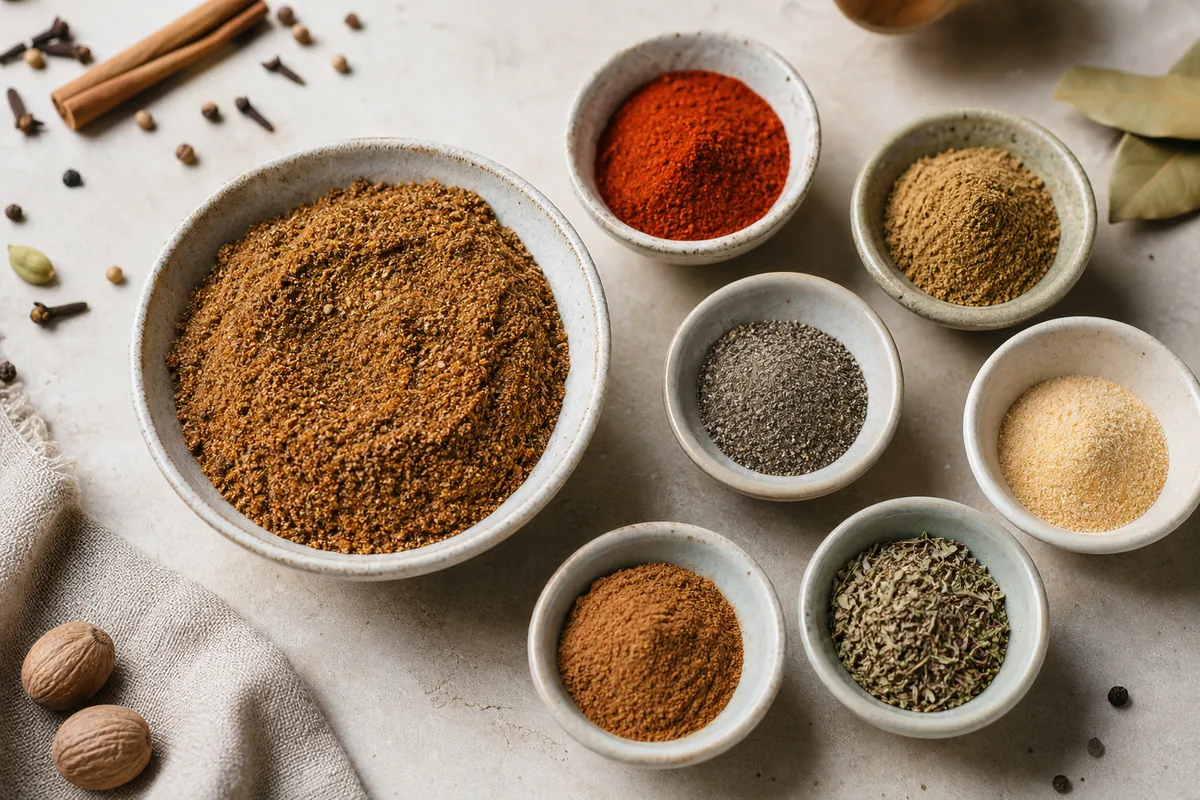
5 Best Baharat Spice Blend Substitutes for Better Results
Ingredients
Equipment
Method
- Identify your use: marinade/roast (savory) or baking (sweet-warm).
- Replace baharat using the ratio shown for your chosen substitute.
- If your substitute is cumin-heavy or chili-heavy, start with slightly less and add after tasting.
- Toast whole spices (or toast ground cumin briefly in a dry pan for 20–30 seconds) to revive aroma before using.
- Adjust the “missing note”: add a pinch of cinnamon/clove for warmth or a pinch of smoked paprika if you need smokiness.
Notes
- For the closest match, treat baharat as a balance of cumin-like warmth, allspice/cinnamon-style sweetness, and mild heat.
- To avoid bitterness, don’t over-toast ground spices—briefly revive aroma only.
Tried this recipe?
Let us know how it was!
Carrie is a food writer and editor with more than 15 years of experience. She has worked for some of the biggest names in the food industry, including Bon Appétit, Food & Wine, and Martha Stewart Living.
As the Editor in Chief of EpicureDelight, Carrie oversees all of the content on the site. She also manages the team of contributing writers and editors, who help to create delicious recipes, helpful tips, and informative articles that you’ll find on the site.
A native of the Chicago area, Carrie is passionate about all things food. She loves trying new restaurants and experimenting with new recipes in her kitchen. She’s also a graduate of the Culinary Institute of America, so she knows a thing or two about food!



