
Black treacle has a flavor that's hard to mistake: smoky, bitter, and thick enough to coat the back of a spoon.
Finding a good black treacle substitute means knowing which of its properties you actually need-dark color, sticky body, molasses tang, or all three at once.
Black treacle is dark, bitter, and viscous. The best swaps are mild molasses or a treacle-style syrup for flavor, and golden syrup or dark corn syrup for body. When your substitute is sweeter, reduce added sugar by 5-15% and check browning early.
Treacle contributes more than sweetness. It darkens batter, supports browning, and adds a faint tang that plays off spices in gingerbread or Christmas cake.
Most substitutes match one or two of those traits, rarely all three, so a small adjustment usually follows.
If you're also working with other dark sugars, knowing your brown sugar alternatives can help you balance the overall sweetness in a recipe.
5 Best Black Treacle Substitutes, Ranked by Flavor Match
Before you pick a swap, check what your recipe actually needs. If it depends on molasses bitterness, start at the top of this list.
If you mainly need moisture and sticky texture, scroll to golden syrup or dark corn syrup. The ratio column is your first move-adjust from there if the batter looks too thick or tastes too sweet.
For a broader look at treacle replacement options, that guide covers the full range.
| # | Substitute | Best For | Ratio | Key Note |
|---|---|---|---|---|
| 1 | Mild Molasses | Both | 1:1 | Closest flavor match overall |
| 2 | Treacle-Style Syrup | Both | 1:1 | Best for treacle tarts, dark cakes |
| 3 | Dark Corn Syrup | Cooking | ¾:1 | Add pinch molasses for depth |
| 4 | Golden Syrup | Baking | ¾:1 | Sweeter-reduce sugar slightly |
| 5 | Dark Maple Syrup | Both | 1:1 | Expect sweeter, less bitter result |
1. Mild Molasses (Unsulphured)
Mild unsulphured molasses is the single closest flavor match for black treacle. It has the same molasses bitterness, a similar dark color, and enough viscosity to behave nearly identically in batter.
If anything, it's slightly less bitter than true black treacle, which most people find a welcome difference.
Use it straight at 1:1 in gingerbread, treacle cake, dark bread, and marinades. In baking, stir it into your wet ingredients before adding flour so it blends smoothly.
You can also read more about what black treacle tastes like to judge how close your molasses really is.
- Best use: Dark cakes, spiced cookies, glazes, and bread where strong molasses flavor is expected
- Ratio: 1:1 by weight or volume-no adjustment needed
- Too dark? Cut molasses with golden syrup at equal parts to soften the bitterness
- Too thick? Warm briefly in a small bowl of hot water for 30 seconds before measuring
Skip if: you need a milder, paler result. Golden syrup or dark corn syrup are better there.
2. Treacle-Style Syrup
A commercial treacle-style syrup-usually a molasses and treacle blend-is the pick when you want the closest flavor without sourcing actual black treacle. It delivers that specific "treacle tart" quality that molasses alone doesn't quite nail.
Brands vary. Some lean sweeter, others more bitter.
If yours pours freely like a thin syrup, cook it down in a small saucepan for 1 to 2 minutes before using. That reduces water content and restores the thick, spoon-coating consistency that treacle brings to baked goods.
- Ratio: Start at 1:1 for treacle tarts, gingerbread, and dark steamed puddings
- Too sweet? Stir in ½ teaspoon of unsulphured molasses per 4 tablespoon to push the bitterness back up
- Browning: It behaves very similarly to treacle in the oven-no need to adjust temperature or time
- Rise: Works the same as treacle when paired with bicarbonate of soda
Skip if: your syrup is thin enough to drip off a spoon at room temperature. Reduce it first, or choose mild molasses instead.
3. Dark Corn Syrup
Dark corn syrup matches black treacle's thick body and helps with browning, but it doesn't carry the same molasses bitterness. Think of it as the texture stand-in rather than the flavor stand-in.
That's actually useful in sauces and glazes where you want color and sheen without a heavy molasses hit.
Dark Corn Syrup vs Black Treacle
Works for: sticky sauces, glazes, moist cakes, caramel-style fillings where viscosity matters more than bitterness
Skip if: your recipe is built around strong molasses flavor-add 1 teaspoon dark molasses per 4 tablespoon corn syrup to compensate
Use ¾:1 to prevent over-sweetness, then add a teaspoon of mild molasses if the batter tastes flat. If you're already thinking about swapping corn syrup in other recipes, the full guide on corn syrup alternatives is worth bookmarking.
- Best use: Pecan pie, sticky sauces, glazed meats, moist loaf cakes
- Flavor gap: Add 1 teaspoon molasses per 4 tablespoon corn syrup for bitterness
- Texture: Very close to treacle-slightly thinner at room temperature
4. Golden Syrup (Light Treacle)
Golden syrup is sweeter, paler, and less bitter than black treacle, but it's one of the most reliable texture swaps available. It keeps bakes moist and chewy, and it dissolves into batter without any extra warming.
The missing element is bitterness-easy enough to add back.
Start at ¾ the amount of treacle called for, then taste your batter before baking. The color will be lighter.
If that matters for your recipe, a small addition of dark molasses or even a drop of food-grade caramel brings it back. Golden syrup also works well alongside other pantry staples-properly stored brown sugar and golden syrup together can cover most treacle jobs in a pinch.
- Best use: Flapjacks, sticky toffee pudding, shortbread, chewy cookies
- Color: Noticeably lighter-add a small amount of molasses if deep color matters
- Sweetness: Reduce other added sugar by around 10% to keep balance
Skip if: your recipe depends on molasses bitterness as a flavor anchor.
5. Maple Syrup (Dark)
Dark maple syrup is a good emergency swap when you don't have treacle or molasses on hand. It's thinner than treacle, sweeter, and brings its own caramel-wood character.
That's a noticeable flavor shift-but in cookies, quick breads, and glazes, it works.
The key adjustment is sugar. Maple syrup is sweeter than treacle, so reduce other added sugar by 5-15% depending on how much you're using.
Check your bake a few minutes early too-maple sugars brown faster than molasses-based ones. For situations where maple is also in short supply, the maple syrup alternatives guide covers what to reach for next.
- Ratio: 1:1, but reduce added sugar by 5-15%
- Texture: Thinner than treacle-add an extra teaspoon of cornstarch to batter if body is needed
- Browning: Watch the oven; maple caramelizes earlier than treacle
- Flavor: Expect a sweeter, less bitter result-pair with a pinch of espresso powder to add depth
Skip if: your recipe is a classic treacle spice blend where the bitter edge is the whole point.
Making a Black Treacle Substitute Work in Baking (and When It Doesn't)
The easiest way to choose a swap is to identify the single most important property your recipe needs. If it needs bitterness, molasses is your anchor.
If it needs moisture and chew, golden syrup or dark corn syrup do that better. Viscosity is adjustable-most syrups can be reduced or thinned slightly-but flavor gaps are harder to close after the batter is mixed.
- Adjusting thickness: Warm thicker substitutes for 20-30 seconds so they blend without seizing. If your swap is thinner than treacle, reduce added liquid in the recipe by 1 to 2 tablespoons.
- Balancing sweetness and browning: Sweeter substitutes (maple, golden syrup) brown faster and can taste cloying. Pull bakes out 3 to 5 minutes early and cut sugar by 10% before you even start mixing.
- Mixing order in batter: Always combine the substitute with your other wet ingredients first. This prevents clumping when flour goes in and distributes color evenly through the batter.
Frequently Asked Questions
Not quite 1:1-golden syrup is sweeter and less bitter, so use ¾ the amount and add 1 to 2 teaspoons of dark molasses to recover some depth. Reduce other sugar slightly to avoid an over-sweet result.
A treacle-style molasses blend is the best match for treacle tarts. Golden syrup alone is the traditional British base, but a small addition of molasses sharpens the flavor.
Cut other added sugar in the recipe by 5-15% and taste the wet mixture before adding flour. A pinch of fine salt also helps balance excess sweetness without changing the structure.
If the batter is too thick, add hot water one teaspoon at a time. If it's too thin, reduce the substitute in a small pan for 1 to 2 minutes before measuring.
Yes-mild molasses or dark corn syrup work well in glazes and no-bake fillings at 1:1. Both hold their viscosity at room temperature and deliver similar dark color and sheen.
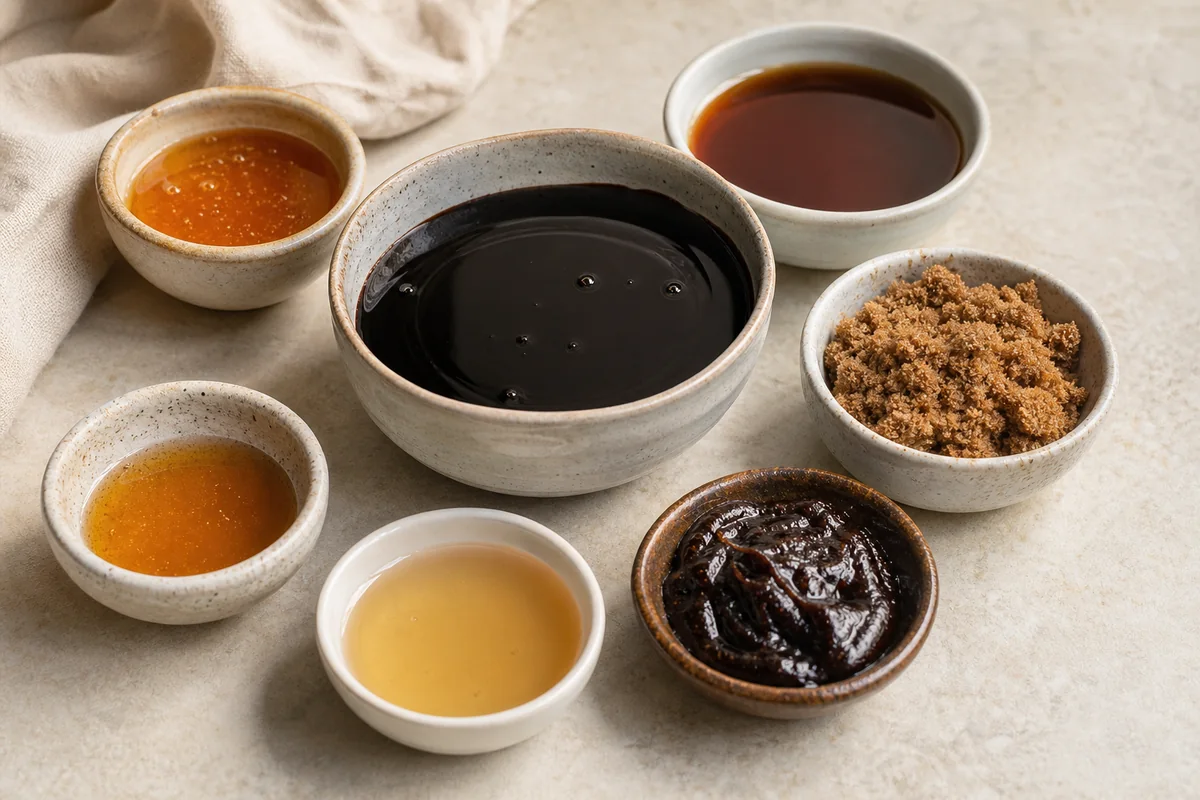
5 Best Black Treacle Substitutes (Flavor-Matched)
Ingredients
Equipment
Method
- Match your goal: for darkest flavor, choose mild or dark treacle/molasses; for stickiness/moisture, choose golden syrup or dark corn syrup.
- Use the table ratio as your starting point, then adjust: add a small splash of water if your batter is too thick, or reduce if it looks runny.
- In baking, stir the substitute into wet ingredients first so it fully dissolves before adding flour.
- Taste-correct after mixing wet + syrup (before baking): increase bitterness with a teaspoon of dark molasses, or sweeten with a touch of golden syrup.
- If you're using sugar-heavy substitutes (maple, golden syrup), reduce the recipe's added sugar by 5-15% to avoid over-sweet results.
Notes
- Black treacle is essentially a dark, sticky syrup with a molasses-like tang-use bitterness + viscosity as your two matching targets.
- If your substitute is less bitter than black treacle (e.g., golden syrup), compensate with a small amount of dark molasses or by slightly reducing added sugar.
Tried this recipe?
Let us know how it was!
Carrie is a food writer and editor with more than 15 years of experience. She has worked for some of the biggest names in the food industry, including Bon Appétit, Food & Wine, and Martha Stewart Living.
As the Editor in Chief of EpicureDelight, Carrie oversees all of the content on the site. She also manages the team of contributing writers and editors, who help to create delicious recipes, helpful tips, and informative articles that you’ll find on the site.
A native of the Chicago area, Carrie is passionate about all things food. She loves trying new restaurants and experimenting with new recipes in her kitchen. She’s also a graduate of the Culinary Institute of America, so she knows a thing or two about food!



