
Cipollini onions are stubborn little things to replace. They caramelize into something jammy and sweet, they stay tender without turning mushy, and they hold a mild bite that never overwhelms the pan.
Finding a cipollini onion substitute that gets all three of those things right takes some thought.
The good news is that several onions come close. The key is matching sweetness and texture to your cooking method, whether that's roasting, baking, or slow caramelizing.
Cipollini onions are sweet, mild, and tender when cooked. The closest swaps are Vidalia and Walla Walla onions at a 1:1 ratio. Yellow onion works at ¾:1 with a pinch of sugar. Red onion needs blanching first. Shallots work in smaller amounts for roasting and baking.
5 Best Cipollini Onion Substitutes (By Sweetness + Bite)
Every substitute below is matched to what cipollini actually does in a dish. The table gives you a quick read on ratios and use cases before you commit to a swap.
If you're storing the real thing and wondering about keeping onions fresh longer, that's worth a look too.
| # | Substitute | Best For | Ratio | Key Note |
|---|---|---|---|---|
| 1 | Vidalia Onion | Both | 1:1 | Slice thicker for roasting |
| 2 | Walla Walla Onion | Both | 1:1 | Watch browning time closely |
| 3 | Yellow Onion | Both | ¾:1 | Add sugar, cook longer |
| 4 | Red Onion | Both | ¾:1 | Blanch 30-45 sec first |
| 5 | Shallot | Both | 1:2 | Slice thin, use fewer |
1. Vidalia Onion
Vidalia is the easiest drop-in for cipollini. It has the same mild sweetness, softens well under heat, and caramelizes without going bitter.
We prefer Vidalia for sheet-pan roasting. Slice it into half-inch rings and it behaves almost exactly like cipollini at similar cook times.
Vidalia Onion
Works for: roasting, caramelizing, baking where mild sweetness and tender edges are needed
Skip if: your recipe needs whole small-bulb presentation; dice instead of trying to replicate the oval shape
- Ratio: Use 1:1 by volume; keep slices at half-inch thickness to avoid overcooking
- Cook time: Start checking 5 minutes earlier than cipollini if slices are thinner than half an inch
- Sweetness: Matches cipollini closely; no sugar needed for most recipes
- Texture: Goes silky-soft when roasted; pairs well with balsamic or thyme
A good read on the sweet onion variety differences can help if you're deciding between Vidalia and candy onions at the store.
2. Walla Walla Onion
Walla Walla onions are juicy, sweet, and only slightly more assertive than Vidalia. They hold up well in the oven but need a watchful eye.
Push them past golden and they can go from jammy to slightly bitter fast.
- Ratio: Use 1:1; match slice thickness to the cipollini size in the original recipe
- Browning watch: Pull from heat once edges are golden, not dark brown
- Moisture: Higher water content than cipollini; pat slices dry before roasting
- Flavor: Mild and sweet with very little sharpness, even when only lightly cooked
Skip if you need a firmer onion for grilling. Walla Walla softens quickly and may fall apart on grates.
3. Yellow Onion
Yellow onion is the everyday stand-in, but it bites harder than cipollini. The sharper flavor is the main obstacle.
The fix is thinner slicing, a longer cook time, and a small pinch of sugar added mid-cook.
Use swapping sharper onion varieties as your reference point if you want to understand exactly why yellow onion runs pungent and how to steer it.
- Ratio: Use ¾:1 to avoid overpowering the dish with too much bite
- Slice thickness: Go thinner than you would with cipollini, around a quarter inch
- Cook time: Add 5-8 extra minutes on low-medium heat to fully mellow the sharpness
- Sugar trick: Add a small pinch (no more than ¼ teaspoon per cup of onion) halfway through cooking
Skip if the recipe needs delicate sweetness but must stay low-sugar. Adding sugar to compensate changes the dish chemistry in baking.
4. Red Onion
Red onion has more sharpness than cipollini and a slightly bitter edge when raw. Blanching changes that.
Drop slices into boiling water for 30-45 seconds, then drain them well before adding to the pan.
The color stays, the pungency drops, and you get something that roasts up reasonably close to cipollini's mild finish. Understanding what raw red onion actually tastes like before blanching helps you judge how much prep it needs.
Red Onion
Works for: roasting and baking when blanched and drained; keeps a nice purple color in the finished dish
Skip if: your dish depends on cipollini's golden sweetness; red onion won't reach the same caramel-sweet tone even after blanching
Ratio: Use ¾:1. Blanch 30-45 seconds, drain thoroughly, then roast as usual. If there's too much moisture, the onions steam instead of brown. If you're curious about other sharper onion swap options, those are worth comparing too.
5. Shallot
Shallots are more aromatic per bulb than cipollini. They work well in roasting and baking, but you need fewer of them.
Think of shallots as a concentrated version: more flavor in a smaller package. Slice them thin so they cook evenly and don't dominate.
The shallot versus garlic tradeoff is worth knowing here, because shallots sit closer to garlic in intensity than cipollini does.
| Use | Ratio | Notes |
|---|---|---|
| Roasting whole | 1 shallot per 2 cipollini | Halve shallots lengthwise; cook time is similar |
| Caramelizing (sliced) | 1:2 by count | Slice thin; stir more often than you would cipollini |
| Baking into dishes | 1:2 by count | Reduce quantity; shallot flavor deepens more than cipollini |
- Prep: Peel and halve or slice thin; thick shallot pieces can turn chewy
- Timing: Shallots brown faster than cipollini; lower heat by 25°F if roasting
- Flavor balance: Add a small splash of water or stock if shallots threaten to burn before softening
Skip if you need the round, oval bulb appearance of cipollini for presentation. Shallots are smaller and more elongated.
Making Your Cipollini Onion Substitute Taste Right
The biggest mistake when using any cipollini swap is treating it like a background ingredient. Cipollini's sweetness is structural in a dish.
When you switch to a sharper onion, the whole flavor balance shifts unless you steer it. For dishes where you're unsure whether a dried format might work, knowing when choosing dried flakes instead makes sense is a smart backup.
The flat, sweet-savory profile of cipollini is also worth reading about before you swap, since understanding that flat, sweet-savory profile helps you judge how close your substitute is getting.
- Match the slice thickness: Cut your substitute to the same thickness cipollini would be; thicker cuts retain moisture and brown more slowly, thinner cuts caramelize faster and may melt away
- Steer toward sweetness: Cook on medium-low, not high heat; rushing the caramelization drives bitterness before the sugars have time to develop properly
- Manage moisture: Pat slices dry before adding to the pan and don't crowd them; crowded onions steam instead of brown, and you lose the jammy texture cipollini is known for
Frequently Asked Questions
Vidalia onion is the closest match for roasting. Use it at a 1:1 ratio, slice to half-inch thickness, and it delivers nearly the same jammy sweetness as cipollini.
Yes, but blanch the slices for 30-45 seconds and drain well first. This reduces sharpness and makes red onion behave closer to cipollini when roasted.
Slice thinner than you normally would, cook 5-8 minutes longer on medium-low heat, and add a small pinch of sugar halfway through to mellow the bite.
Match the thickness to what cipollini's size would give you, roughly half an inch. Thinner slices soften faster; thicker slices hold more bite in the finished dish.
Yes. Baking uses indirect, enclosed heat that softens sweet onions faster and can make them watery. Pat them dry and keep pieces larger to hold texture.
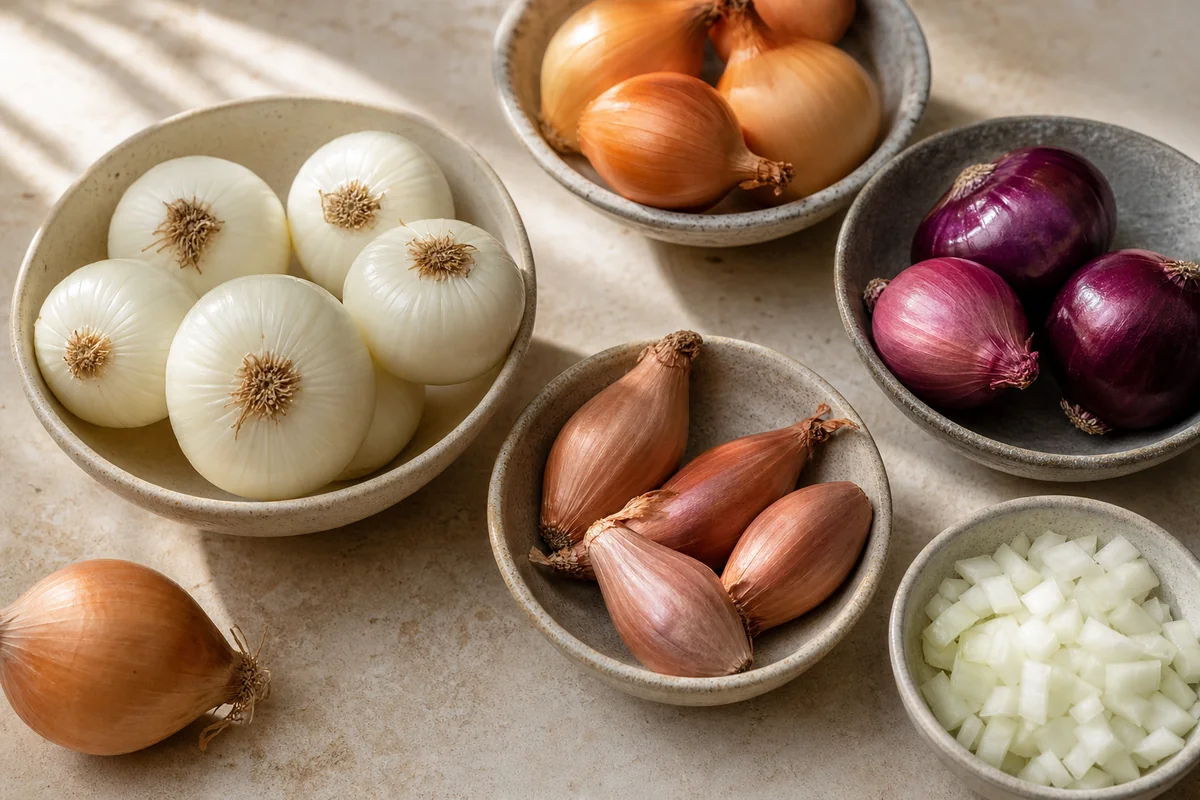
5 Best Cipollini Onion Substitutes That Taste Right
Ingredients
Equipment
Method
- Identify your use: roasting/caramelizing (need sweetness and tenderness) or raw/as-a-garnish (need mild bite).
- Choose the closest swap from the table: Vidalia or Walla Walla for the mild, sweet profile.
- Use the listed ratio; if your substitute is sharper (yellow or red), slice thinner and cook longer to mellow the bite.
- For watery swaps (red onion), blanch briefly and drain before adding to avoid steaming.
- Taste once cooked: add a tiny pinch of sugar or salt to steer toward cipollini’s sweet-savory balance.
Notes
- Cipollini onions are typically mild and sweet; aim for low pungency and tender caramelization.
- Thickness matters: thinner slices roast faster and prevent harshness from stronger onions.
Tried this recipe?
Let us know how it was!
Carrie is a food writer and editor with more than 15 years of experience. She has worked for some of the biggest names in the food industry, including Bon Appétit, Food & Wine, and Martha Stewart Living.
As the Editor in Chief of EpicureDelight, Carrie oversees all of the content on the site. She also manages the team of contributing writers and editors, who help to create delicious recipes, helpful tips, and informative articles that you’ll find on the site.
A native of the Chicago area, Carrie is passionate about all things food. She loves trying new restaurants and experimenting with new recipes in her kitchen. She’s also a graduate of the Culinary Institute of America, so she knows a thing or two about food!



