
Eggplant is one of those vegetables that doesn't taste like much on its own. What it does is absorb heat, take on color, and soak up whatever sauce surrounds it.
That's why finding a good eggplant substitute isn't just about flavor. It's about matching that sponge-like behavior and browning capacity.
The two things eggplant brings to a dish are mild, almost neutral savory flavor and a porous texture that browns at the edges while going silky inside. Lose the texture match and the whole dish shifts.
These swaps are chosen for both.
The best eggplant substitutes match its mild flavor and absorbent, browning texture. Zucchini (seeded, thick-cut) is closest for sautéed dishes. Portobello mushrooms win for roasting. Okra works in stews. Bell peppers suit grilling. Potato is the hearty emergency swap.
5 Best Eggplant Swaps: Flavor-Matched Options
Matching by texture role is the move here. Each substitute below is sorted by how well it replicates eggplant's three jobs: browning, absorbing sauce, and holding a tender bite.
When you're picking the best roasting setup, the substitute you choose matters as much as the method itself.
| # | Substitute | Best For | Ratio | Key Note |
|---|---|---|---|---|
| 1 | Zucchini (thick, seeded) | Both | 1:1 | Seed to prevent watery results |
| 2 | Portobello mushrooms | Roasting | 1:1 | Pat dry for max browning |
| 3 | Okra | Stews | 1:1 | High heat cuts slime |
| 4 | Bell peppers (roasted) | Grilling | 1:1 | Add acid to cut sweetness |
| 5 | Potato (pan-seared) | Saucy dishes | 1:1 | Sear first, sauce after |
Eggplant's thickness and moisture level decide whether it browns or goes watery. That same logic applies to every substitute.
Keep slices thick and surfaces dry. Storing your potatoes correctly before cooking also affects how well they sear.
1. Zucchini
Zucchini is the most natural stand-in for eggplant in sautéed and baked dishes. It has the same mild, savory-neutral flavor, and when you cut it thick and remove the seedy core, it browns at the edges without releasing a flood of water.
The key is heat. A hot pan or a high oven is the reason zucchini mimics eggplant's browned edge and tender middle.
These mild squash swaps follow the same moisture-management principle eggplant does. Salt the slices for 10 minutes and pat them dry before cooking.
Zucchini
Works for: sautéed dishes, baked casseroles, stir-fries, and layered bakes like moussaka
Skip if: you need a deep, smoky eggplant flavor-zucchini stays mild and won't develop that char note naturally
- Cut thick: Aim for slices at least ½ inch; thinner ones go limp instead of browning.
- Remove seeds: Scoop or cut out the watery center on large zucchini before slicing.
- Pat dry: After salting, press firmly with a paper towel before adding to the pan.
- Use high heat: Medium-high at minimum-lower heat steams instead of sears.
2. Portobello Mushrooms
Portobello is the best option when browning and savory depth are the whole point of the dish. The cap's dense, meaty structure holds up in a hot oven the same way a thick eggplant slice does.
The flavor of portobello is earthier than eggplant, so season with a little less salt up front. Understanding that deep, meaty flavor profile helps you decide when to pull back on other umami-forward ingredients like soy or anchovy.
The moisture in mushrooms is real, so always dry the surface before they hit the pan.
- Pat dry aggressively: Use paper towels on both sides; a wet surface steams and won't brown.
- Slice to ½ inch: Thicker slices hold up better in long roasts or saucy dishes.
- Go high and hot: Start in a 425°F oven or a well-heated cast iron for real crust.
- Skip if: your dish needs a flavor-neutral base-mushrooms read savory and will shift milder sauces.
3. Okra
Okra does something eggplant does well: it softens into a saucy dish and helps the liquid cling, adding body without disappearing. In stews, that's almost exactly eggplant's role.
When you're swapping thicker vegetables in sauce-heavy recipes, okra is one of the few options that absorbs and gives back texture at the same time.
- Slice to 1-inch rounds: Smaller pieces get too slippery; larger pieces stay firm longer in the pot.
- High heat first: Sear the okra in a dry hot pan for 2 minutes before adding liquid to reduce slime.
- Add to sauce late: Put okra in during the last 10-15 minutes so it tenderizes without dissolving.
- Skip if: you need clean, non-sticky cubes-okra's natural mucilage will make the texture noticeably different from eggplant in some dishes.
4. Bell Peppers
Bell peppers are closest to eggplant when they're roasted or grilled until the skin chars and the flesh goes tender. That smoky sweetness is adjacent to eggplant's mild savory note, especially once you add salt and a splash of acid.
Bell Peppers (Roasted)
Works for: grilled dishes, roasted vegetable trays, layered bakes, and Mediterranean-style sauces
Skip if: you need a neutral base for a heavily spiced sauce-the pepper's sweetness shifts the whole flavor balance
Cut them thick. Thin strips turn sugary and soft, not tender and savory.
These firm, crisp vegetables actually hold up better to high heat when they're fresh and stored well before cooking.
- Cut to wide strips or half-slabs: At least 1.5 inches wide so they hold some body after roasting.
- Char before saucing: Get color on a dry pan or open flame before any liquid goes in.
- Add acid after cooking: A squeeze of lemon or a splash of red wine vinegar at the end pulls the sweetness back toward savory.
- Season assertively: Peppers need more salt than eggplant does to land in the same savory register.
5. Potato
Potato won't fool anyone into thinking it's eggplant, but it absorbs sauce, holds shape, and develops a crust when seared. That combination makes it a legitimate stand-in when nothing else is available.
| Use | Ratio | Notes |
|---|---|---|
| Stews and braises | 1:1 by volume | Cut to ¾-inch cubes; add earlier than eggplant since potato needs more time |
| Roasted dishes | 1:1 by volume | ½-inch slices; sear in oil first, then roast at 400°F to finish |
| Layered bakes | 1:1 by layer | Pre-cook slices 70% through before layering or they stay too firm |
Season potato more than you think you need to. It is starchy and can taste flat inside a spiced sauce if you don't push the salt and aromatics.
Once seared, it soaks the surrounding sauce well without turning mushy if you watch the timing.
- Sear in oil first: Get a real crust on at least two sides before adding any liquid.
- Finish in sauce or oven: Don't just boil-that removes the crust and makes it starchy, not silky.
- Skip if: you're cooking for someone avoiding carbs or starch-potato changes the nutritional profile significantly.
Making Eggplant Substitutes Work
Moisture is the main thing standing between a good substitute and a watery mess. Every option above browns better when the surface is dry, the pan is hot, and the sauce goes in after the crust forms.
When you're working with fresh summer vegetables that have high water content, that drying step matters even more. Picking a substitute that matches the right savory-depth level for your dish is the second decision.
- Dry before you cook: Salt, press with paper towels, or air-dry for 10 minutes before anything hits heat.
- Use a very hot surface: Low heat stews instead of sears-you want 425°F or a screaming-hot skillet.
- Sauce goes in last: Build the crust first, then add liquid so the substitute absorbs flavor without going soft.
Frequently Asked Questions
Portobello mushrooms are the closest match for roasted eggplant. They brown at the edges, hold shape, and develop a savory depth that zucchini or pepper can't quite reach in a hot oven.
Salt the slices and let them sit for 10 minutes, then press firmly with paper towels. Remove the seedy center on large zucchini and cook on high heat to sear, not steam.
Yes. Use thick portobello slices, bread and pan-fry them the same way, and they hold up well under sauce and cheese. The flavor is earthier but works in a tomato-heavy bake.
Potato holds the best in long braises and stews. Cut it into ¾-inch cubes, sear first, then let it finish in the sauce so it absorbs flavor without falling apart.
Add more salt and finish with a splash of acid-lemon juice or red wine vinegar works well. Bell peppers lean sweet, and those two adjustments pull the flavor back toward savory.
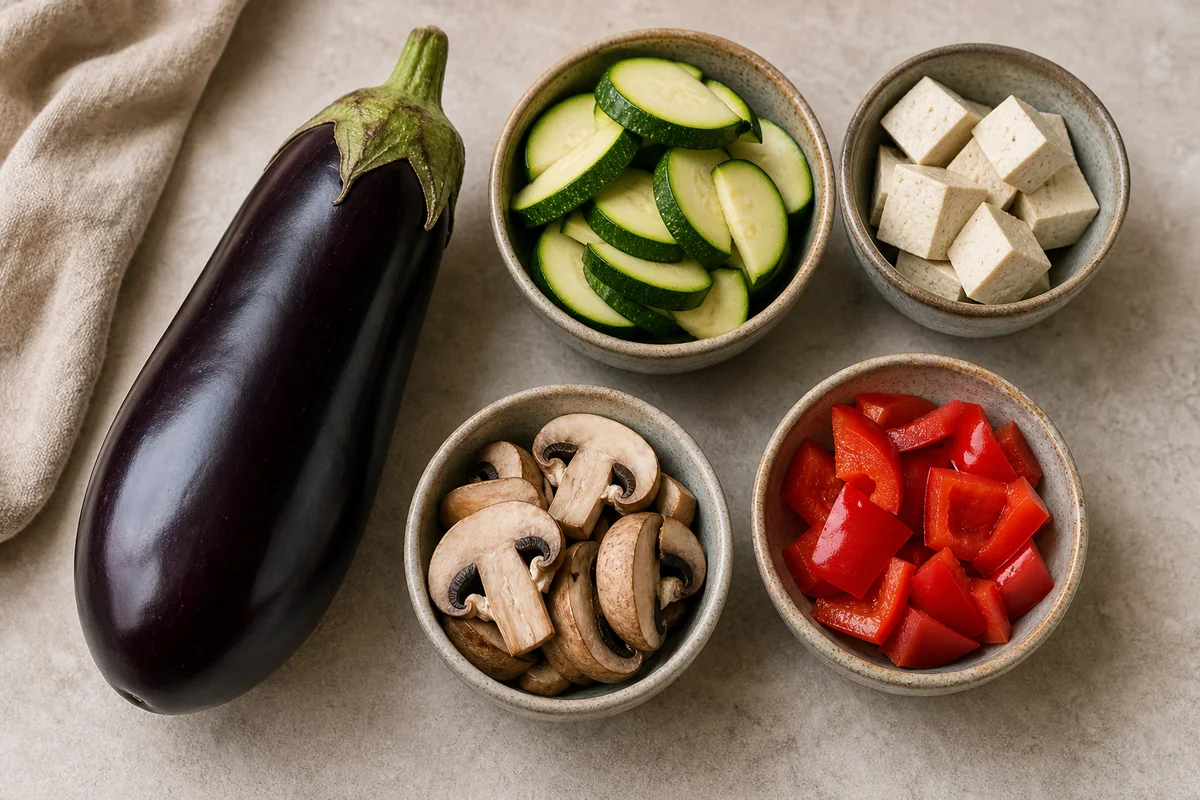
5 Best Eggplant Substitutes (Flavor-Matched)
Ingredients
Equipment
Method
- Decide your cook method (roast/bake, sauté/stir-fry, grill, or saucy stew) and pick the substitute whose texture role matches (browning, absorbency, or tenderness).
- Prep for moisture control: seed zucchini, pat mushrooms drier, and for okra use quick high heat to reduce excess slime.
- Use the 1:1 ratio by volume/weight, then season slightly more aggressively for sweeter swaps (peppers) or adjust with acid for balance.
- For absorbent dishes, let the cut pieces sit in the sauce briefly (not long enough to fully break down unless you want a paste-like texture).
- Taste and adjust: add salt for “eggplant-like” savoriness, and add a squeeze of lemon/vinegar if the swap tastes flat or sweet.
Notes
- If you want eggplant’s signature soft-tender center with browned edges, prioritize zucchini (seeded), mushrooms (dried), or roasted peppers with a salt-and-acid finish.
Tried this recipe?
Let us know how it was!
Carrie is a food writer and editor with more than 15 years of experience. She has worked for some of the biggest names in the food industry, including Bon Appétit, Food & Wine, and Martha Stewart Living.
As the Editor in Chief of EpicureDelight, Carrie oversees all of the content on the site. She also manages the team of contributing writers and editors, who help to create delicious recipes, helpful tips, and informative articles that you’ll find on the site.
A native of the Chicago area, Carrie is passionate about all things food. She loves trying new restaurants and experimenting with new recipes in her kitchen. She’s also a graduate of the Culinary Institute of America, so she knows a thing or two about food!



