
That delicate tangle of pale, needle-thin stems is harder to replace than it looks. The enoki mushroom substitute you pick needs to match two things: the mild, almost neutral flavor and the fragile crunch that holds up for just a moment in hot broth or a fast stir-fry.
Get those two right and no one at the table will notice.
Texture is the real variable here. Some swaps give you a tender chew, some stay firmer, and a few mimic that barely-there crispness enoki is known for.
The cooking method matters just as much, because a mushroom that works in miso soup can turn rubbery in a screaming-hot wok.
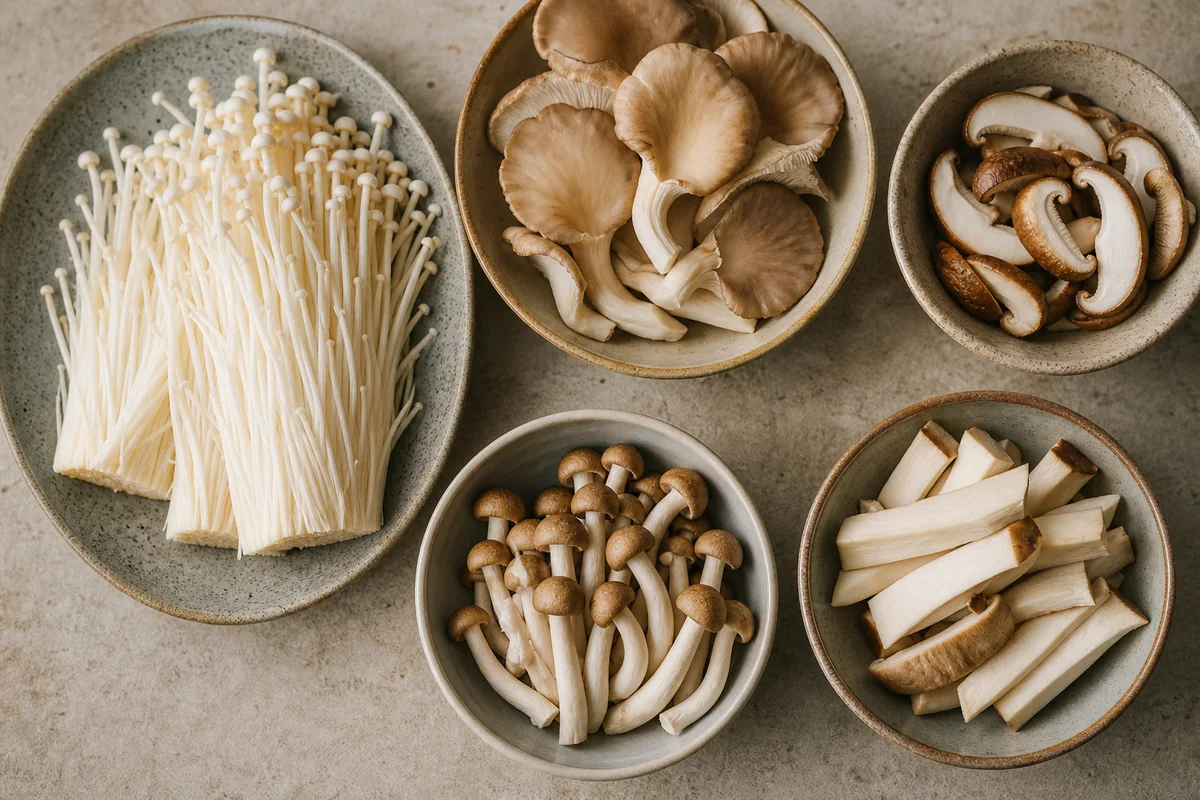
Shimeji mushrooms are the closest match for enoki's delicate bite and mild flavor. Oyster mushrooms sliced thin work well in soups. King oyster, wood ear, and button mushrooms all cover different texture needs depending on how you're cooking.
5 Best Enoki Mushroom Substitutes (Ranked)
These five options are ranked by how closely they match enoki's texture and how easy they are to prep. The table maps each one to a texture type and the dishes where it performs best.
| # | Substitute | Best For | Ratio | Key Note |
|---|---|---|---|---|
| 1 | Shimeji mushrooms | Both | 1:1 | Separate clusters before cooking |
| 2 | Oyster mushrooms | Both | 1:1 | Slice thin for lighter texture |
| 3 | King oyster mushrooms | Soup | 1:1 | Matchstick-cut for enoki feel |
| 4 | Wood ear mushrooms | Both | ¾:1 | Chop small, use less |
| 5 | Button mushrooms | Both | 1:1 | Slice very thin, cook fast |
1. Shimeji Mushrooms
Shimeji ranks first because it is the most honest swap for enoki. The clusters have a similar delicate stem structure, they cook down quickly without turning to mush, and the flavor stays mild enough that they blend into broths and stir-fries without taking over.
The key step is separating the clusters before they hit the pan. Keeping them bunched together slows cooking and creates uneven texture.
If you want to understand more about those pale, tender strands and why texture matters so much, that context helps when selecting any swap.
- Prep: Trim the woody base and pull clusters apart into individual stems or small groups
- Dish fit: Stir-fries, ramen toppings, hot pot, and light broth soups
- Cook time: 2 to 3 minutes in a hot pan; 1 to 2 minutes in simmering broth
Shimeji Mushrooms
Works for: stir-fry, hot pot, ramen, any dish where enoki's delicate bite is expected
Skip if: you want a completely neutral flavor - shimeji can taste slightly earthy when over-browned
2. Oyster Mushrooms
Oyster mushrooms have a gentle, springy chew that lands close to enoki when you slice them thin. They are best in miso soup, ramen, and saucy stir-fries where a little softness is welcome.
If you are already familiar with choosing among tender Asian mushrooms, oyster is the one most cooks keep coming back to.
- Cut: Tear or slice lengthwise into strips about 5mm wide, matching enoki's slender profile
- Cook time: 2 minutes in soup; 3 minutes max in a wok over high heat
- Seasoning: Add salt at the end - oyster mushrooms release water fast and can dilute the sauce if salted early
Skip this one if your dish needs a mostly crisp texture. Oyster mushrooms become noticeably softer than enoki when they spend more than a few minutes in heat.
3. King Oyster Mushrooms
King oyster is firmer and meatier than enoki, but don't let that put you off. The trick is cutting it into matchsticks or shredding it into thin strands so the pieces have a chance to soften to a similar tenderness in broth-based dishes.
The stems are dense, so they hold their shape well without falling apart in a long simmer.
This makes king oyster a good fit for mild, silky mushroom varieties used in clear soups and hot pot where you want the mushroom to stay intact. Cut the pieces thin, around 3 to 4mm wide, and they will soften in about 4 to 5 minutes in simmering liquid.
Skip this one if you want a neutral, mild mushroom flavor. King oyster tastes more meaty than enoki and can shift the overall character of a delicate broth.
4. Wood Ear Mushrooms
Wood ear is a texture-heavy alternative. It does not taste strongly of much, but the chew is notably more pronounced than enoki's fine crunch.
That can work in your favor in hot pot or a bold stir-fry, where a little extra bite is welcome alongside sauce and aromatics. The dark, gelatinous texture of rehydrated wood ear is also why it behaves so differently from the other swaps on this list.
Use about three-quarters of the amount you would use for enoki, and chop the pieces small so they distribute evenly rather than clumping.
| Use | Ratio | Notes |
|---|---|---|
| Hot pot | ¾:1 | Chop into 2cm pieces; add in last 3 minutes |
| Stir-fry | ¾:1 | Pat dry after rehydrating to avoid excess liquid |
| Broth soup | ½:1 | Reduce further - wood ear can dominate clear broths |
- Prep: Soak dried wood ear for 20 minutes in warm water, then rinse and chop
- Size rule: Aim for pieces no larger than 2cm so they blend like enoki strands, not chunks
Skip this one if your recipe depends on enoki's nearly crisp, delicate bite. Wood ear is noticeably chewier and will change the mouthfeel of the dish.
If you find yourself needing other options, chewy mushroom swaps worth considering are listed separately.
5. Button Mushrooms
Button mushrooms are the most available option and the mildest on this list. They do not look like enoki, but when sliced very thin and cooked quickly, they get close enough in soups and saucy stir-fries.
The flavor is neutral, which is one of the things that makes them a reasonable everyday stand-in.
The main risk is rubberiness. If you let them sit too long in a hot pan, they firm up rather than soften.
If you are weighing picking the right common mushroom for a quick weeknight swap, button mushrooms paired with a fast cook time are your safest bet.
Button Mushrooms
Works for: saucy stir-fries, noodle soups, everyday dishes where texture precision isn't critical
Skip if: you need very fine, delicate strands - button mushrooms won't match enoki's slender profile
- Slice thickness: No more than 2mm - use a mandoline or a sharp knife with patience
- Timing: Add them in the last 2 minutes of cooking to avoid overcooking
- Sauce trick: A light sauce or broth tenderizes the slices faster than dry heat alone
Making Enoki Mushroom Substitutes Work
Picking the right swap is half the job. The other half is matching the prep and timing so the substitute behaves like enoki rather than like itself.
When storing stir-fry components ahead of time, keep any prepped mushroom slices in an airtight container so they don't dry out before cooking. In general, the firmer the mushroom, the thinner you should cut it and the hotter the pan should be.
Mushrooms that soften quickly, like oyster, need less time and a gentler touch.
- Texture matching: Cut substitutes into shapes that mimic enoki's slender profile - matchsticks, thin strips, or small separated clusters all work better than large rough-torn pieces
- Cook-time adjustment: Enoki takes 1 to 2 minutes; shimeji and oyster match that closely, but king oyster and wood ear need 3 to 5 minutes to soften to a comparable tenderness
- Liquid control: Oyster and button mushrooms release more water than enoki - cook them on high heat in a dry pan first, then add the sauce so the dish doesn't thin out
Frequently Asked Questions
Yes, shimeji is the closest match for stir-fry. Separate the clusters and cook on high heat for 2 to 3 minutes so they stay distinct rather than clumping.
Not in most dishes. Oyster mushrooms are mild, though slightly more savory than enoki. Thin slicing keeps their flavor from standing out.
Aim for 2mm or thinner. Thicker slices stay firm and chewy rather than softening into a texture that resembles enoki.
King oyster is better for clear broth. Wood ear can make the broth feel heavier, and its stronger chew is more obvious in a light soup.
Usually yes, for firmer swaps like king oyster and wood ear. Shimeji and thin-sliced oyster mushrooms cook in roughly the same time as enoki.
5 Best Enoki Mushroom Substitutes (Ranked)
Ingredients
Equipment
Method
- Decide your texture goal: enoki should feel delicate-crisp for stir-fries or tender for soups.
- Choose the closest match from the ranked list, then measure using the ratio given for that substitute.
- Prep for bite: separate clusters, cut matchsticks thin, or chop/reduce chewy pieces so the swap cooks evenly.
- Adjust cooking time by texture (thin slices and shreds cook faster; chewy mushrooms need longer or more heat).
- Taste and balance: add a small pinch of salt early for mushrooms that taste mild, and reduce liquid slightly if the swap releases more water.
Notes
- Best use-case match depends more on cut size and cooking method than on the mushroom name alone.
- If the substitute releases extra moisture, cook uncovered and reduce sauce at the end.
Tried this recipe?
Let us know how it was!
Carrie is a food writer and editor with more than 15 years of experience. She has worked for some of the biggest names in the food industry, including Bon Appétit, Food & Wine, and Martha Stewart Living.
As the Editor in Chief of EpicureDelight, Carrie oversees all of the content on the site. She also manages the team of contributing writers and editors, who help to create delicious recipes, helpful tips, and informative articles that you’ll find on the site.
A native of the Chicago area, Carrie is passionate about all things food. She loves trying new restaurants and experimenting with new recipes in her kitchen. She’s also a graduate of the Culinary Institute of America, so she knows a thing or two about food!



