
Grapefruit has a personality that no single fruit quite copies: sharp citrus acidity up front, a floral oil from the zest, and a mild bitter finish that keeps sweet dishes from going flat. Finding the right grapefruit substitute depends on which of those three qualities your recipe actually needs.
A cocktail cares about bitterness. A curd cares about zest aroma.
A marinade mostly cares about acid.
Juice swaps and zest swaps behave differently. When a recipe calls for grapefruit juice, any citrus can step in for acidity, but bitterness needs a separate nudge.
When zest is involved, you need a citrus with strong peel oils, and that narrows your options.
The best grapefruit swaps depend on whether you need tang, bitterness, or zest aroma. Orange juice plus a trace of bitters covers most juice-forward uses. Lime with a little orange handles acidity without bitterness. For zest, navel orange peel is the closest match.
5 Best Grapefruit Substitutes Ranked by Flavor Goal
Each swap below targets a specific flavor quality grapefruit brings. Pick by what your recipe relies on most, not by what's easiest to grab.
| # | Substitute | Best For | Ratio | Key Note |
|---|---|---|---|---|
| 1 | Orange juice + orange bitters | Both | 1:1 | Closest bitter match |
| 2 | Tangerine or mandarin juice | Drinks | 1:1 | Bright but less bitter |
| 3 | Lime + orange juice | Both | ¾:1 | Tart, low bitterness |
| 4 | Navel orange zest + juice | Baking | 1:1 | Best for zest aroma |
| 5 | Lemon juice + honey | Both | ¾:1 | Sharp, needs sweetening |
1. Orange Juice + Orange Bitters
Orange juice alone is a reasonable starting point, but it skips grapefruit's defining bitter note entirely. Adding a few dashes of orange bitters pulls the flavor toward grapefruit's finish without making the swap obvious.
Orange Juice + Orange Bitters
Works for: drinks, glazes, salad dressings, marinades needing citrus bitterness
Skip if: your recipe is bitter-sensitive or you're avoiding alcohol-based additives
When swapping in bitters for grapefruit's bite, start with just 2-3 dashes per cup of juice and taste as you go. Bitters are concentrated, and a half-dash too many crosses from pleasant to medicinal fast.
- Base ratio: Start at 1:1 (orange juice to grapefruit juice) before adding any bitters.
- Bitterness step: Add 2 dashes of orange bitters per cup, then taste before adding more.
- For glazes: Reduce the orange juice by 2 tablespoon first, then add bitters at the end of cooking.
- For drinks: Shake bitters in with the juice so they distribute evenly before mixing.
2. Tangerine or Mandarin Juice
Mandarin juice is aromatic and fresh. It is less bitter than grapefruit, but its floral oils make it a surprisingly good stand-in for drinks where aroma matters as much as acidity.
If your recipe relies on grapefruit's bitterness to balance sweetness, mandarin won't hold that line on its own. A pinch of salt helps sharpen its edges and makes it read as more complex than it would otherwise.
- Ratio: Use 1:1 as a direct replacement for grapefruit juice.
- For cocktails: Add a small pinch of salt to tighten the flavor and reduce the impression of sweetness.
- Sugar adjustment: Reduce any added sugar in the recipe by about 1 teaspoon per cup - mandarins are already sweeter.
- For mocktails: A light squeeze of lime alongside mandarin brings the tartness closer to grapefruit territory.
Knowing how to store mandarin or tangerine juice properly keeps the fresh citrus flavor intact longer than you'd expect.
Skip if: your cocktail or dessert depends on grapefruit's bitterness for structure. Mandarin reads as sweet-floral, not bitter-tart.
3. Lime Juice + Orange Juice
This is the sharpest-tasting combination on the list. Lime delivers the kind of clean, punchy acidity that grapefruit has; orange rounds it out so it doesn't taste like a lime drink with a disguise.
The right ratio matters here. Too much lime and the whole thing collapses into sour.
Too much orange and you lose the tang that made you want grapefruit in the first place.
- Base ratio: 3 parts lime juice to 4 parts orange juice (roughly ¾:1 compared to grapefruit).
- For marinades: This ratio works at full strength - no dilution needed.
- For dressings: Add an extra splash of orange to soften the lime edge if it tastes sharp.
- For drinks: A light pinch of salt bridges the two juices and makes the flavor more cohesive.
If your recipe ever leans heavily on lime, choosing an acid-forward replacement for that component keeps the whole swap balanced.
Skip if: you need grapefruit zest oils or a true bitter finish. This blend is bright and tart, but not bitter.
4. Navel Orange Zest + Orange Juice
When a recipe relies on grapefruit zest, it's after the aromatic oils in the peel, not just the acid. Navel orange zest delivers those oils in a similar citrus register, and it pairs naturally with orange juice so nothing feels out of place.
- Zest ratio: Use 1 teaspoon orange zest for every 1 teaspoon grapefruit zest called for.
- When aroma matters most: Add zest late in cooking (or off heat) so the oils don't cook off.
- For syrups and curds: Steep the zest in warm liquid for 5 minutes, then strain before proceeding.
- Juice alongside zest: Use orange juice at 1:1 for any liquid the recipe also needs.
Skip if: your recipe needs grapefruit's bitterness to balance sweetness. Orange zest is aromatic but not bitter, so a very sweet dessert may taste one-dimensional without that edge.
5. Lemon Juice + Honey
Lemon is easy to find and reliably sharp, but on its own it reads as a different kind of citrus entirely. Lemon's acidity is more linear than grapefruit's.
Adding honey or simple syrup recreates some of the sweet-acid rounding that makes grapefruit feel complex.
Lemon Juice + Honey
Works for: desserts, vinaigrettes, sauces, curd, and bright citrus glazes
Skip if: you're making a savory reduction where added sweetness doesn't fit
When replacing sharp citrus in a recipe, start at ¾ the amount your recipe calls for and taste before adding the rest. Lemon punches harder than grapefruit, so going in at full volume often overshoots.
- Base ratio: ¾ cup lemon juice for every 1 cup grapefruit juice called for.
- Sweetener step: Start with 1 teaspoon honey or syrup per ¼ cup of lemon juice, then taste.
- For vinaigrettes: Add the honey with the oil so it emulsifies cleanly into the dressing.
- For desserts: Slightly tart lemon curd with honey is a good analogue for grapefruit curd.
Making Grapefruit Substitutes Work
The quickest way to choose a swap is to decide upfront which of grapefruit's three qualities your recipe actually needs: tang, aroma, or bitterness. Nail that one thing first, and then adjust the others in small increments.
Swaps fail when cooks try to fix flavor in one large pour rather than several small ones.
- Juice vs. zest: If the recipe uses both, handle them separately. The citrus juice options listed here cover liquid volume and acidity, but they won't replace zest fragrance. Use orange or lemon zest alongside whichever juice swap you pick.
- Adjusting bitterness last: Add bitters, a pinch of citrus pith, or a tiny amount of tonic water after you've set the sweetness level. Bitterness perception shifts when sugar is present, so sequence matters.
- Salt and sugar as tools: A pinch of salt sharpens citrus and reduces the perception of sweetness. A small amount of sugar or honey softens acidity. Both adjustments are more powerful than they look, so move in ¼-tsp steps and taste between each addition.
Frequently Asked Questions
Orange juice plus 2-3 dashes of orange bitters is the closest match. It covers both the citrus brightness and the mild bitterness that cocktails like a Paloma depend on.
Steep navel orange zest in warm liquid for 5 minutes and strain it out. The oils transfer well and approximate grapefruit's floral citrus perfume in syrups and curds.
None of them is bitter on its own. Orange juice paired with orange bitters is the only juice-based option that gets close to grapefruit's bitter finish.
Yes, but taste it first. Bottled juice is often sweeter and less bitter than fresh, so you may need to reduce added sugar slightly or add a dash of bitters.
Too sour: add honey or simple syrup in ¼-tsp increments. Too sweet: add a small pinch of salt or a small squeeze of lemon to sharpen the flavor back up.
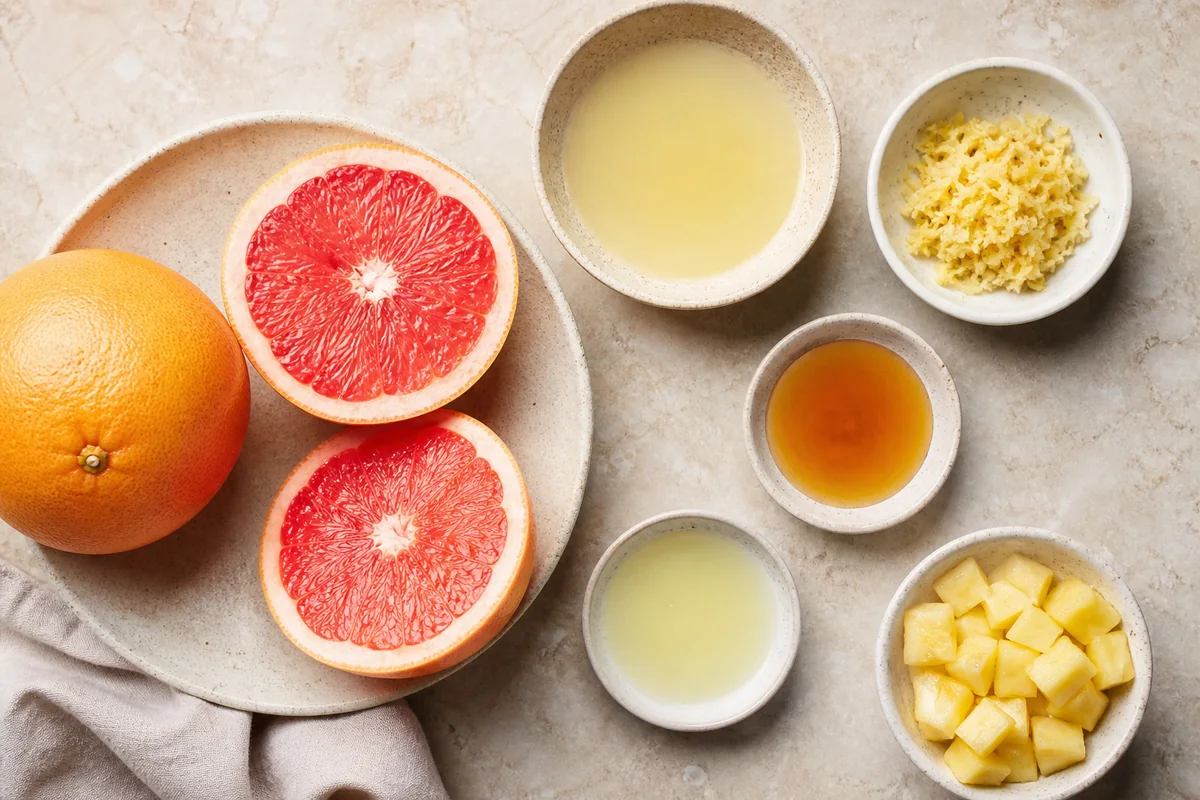
5 Best Grapefruit Substitutes (Easy Swaps)
Ingredients
Equipment
Method
- Decide what you’re missing: grapefruit’s tang, its grapefruit-like aroma (zest), or its mild bitterness.
- Start with the ratio listed for your closest match; use grapefruit juice-to-juice or zest-to-zest behavior.
- If the substitute tastes flat, sharpen with a pinch of salt (for sweet drinks) or a tiny splash of citrus.
- If it tastes too sharp or too sour, balance with a small amount of sugar/honey; if too mild, add a trace of bitterness.
- Taste, then adjust in small increments so the swap doesn’t overpower your recipe’s main flavors.
Notes
- For drinks and dressings, flavor matching matters more than exact fruit type—adjust bitterness last.
- If your recipe uses zest, add zest earlier so it has time to bloom (especially in syrups).
Tried this recipe?
Let us know how it was!
Carrie is a food writer and editor with more than 15 years of experience. She has worked for some of the biggest names in the food industry, including Bon Appétit, Food & Wine, and Martha Stewart Living.
As the Editor in Chief of EpicureDelight, Carrie oversees all of the content on the site. She also manages the team of contributing writers and editors, who help to create delicious recipes, helpful tips, and informative articles that you’ll find on the site.
A native of the Chicago area, Carrie is passionate about all things food. She loves trying new restaurants and experimenting with new recipes in her kitchen. She’s also a graduate of the Culinary Institute of America, so she knows a thing or two about food!



