
That sticky, amber block sitting in your pantry does more than just sweeten a dish. Jaggery adds a caramel-toffee depth, a warm brown color, and a bit of moisture that plain white sugar simply can't match. If you're out of it, the right jaggery substitute depends on what your recipe actually needs: color, flavor intensity, or texture.
Baking recipes are stricter than stovetop ones. A curry or sauce forgives a looser swap; a cookie or cake notices color shift and moisture change.
Knowing which role jaggery plays in your specific dish makes the difference between a good result and a flat one.
Brown sugar is the fastest swap, used at a ¾:1 ratio. For darker color and deeper flavor, muscovado or turbinado with molasses comes closest to jaggery's toffee notes. Liquid substitutes like maple syrup and honey add moisture, so reduce other liquids slightly.
5 Best Jaggery Substitutes, Ranked by Usefulness
| # | Substitute | Best For | Ratio | Key Note |
|---|---|---|---|---|
| 1 | Brown Sugar (Light, Packed) | Baking | ¾:1 | Mild caramel, slightly lighter |
| 2 | Muscovado (Dark Brown Sugar) | Both | 1:1 | Closest in depth and color |
| 3 | Turbinado + Molasses | Both | 1:1 | Pinch of molasses for toffee |
| 4 | Maple Syrup (Dark) | Baking | ¾:1 | Reduce added liquid 1-2 tbsp |
| 5 | Honey (with pinch of depth) | Both | ⅔:1 | Browns fast; lower oven temp |
Skip this table if your recipe needs jaggery's exact granular texture and the substitute won't dissolve evenly in the batter.
1. Brown Sugar (Light, Packed)
Brown sugar is the easiest everyday swap. It has a gentle caramel note and similar sweetness, though it's lighter in color and less complex than jaggery.
Use a ¾:1 ratio to avoid over-sweetening. The slight reduction also keeps the baked color closer to what jaggery would produce.
If you want a hint of darker depth, learning about caramel-forward swaps can help you push the flavor further.
Brown Sugar in Baking
Works for: Cookies, cakes, glazes, and quick sauces where mild caramel color is acceptable
Skip if: Your recipe depends on jaggery's deeper molasses-like flavor and you can't add a pinch of molasses
- Best baking use: Cookies, banana bread, and simple cakes where a slightly lighter color is fine
- Ratio: ¾ cup brown sugar for every 1 cup jaggery called for
- Troubleshooting: Brown sugar dissolves faster than jaggery; don't over-cream or you'll lose structure in the batter
2. Muscovado (Dark Brown Sugar)
Muscovado is the closest thing to jaggery in a standard grocery store. It has a heavy molasses content, a sticky texture, and a bold, almost smoky sweetness that reads very close to jaggery's depth in baked goods.
The color is dark and the flavor is strong. That's a good thing if you're baking dark cookies, spiced cakes, or anything gingerbread-adjacent.
Knowing the muscovado vs. brown contrast helps when choosing between the two for lighter recipes.
- Ratio: 1:1 with jaggery; no other adjustment needed for most recipes
- Color: Very dark brown, nearly matches jaggery's visual depth in finished bakes
- Best recipes: Dark chocolate cookies, spiced cakes, gingerbread-style bakes, and Indian-inspired sweets
- Skip if: You're making a light-colored dessert and need a paler, milder sweetener
3. Turbinado + Molasses
Turbinado on its own is too light for jaggery's flavor. Add a small molasses pinch, though, and the combination hits both the caramel-grain texture and the dark, toffee-like notes that jaggery brings to sauces, batters, and syrups.
The key is restraint with the molasses. Too much and it turns bitter and overpowering.
Dark syrup options are worth understanding before you pour.
- Ratio: 1:1 turbinado to jaggery, then stir in the molasses pinch before adding to the batter
- Dissolving tip: Warm slightly in 1 tablespoon of liquid from the recipe to help turbinado grains dissolve evenly
- Best for: Syrups, sauces, chutneys, and batters where slight grain texture is acceptable
- Skip if: The recipe calls for a smooth, lump-free consistency, such as custards or fine-set puddings
4. Maple Syrup (Dark)
Dark maple syrup brings genuine caramel notes and a rich amber color that works surprisingly well instead of jaggery in moist bakes. The trade-off is liquid.
Maple syrup adds moisture to your batter, and you need to account for that.
Use a ¾:1 ratio and reduce any other added liquid in the recipe by 1 to 2 tablespoon per half-cup equivalent. If your bake already runs wet (like a dense pudding cake), drop the liquid reduction to 1 tablespoon and check the batter consistency before baking.
If you want to understand how this sweetener behaves across recipes, the flavor profile of maple covers the key points. When swapping in other liquid sweeteners, choosing a syrup alternative gives useful side-by-side context.
Skip if: You want a neutral, brown sugar-style flavor. Maple has a distinct aroma that some recipes will carry, especially in simple batters.
5. Honey (Lightly Darkened)
Honey is sweeter than jaggery and lighter in caramel character. On its own, it lacks the toffee-dark note that jaggery delivers.
A small addition fixes that: stir in a pinch of cinnamon or a very small molasses drop, and the depth comes much closer.
Honey also browns faster in the oven. If your recipe already runs to a golden color at standard temperatures, drop the oven by 10-15°F or shorten the bake time by a few minutes.
Honey as a Jaggery Swap
Works for: Moist cakes, soft cookies, energy bars, marinades, and sauces where caramel sweetness matters
Skip if: The dish relies on jaggery's toffee depth and you can't add any extra flavoring
- Ratio: ⅔ cup honey for every 1 cup jaggery
- Best baking uses: Soft cookies, muffins, flapjacks, and dense cakes where a little extra moisture helps
- Browning adjustment: Lower oven temp by 10-15°F if batter darkens quickly; check doneness 3-5 minutes early
- Depth fix: Add ¼ teaspoon cinnamon or a tiny drop of molasses to pull flavor closer to jaggery
Making Jaggery Substitutes Work in Any Recipe
Getting a substitute right comes down to three things: matching sweetness and color, handling any liquid changes, and managing how fast your baked good browns. Most failures happen when a cook swaps the sweetener but ignores everything else.
Recipes using properly stored brown sugar hold moisture well, which mirrors jaggery's behavior in batters. For granular swaps like turbinado, swapping granulated options gives useful technique detail on dissolving.
- Match sweetness and color first: Use the ratio as written, then taste the batter. Add a small molasses pinch if the depth falls short.
- Adjust liquid for syrupy substitutes: Maple syrup and honey both add moisture. Reduce other recipe liquids by 1-2 tablespoon per half-cup of sweetener to keep texture on target.
- Manage browning and dissolving: Liquid substitutes brown faster; lower oven temp slightly. Granular ones need thorough mixing; undissolved grains create gritty pockets in the finished bake.
Frequently Asked Questions
We recommend ¾:1 instead of 1:1. Brown sugar is sweeter and lighter, so the reduced ratio keeps both sweetness and color closer to what jaggery produces in the finished bake.
Muscovado sugar is the best match for dark color, used at a 1:1 ratio. It has high molasses content and a very deep brown tone that nearly matches jaggery visually.
Use a ¾:1 ratio and reduce other added liquids by 1-2 tablespoon per half-cup equivalent. Check batter consistency before baking and pull back another tablespoon if it looks too loose.
Yes, honey has a floral note that jaggery doesn't. Add a small pinch of cinnamon or a drop of molasses to push the flavor toward jaggery's toffee character.
Bitter flavor means too much molasses. Add a small pinch of salt and a teaspoon of plain sugar to the batter; both balance molasses bitterness without altering the recipe structure significantly.
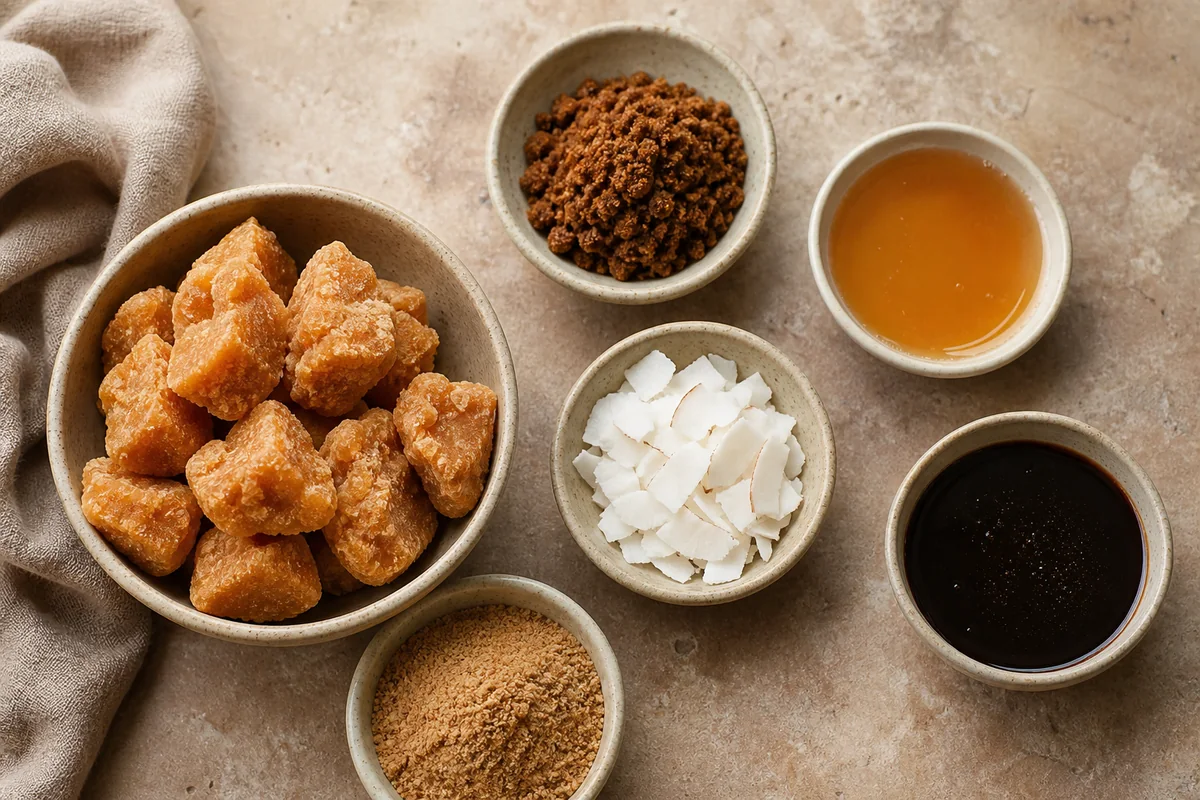
5 Best Jaggery Substitutes You Can Trust
Ingredients
Equipment
Method
- Identify your goal: caramel/toffee flavor, dark color, or moist texture (baking) and pick the closest substitute from the list above.
- Use the listed ratio (for baking accuracy). If the substitute is liquid (maple syrup/honey), reduce recipe added liquid slightly.
- For darker color and deeper notes, add molasses (especially when using white sugar or turbinado).
- Mix until fully dissolved or evenly distributed; jaggery swaps can be gritty if under-mixed.
- Taste the batter/sauce before baking: adjust with a pinch more darkener (molasses) for depth or a touch of salt to balance sweetness.
Notes
- If your recipe relies on jaggery’s liquid nature (syrupy texture), pick maple syrup or honey and reduce added liquid.
- If your recipe expects jaggery’s dark caramel flavor, brown sugar, muscovado, and molasses-based mixes perform best.
Tried this recipe?
Let us know how it was!
Carrie is a food writer and editor with more than 15 years of experience. She has worked for some of the biggest names in the food industry, including Bon Appétit, Food & Wine, and Martha Stewart Living.
As the Editor in Chief of EpicureDelight, Carrie oversees all of the content on the site. She also manages the team of contributing writers and editors, who help to create delicious recipes, helpful tips, and informative articles that you’ll find on the site.
A native of the Chicago area, Carrie is passionate about all things food. She loves trying new restaurants and experimenting with new recipes in her kitchen. She’s also a graduate of the Culinary Institute of America, so she knows a thing or two about food!



