
Lillet Blanc has a flavor that's harder to fake than most people expect. It's pale and wine-forward, yes, but there's a bitter-orange edge and a soft herbal hum underneath that most plain white wines just don't carry.
A solid lillet blanc substitute needs to at least gesture at those two things: the quiet bitterness and the citrus lift.
The good news is that most bar carts already have something that can stand in. Dry vermouth, sherry, and even a well-doctored glass of white wine can all get you close.
What you pick depends heavily on whether you're mixing drinks or cooking.
Dry vermouth is the fastest swap for cocktails. White wine with gentian bitters gets closest to Lillet's herbal-bitter top note. For baking or sauces, dry sherry with lemon zest is the most forgiving option. Use a 1:1 ratio across all swaps, then taste and adjust with zest or a pinch of sugar.
Lillet Blanc Substitute Guide (Quick Reference)
These six options cover most situations. The ratio is 1:1 across the board, so the only real variable is how much you want to chase Lillet's bitterness versus its citrus softness.
If your cocktail already has a bitters component, go with the mildest swap on this list.
| # | Substitute | Best For | Ratio | Key Note |
|---|---|---|---|---|
| 1 | Dry Vermouth + White Wine | Both | 1:1 | Closest bitterness and body |
| 2 | Martini & Rossi Extra Dry | Both | 1:1 | More herbal, brighten with peel |
| 3 | White Wine + Gentian Bitters | Both | 1:1 | Rebuilds herbal-bitter top note |
| 4 | Dry Sherry + Lemon Zest | Both | 1:1 | Best for sauces and spritz |
| 5 | Dry White Wine + Vinegar | Both | 1:1 | Emergency brightness only |
| 6 | Sweet Vermouth + Soda Water | Drinks | 1:1 | Dilute until dryness reads right |
5 Best Lillet Blanc Swaps Ranked by Use
1. Dry Vermouth + White Wine
Dry vermouth already carries most of what Lillet does: a mild herbal bitterness, a wine base, and that slightly oxidized complexity. Adding a small splash of Sauvignon Blanc or any neutral wine-based pick lightens the body and pulls it closer to Lillet's pale, lower-alcohol feel.
Use a 3:1 ratio of vermouth to wine within your total substitute amount.
This is our top pick for gin-based cocktails and light spritz drinks. In baking, it works in place of Lillet in any recipe where the wine is a braising or deglazing liquid.
- Best use: Cocktails first, light pan sauces second
- Ratio: 1:1 total (mix as 3 parts vermouth to 1 part white wine)
- Adjustment: Add a strip of lemon zest to the drink; skip extra sugar unless the recipe is already undersweetened
- Tasting cue: Should read dry, mildly bitter, and citrus-edged - not sharp or medicinal
Skip if: The recipe already has enough sweetness built in. The vermouth-wine mix is drier than Lillet, so adding extra sugar here can overshoot.
2. Martini & Rossi Extra Dry Vermouth
This is the easiest single-bottle pour when you want to stay in vermouth territory. Martini & Rossi Extra Dry is widely stocked and has the dry, botanical edge that holds up in both shaken and stirred drinks.
The catch is that it runs more herbal than Lillet, so you'll want to soften it with a piece of lemon peel.
Martini & Rossi Extra Dry
Works for: Light cocktails, spritz, wine-based reductions, and baking where a dry note is welcome
Skip if: You need a distinctly citrus-forward aroma - the herbal character here can overpower delicate drinks
- Ratio: 1:1, no dilution needed
- Best cocktails: Vesper-style drinks, any recipe calling for a dry wine aperitif
- Baking: Works in sauces and glazes; reduces cleanly without turning bitter
- Adjustment: Drop a strip of lemon peel in for 2 minutes, then remove it before serving
3. White Wine + Gentian or Quinquina Bitters
You're rebuilding the herbal-bitter top note that white wine alone can't supply. Start with a dry-to-off-dry white, then add bitters one drop at a time.
The flavor notes in Lillet include a bitter-orange quality that gentian and quinquina bitters both carry naturally.
- Ratio: 1:1 total (start with wine, then add bitters to taste)
- Drop count: Begin with 2 drops per 3 oz of wine; add 1 more at a time and taste after each
- Best for: Refreshing cocktails, light cream sauces, and any recipe where Lillet is a major aromatic
- Aroma check: It should read bitter-orange and herbal - if it tips toward medicinal, you've added too much
Skip if: You're making a sweet dessert sauce. Bitters in a sweet context can turn the whole thing weirdly astringent.
4. Dry Sherry + Lemon Zest
Dry sherry - a fino or manzanilla specifically - has real complexity without being wine-simple. It's nutty and slightly saline, which sounds far from Lillet but actually reads well once you add lemon zest to restore the citrus brightness.
For anyone swapping out sherry in other recipes, the substitution logic runs in both directions here.
- Ratio: 1:1, with the zest of about ¼ lemon per 3 oz sherry
- Best use cases: Spritz-style drinks, pan sauces, and light baking (think citrus cakes or chicken braises)
- Adjustment: If the aroma is still flat after zesting, add a second small strip and let it sit for 1 minute
- Bitterness expectation: Lower than Lillet - this swap trades bitterness for savory depth, which works in food but less so in bitter-forward cocktails
Skip if: You only have cream sherry. Its sweetness pushes everything toward dessert territory, which is hard to dial back.
5. Dry White Wine + Micro-Dose Vinegar
This is the emergency option. It won't replace Lillet's bitterness, but it restores the brightness and acid lift that keeps a cocktail or sauce from tasting flat.
Use white-wine vinegar for dosing rather than balsamic, which will color and sweeten the drink. The vinegar should be nearly undetectable when you taste it.
| Use | Ratio | Notes |
|---|---|---|
| 1 serving | 3 oz wine + 1-2 drops vinegar | Start with 1 drop; taste before adding a second |
| 2 servings | 6 oz wine + 3-4 drops vinegar | Stir gently; vinegar disperses unevenly if not mixed |
| 4 servings | 12 oz wine + ¼ teaspoon vinegar | Use a measuring spoon; eyeballing risks overshooting |
- Ratio: 1:1 by volume (wine replaces Lillet); vinegar is additive, not a swap
- After 2-3 minutes: It should taste bright and lightly tart - not sour, not sharp
- What not to do: Don't add vinegar and immediately taste - give it a minute to integrate or you'll misjudge the level
- Best for: Light spritz drinks, quick pan reductions, and any recipe where Lillet was only a background note
Skip if: Your dish already has lemon juice or another acid component. Adding vinegar on top will push it harsh.
Making Lillet Blanc Substitutes Work
Matching bitterness first is the right starting point. Once the bitter register is close, you add citrus lift (lemon zest or a squeeze), then round sweetness only if needed.
The order matters: if you reach for sugar before fixing the bitterness, you'll end up masking the problem rather than solving it. Among the options above, the vermouth-side swaps handle bitterness natively, while the wine-based ones rely on bitters or acid to get there.
For baking specifically, choosing a lower-alcohol option is worth considering if you want the liquid to reduce without concentrating alcohol flavor.
- Quick taste-check: After mixing, taste after 2 minutes - aroma blooms slowly, and early tastes can mislead you into over-adjusting
- Cocktail vs baking: In cocktails, bitterness matters more; in baking or sauces, citrus and sweetness are what survives heat, so prioritize those
- Adjustment ladder: First try lemon zest (lowest impact), then a single drop of bitters (medium), then a tiny pinch of sugar only if still flat
Frequently Asked Questions
Dry vermouth mixed with a small splash of white wine is the closest match. Use a 3:1 vermouth-to-wine ratio within your total substitute amount and add lemon zest to restore citrus lift.
Yes, at a 1:1 ratio. Dry vermouth reduces cleanly and holds its herbal note under low heat, making it reliable in sauces and braising liquids.
Add a micro pinch of sugar and a strip of lemon peel, then wait 2 minutes before tasting again. Avoid adding more wine to dilute - it flattens the flavor instead of balancing it.
Lemon zest is the fastest fix - use the zest of about ¼ lemon per 3 oz of substitute and let it sit for 1-2 minutes. A single drop of orange bitters also works if you want more aromatic complexity.
It works for sipping-style drinks when nothing drier is available. Dilute until the sweetness pulls back to a light aperitif level, then add lemon peel - but skip this swap for any reduction or sauce.
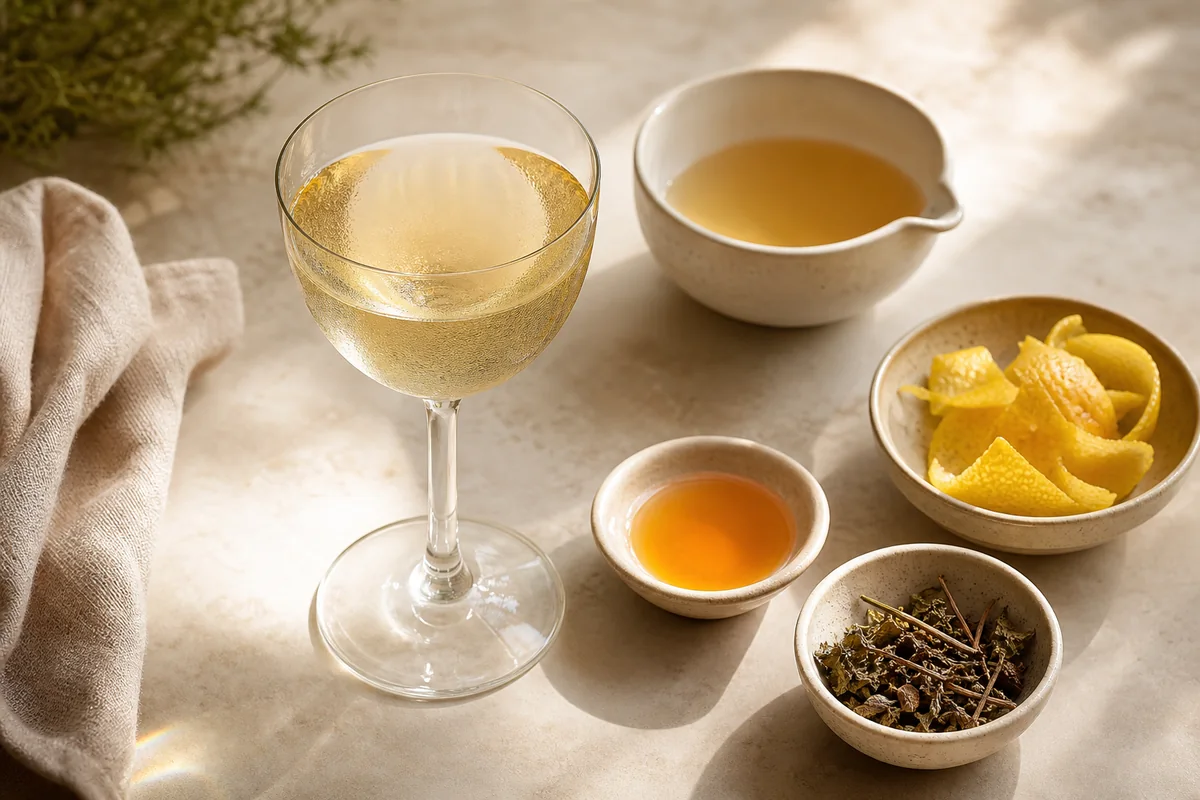
5 Best Lillet Blanc Substitutes (Honest Picks)
Ingredients
Equipment
Method
- Identify how you’re using Lillet Blanc: mostly in a cocktail/drink, or as an ingredient in a sauce/baking mix.
- Pick the closest match by flavor: Dry vermouth-based swaps for bitterness + herbiness; white wine + lemon/zest to restore the citrus lift.
- Use the listed 1:1 ratio (substitute amount in place of Lillet). If your swap is less bitter, add a small squeeze of lemon; if too bitter, add a small pinch of sugar.
- Let it sit 2–5 minutes (especially cocktails) so the aroma settles. Taste once and adjust bitterness (bitters/vermouth) or sweetness (micro pinch).
- For baking or pan sauces, reduce very gently over low heat to concentrate flavor without turning harsh.
Notes
- Lillet Blanc is valued for a pale, lightly bitter, herbal-citrus profile—match bitterness first, then add citrus lift.
- If your substitute lacks sweetness and you’re using it in drinks, a micro pinch of sugar can round the edges without making it dessert-like.
Tried this recipe?
Let us know how it was!
Carrie is a food writer and editor with more than 15 years of experience. She has worked for some of the biggest names in the food industry, including Bon Appétit, Food & Wine, and Martha Stewart Living.
As the Editor in Chief of EpicureDelight, Carrie oversees all of the content on the site. She also manages the team of contributing writers and editors, who help to create delicious recipes, helpful tips, and informative articles that you’ll find on the site.
A native of the Chicago area, Carrie is passionate about all things food. She loves trying new restaurants and experimenting with new recipes in her kitchen. She’s also a graduate of the Culinary Institute of America, so she knows a thing or two about food!



