Moroccan chickpea and squash stew cooks butternut squash, carrots, canned chickpeas and dried apricots in a tomato broth flavored with cumin, coriander, cinnamon and paprika.
One pot makes six bowls at about 260 calories each, which puts it well inside our low-calorie vegan winter dinners with room left for couscous or flatbread on the side.
The whole pot is ready in 55 minutes. Each 1 ½-cup bowl carries about 9 grams of protein and 11 grams of fiber. There is no coconut milk and no cream in it: the squash and a spoonful of mashed chickpeas thicken the broth.
A vegan Moroccan stew of butternut squash and chickpeas in spiced tomato broth, about 260 calories a bowl and thick without cream.
Save This Chickpea and Squash Stew
A vegan Moroccan-spiced stew with butternut squash, chickpeas and dried apricots, about 260 calories a bowl.
Why This Moroccan Stew Works
- Squash cut to ¾ inch. Cubes this size soften in 25 minutes of simmering while the corners stay sharp, so every spoonful has chunks instead of orange mush.
- Spices cooked with the tomato paste. One minute in the hot oil and paste wakes up the cumin, coriander and cinnamon, so the broth tastes of them from the first bite.
- Dried apricots for sweet and sour. Only ⅓ cup goes in, about 18 calories a bowl, and it answers the cumin with a fruity tartness that sugar would not give.
- Two cans of chickpeas as the protein. They supply about 34 grams of protein for the pot, and rinsing them first removes part of the sodium from the canning liquid.
- Body without cream. A cup of canned full-fat coconut milk would add about 445 calories, or 74 a bowl; a half cup of mashed stew thickens the broth for nothing extra.
Butternut squash is the right squash here: it holds its cubes through 25 minutes of simmering and brings a sweetness that the spices need.
Most chickpea stews that taste rich get there with coconut milk. Our coconut chickpea curry and the pumpkin soup with coconut milk both do, and this stew takes the other route: a tomato base, spices and fruit, which keeps each bowl at about 260 calories.
What You Need
The whole pot comes from the pantry and the produce drawer. Two 15-ounce cans of chickpeas do the work of the protein, and our guide to how chickpeas taste explains why they stay mild enough to carry the spices.
- 1 tablespoon olive oil
- 1 large yellow onion, diced
- 2 medium carrots, sliced ½ inch thick
- 3 cloves garlic, minced
- 1 tablespoon fresh ginger, grated
- 1 ½ pounds butternut squash, peeled and seeded, cut into ¾-inch cubes (about 5 cups)
- 2 tablespoons tomato paste
- 2 teaspoons ground cumin
- 2 teaspoons ground coriander
- 1 ½ teaspoons ground cinnamon
- 1 teaspoon paprika
- ½ teaspoon ground turmeric
- ¼ teaspoon cayenne pepper
- ½ teaspoon fine salt
- 1 can (14.5 ounces) diced tomatoes, with their juice
- 2 cans (15 ounces each) chickpeas, drained and rinsed
- 3 cups low-sodium vegetable broth
- ⅓ cup dried apricots, chopped
- 3 cups baby spinach, packed
- 1 tablespoon lemon juice
- ¼ cup fresh cilantro, chopped
Ingredient Details
- Butternut squashA 2-pound squash gives about 1 ½ pounds once peeled and seeded. Microwave the whole squash for 2 minutes first if the skin fights the peeler, or buy pre-cut cubes.
- ChickpeasPour them into a colander and rinse until the foam stops. The recipe counts 2 cans drained, about 3 cups of chickpeas.
- Dried apricotsChop them to raisin size so they soften and spread through the broth instead of sitting in lumps.
- Vegetable brothLow-sodium broth keeps each bowl near 560 milligrams of sodium. Check that the label lists no animal ingredients, since a few brands add them.
- Cinnamon1 ½ teaspoons reads as warm background. Doubling it makes the stew taste like dessert.
Ingredient Swaps
Four gaps come up most often: no butternut, no apricots, no cayenne, and no spinach. Each swap keeps the pot under 450 calories a bowl, and the squash swap is the only one that moves the number much.
- Sweet potato for butternut: use 1 ½ pounds peeled sweet potato in ¾-inch cubes and check it at 20 minutes. It adds about 45 calories a bowl, and more butternut squash swaps are ranked in our guide.
- Golden raisins for apricots: use ⅓ cup, no chopping needed.
- Harissa for cayenne: stir 1 tablespoon harissa paste in with the spices for a hotter, smokier stew, and see our harissa paste alternatives if the jar is empty.
- Kale for spinach: use 3 cups chopped, stemmed kale and simmer it 5 minutes instead of 2.
Canned chickpeas
Go in straight from the colander, with no soaking and no extra pot.
They are softer than home-cooked ones, so stir gently after the squash is tender.
Dried chickpeas, cooked at home
Firmer bite and no canning liquid. About 1 ¼ cups dry makes the 3 cups the stew needs.
They need an overnight soak and about 60 to 90 minutes of simmering, and they add about 20 calories a bowl.
If lentils are in the pantry instead of chickpeas, a red lentil stew is the closest swap, since red lentils break down as they cook and give a thicker pot. Squash lovers who want a chili can look at the butternut bean chili, which pairs the same squash with white beans.
How to Make Moroccan Chickpea and Squash Stew
Use a 5-quart Dutch oven or a heavy pot of similar size. The stew fills it more than halfway before the spinach goes in, and a lid that sits slightly ajar lets the broth reduce as it simmers.
- Cook the onion and carrots. Warm 1 tablespoon olive oil in a 5-quart Dutch oven over medium heat. Add the onion and carrots and cook 6 to 8 minutes, until the onion is soft and see-through at the edges.
- Toast the spices. Stir in the garlic, ginger, tomato paste, cumin, coriander, cinnamon, paprika, turmeric and cayenne. Cook 1 minute, stirring constantly, until the paste darkens and the pot smells toasted. If it sticks, add 2 tablespoons of the broth.
- Add the squash and liquids. Add the squash, tomatoes with their juice, chickpeas, broth, apricots and salt, and scrape up the browned bits from the bottom.
- Bring to a boil. Bring to a boil over high heat, about 5 minutes, then lower to medium-low.
- Simmer until tender. Cover with the lid slightly ajar and simmer 25 minutes, stirring twice, until a knife slides into a squash cube with no resistance and the cubes keep their corners.
- Mash to thicken. Mash about ½ cup of the stew against the side of the pot with the back of a spoon to thicken the broth.
- Wilt the spinach. Stir in the spinach and cook 2 minutes, uncovered, until it wilts.
- Finish and serve. Take the pot off the heat and stir in 1 tablespoon lemon juice. Top each bowl with the cilantro.
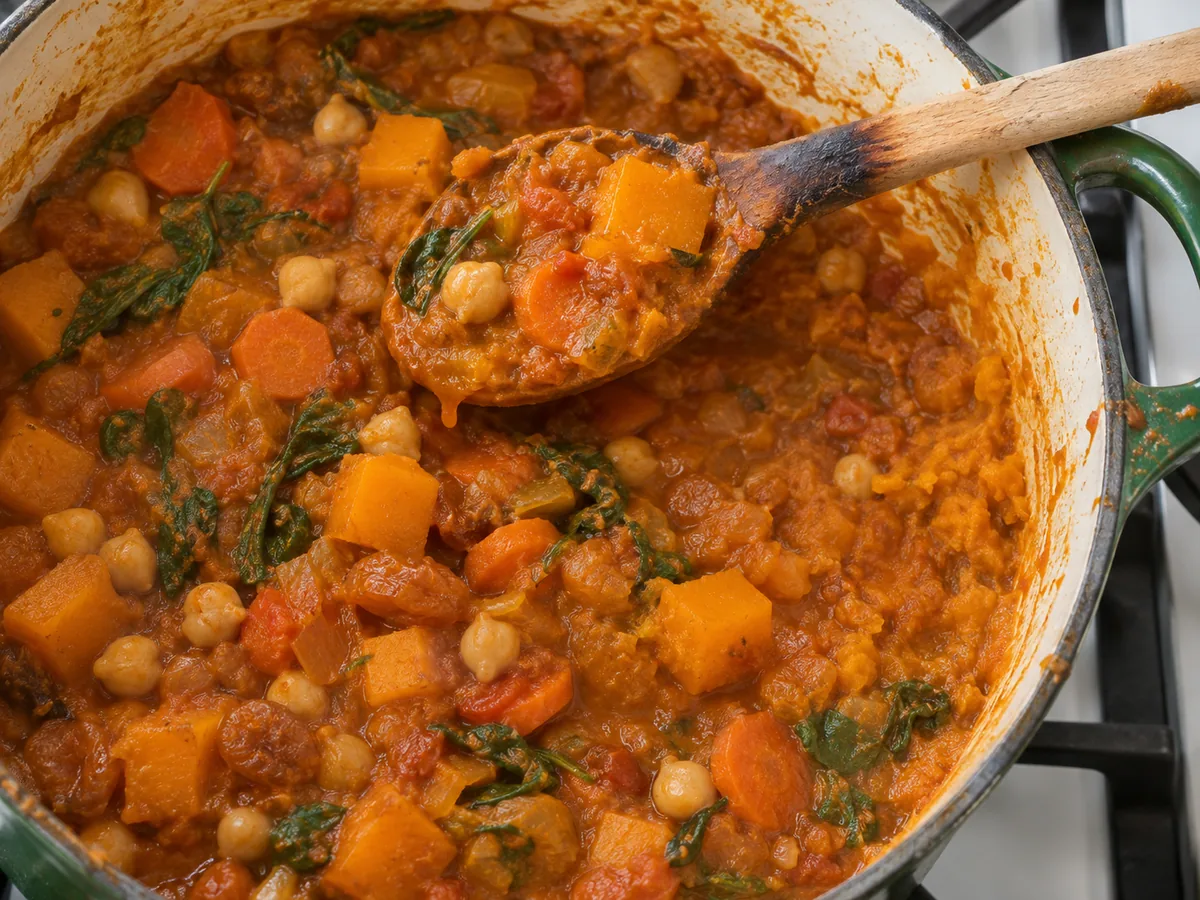
The pot is ready when the broth is thick enough to cling to a spoon and the squash cubes break under a spoon but have not melted into the liquid. A thin, watery broth only needs 5 to 10 more minutes uncovered, and mash another ¼ cup of the chickpeas and squash if it still runs.
Peel every strip of butternut skin. Skin left on stays chewy after 25 minutes of simmering, even when the flesh around it is tender.
What to Serve With It
A bowl of stew alone is about 260 calories, so one starch of about 90 calories fits and keeps the dinner under 450.
Couscous is the traditional pairing, and our list of couscous side dishes shows what else sits beside it. A salad such as a kale and apple salad gives a crisp, tart contrast to the soft squash.
| Side | Prep | Why It Works |
|---|---|---|
| Couscous | Easy | Soaks up the broth, adding about 90 calories |
| Brown rice | Easy | Chewier, with more fiber than couscous |
| Warm whole-wheat flatbread | Easy | Scoops up the last of the broth |
| Kale and apple salad | Medium | Crisp and tart against soft squash |
Spoon the stew over ½ cup of cooked couscous or rice, warm the flatbread in a dry skillet 30 seconds per side, and serve the salad on a small plate beside the bowl.
Stew over ½ cup of couscous comes to about 350 calories. A larger grain portion or a big piece of flatbread pushes the plate toward 450, so measure the starch before ladling the stew over it.
Couscous is the best match: it takes up the broth and adds only about 90 calories to a bowl.
Store and Reheat
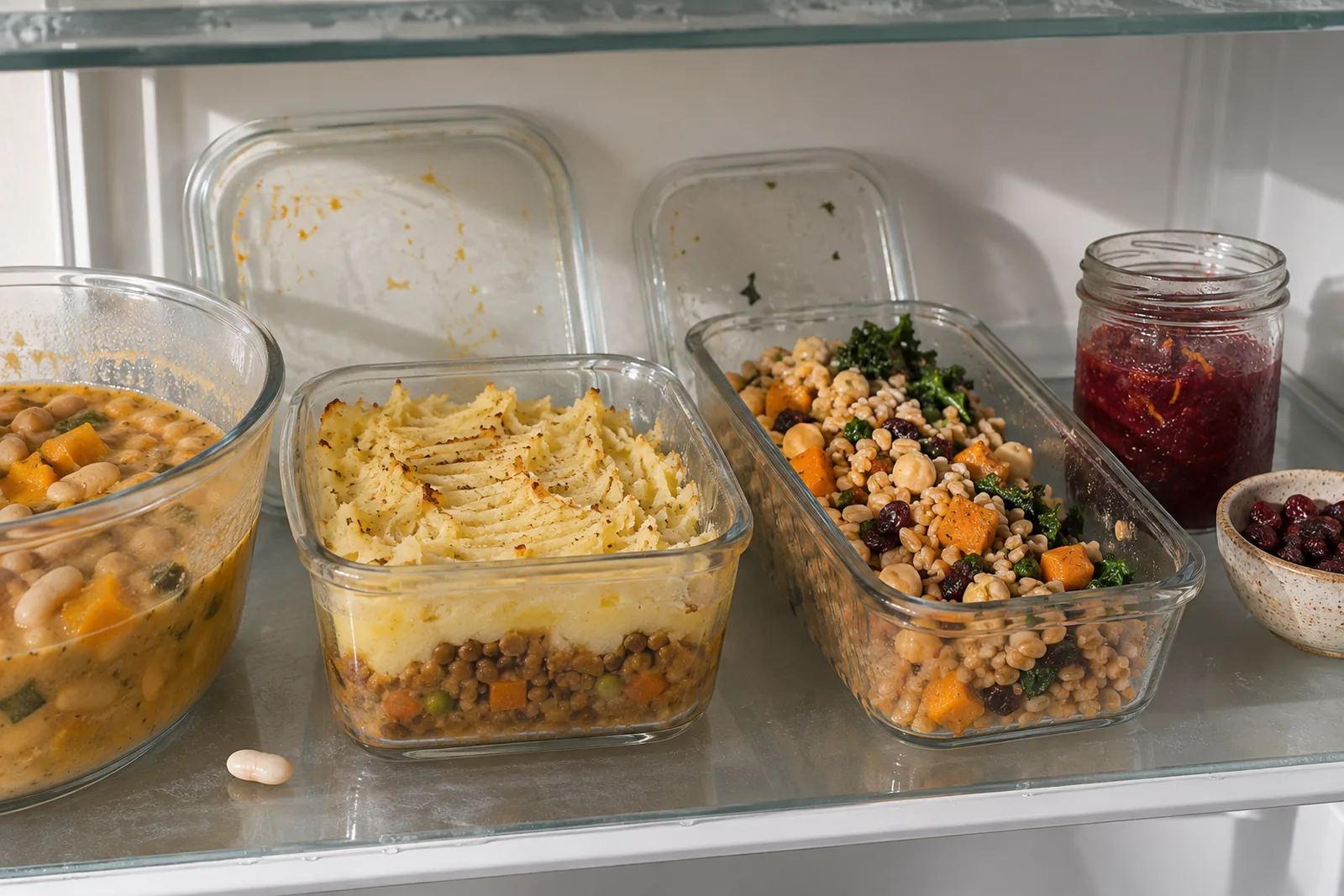
Refrigerate leftovers within 2 hours of cooking. The stew keeps 3 to 4 days in the fridge and 2 to 3 months in the freezer, and it tastes better on day two once the spices have settled into the broth.
| Method | Time | Best For |
|---|---|---|
| Stovetop | 8-10 min, medium-low, covered | Two or more bowls |
| Microwave | 2-3 min per bowl, stir halfway | A single lunch |
| Frozen block | 20-25 min, medium-low | No time to thaw |
Add ¼ cup water to a frozen block before heating.
- Cool the stew in shallow containers so it chills fast, and leave 1 inch of space for freezing.
- Freeze it before adding the spinach when possible, and stir in fresh spinach after reheating.
- Thaw frozen stew overnight in the fridge, not on the counter.
- Reheat until the stew is steaming hot all through, 165°F, whichever method you use.
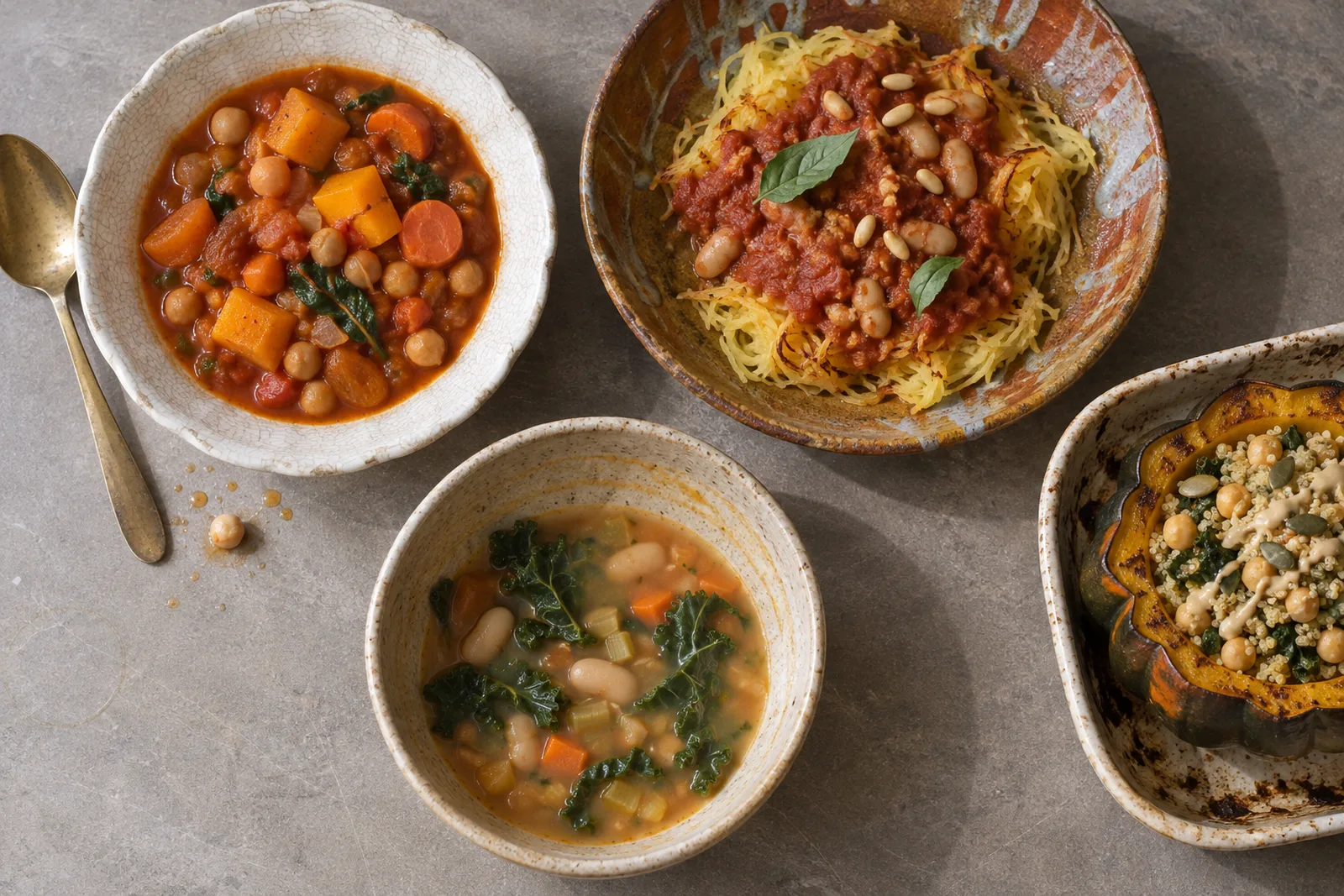
One pot gives lunch through midweek. For a rotation, the weight-focused vegan soups and stews list has more pots that keep the same way, and the kale and white bean soup is a brothier choice.
Two more dinners from the same group make a second batch worth cooking: a vegetable-heavy winter minestrone, and quinoa-stuffed acorn squash for a night when a stew feels like too much.
Sources
Frequently Asked Questions
One 1 ½-cup bowl has about 260 calories, 49 grams of carbohydrate, 9 grams of protein, 5 grams of fat and 11 grams of fiber, estimated from USDA values for the listed amounts. Add about 90 calories for ½ cup of cooked couscous.
It is vegan: every ingredient comes from plants, and the vegetable broth label should list no animal products. No ingredient contains wheat, so it is gluten-free as written, but check the broth and spice labels if the diner has celiac disease.
Yes. Cook the onion, carrots and spices on the stove first, which takes about 8 minutes. Move them to a 6-quart slow cooker with the squash, tomatoes, chickpeas, broth, apricots and salt, and cook on low for about 6 hours or on high for about 3 hours, until the squash is tender. Stir in the spinach and lemon juice at the end.
Peeled kabocha or sweet potato work in the same ¾-inch cubes. Check kabocha at 20 minutes. Acorn squash is the hardest to peel, so it is the weakest swap.
The lid was probably on too tight, or the squash cubes were small. Simmer uncovered for 5 to 10 minutes, then mash another ¼ cup of the chickpeas and squash against the side of the pot to thicken it.
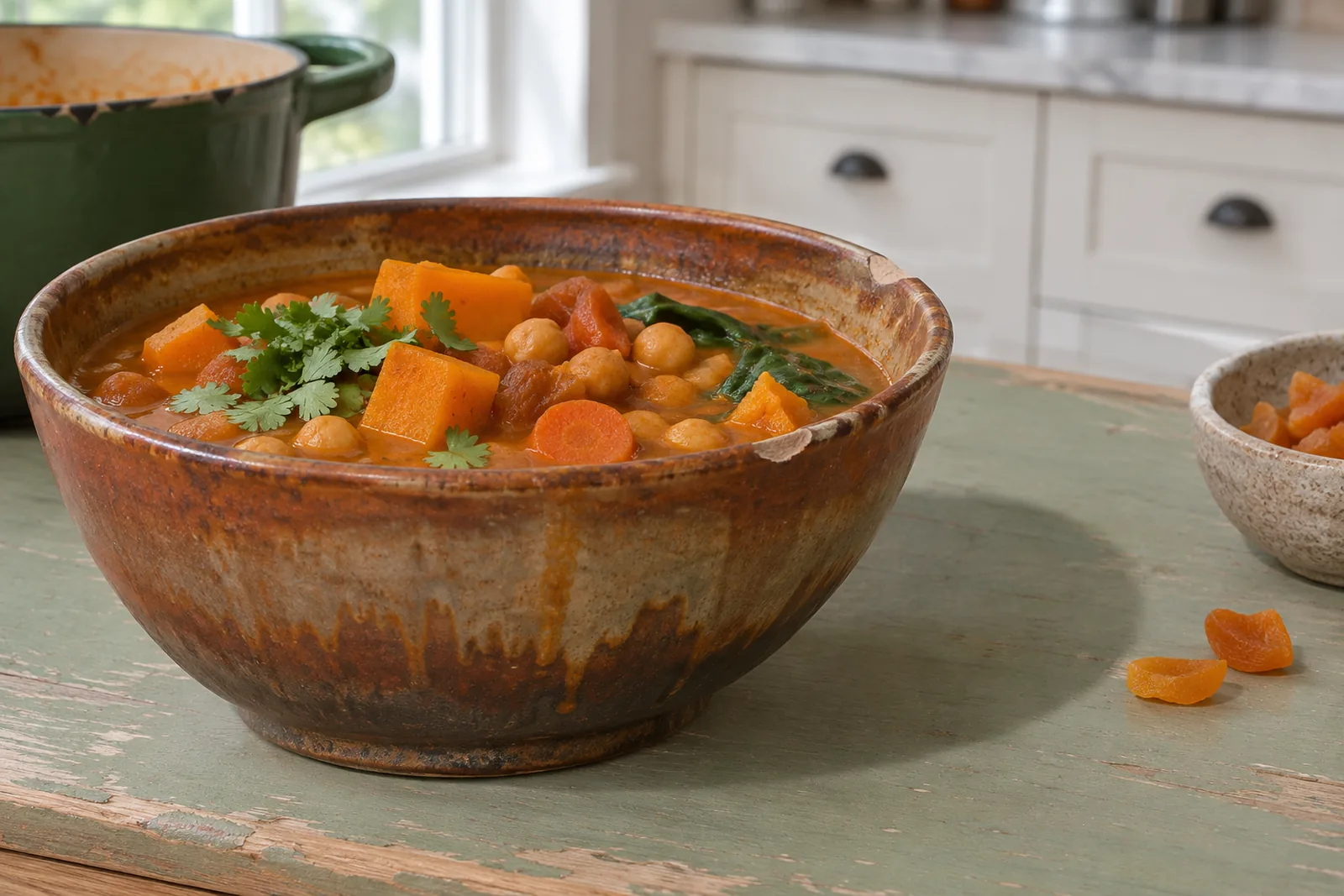
Moroccan Chickpea and Squash Stew
Ingredients
Equipment
Method
- Cook the onion and carrots. Warm 1 tablespoon olive oil in a 5-quart Dutch oven over medium heat. Add the onion and carrots and cook 6 to 8 minutes, until the onion is soft and see-through at the edges.
- Toast the spices. Stir in the garlic, ginger, tomato paste, cumin, coriander, cinnamon, paprika, turmeric and cayenne. Cook 1 minute, stirring constantly, until the paste darkens and the pot smells toasted. If it sticks, add 2 tablespoons of the broth.
- Add the squash and liquids. Add the squash, tomatoes with their juice, chickpeas, broth, apricots and salt, and scrape up the browned bits from the bottom.
- Bring to a boil. Bring to a boil over high heat, about 5 minutes, then lower to medium-low.
- Simmer until tender. Cover with the lid slightly ajar and simmer 25 minutes, stirring twice, until a knife slides into a squash cube with no resistance and the cubes keep their corners.
- Mash to thicken. Mash about ½ cup of the stew against the side of the pot with the back of a spoon to thicken the broth.
- Wilt the spinach. Stir in the spinach and cook 2 minutes, uncovered, until it wilts.
- Finish and serve. Take the pot off the heat and stir in 1 tablespoon lemon juice. Top each bowl with the cilantro.
Nutrition
Notes
- Mash ½ cup of the stew against the pot to thicken it.
- Keeps 3 to 4 days in the fridge, 2 to 3 months frozen.
- Freeze without the spinach; stir in fresh spinach after reheating.
- Peel every strip of butternut skin; leftover skin stays chewy.
Tried this recipe?
Let us know how it was!
Carrie is a food writer and editor with more than 15 years of experience. She has worked for some of the biggest names in the food industry, including Bon Appétit, Food & Wine, and Martha Stewart Living.
As the Editor in Chief of EpicureDelight, Carrie oversees all of the content on the site. She also manages the team of contributing writers and editors, who help to create delicious recipes, helpful tips, and informative articles that you’ll find on the site.
A native of the Chicago area, Carrie is passionate about all things food. She loves trying new restaurants and experimenting with new recipes in her kitchen. She’s also a graduate of the Culinary Institute of America, so she knows a thing or two about food!