Winter minestrone swaps the summer zucchini and green beans for butternut squash, carrots and lacinato kale, then simmers them with cannellini beans and 3 ounces of ditalini in a tomato broth.
One pot makes six bowls at about 228 calories each, so it fits our light vegan winter dinners list with room left over for a roll on the side.
Classic minestrone gets its savory depth from a Parmesan rind that softens in the broth. This version has no dairy: 2 tablespoons of tomato paste browned for 2 minutes and 1 tablespoon of white miso stirred in off the heat do the rind's job, adding salt and a savory edge to the tomato broth.
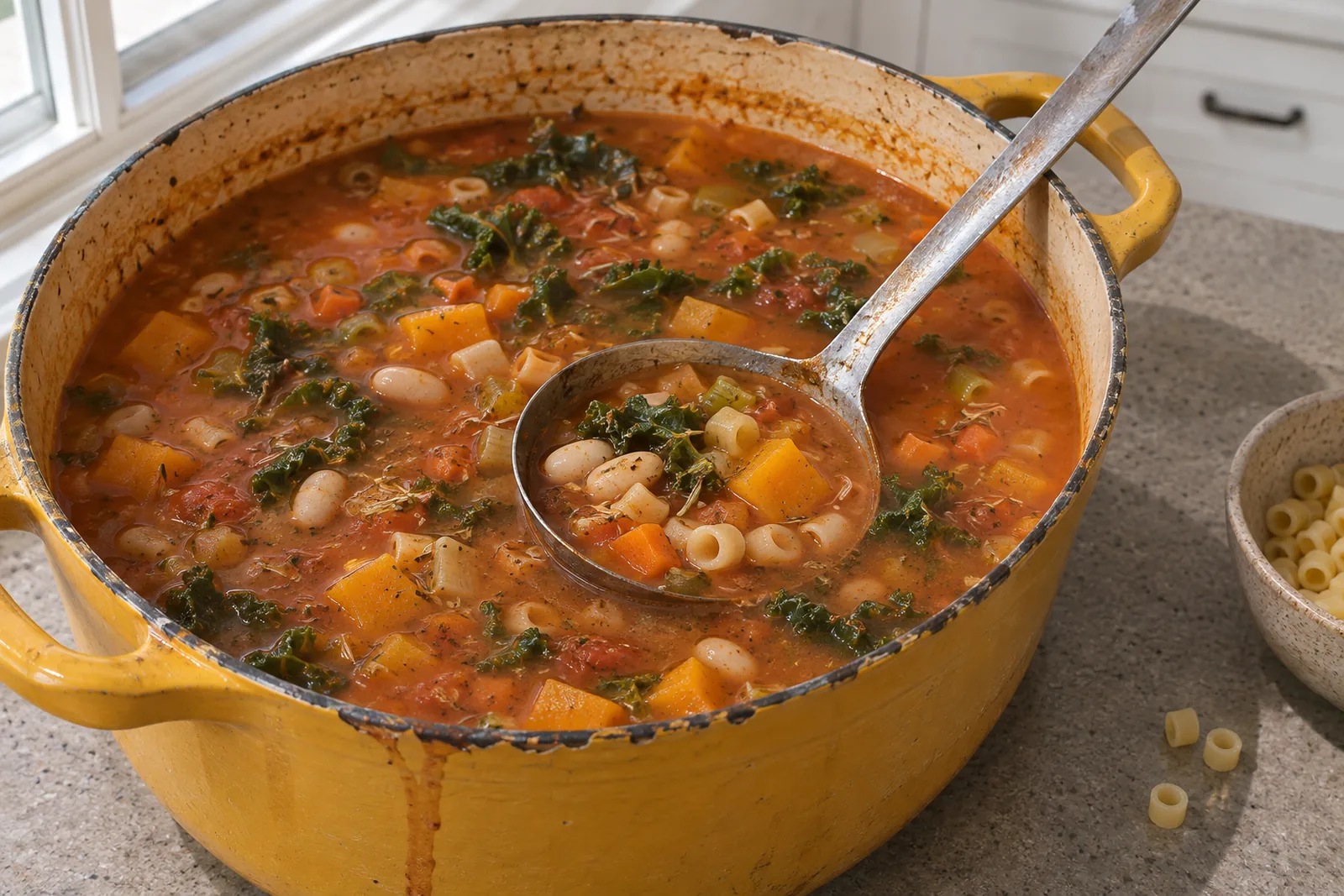
A vegan minestrone of butternut squash, white beans, ditalini and kale in tomato broth, about 228 calories a bowl, all in one pot.
Save This Winter Minestrone
A vegan tomato soup with squash, white beans, pasta and kale, about 228 calories a bowl.
Why This Winter Minestrone Works
- Squash in place of potatoes. Two cups of butternut cubes add 126 calories to the whole pot, about 21 per bowl, and soften in 15 minutes while their natural sugar rounds off the tomato.
- Tomato paste browned before any liquid. Two minutes in the hot oil turns it from bright red to brick red and gives the broth a roasted flavor that the rind would otherwise supply.
- A measured amount of pasta. Three ounces of dry ditalini across six bowls is about 53 calories a bowl, so the soup stays brothy and full of vegetables.
- Little oil. Two tablespoons for the entire pot comes to about 40 calories a bowl; the pasta, the beans and the oil are the three largest calorie sources.
- Kale added last. Three minutes in the hot broth wilts the leaves and leaves a little chew, and they stay dark green instead of turning olive.
Ditalini is the right pasta: the short tubes are close to the size of the cannellini beans and the ½-inch squash cubes, so each spoonful carries all three.
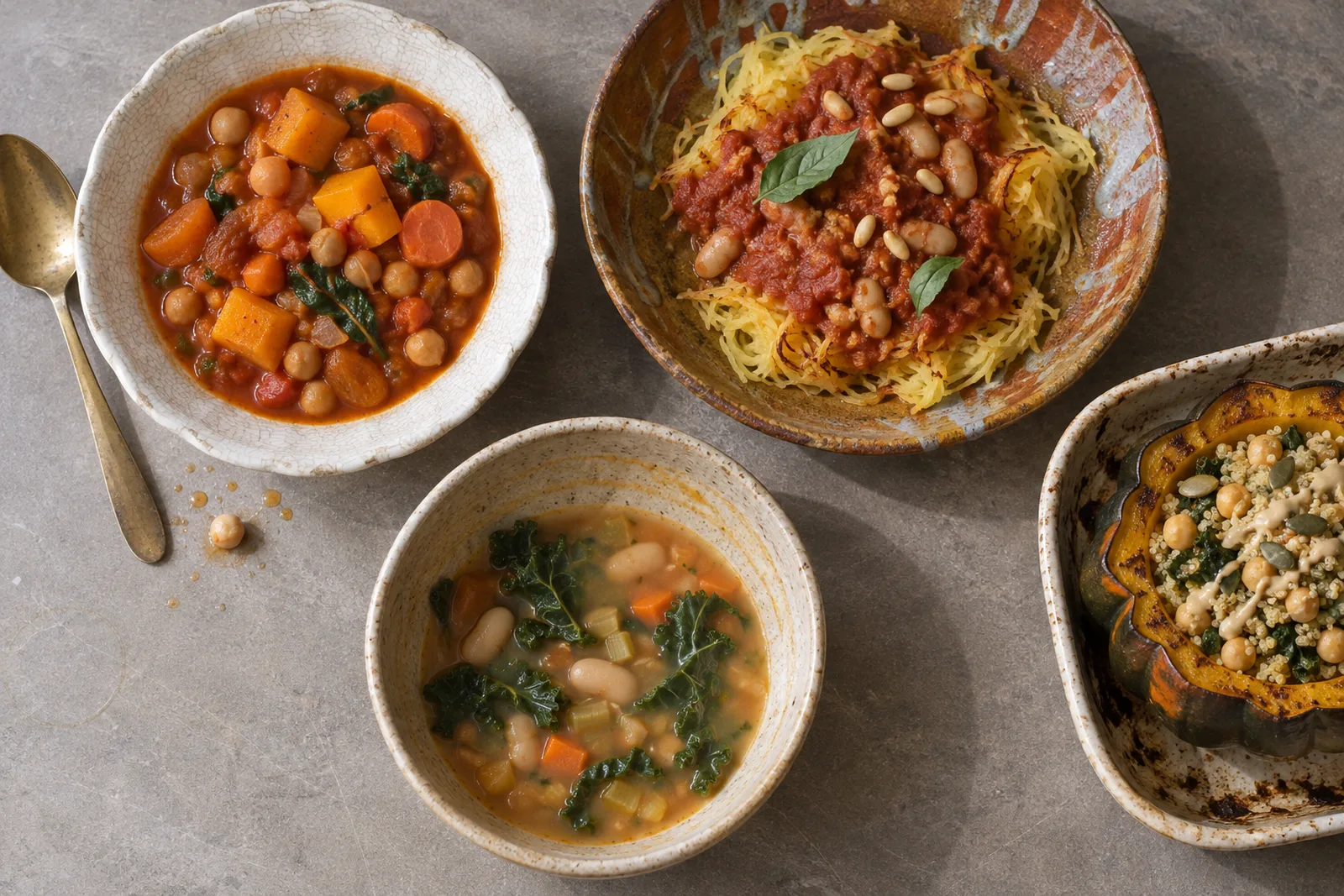
Brothy bean-and-greens soups are a small family on the same list. The brothy kale-and-bean soup builds on the same two ingredients, and a squash and bean chili shares the squash and the beans but cooks down much thicker, so pick minestrone when you want pasta and a clear tomato broth.
What You Need
Buy no-salt-added tomatoes and low-sodium broth. With them, a bowl has about 558 milligrams of sodium, most of it from the miso, the canned beans and the broth; regular broth would add a good deal more.
- 2 tablespoons olive oil
- 1 large yellow onion, diced
- 2 medium carrots, diced
- 2 celery ribs, diced
- 4 cloves garlic, minced
- 2 cups butternut squash, peeled and cut into ½-inch cubes
- 1 can (15 ounces) cannellini beans, drained and rinsed
- 3 ounces ditalini (about ¾ cup dry)
- 4 ounces lacinato kale, stems removed, leaves chopped (about 4 packed cups)
- 2 tablespoons tomato paste
- 1 can (14.5 ounces) no-salt-added diced tomatoes, with their juice
- 6 cups low-sodium vegetable broth
- 2 bay leaves
- 1 teaspoon dried oregano
- ½ teaspoon dried rosemary, crushed
- ½ teaspoon fine salt, divided
- ¼ teaspoon ground black pepper
- 1 tablespoon white miso
- 1 tablespoon lemon juice
Ingredient Details
- White misoStands in for the Parmesan rind. Check the label, because some miso pastes contain fish-based dashi, and stir it in after the heat is off so the boil does not flatten its flavor.
- DitaliniDry ditalini is usually just semolina and water, but a few brands add egg, so read the ingredient list. Our guide to ditalini alternatives covers other small shapes.
- Cannellini beansRinse them under cold water until the foam stops; this removes part of the canning salt. Great Northern or navy beans work the same way.
- Vegetable brothPick a broth with no cream, butter or milk powder in the ingredients. Out of broth? These vegetable broth alternatives are ranked.
- Lacinato kaleAlso sold as Tuscan or dinosaur kale. Strip the leaves off the stems, stack them and cut 1-inch ribbons.
Ingredient Swaps
Four substitutions come up most: a different pasta, no miso, no kale, and no squash. Each swap below keeps the amounts above unless it says otherwise.
- Other small pasta: use 3 ounces of small shells, elbows or tubettini and cook for the time on the package, checking a minute early.
- No miso: stir in 1 tablespoon of tamari or soy sauce and leave out the second ¼ teaspoon of salt. The miso paste swaps in our guide go further.
- Swiss chard or spinach for kale: chard goes in for the last 3 minutes like kale, and spinach needs only 1 minute. More options are in our lacinato kale swaps.
- Sweet potato for squash: cut it into the same ½-inch cubes; it needs the same 15 minutes.
Pasta cooked in the soup
Starch from the pasta gives the broth a little body, and there is one pot to wash.
The pasta keeps swelling in the fridge, so leftovers turn thick and the pasta goes soft.
Pasta cooked separately
Leftover soup keeps a clear broth and firm pasta for the full 3 to 4 days.
It needs a second pot, and each bowl gets about ¼ cup of cooked pasta added at serving.
Another bean can fill the cannellini's place, but a pot built on lentils or black beans is a different soup. Our lentil soup and black bean soup are written for those beans, with their own spices.
How to Make Vegan Winter Minestrone
Use a 5- to 6-quart Dutch oven or soup pot, so the pasta has room to swell. Cut the squash into ½-inch cubes, because larger pieces stay firm after the 15-minute simmer.
- Soften the aromatics. Warm 2 tablespoons olive oil in the pot over medium heat. Add the onion, carrots, celery and ¼ teaspoon of the salt, and cook 8 to 10 minutes, stirring often, until the onion is soft and translucent.
- Brown the tomato paste. Stir in the garlic, 2 tablespoons tomato paste, the oregano and the rosemary. Cook 2 minutes, stirring, until the paste darkens from bright red to brick red and starts to stick to the pot.
- Add the base. Add the diced tomatoes with their juice, the broth, the squash and the bay leaves, and scrape up the browned bits. Bring to a boil, about 5 minutes.
- Simmer the base. Reduce the heat to a steady simmer and cook 15 minutes, until a fork slides into a squash cube with no resistance.
- Add the beans and pasta. Stir in the cannellini beans and 3 ounces ditalini. Simmer 10 minutes, stirring every few minutes so the pasta does not stick.
- Add the kale. Stir in the kale for the last 3 minutes of simmering. The pasta is ready when it is tender with a slight bite at the center.
- Make the miso broth. Remove the pot from the heat and fish out the bay leaves. Whisk 1 tablespoon white miso with a ladle of hot broth until smooth.
- Finish and taste. Stir the miso into the pot with 1 tablespoon lemon juice and ¼ teaspoon pepper. Taste and add the remaining ¼ teaspoon salt if it needs it.
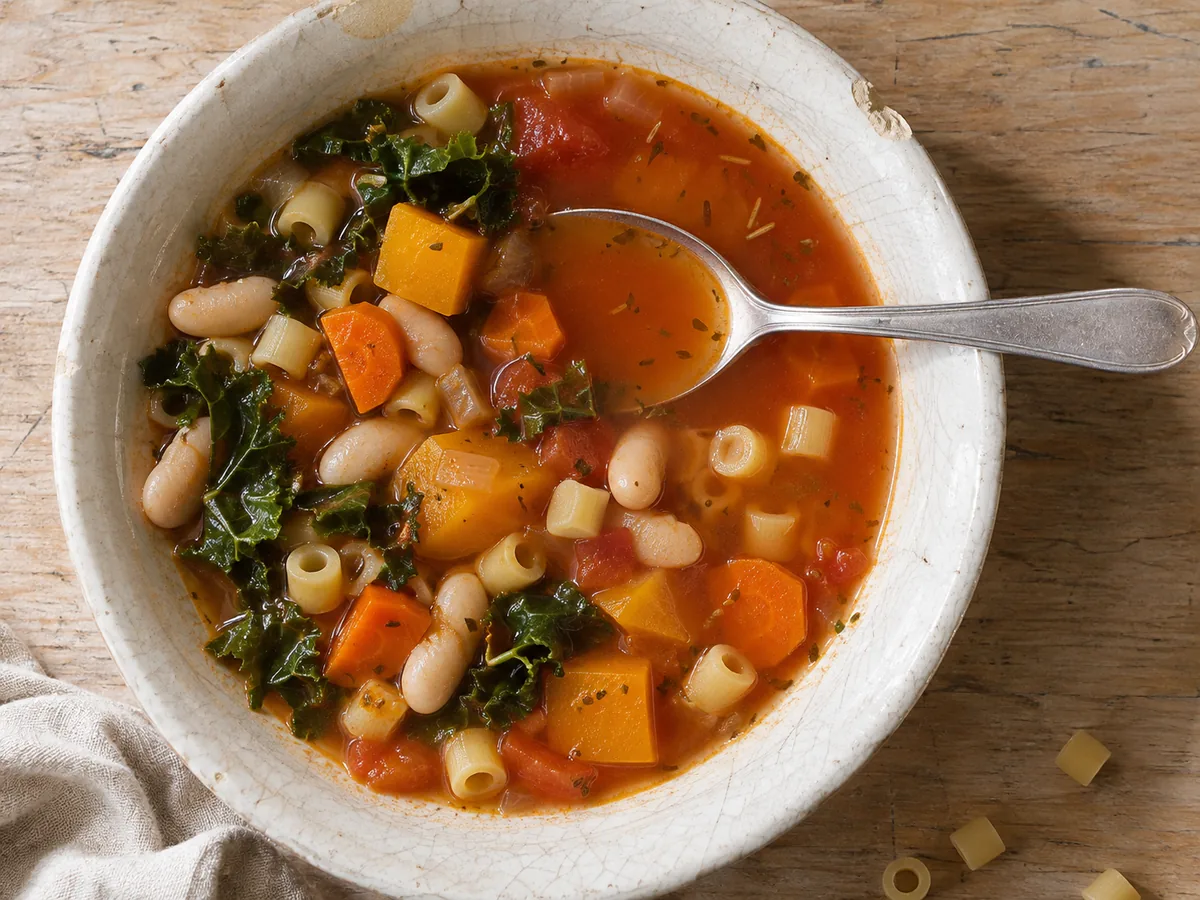
At the end of step 6 the soup should look brothy but not watery: whole beans, squash cubes that still have corners, dark green kale ribbons and pasta that has not burst. If the spoon stands in the pot, the pasta has absorbed too much broth, and ½ cup of hot water brings it back.
Pasta keeps drinking broth after the heat is off. Serve within 15 minutes of finishing, or cook the pasta separately if the soup will wait.
What to Serve With It
A bowl at 228 calories leaves room for a side, and bread is the natural partner for a tomato broth. A warm batch of soft dinner rolls is the easiest pairing for a weekend, and toast or a crisp green salad covers a weeknight.
| Side Dish | Prep | Why It Works |
|---|---|---|
| Soft dinner rolls | Medium | Soak up the tomato broth in the bowl |
| Garlic toast | Easy | A crisp edge holds up against hot broth |
| Arugula and lemon salad | Easy | Peppery raw leaves cut the squash's sweetness |
| Roasted broccoli | Easy | Charred edges add the crunch the soup lacks |
Serve the rolls warm, one per bowl, and rub a toasted slice with a cut garlic clove, no butter. Toss the arugula with 1 teaspoon olive oil and lemon juice per serving, and roast the broccoli at 425°F for 20 minutes to serve alongside.
For a supper of two small soups, ladle half a bowl of minestrone, about 114 calories, next to ¾ cup of coconut pumpkin soup, about 127 calories. The tomato broth and the smooth pumpkin differ enough that the two cups together come to about 241 calories.
One soft roll per bowl. A roll from that recipe has about 211 calories, so the bowl and roll together come to about 439, still under 450.
Store and Reheat
Refrigerate leftovers within 2 hours of cooking. The soup keeps 3 to 4 days in the fridge and up to 3 months in the freezer, based on USDA FoodKeeper storage times.
| Method | Time | Best For |
|---|---|---|
| Stovetop | 8-10 min, medium-low heat | Two or more bowls |
| Microwave | 2-3 min per bowl, stir halfway | One lunch portion |
| From frozen | Thaw overnight, then 10-12 min | Soup frozen without pasta |
- Cool the pot in shallow containers so the soup chills quickly, and keep the lids on in the fridge.
- Add ¼ to ½ cup of water or broth to each bowl before reheating, because the pasta and beans soak up liquid overnight.
- To freeze, stop after step 4 and freeze the squash and tomato base; add the beans, pasta and kale when reheating.
- Reheat until the soup is steaming hot, with a center temperature of 165°F.
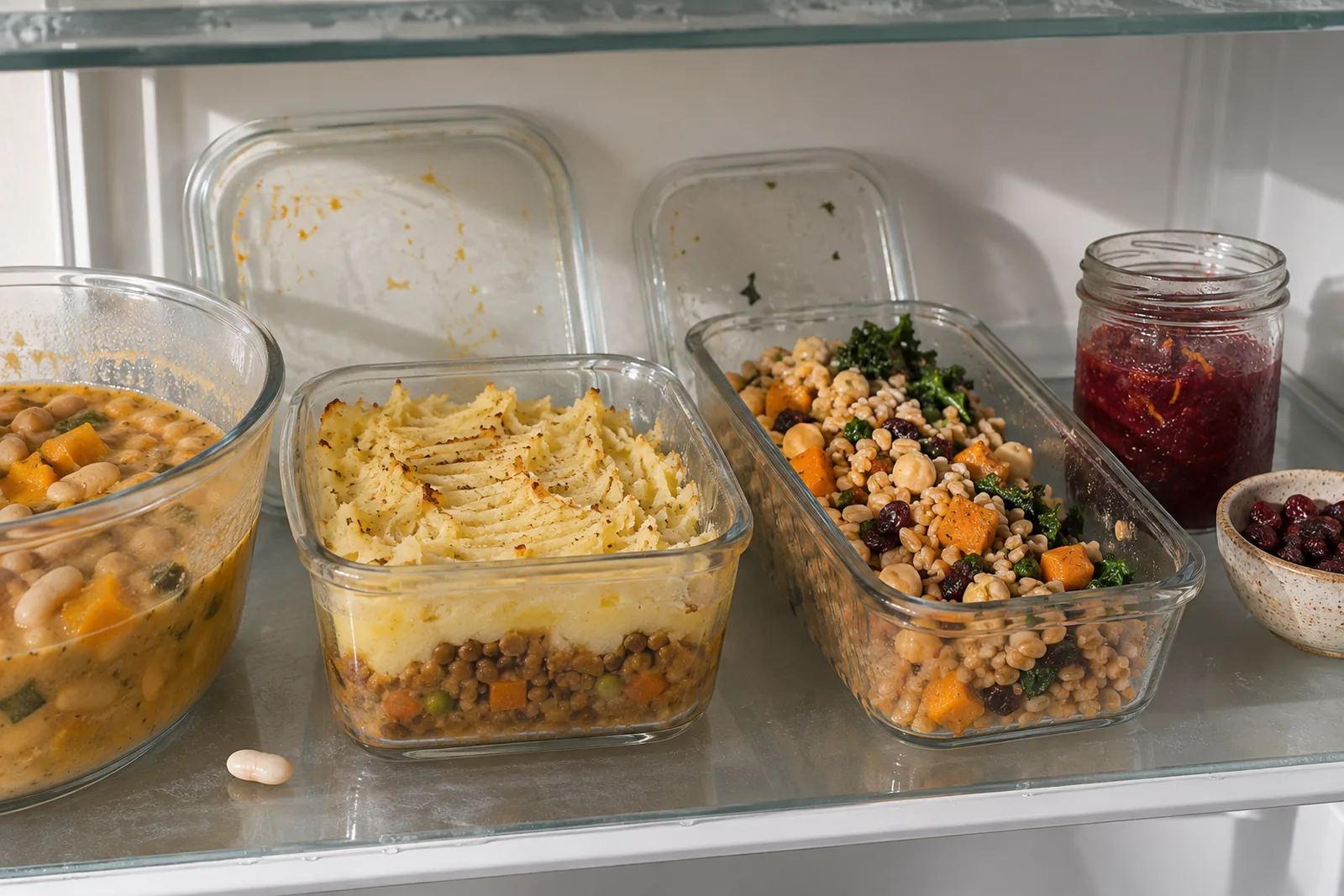
Soups built on grains behave the same way in the fridge. The wild rice mushroom soup and the mushroom barley soup keep swelling as they sit, so both also want a splash of liquid when they are warmed up.
Sources
Frequently Asked Questions
The rind adds salt and savory depth as it softens in the broth. This recipe gets both from 2 tablespoons of tomato paste browned until brick red and 1 tablespoon of white miso stirred in after the heat is off. A tablespoon of nutritional yeast stirred in with the miso adds a cheesy note for a few more calories per bowl.
The pasta and the beans keep absorbing broth in the fridge. Stir ¼ to ½ cup of water or broth into each portion as it reheats, or cook the pasta in a separate pot and add about ¼ cup per bowl at serving.
Yes, for up to 3 months. Pasta turns soft after freezing, so freeze the squash and tomato base from step 4 in containers, thaw it overnight in the fridge, then simmer it and add the beans, pasta and kale.
Not as written, because ditalini is made from wheat and some miso pastes contain barley. Use a gluten-free small pasta, following the time on its package, and a miso labeled gluten-free.
A bowl of about 1 ⅔ cups has about 228 calories, 8 grams of protein and 7 grams of fiber. The figure is estimated from USDA FoodData Central values for the listed amounts, divided by 6 bowls.
Vegan Winter Minestrone
Ingredients
Equipment
Method
- Soften the aromatics. Warm 2 tablespoons olive oil in the pot over medium heat. Add the onion, carrots, celery and ¼ teaspoon of the salt, and cook 8 to 10 minutes, stirring often, until the onion is soft and translucent.
- Brown the tomato paste. Stir in the garlic, 2 tablespoons tomato paste, the oregano and the rosemary. Cook 2 minutes, stirring, until the paste darkens from bright red to brick red and starts to stick to the pot.
- Add the base. Add the diced tomatoes with their juice, the broth, the squash and the bay leaves, and scrape up the browned bits. Bring to a boil, about 5 minutes.
- Simmer the base. Reduce the heat to a steady simmer and cook 15 minutes, until a fork slides into a squash cube with no resistance.
- Add the beans and pasta. Stir in the cannellini beans and 3 ounces ditalini. Simmer 10 minutes, stirring every few minutes so the pasta does not stick.
- Add the kale. Stir in the kale for the last 3 minutes of simmering. The pasta is ready when it is tender with a slight bite at the center.
- Make the miso broth. Remove the pot from the heat and fish out the bay leaves. Whisk 1 tablespoon white miso with a ladle of hot broth until smooth.
- Finish and taste. Stir the miso into the pot with 1 tablespoon lemon juice and ¼ teaspoon pepper. Taste and add the remaining ¼ teaspoon salt if it needs it.
Nutrition
Notes
- Check the miso and ditalini labels; some contain fish dashi or egg.
- Stands in for the Parmesan rind: browned tomato paste plus white miso.
- Keeps 3 to 4 days; thin each bowl with water when reheating.
- Freeze the base from step 4; add beans, pasta and kale after thawing.
Tried this recipe?
Let us know how it was!
Carrie is a food writer and editor with more than 15 years of experience. She has worked for some of the biggest names in the food industry, including Bon Appétit, Food & Wine, and Martha Stewart Living.
As the Editor in Chief of EpicureDelight, Carrie oversees all of the content on the site. She also manages the team of contributing writers and editors, who help to create delicious recipes, helpful tips, and informative articles that you’ll find on the site.
A native of the Chicago area, Carrie is passionate about all things food. She loves trying new restaurants and experimenting with new recipes in her kitchen. She’s also a graduate of the Culinary Institute of America, so she knows a thing or two about food!