
That deep, toasty aroma pumpkin seed oil brings to a dish is hard to fake with just any oil. A good pumpkin seed oil substitute has to do at least one of two things: match that nutty depth, or handle heat without turning bitter.
The best swap depends on where the oil goes in your recipe. Finishing drizzles and dressings need something aromatic.
Baking and sautéing need something heat-stable.
For a nutty, toasted finish, walnut oil is the closest match at 1:1. Toasted sesame oil works but use ¾ of the amount. For baking, olive or avocado oil hold up under heat. Add roasted pumpkin seed dust to any neutral oil to restore the signature aroma.
5 Best Pumpkin Seed Oil Substitutes Ranked by Flavor and Heat
Choosing by dish type saves you from a bland result or a bitter one. Delicate oils like flaxseed oil are best cold.
Heat-stable oils like avocado oil are safer when the oil is baked into batter or used in a warm sauté.
| # | Substitute | Best For | Ratio | Key Note |
|---|---|---|---|---|
| 1 | Walnut Oil | Finishing / Dressings | 1:1 | Closest nutty match |
| 2 | Extra-Virgin Olive Oil | Baking / Sauté | 1:1 | Fruitier, heat-stable |
| 3 | Toasted Sesame Oil | Finishing Drizzle | ¾:1 | Strong-use less |
| 4 | Flaxseed Oil | Cold Uses Only | 1:1 | Bitter if heated |
| 5 | Sunflower + Seed Dust | Baking / Neutral | 1:1 | Add dust for aroma |
1. Walnut Oil
Walnut oil is the most natural stand-in for pumpkin seed oil in cold applications. Its toasted-nut character sits close to what pumpkin seed oil delivers, especially in vinaigrettes and finishing drizzles over roasted vegetables or soups.
If you regularly swap between nut-forward oils, the page on swapping out walnut oil is worth a look for when this bottle runs dry too.
- Ratio: Use 1:1 - no reduction needed.
- Best dishes: Salad dressings, grain bowls, drizzled over squash soup or pasta.
- Heat guidance: Keep it to low-medium heat only; high heat flattens the flavor quickly.
- Adjustment tip: If the swap tastes flat, add a pinch of flaky salt to sharpen the nuttiness.
Skip if: Your recipe needs prolonged high heat, such as a long roast or deep fry.
2. Extra-Virgin Olive Oil
Olive oil is the safest all-around swap when the oil gets cooked into the dish. It handles heat better than most nut oils, and its flavor fades into the background in baked goods.
If you're buying a bottle specifically for this, a well-stored press oil will taste noticeably better than one sitting on a shelf for a year.
A medium or robust olive oil works best here. Light olive oil can taste too neutral, and you'll lose even the mild fruitiness that makes the swap worthwhile.
Extra-Virgin Olive Oil
Works for: baking, sautéing, vinaigrettes, warm sauces
Skip if: you need the exact toasted-seed aroma - olive oil reads as fruitier, not seed-forward
- Ratio: 1:1 across the board.
- Where it fits: Muffins, quick breads, vinaigrettes, pan sauces.
- Watch-out 1: A strongly grassy olive oil can clash with delicate baked goods.
- Watch-out 2: If flavor feels muted after baking, finish with a sprinkle of roasted pumpkin seed dust.
3. Toasted Sesame Oil
Toasted sesame oil has real aromatic punch. Use it at the wrong ratio and it takes over the whole dish.
It works best as a finishing oil, added after cooking. The toasty, seed-forward character is the closest thing to pumpkin seed oil's aroma, though the flavor skews more distinctly "sesame."
For anyone weighing whether to keep this oil on hand at all, choosing a sesame replacement is a useful reference if you end up needing to swap it out later.
- Ratio: ¾:1 - start lower and taste before adding more.
- Where it shines: Finishing drizzles, cold noodle dishes, dipping sauces.
- Where it's risky: Delicate recipes where a single dominant flavor is a problem.
- Pairing tip: A small squeeze of lime or rice vinegar softens the sesame intensity nicely.
Skip if: You or your guests are sensitive to sesame, or the recipe calls for a subtle, background nuttiness.
4. Flaxseed Oil
Flaxseed oil is the quietest option on this list. It has a mild, slightly grassy nuttiness that works well in cold dressings but turns bitter fast when exposed to high heat.
For a broader look at cold-use oil swaps, that page covers when similar delicate oils hold up and when they don't.
- Ratio: 1:1 for cold uses.
- Best uses: Salad dressings, drizzling over finished dishes, blending into smoothies.
- Avoid: Baking, sautéing, or any application where the oil heats for more than a brief moment.
- Taste check: If the flavor reads too grassy, add a small squeeze of lemon or a splash of apple cider vinegar to balance.
Skip if: Your recipe cooks the oil for any sustained period.
5. Sunflower Oil + Roasted Pumpkin Seed Dust
Sunflower oil on its own is too bland to mimic pumpkin seed oil. That's the honest truth.
But when you stir in a small amount of crushed roasted pumpkin seeds, the neutral base carries the toasted character forward, and the result is surprisingly close.
The key is restraint with the dust. A quarter teaspoon per tablespoon of oil is a reasonable starting point.
For similar techniques with other neutral-base oils, pumpkin seed oil flavor notes can help you calibrate how far to push the toasted element.
| Use | Ratio | Notes |
|---|---|---|
| Baking | 1:1 oil + ¼ teaspoon dust per tbsp | Mix dust directly into batter |
| Dressing | 1:1 oil + ¼ teaspoon dust per tbsp | Whisk well; taste before adding more |
| Finishing drizzle | 1:1 oil + pinch of dust | Add just before serving for freshest aroma |
- How to make the dust: Toast raw pumpkin seeds in a dry pan, then crush finely with a mortar or spice grinder.
- Neutral oil best use: Baking where the oil is mainly adding moisture, not flavor.
- Avoid overshooting: Too much dust makes the result gritty and overly seedy - start small and build.
Skip if: You don't have time to toast and crush seeds.
Making Pumpkin Seed Oil Substitutes Work in Real Recipes
The fastest decision rule is two questions: will the oil be heated, and how important is the toasted-nut aroma? For finishing and dressings, walnut oil or toasted sesame oil are the first call.
For anything that involves an oven or a hot pan, storing heat-stable oils properly matters as much as the swap itself. If you want the toasted note back in a baked dish, the neutral-oil-plus-seed-dust approach is your best option, and this nutty pressed oil is worth keeping as a backup finishing oil regardless.
- Step 1 - Match to heat: Cold or finishing use? Go walnut or sesame. Baking or sautéing? Go olive or avocado.
- Step 2 - Apply the ratio: 1:1 for most swaps; drop to ¾:1 for toasted sesame oil specifically.
- Step 3 - Taste and adjust: If the result is flat, add a pinch of salt. If it's too one-note, a small hit of acid (lemon juice or white wine vinegar) brings things into balance.
Frequently Asked Questions
Walnut oil is the closest match at a 1:1 ratio. It has a toasted-nut flavor that sits right in the same register as pumpkin seed oil without overpowering the other dressing ingredients.
Not at a full 1:1 - sesame oil is significantly more assertive. Start at ¾ of the amount, taste, and add more only if the dish needs it.
No. Flaxseed oil turns bitter under sustained heat and should only be used in cold applications. For baking, olive oil or avocado oil are much safer choices.
Use walnut oil for finishing or olive oil for cooking, and skip the dust entirely. The toasted note will be lighter, but the dish will still taste balanced.
Bitterness usually means the oil was heated too hard - flaxseed and walnut oils degrade quickly. A muted result responds well to a pinch of salt or a small squeeze of lemon juice.
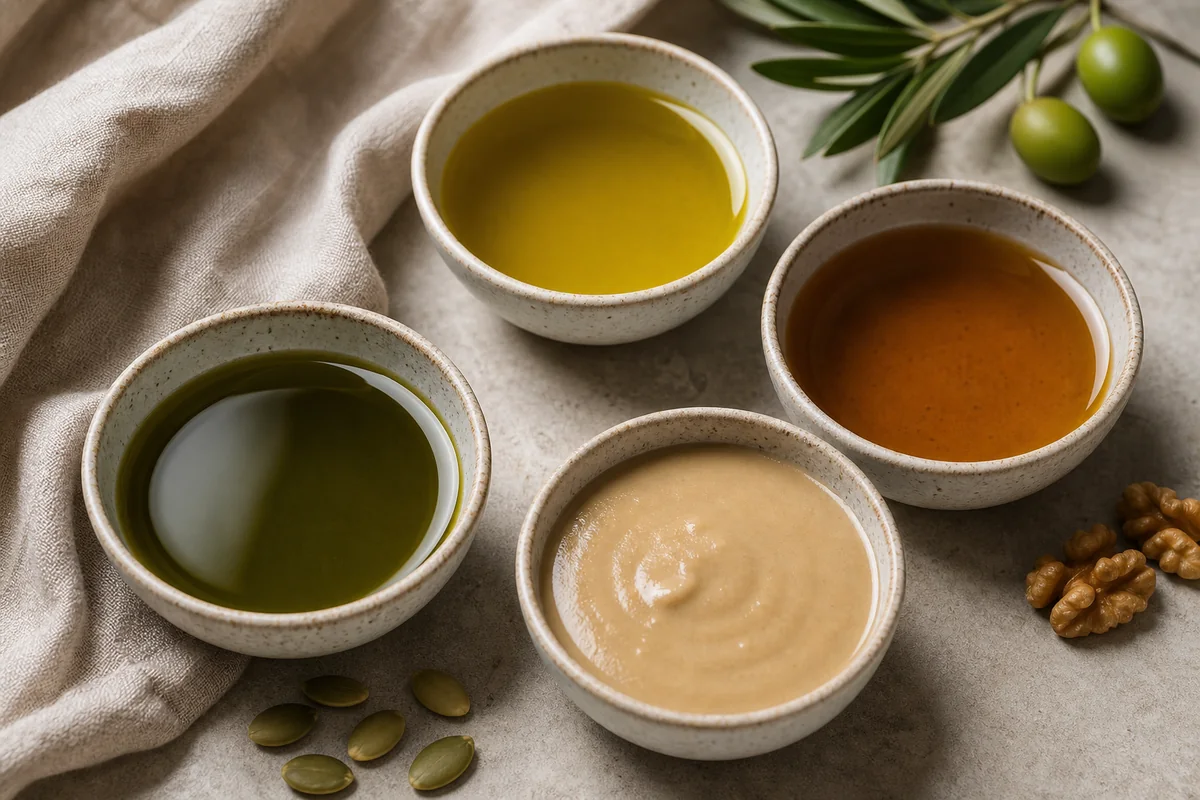
5 Best Pumpkin Seed Oil Substitutes (Easy Swaps)
Ingredients
Equipment
Method
- Decide how you’re using pumpkin seed oil: finishing/drizzling (keep flavor oils) vs baking/cooking (use more heat-tolerant swaps).
- Match flavor intensity: for a nutty, toasted vibe, choose walnut oil; for a bolder aroma, choose toasted sesame oil using slightly less.
- Use the listed ratio: if the substitute is stronger (sesame), start lower and adjust after tasting.
- If you’re swapping with a neutral oil, add a pinch of crushed roasted pumpkin seeds (start tiny) to restore the “toasted” notes.
- For best results, add finishing oils at the end and avoid high heat with delicate oils like flaxseed oil.
Notes
- Pumpkin seed oil is often used for aroma and toasted flavor, so the best swap depends on whether heat will “mute” the flavor.
- If your recipe involves frying, prefer heat-stable swaps (olive, avocado, sunflower) and add the nutty notes late when possible.
Tried this recipe?
Let us know how it was!
Carrie is a food writer and editor with more than 15 years of experience. She has worked for some of the biggest names in the food industry, including Bon Appétit, Food & Wine, and Martha Stewart Living.
As the Editor in Chief of EpicureDelight, Carrie oversees all of the content on the site. She also manages the team of contributing writers and editors, who help to create delicious recipes, helpful tips, and informative articles that you’ll find on the site.
A native of the Chicago area, Carrie is passionate about all things food. She loves trying new restaurants and experimenting with new recipes in her kitchen. She’s also a graduate of the Culinary Institute of America, so she knows a thing or two about food!



