
Quinoa flour has a quiet earthiness that's hard to pin down until it's missing from your pantry. Its mild nuttiness and protein content give baked goods a slightly dense but tender crumb that neutral flours can't fully replicate on their own.
Knowing which swap keeps your flavor profile intact saves a ruined batch.
A good quinoa flour substitute matches two things at once: flavor profile and structural role. Nutty, protein-forward swaps like buckwheat or sorghum suit breads and muffins.
Lighter, more neutral options like brown rice flour work better when you want a clean-tasting crumb.
The moisture level matters too. Denser flours absorb more liquid, so add 1-2 tablespoon extra per cup of batter if things look too thick.
Most quinoa flour swaps work at a 1:1 ratio. For neutral crumb, use brown rice flour. For earthy body, try buckwheat or sorghum. Use oat flour for tenderness. Reserve cornstarch for thickening only, blended with another flour for structure.
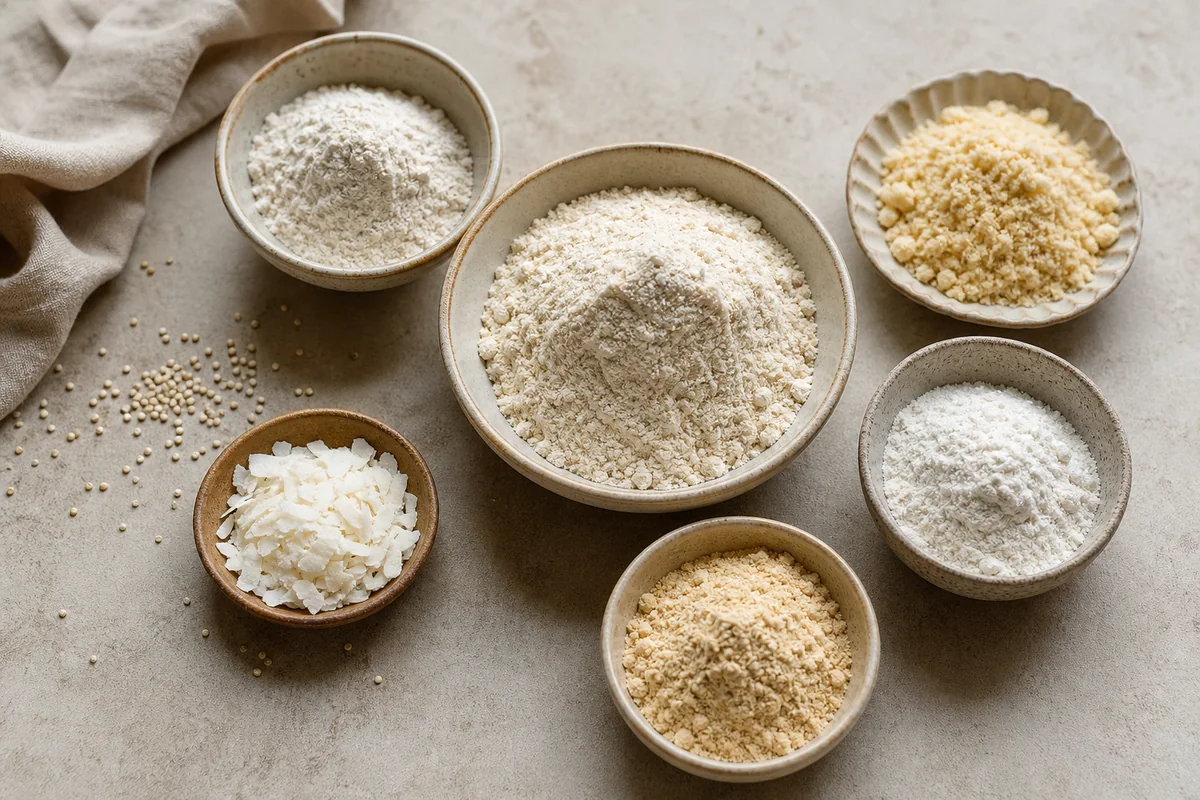
5 Best Quinoa Flour Substitutes (Flavor-Matched)
Reading the table below is straightforward. Match your recipe's flavor goal first: nutty and dense vs. neutral and light.
Then check the function column. A thickening-only swap like cornstarch behaves differently from a full flour replacement.
For anything related to flake-based swaps, that's a separate category worth checking.
| # | Substitute | Best For | Ratio | Key Note |
|---|---|---|---|---|
| 1 | Buckwheat Flour | Both | 1:1 | Earthy, adds structure |
| 2 | Brown Rice Flour | Both | 1:1 | Neutral, light crumb |
| 3 | Oat Flour | Both | 1:1 | Tender, browns fast |
| 4 | Sorghum Flour | Both | 1:1 | Chewy, suits dense bakes |
| 5 | Cornstarch + Flour Base | Cooking | ½:1 | Thickening only |
1. Buckwheat Flour
Buckwheat flour is the closest structural match for quinoa flour. Both carry a mildly earthy, slightly nutty character that holds up in savory batters and whole-grain-style muffins.
If your recipe leans into that nuttiness, buckwheat often produces a crumb you'd swear was made with quinoa flour. For recipes where you're also storing flour long-term, buckwheat keeps well sealed and airtight.
Buckwheat Flour
Works for: muffins, pancakes, quick breads, savory crepes
Skip if: you need a fully neutral taste - buckwheat is distinctly earthy and will read through in delicate sweets
- Best for muffins: Replaces quinoa flour cup for cup with minimal texture change
- Best for pancakes: Gives a slightly rustic flavor that works well with fruit or maple
- Flavor note: Expect a darker color and earthier taste compared to quinoa flour
- Adjustment: If batter feels thick, add 1 tablespoon liquid at a time until it pours normally
2. Brown Rice Flour
Brown rice flour is the safest swap when you want the lightest possible flavor interference. It stays close to quinoa flour's neutral side without any of buckwheat's earthiness. The crumb comes out slightly more delicate, but the overall bake is reliable. For wider options when this is also unavailable, swapping out brown rice opens up a few more paths worth knowing.
- Flavor profile: Mild and almost neutral, with a barely-there nutty undertone
- Texture outcome: Light, tender crumb with good structure for cookies and muffins
- Grittiness tip: Rest the batter 5-10 minutes before baking to let the flour hydrate fully
- Browning: Slightly less browning than quinoa flour, so check color at the low end of your bake window
Skip if: you want extra chew or elasticity. Rice flour produces a lighter, more fragile crumb, which can work against denser recipes like dense cakes.
3. Oat Flour
Oat flour is the tenderness swap. It produces a soft, almost pillowy crumb that works beautifully in pancakes and quick muffins.
The flavor is subtly sweet and mildly nutty, which reads as pleasant rather than overpowering in most recipes. If you need a grain-based alternative that fits a range of dietary needs, oat flour certified gluten-free is widely available.
- Best for pancakes: Produces a soft, even stack with good rise and no grittiness
- Best for muffins: Yields a tender crumb that holds together without feeling heavy
- Texture tip: Whisk thoroughly before adding wet ingredients to prevent clumping
- Bake time: Start checking 3-5 minutes before the recipe calls for, especially in a darker pan
Skip if: you're sensitive to oats or need a truly neutral flavor. Oat flour has a distinct sweet-nutty note that comes through in mild-flavored batters.
4. Sorghum Flour
Sorghum flour brings more chew and body than either rice or oat flour. It sits closer to quinoa flour's protein weight, which helps batters hold shape in flatbreads, tortillas, and denser quick breads.
If quinoa flour was doing structural work in your recipe, sorghum is the right call. For more on when sorghum falls short, the page covering flour-based grain swaps breaks down the edge cases clearly.
The tradeoff is that sorghum can make a crumb feel heavier if the recipe relies on a light, airy rise. Pair it with a leavening agent, and it performs well.
Without enough lift, it can settle into a compact bite.
Sorghum Flour
Works for: flatbreads, tortillas, dense cakes, thick pancakes, hearty quick breads
Skip if: you're aiming for a light, fluffy crumb - sorghum adds mass and tends to produce a heavier texture
- Best for flatbreads: Handles rolling and dry heat well without crumbling
- Best for dense cakes: Holds moisture without collapsing over a longer bake
- Adjustment: If dough feels stiff, add 1 tablespoon water at a time until workable
5. Cornstarch (Mixed with a Flour Base)
Cornstarch is not a standalone flour swap. Used alone, it produces a gluey texture in baked goods and no real structure.
But blended with another flour, it can mimic quinoa flour's thickening contribution in batters and sauces. Think of it as a modifier, not a replacement.
For recipes where you're choosing among neutral-flavored starches, neutral starch options give a useful comparison.
| Use | Ratio | Notes |
|---|---|---|
| Sauce thickening | 1 tablespoon per cup liquid | Whisk into cold liquid first, heat until glossy |
| Batter blend | Replace half the quinoa flour | Pair with rice or oat flour for structure |
| Tender crumb boost | 2 tablespoon per cup flour | Mix into sorghum or buckwheat base |
- Thickening share: Replaces quinoa flour's thickening role only, not its structure or protein content
- Best for sauces: Whisk into cold liquid before heating to avoid lumps
- Best for batters: Blend with rice or oat flour so the batter holds shape when cooked
- Blend ratio: Use half cornstarch, half structural flour per cup of quinoa flour called for
Skip if: your recipe needs full flour structure. Breads and pastries need a real flour swap instead.
Making Quinoa Flour Substitutes Work
The selection rule is simple: match texture first, then flavor. If the recipe depends on structure and chew, buckwheat or sorghum is the right anchor.
If it needs a light, tender crumb, brown rice or oat flour gets you there faster. The familiar neutral body of all-purpose flour is worth keeping in mind as a fallback for non-GF recipes.
Hydration is where most swaps go wrong. A substitute that absorbs more liquid than quinoa flour will turn out a dry, crumbly result if you don't compensate.
Add liquid in 1 tablespoon increments rather than guessing upfront.
- Ratio and hydration: Start at 1:1, then add 1-2 tablespoon liquid per cup if the substitute is denser (sorghum, buckwheat) or the batter looks stiff
- Rest time: Let batters sit 5-10 minutes after mixing so rice or sorghum flour hydrates fully and grittiness fades
- Bake-time check: Begin checking color 3-5 minutes early, especially with oat flour, which browns faster than most alternatives
Frequently Asked Questions
Brown rice flour is the closest 1:1 swap for most baked goods. It keeps flavor neutral and produces a reliable crumb without major hydration changes.
Yes, oat flour works well at a 1:1 ratio in pancakes. Watch the heat and check doneness 2-3 minutes early since oat flour browns faster.
Use cornstarch as only half the replacement and pair it with a structural flour. Always whisk it into cold liquid before heating to avoid a gluey result.
It's very close. Brown rice flour is slightly more neutral, so the cookie may taste a little milder but the texture difference is minimal at 1:1.
Rest batter 5-10 minutes before baking. This is especially useful with rice or sorghum flour, as it reduces grittiness and improves overall texture.
5 Best Quinoa Flour Substitutes (Flavor-Matched)
Ingredients
Equipment
Method
- Match the recipe goal first: use a neutral option (brown rice flour) for light flavors or a body-rich option (buckwheat flour) for better structure.
- Start with the listed ratio (often 1:1); if the substitute is denser (sorghum) or lighter (rice), adjust by adding 1–2 tablespoon liquid per cup batter as needed.
- For baking, check color at the lower end of the bake window—quinoa-like flours can brown quickly, especially oat flour.
- Let batters rest 5–10 minutes (especially with rice or sorghum) so the flour hydrates and reduces grittiness.
- Taste/texture test: if the crumb feels dry, add a tablespoon of fat (oil/butter) or an extra spoon of liquid next time.
Notes
- If your recipe relies on quinoa flour for both structure and flavor, avoid cornstarch-only swaps—use a flour base plus cornstarch if thickening is needed.
- For the closest “quinoa” vibe, lean toward buckwheat or oat depending on whether you want more earthiness (buckwheat) or tenderness (oat).
Tried this recipe?
Let us know how it was!
Carrie is a food writer and editor with more than 15 years of experience. She has worked for some of the biggest names in the food industry, including Bon Appétit, Food & Wine, and Martha Stewart Living.
As the Editor in Chief of EpicureDelight, Carrie oversees all of the content on the site. She also manages the team of contributing writers and editors, who help to create delicious recipes, helpful tips, and informative articles that you’ll find on the site.
A native of the Chicago area, Carrie is passionate about all things food. She loves trying new restaurants and experimenting with new recipes in her kitchen. She’s also a graduate of the Culinary Institute of America, so she knows a thing or two about food!



