
Raspberry vinegar has a flavor that's hard to fake with a single swap. It's fruity and bright, with berry aroma up front and a clean acidic finish underneath.
When you pick a raspberry vinegar substitute, the goal is to cover both roles: the tart bite and the berry note. Miss one, and the dish tastes incomplete.
That matters more in some recipes than others. A salad dressing needs both.
A pan sauce leans harder on tartness. Knowing which role your recipe depends on most will point you to the right swap fast.
The best raspberry vinegar substitutes pair an acid (white wine, champagne, or apple cider vinegar) with a raspberry source (jam, syrup, juice, or fresh berries). Use a 1:1 ratio for most recipes. Add berry flavor first, then adjust tartness after tasting.
5 Best Raspberry Vinegar Swaps (Flavor-Matched)
Each swap below matches raspberry vinegar by both tartness and berry character. The table shows the fastest path before you read the details.
| # | Substitute | Best For | Ratio | Key Note |
|---|---|---|---|---|
| 1 | Raspberry jam + white wine vinegar | Both | 1:1 | Whisk smooth, strain solids |
| 2 | Raspberry syrup + apple cider vinegar | Both | 1:1 | Watch sweetness level |
| 3 | Champagne vinegar + raspberry juice | Both | 1:1 | Lightest, cleanest finish |
| 4 | Apple cider vinegar + macerated raspberries | Both | 1:1 | Strain before using |
| 5 | Red wine vinegar + cranberry/pomegranate juice | Savory | 1:1 | Best for pan sauces |
1. Raspberry Jam + White Wine Vinegar
This is the closest everyday swap. Seedless raspberry jam brings the berry aroma, and white wine vinegar keeps the acidity neutral and bright. Because jam is concentrated, you get more berry flavor per tablespoon than fresh juice would give you.
Sweetness is the main variable to watch. If your jam is very sweet, start with slightly less than 1:1 and add a splash more vinegar to keep it tart.
Taste before it goes into the pan.
Jam + White Wine Vinegar
Works for: dressings, glazes, pan sauces, marinades needing berry depth
Skip if: you need a crisp, zero-sweetness tang - use champagne vinegar with raspberry juice instead
Plain White Wine Vinegar Alone
Works for: recipes where tartness is the only goal
Skip if: the dish depends on any fruity berry character - it will taste flat
- Ratio: 1 tablespoon jam whisked into enough white wine vinegar to equal the total amount called for
- Texture: Strain through a fine mesh if the sauce needs a smooth, seed-free finish
- Adjusting tartness: Add vinegar by the teaspoon until the sharp-sweet balance feels right
- Adjusting fruitiness: Add a second small spoon of jam if the berry note is faint
If you're already a fan of baking with raspberry jam, you likely have this ingredient on hand already.
2. Raspberry Syrup + Apple Cider Vinegar
This is the best starting point for sweet-tart salad dressings. The syrup brings clear raspberry flavor, and swapping in apple cider vinegar adds a mild fruity acidity that doesn't clash.
- Ratio: Start at 1 part syrup to 1 part apple cider vinegar, then taste
- If syrup is very thin: Reduce syrup amount by 1 teaspoon and add that much extra vinegar back in
- For glazes: Mix ahead and reduce slightly in the pan to thicken before brushing on
- Sweetness check: A small pinch of salt rounds out excess sweetness without adding more acid
Skip if your recipe cooks at high heat for more than 10 minutes. The sugars in syrup will caramelize and darken the dish. Use the jam-based option instead for long-cooked sauces.
3. Champagne Vinegar + Raspberry Juice
Champagne vinegar is the lightest acid in this list. It is delicate and almost floral, which means it doesn't overpower the raspberry juice you add to it.
The result is a swap that tastes closer to the real thing than red wine vinegar ever will.
Choosing a lighter vinegar here matters especially in pale-colored dressings or cream sauces, where a darker vinegar would muddy the color and add unwanted tannin.
Champagne Vinegar + Raspberry Juice
Works for: pale vinaigrettes, fish marinades, light cream sauces, fruit-based reductions
Skip if: you're making a thick glaze - jam or syrup swaps cling better to coatings
Red Wine Vinegar + Raspberry Juice
Works for: bold, dark pan sauces and beef marinades
Skip if: the dish is light or the recipe is delicate - red wine vinegar's tannin will dominate
- Ratio: 3 parts this pale acid to 1 part raspberry juice; adjust to taste
- Puree version: Press fresh berries through a fine strainer and use the strained liquid only
- Color tip: Juice keeps the swap translucent; unstrained puree will cloud the dressing
4. Apple Cider Vinegar + Macerated Raspberries
Fresh raspberries release their juice and aroma into the vinegar as they sit. The result is a genuinely berry-forward swap, and it is the one that comes closest in texture and fragrance to a homemade raspberry vinegar.
It just takes a few minutes of patience.
Maceration time changes the strength. Ten minutes gives you a light raspberry note.
Thirty minutes gets you something closer to the real thing.
| Maceration Time | Flavor Intensity | Best Use |
|---|---|---|
| 10 minutes | Light, fresh | Delicate vinaigrettes, fish |
| 20-25 minutes | Medium, balanced | Dressings, marinades, glazes |
| 30+ minutes | Strong, rustic | Pan sauces, bold reductions |
- Method: Muddle 6-8 fresh raspberries per ¼ cup apple cider vinegar, let sit, then strain through a fine mesh
- Ratio: Use the strained liquid 1:1 in place of raspberry vinegar
- Texture note: Press gently on the berries while straining to extract more juice without pushing solids through
- Storage: Use within 2 days; the mixture loses aroma quickly
If you're curious how the flavor profile shifts when you add fruit to ACV, the difference is noticeable even after a short steep.
Skip if you can't strain. Unstrained berry solids will change the texture of dressings and vinaigrettes.
5. Red Wine Vinegar + Cranberry or Pomegranate Juice
This is the emergency swap. You may not have raspberry anything in the house, but cranberry or pomegranate juice gets you to a tart, deep-fruit acidity that carries pan sauces and bold dressings well.
It won't smell like raspberries, but it won't taste flat either.
- Ratio: 2 parts red wine vinegar to 1 part cranberry or pomegranate juice, then taste and adjust
- Cranberry vs. pomegranate: Cranberry is sharper; pomegranate is deeper and slightly sweeter - the juice difference matters for final flavor, so choose the tarter option for savory dishes
- Balancing: Add a small pinch of salt to round the vinegar's sharp edge
- Best dishes: Beef or duck pan sauces, lentil salad dressings, bold grain bowls
Pomegranate also adds a slightly tannic depth of its own. If you want to understand that tart fruit flavor before you commit to it, it pairs surprisingly well with red wine vinegar in cooked sauces.
Skip if your recipe is a dessert or a delicate fruit-forward dish. The raspberry aroma just isn't there, and it will read as "wrong fruit."
Making Raspberry Vinegar Substitutes Taste Right
The biggest mistake with any of these swaps is mixing once and calling it done. Taste after you mix, and then correct in one direction. If the swap tastes too sharp, add ½ teaspoon of jam or syrup.
If it tastes too sweet, add a small splash of vinegar. Move in small increments so you don't overcorrect.
One thing worth knowing: you can always check how long your actual bottle has been open before deciding whether it needs replacing at all. Understanding storing your vinegar correctly may save you the swap entirely.
- For dressings: Mix the swap in the jar first, shake, then taste before adding oil - the oil will mute the acid and make it harder to judge
- For marinades: Err toward more vinegar, less sweetener - the protein will absorb the acid and soften it over time
- For pan sauces: Add the swap off-heat first, then return to low heat so you can taste as it reduces and stop before it gets too concentrated
Frequently Asked Questions
Yes. Whisk 1 tablespoon of seedless raspberry jam into enough white wine vinegar to match the total amount called for. Use it 1:1 and taste before adding to your dish.
Raspberry syrup mixed with apple cider vinegar is the best choice. It balances sweet and tart well, and works at a 1:1 ratio in most vinaigrette recipes.
Jam and syrup swaps add a light pink tint, which is usually harmless. Red wine vinegar with cranberry or pomegranate juice will darken sauces noticeably.
Add more vinegar in small splashes, half a teaspoon at a time, until the tartness balances the fruit sweetness. A small pinch of salt also helps cut excess sweetness.
Yes, all five swaps work in hot sauces and marinades. Avoid syrup-heavy versions in long-cooked or high-heat sauces, as sugars can over-caramelize.
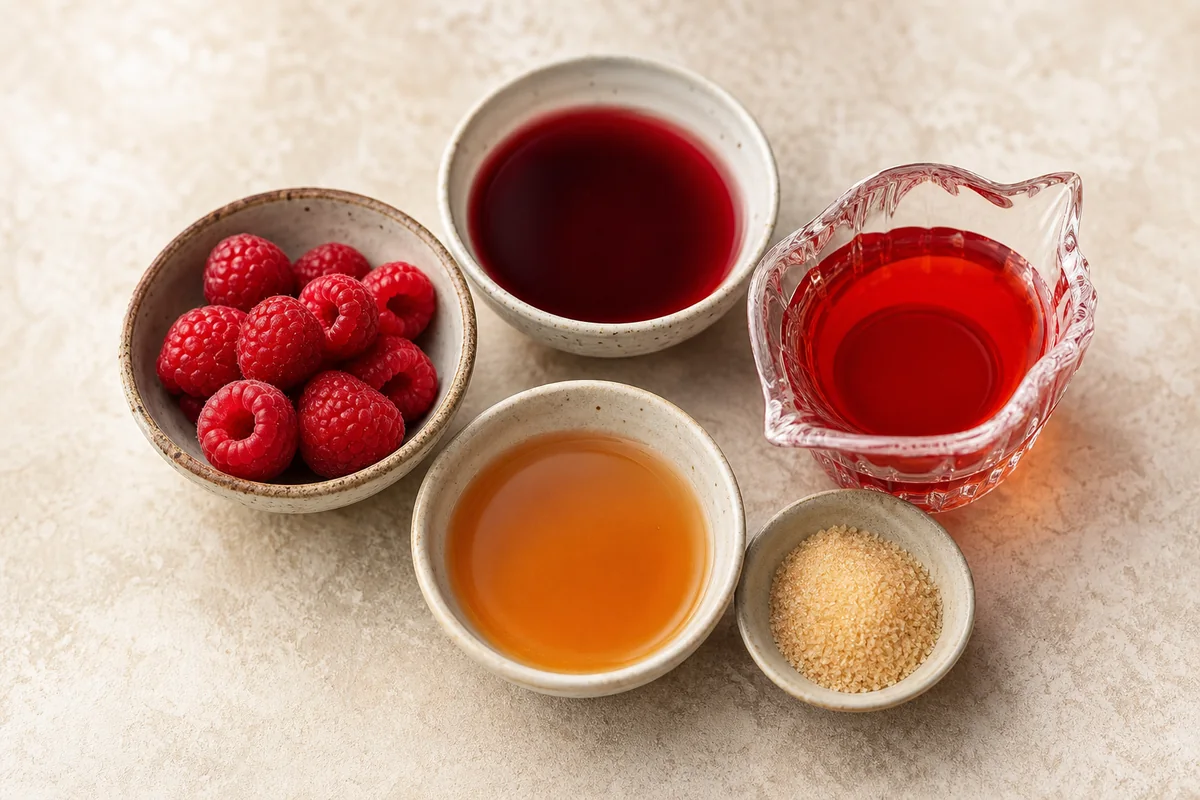
5 Best Raspberry Vinegar Substitutes (Flavor-Matched)
Ingredients
Equipment
Method
- Decide what you need most: fruity berry aroma, the vinegar’s tart bite, or both (most recipes need both).
- Choose the closest match from the table and apply the listed ratio for your recipe.
- Mix liquid-based swaps first (e.g., syrup/juice with vinegar) so the acid fully dissolves the sweetness or fruit solids.
- Taste and fine-tune: if it’s not tart enough, add a small splash of vinegar; if it’s too sharp, add a teaspoon of syrup/jam.
- For gritty swaps (purees), strain or let sit 5 minutes, then pour off the clearer top to avoid texture changes.
Notes
- When the substitute includes sugar (jam/syrup), reduce added sweeteners in your recipe slightly and taste after mixing.
- If using macerated berries, strain for sauces/dressings so the finish stays glossy.
Tried this recipe?
Let us know how it was!
Carrie is a food writer and editor with more than 15 years of experience. She has worked for some of the biggest names in the food industry, including Bon Appétit, Food & Wine, and Martha Stewart Living.
As the Editor in Chief of EpicureDelight, Carrie oversees all of the content on the site. She also manages the team of contributing writers and editors, who help to create delicious recipes, helpful tips, and informative articles that you’ll find on the site.
A native of the Chicago area, Carrie is passionate about all things food. She loves trying new restaurants and experimenting with new recipes in her kitchen. She’s also a graduate of the Culinary Institute of America, so she knows a thing or two about food!



