
That sharp, almost smoky sourness tamarind puree adds to a curry or dipping sauce is hard to fake. But if your jar is empty, these five swaps will keep your dish tangy, balanced, and the right thickness without a last-minute store run.
The key with any tamarind puree substitute is matching two things at once: the acidity and the body. Tamarind puree is thick, fruity-sour, and slightly sweet all at the same time.
A swap that only covers sourness will leave your dish tasting thin.
Tamarind puree delivers fruity tang, mild sweetness, and sauce thickness. The closest swaps are unsweetened tamarind paste thinned with water, or Indian concentrate dissolved and strained. Lime juice and brown sugar work in a pinch. Always taste and adjust sweetness plus salt after substituting.
5 Best Tamarind Puree Substitutes That Taste Right
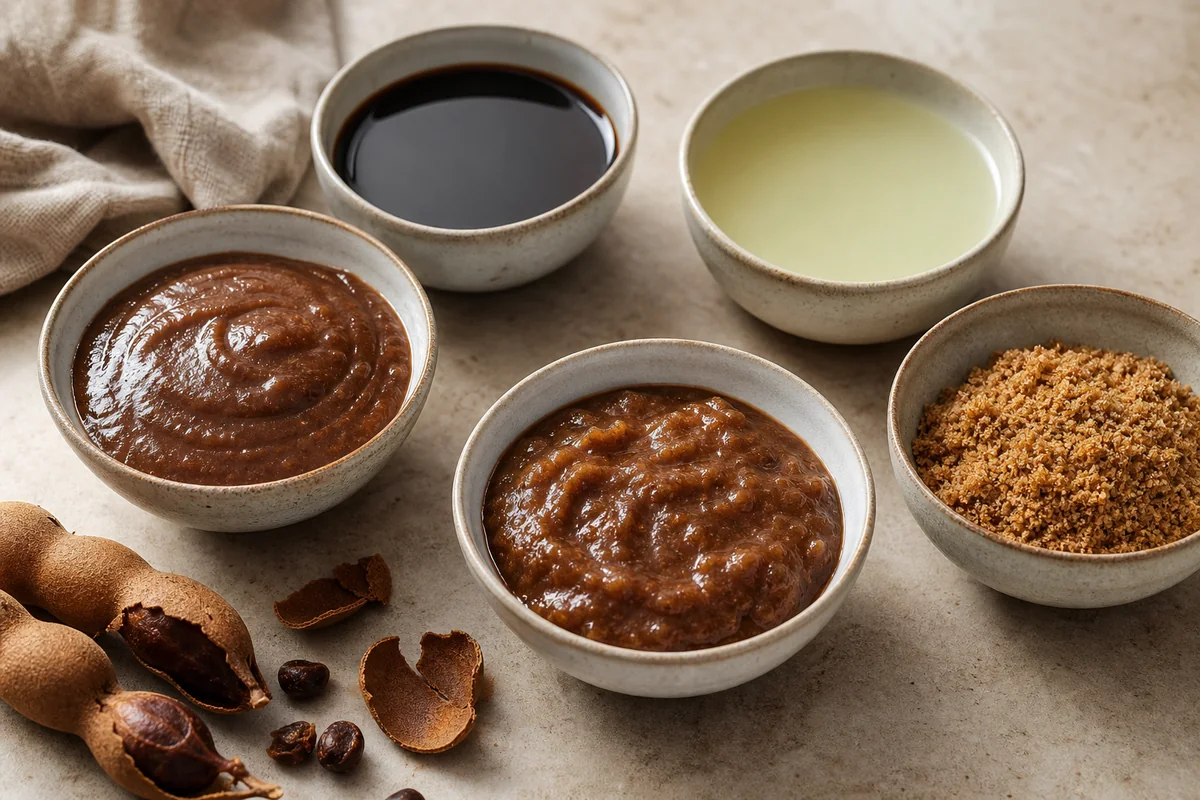
Each of these swaps covers tamarind's sourness in a different way. The table below gives you a starting ratio and a key note before you read the full detail on each option.
| # | Substitute | Best For | Ratio | Key Note |
|---|---|---|---|---|
| 1 | Tamarind paste, thinned | Both | 1:1 | Thin first, then taste |
| 2 | Imli concentrate, dissolved | Both | 1:1 | Strain before adding |
| 3 | Brown tamarind sauce | Cooked | ¾:1 | Dilute more than expected |
| 4 | Lime juice + sugar | Both | 1:1 | Lacks caramel depth |
| 5 | Pomegranate molasses | Cooked | ½:1 | Loosen before using |
1. Tamarind Paste, Thinned
Unsweetened tamarind paste is essentially puree at a slightly denser stage, which makes it the closest swap you can find. The flavor is identical: same fruity sourness, same underlying sweetness, same slight earthiness you get from the seed pods.
- Start with: 1 tablespoon paste plus 1-2 tablespoons warm water, stirred until smooth.
- Match thickness: Puree should pour slowly off a spoon. Add water in half-tablespoon steps until it does.
- Strain if needed: If the paste has visible fibers, pass it through a fine sieve after thinning.
- Taste and adjust: If it still tastes more concentrated than your usual puree, add a tiny pinch of salt and a few drops of water.
This swap also stores the same way as the original, so check out this dark, sticky product's shelf life if you want to keep the rest fresh.
Skip if: Your paste is sweetened. The sugar balance will already be off before you start any adjustment.
2. Imli Concentrate, Dissolved and Strained
Indian tamarind concentrate (imli) is noticeably stronger than puree and can have a gritty texture if you add it directly from the jar. It needs a two-step prep before it goes anywhere near your dish.
- Dissolve: Mix 1 teaspoon concentrate into 3 tablespoons warm water and stir for 30 seconds.
- Strain: Pour through a fine sieve or cheesecloth to remove any fiber or grit.
- Measure: Use the strained liquid as you would tamarind puree, at a 1:1 starting ratio.
- Adjust acidity: Concentrate can taste sharper than puree. Add a small pinch of salt and half a teaspoon of brown sugar if the tang is too aggressive.
For a full breakdown of how concentrate compares to paste in strength and use, the paste vs. concentrate comparison is worth a quick read before you commit to this route.
Skip if: Your recipe is a quick salad dressing or raw application. Concentrate's intense sourness is hard to round off without at least a brief simmer.
3. Brown Tamarind Sauce, Diluted
Brown tamarind sauce from a bottle is usually sweeter and thicker than puree. It often contains added sugar, salt, and sometimes spices already blended in. That convenience is fine for some dishes and a problem for others.
Brown Tamarind Sauce
Works for: Stir-fries, dipping sauces, pad thai bases where the sweetness fits the dish.
Skip if: Recipe is already sweet, or you want to control spice and salt independently.
- Dilute more than you think: Start at a ¾:1 ratio and thin with water until it flows like puree.
- Taste for sweetness: If the sauce is noticeably sweeter than tamarind puree, reduce any added sugar in the recipe by half a teaspoon.
- Check salt: Many bottles are already salted. Hold back on any salt additions until you taste the finished dish.
- Skip spiced bottles: If the bottle lists chili or heavy sweeteners, choose a plainer option instead.
If you want to understand what straight tamarind puree actually tastes like before comparing, the sour, fruity paste has a flavor breakdown that will help you calibrate any bottle-based swap.
Skip if: The bottle has heavy added ingredients that would clash with your dish's seasoning.
4. Lime Juice Plus Sugar
Lime juice with a small amount of brown sugar is a fast acidic swap that mimics tamarind's sourness without requiring any specialty ingredients. It is not a flavor-identical match, but it works well in lighter dishes, marinades, and quick sauces.
The depth tamarind gets from its fruity, almost caramel-like base is missing here. You are covering the tang only.
For dishes that rely on that darker dimension, such as slow braises or thick chutneys, this swap will taste noticeably thinner.
- Combine: Mix 2 tablespoons lime juice with ¼ teaspoon brown sugar per tablespoon of puree required.
- Add late: Stir in after simmering, not at the start. Lime's brightness burns off quickly with heat.
- Adjust salt: A small pinch of salt rounds the tang and reduces the straight citrus edge.
- Boost depth (optional): A few drops of Worcestershire sauce add the missing earthiness if your dish can handle it.
If lime isn't available either, swapping out citrus covers the next best acidic options you likely already have.
Skip if: Your dish needs tamarind's darker, caramel-like depth. Lime reads bright and clean, not smoky-sweet.
5. Pomegranate Molasses, Loosened
Pomegranate molasses is sticky, tart, and fruity in a way that actually overlaps well with tamarind's flavor profile. The problem is thickness. Straight from the bottle, it is far too dense to use as a direct puree swap.
You also need to account for color. Pomegranate molasses is dark and slightly purple-red.
It will tint pale sauces visibly. In dark curries or braises, this is not an issue.
- Loosen first: Mix 1 tablespoon molasses with 2 tablespoons warm water, stirring until fully blended.
- Start at ½:1: Use half the volume you would use for tamarind puree, then adjust upward.
- Add mid-cook: It deepens well when simmered for 5-8 minutes in a sauce.
- Balance sweetness: Pomegranate molasses can push a dish sweet fast. Skip any extra sugar in the recipe until you taste.
| Sauce Thickness Goal | Dilution Approach | Notes |
|---|---|---|
| Pourable (curry, stew) | 1 tablespoon molasses + 2 tablespoon water | Stir fully before adding to pot |
| Medium (marinade, stir-fry) | 1 tablespoon molasses + 1 tablespoon water | Taste after stirring; add more water if sharp |
| Thick (glaze, dipping sauce) | 1 tablespoon molasses, no water added | Reduce heat slightly to avoid burning |
If you ever need to swap out the pomegranate molasses itself, tart syrup alternatives cover several options worth bookmarking.
Skip if: Your dish is already sweet or needs a neutral color. Both will work against you here.
Making Tamarind Puree Substitutes Work
Every swap above needs a small calibration step before it goes into the pot. The thickness of your substitute matters as much as the sourness level.
A swap that's too thin will dilute your sauce; one that's too thick will overpower it. If you're choosing between the sharper acidic options lower on the list, that calibration step is especially important.
- Match thickness first: Hold a spoon over the substitute. It should flow slowly, not drip fast or sit stiff. Thin with warm water in half-tablespoon increments until the pour matches tamarind puree.
- Taste for balance: After adding the substitute, stir and taste. Too sharp means add a small pinch of brown sugar. Too flat means add a pinch of salt and a few drops more of your substitute.
- Simmer briefly to round flavor: Two to three minutes on a gentle simmer smooths out any harsh edges from lime juice or vinegar-based swaps. Add the substitute early enough to give it that time.
Tamarind Puree Substitute FAQ
Frequently Asked Questions
Not straight from the jar. Tamarind paste is denser than puree, so thin it with 1-2 tablespoons of warm water per tablespoon of paste until it matches the consistency of puree.
Brown tamarind sauce and pomegranate molasses both carry added sugar. Cut any sugar in your recipe by half a teaspoon and taste before adding more.
Yes, for smooth sauces. Dissolve it in warm water first, then pass it through a fine sieve to remove fiber and grit before measuring.
Lime juice with a pinch of brown sugar is the fastest option. Pomegranate molasses loosened with water gives more depth for slow-cooked curries.
Simmer the sauce for 2-3 extra minutes to reduce it slightly. Alternatively, add a half teaspoon of cornstarch slurry if the dish needs immediate thickening.
5 Best Tamarind Puree Substitutes That Taste Right
Ingredients
Equipment
Method
- Decide whether your recipe needs tamarind’s flavor only or both flavor and thickness (e.g., glaze vs. curry).
- Start with the ratio listed for your chosen substitute, then thin with water until it matches the consistency of tamarind puree in your dish.
- Taste after adding the substitute: if it’s too sharp, add a small amount of sweetness; if it’s flat, add salt and simmer 2–3 minutes.
- For gritty swaps (tamarind concentrate), dissolve in warm water and strain before using for smooth sauces.
- Adjust in small steps: tamarind is strong, so increment by 1–2 tablespoons per batch rather than dumping in more at once.
Notes
- Most substitutes are more intense than puree or are sweeter—always adjust with water plus a sweetness/salt micro-dose.
Tried this recipe?
Let us know how it was!
Carrie is a food writer and editor with more than 15 years of experience. She has worked for some of the biggest names in the food industry, including Bon Appétit, Food & Wine, and Martha Stewart Living.
As the Editor in Chief of EpicureDelight, Carrie oversees all of the content on the site. She also manages the team of contributing writers and editors, who help to create delicious recipes, helpful tips, and informative articles that you’ll find on the site.
A native of the Chicago area, Carrie is passionate about all things food. She loves trying new restaurants and experimenting with new recipes in her kitchen. She’s also a graduate of the Culinary Institute of America, so she knows a thing or two about food!



