
Wisconsin Brick Cheese has a specific personality. It melts smooth, carries a mild tang, and slices cleanly without crumbling.
Finding a stand-in that checks all three boxes takes a bit of matching, but it's very doable.
The key traits to replace are melt behavior, sharpness level, and slice structure. A good wisconsin brick cheese substitute leans semi-firm, melts without turning greasy, and brings at least a light tang to the dish.
Wisconsin Brick Cheese melts smoothly, slices cleanly, and delivers mild-to-moderate tang. The best swaps are provolone for baked melts, medium cheddar for flavor punch, Colby Jack for sandwiches, young Gouda for creamy bakes, and Monterey Jack for fast everyday melting.
5 Best Wisconsin Brick Cheese Substitutes Ranked
| # | Substitute | Best For | Ratio | Key Note |
|---|---|---|---|---|
| 1 | Provolone (low-moisture) | Baking & Melts | 1:1 | Smooth melt, mild tang |
| 2 | Medium Cheddar (shredded) | Both | 1:1 | Closest overall flavor |
| 3 | Colby Jack (shredded) | Sandwiches | 1:1 | Mild, crowd-pleasing melt |
| 4 | Gouda (young, shredded) | Casseroles | 1:1 | Buttery, creamy finish |
| 5 | Monterey Jack (shredded) | Both | 1:1 | Reliable, widely available |
1. Provolone
Low-moisture deli-style provolone is one of the strongest matches here. It melts in a smooth, even sheet and carries a gentle sharpness that echoes brick cheese without overwhelming a dish.
Provolone handles casseroles, baked pasta, and layered sandwiches well. When you're choosing a provolone-adjacent swap for a similar dish, match the moisture level first.
- Casseroles: Layer slices directly over the top in the last 10 minutes of baking for a clean melt.
- Baked melts: Use the same weight as your brick cheese; no ratio adjustment needed.
- Sandwiches: One thin slice per sandwich layer melts without pooling or going rubbery.
Skip if: You need a punchy, distinctly tangy bite. Provolone is milder than aged brick, so add cheddar instead.
2. Medium Cheddar
Medium cheddar is the closest flavor match for brick cheese in most everyday recipes. It brings a sharper tang than provolone and browns well, which matters in open bakes and gratins.
Medium Cheddar (shredded)
Works for: baked mac, casseroles, gratin toppings, grilled sandwiches where tang matters
Skip if: the dish is a delicate cream sauce where cheddar sharpness turns harsh
Shred it fine. Big chunks stay chunky in the oven and create uneven melt across the surface.
When swapping in a sharper cheese for any baked recipe, fine shredding is the single biggest factor for even coverage.
- Mac-style bakes: Add to the sauce off the heat so it melts in without breaking.
- Gratin topping: Mix with a small amount of breadcrumbs to control browning speed.
- Grilled sandwiches: Medium heat only; high heat makes cheddar oil out faster than brick.
Skip if: Your recipe depends on a gentle, creamy melt with very little sharpness.
3. Colby Jack
Colby Jack sits between mild cheddar and Monterey Jack in both flavor and melt behavior. It slices cleanly and holds up in sandwiches without going stringy, which is exactly what brick cheese does.
For comparing these two mild melt options, Colby Jack edges out Monterey Jack when you want a slightly more complex flavor.
- Grilled sandwiches: Shred or use thin slices; it melts quickly on medium heat without puddling.
- Baked mac casseroles: Works at a 1:1 ratio; stir into warm (not boiling) sauce for a smooth result.
- Cold sandwiches: Slices hold their shape at room temperature, just like brick cheese does.
- Quesadillas: Excellent choice; the blend melts evenly and doesn't brown too fast.
Skip if: You need a noticeably tangy bite. Colby Jack is pleasant but mild, so it won't stand in for sharper brick cheese profiles.
4. Gouda (Young or Mild)
Young Gouda melts almost as smoothly as processed cheese but keeps a natural, slightly buttery flavor that works beautifully under a casserole crust. It won't bring the tang of brick cheese, but the creaminess fills the gap in texture.
For dishes where you're already deciding on a Gouda-based swap, choose a wheel labeled "young" or "mild," not aged or smoked.
| Use | Ratio | Notes |
|---|---|---|
| Baked casserole topping | 1:1 | Fine shred; check 5 min early to prevent over-browning |
| Cheese sauce base | 1:1 | Melt off the heat; Gouda seizes if overheated |
| Sandwich melt | 1:1 | Thin slices melt faster than thick; medium heat only |
- Browning control: Gouda browns faster than brick cheese, so check the dish 3-5 minutes early.
- Starch pairings: Works especially well with potato gratin and pasta bakes.
- Tang fix: A small pinch of dry mustard powder in the sauce brings the sharpness back up.
Skip if: Your recipe is built around brick cheese's distinctive tang. Gouda is buttery and mild, not tangy.
5. Monterey Jack
Monterey Jack is the go-to when availability and melt reliability matter more than flavor matching. It melts smoothly, doesn't break into grease easily, and disappears into dishes without fighting other flavors.
Monterey Jack (shredded)
Works for: quick bakes, nacho toppings, and any dish where a clean, fast melt is the priority
Skip if: the recipe needs tang as a flavor anchor; Monterey Jack is very mild and may taste flat
When using it in place of brick cheese, the mildness is the main thing to manage. Adding a small pinch of salt and a teaspoon of building tang into Monterey Jack dishes can bring a sauce or bake much closer to the original.
- Quick bakes: Use at 1:1; shred medium-fine for even coverage across the dish.
- Nacho topping: Goes on in the last 5-6 minutes under the broiler; no need to pre-melt.
- Sauce adjustment: Add ½ teaspoon lemon juice or a small dot of sour cream per cup of sauce to lift the flavor.
Making a Wisconsin Brick Cheese Substitute Work
The three variables that matter are melt rate, sharpness level, and browning behavior, and each substitute lands differently on all three. Provolone and Monterey Jack melt the fastest.
Cheddar brings the most tang. Gouda browns quickest.
When building a dish around picking the right baked cheese dish, matching the melt rate to your cook time is usually more important than matching the flavor exactly.
- Shred fine: All five substitutes perform better shredded medium-fine rather than chunked; this alone prevents uneven melt spots.
- Add tang back: If your swap tastes flat, stir in ½ teaspoon lemon juice or a small spoonful of sour cream per cup of sauce before serving.
- Check early: Substitutes like Gouda and provolone can reach their melt point 3-5 minutes ahead of brick cheese, so start checking before your recipe says to.
Frequently Asked Questions
Medium cheddar (shredded fine) is the closest match for baked mac. It brings similar tang and melts evenly into the sauce without breaking when you add it off the heat.
Yes. Low-moisture provolone slices at a 1:1 swap. The flavor is slightly milder, but the melt and sliceability are very close to brick cheese.
Use about ¾ of the amount your recipe calls for. American cheese is saltier and can turn oily in baked dishes, so using slightly less prevents pooling.
Mild substitutes like Monterey Jack or Gouda lack brick cheese's tang. Stir in ½ teaspoon lemon juice or a small spoonful of sour cream per cup of sauce to restore sharpness.
Yes, significantly. Finely shredded cheese melts faster and more evenly than chunks, which prevents rubbery pockets and uneven browning across the dish surface.
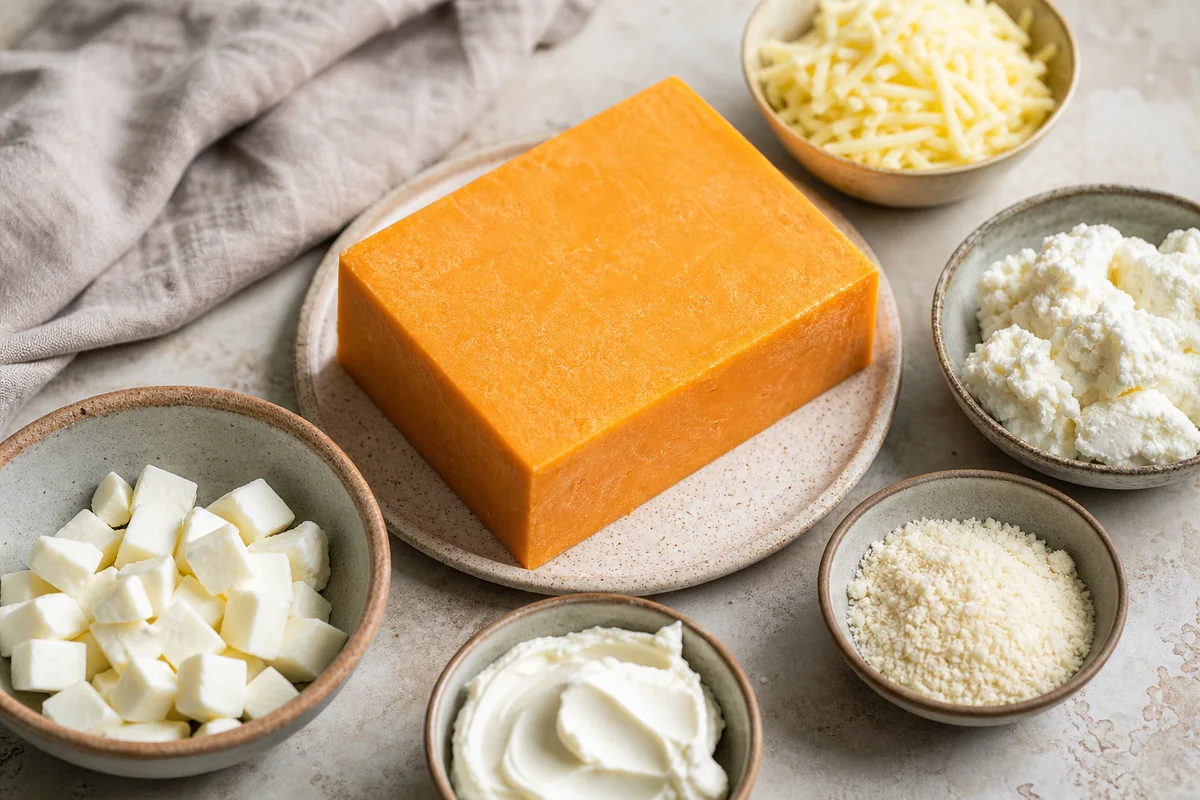
5 Best Wisconsin Brick Cheese Substitutes
Ingredients
Equipment
Method
- Identify your use case (melting/baking vs slicing/sandwich) and pick the closest match from the list above.
- Use the listed substitution ratio; shred or slice thinly so the cheese melts evenly.
- If your swap is milder than Wisconsin Brick Cheese, add a small pinch of salt to the dish before baking.
- For swaps that melt faster, start checking doneness 3–5 minutes early to avoid greasiness.
- Taste the hot dish: if it needs more tang, mix in a tiny amount of sour cream or a few drops of lemon juice (by teaspoon) in the sauce.
Notes
- Shredding improves melt texture for most swaps.
- Use slightly less American cheese because it can dominate and get oily.
- For tang-forward results, prefer cheddar or provolone and adjust seasoning to taste.
Tried this recipe?
Let us know how it was!
Carrie is a food writer and editor with more than 15 years of experience. She has worked for some of the biggest names in the food industry, including Bon Appétit, Food & Wine, and Martha Stewart Living.
As the Editor in Chief of EpicureDelight, Carrie oversees all of the content on the site. She also manages the team of contributing writers and editors, who help to create delicious recipes, helpful tips, and informative articles that you’ll find on the site.
A native of the Chicago area, Carrie is passionate about all things food. She loves trying new restaurants and experimenting with new recipes in her kitchen. She’s also a graduate of the Culinary Institute of America, so she knows a thing or two about food!



