Plain zucchini bread keeps about four days at room temperature when it is fully cooled and sealed in an airtight container. A loaf with cream cheese frosting, custard, or another perishable filling belongs in the refrigerator instead.
Freeze a cooled loaf or individual slices when you need more time. University of Maine Cooperative Extension gives frozen zucchini bread a best-quality window of three to four months.

A plain zucchini loaf stays at its best for about four days on the counter. Perishable toppings need refrigeration, while tight freezer wrapping protects a loaf or slices for three to four months.
How Long Does Zucchini Bread Last at Room Temperature?
| Loaf state | Storage place | Best-quality guide | Main concern |
|---|---|---|---|
| Plain whole loaf | Cool room in an airtight container | Up to 4 days | Surface moisture and mold |
| Plain cut loaf | Cool room with cut face covered | Use within 4 days | Dry edges and exposed crumb |
| Perishable frosting or filling | Refrigerator at 40°F or below | Follow the topping recipe | Dairy or egg safety |
| Wrapped loaf or slices | Freezer | 3 to 4 months | Freezer burn and odor pickup |
A plain zucchini loaf can stay at room temperature because it is a baked bread without a perishable topping. The moist crumb still loses quality faster than a dry sandwich loaf, so a tight seal matters.
Use four days as the main counter limit. That matches the storage direction in the University of Maine Cooperative Extension zucchini-bread recipe.
Count from the day the bread was baked, not the day you first cut it. A loaf does not gain extra counter time because it stayed whole for two days.
Room conditions matter. A hot, humid kitchen raises the chance of surface moisture and mold, while a dry room makes the cut edge stale faster.
Refrigeration can slow mold, but cold air also makes bread firm and stale. The same quality tradeoff matters for ordinary bread storage, so do not chill every plain loaf automatically.
Small muffins expose more surface area than one large loaf. Follow the tighter texture checks used for stored muffins and seal them as soon as they cool.
When Does Zucchini Bread Need Refrigeration?
The bread name does not decide the storage place by itself. Cream cheese frosting or a cream cheese alternative can turn a counter-safe plain loaf into a refrigerated dessert when the product label requires cold storage.
USDA food-safety guidance separates ordinary bread and muffins from baked goods with cream cheese frosting or cream fillings. Those perishable versions need cold storage.
A plain loaf can use the counter clock
Nuts, spices, chocolate chips, and a dry sugar glaze do not automatically make a cooled loaf perishable. Seal it and keep using the four-day counter guide.
Dairy and egg additions set a colder clock
Cream cheese frosting, custard filling, and cheesecake swirl need refrigeration. Follow the topping or filling recipe when its limit is shorter than the bread's.
A simple powdered-sugar glaze usually dries on the surface and does not create the same issue as cream cheese frosting. A moist fruit puree or one of the applesauce baking swaps changes crumb softness, but the finished loaf still follows its topping and filling.
Fresh fruit laid on top after baking adds wet spots and can shorten quality. Refrigerate that version and use it sooner than a plain loaf.
Do not leave a chilled loaf on the counter all afternoon, then return it to the refrigerator. Cut what you plan to serve and keep the rest covered and cold.
Label the container with the baking date. This keeps the clock tied to the loaf rather than to a forgotten guess later in the week.
How Can You Tell Whether Zucchini Bread Has Gone Bad?
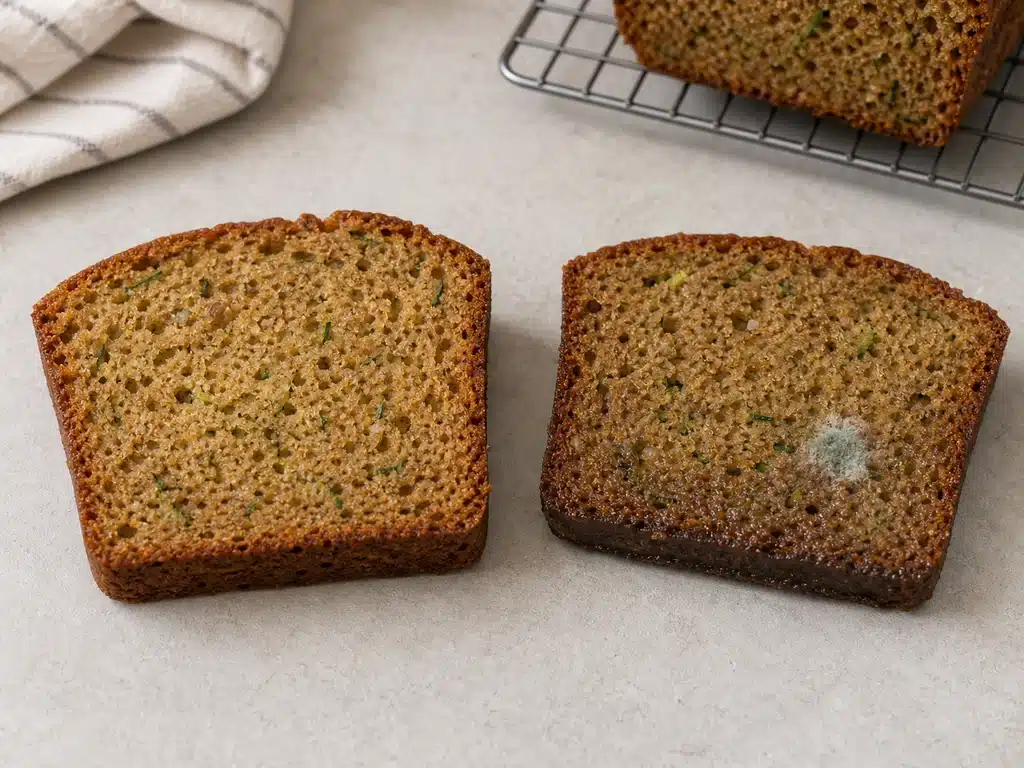
Zucchini bread starts moist, so a soft crumb is normal. Spoilage looks or smells different from the even moisture that was present after baking.
Dry edges and a firm crumb point to staling. Those quality changes may make the bread less pleasant, but they do not carry the same warning as mold or a sour fermented smell.
- Visible mold can appear green, blue, white, gray, or black and may look fuzzy or dusty.
- Unexplained wet patches feel slimy or soak the wrapper after the loaf had already cooled.
- Sour or fermented odor is different from cinnamon, zucchini, nuts, or the normal baked aroma.
- Pantry pests or torn wrapping expose the full loaf to contamination.
- Unexpected fizz or sticky breakdown signals more than ordinary moist crumb.
Discard the whole loaf when mold appears. USDA advises throwing away moldy bread and baked goods because their porous structure can carry contamination below the visible spot.
Do not cut one inch around a mold spot and keep the rest. That method belongs to a few dense foods, while soft bread allows mold threads to move deeper.
A loaf can darken slightly as spices, nuts, or chocolate settle into the crumb. Color alone needs context, so check whether the patch is fuzzy, wet, spreading, or paired with an off odor.
Never sniff a moldy loaf closely. Wrap it, discard it, and clean the shelf or container that held it.
Stale but clean bread can still work after light warming. Stop when the problem is mold, pests, wet breakdown, or an odor that does not belong.
How Should You Cool and Wrap Zucchini Bread?
Warm bread releases steam. Wrapping it too early traps that water against the crust, which creates a damp surface where mold can gain a head start.
Let the loaf cool completely on a rack. Air should move around the bottom until the center no longer feels warm through the pan or crust.
- Remove the loaf from the pan after the recipe's cooling period.
- Set it on a clean rack until the center reaches room temperature.
- Wrap the whole loaf or place it in an airtight container.
- Cover the cut face tightly after the first slice.
- Keep the container away from the stove, dishwasher steam, and direct sun.
- Write the baking date on the outside.
A paper towel can absorb a small amount of surface moisture, but it cannot fix bread wrapped while hot. Replace a damp towel rather than leaving it against the loaf.
Plastic wrap, a zipper bag, or a rigid container can all work. The tight seal also protects loaves made with stored pumpkin puree, which can create a similarly moist crumb.
Keep strong-smelling onions, garlic, and spices away from loosely wrapped bread. A moist crumb absorbs nearby odors, especially in the refrigerator or freezer.
Handle slices with clean hands or utensils. Repeated contact adds crumbs and moisture to the container and shortens the clean storage period.
Can You Freeze Zucchini Bread?
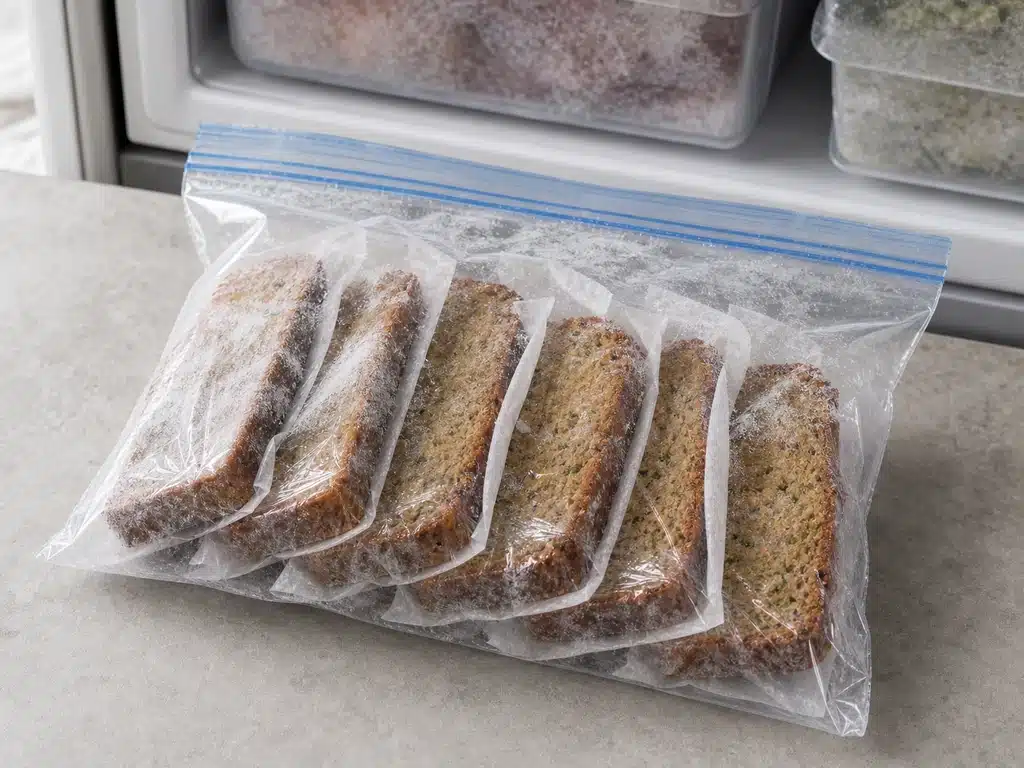
Freezing works well because zucchini keeps quick bread moist after thawing. Penn State Extension notes that baked zucchini products freeze well when they cool fully before tight wrapping.
Freeze the loaf on the day you know you will not finish it. Waiting until day four saves older bread and gives you less fresh flavor after thawing.
Freeze a whole loaf when it will be served together
Cool it completely, wrap it closely with freezer-safe wrap, and add a freezer bag or rigid outer container. Press out spare air without crushing the crumb, then date the package.
Freeze slices when people will eat them one at a time
Wrap single portions or place parchment between slices. Use the package within three to four months for best quality.
Individual slices thaw faster and keep the rest of the loaf frozen. Put a small sheet of parchment between slices if you want to skip separate plastic wrapping.
Freeze a plain loaf before adding a wet glaze when possible. Fresh glaze looks and tastes better after thawing, while frozen frosting can weep or crack.
Freezer burn appears as pale dry areas and leaves the crumb tough. Fat choice can affect tenderness after thawing, especially when a recipe uses one of the common baking-oil swaps.
Do not use a thin bread bag for long freezer storage. A freezer-grade bag or rigid container gives better protection from dry air and nearby odors.
How Should You Thaw and Refresh Zucchini Bread?
Thaw plain slices while they are still wrapped. Keeping the cover on lets condensation form on the outside instead of settling directly on the crumb.
A single slice can thaw at room temperature in about an hour depending on thickness. A whole loaf needs longer, so plan ahead rather than using high heat on a frozen center.
A brief pass through a toaster oven or microwave can restore aroma to a thawed slice. Repeated warming dries the loaf, so leave the other portions covered.
Thaw a cream-cheese-frosted loaf in the refrigerator. Keep it chilled until serving and return leftovers to the refrigerator promptly.
Remove the freezer wrapping after plain bread reaches room temperature if the surface feels damp. A few minutes of open air can dry the crust without drying the full slice.
A gummy center after thawing may come from underbaking rather than freezing. Flour changes can also affect structure, so a loaf made with a different baking flour needs the same doneness check before storage.
Refreezing a fully thawed plain loaf may be safe when it stayed clean and cool, but the crumb loses quality each time. Freeze portions from the start so one serving does not disturb the rest.
Sources
- University of Maine Cooperative Extension zucchini-bread recipe and storage guidance
- Penn State Extension guide to freezing baked zucchini products
- USDA FSIS guidance for mold on bread and baked goods
- USDA FSIS guidance for ordinary and cream-filled baked goods
Frequently Asked Questions
Can zucchini bread sit out overnight?
A plain fully baked loaf can stay covered at room temperature overnight. A loaf with cream cheese frosting, custard, or a perishable filling should be refrigerated.
Should I slice zucchini bread before storing it?
Keep it whole when you plan to eat it soon because a whole loaf dries more slowly. Slice before freezing when you want single portions.
Why is my zucchini bread sticky on top?
A slightly tacky crust can come from sugar and moisture. A slimy surface, spreading wet patch, or sour odor points to spoilage instead.
Can I freeze zucchini bread in foil?
Yes, but add a freezer bag or airtight container around the foil. The second barrier reduces dry air and odor transfer.
How long does zucchini bread last in the refrigerator?
Use the topping or filling recipe as the main guide for a refrigerated loaf. For a plain loaf, freezing protects texture better than keeping it cold for a long period.

Carrie is a food writer and editor with more than 15 years of experience. She has worked for some of the biggest names in the food industry, including Bon Appétit, Food & Wine, and Martha Stewart Living.
As the Editor in Chief of EpicureDelight, Carrie oversees all of the content on the site. She also manages the team of contributing writers and editors, who help to create delicious recipes, helpful tips, and informative articles that you’ll find on the site.
A native of the Chicago area, Carrie is passionate about all things food. She loves trying new restaurants and experimenting with new recipes in her kitchen. She’s also a graduate of the Culinary Institute of America, so she knows a thing or two about food!