
Peach jam is the closest all-purpose apricot jam substitute, and it works at a one-to-one ratio. Use orange marmalade when a savory glaze can handle citrus bitterness, fig jam for dark rich fillings, apricot preserves for the closest fruit match, or reduced apricot purée when smooth fruit matters more than a firm set.
The right choice depends on what the jam does in the recipe. A clear pastry glaze needs a different texture from a cake filling or a pan sauce.

Peach jam is the safest general swap. Marmalade favors savory glazes, fig jam favors rich fillings, preserves keep the apricot flavor, and purée needs reduction when the recipe depends on a set.
Which Apricot Jam Substitute Fits the Recipe?
Apricot jam can add fruit, sugar, acidity, shine, moisture, and a soft pectin gel. A replacement succeeds when it covers the part the recipe actually depends on.
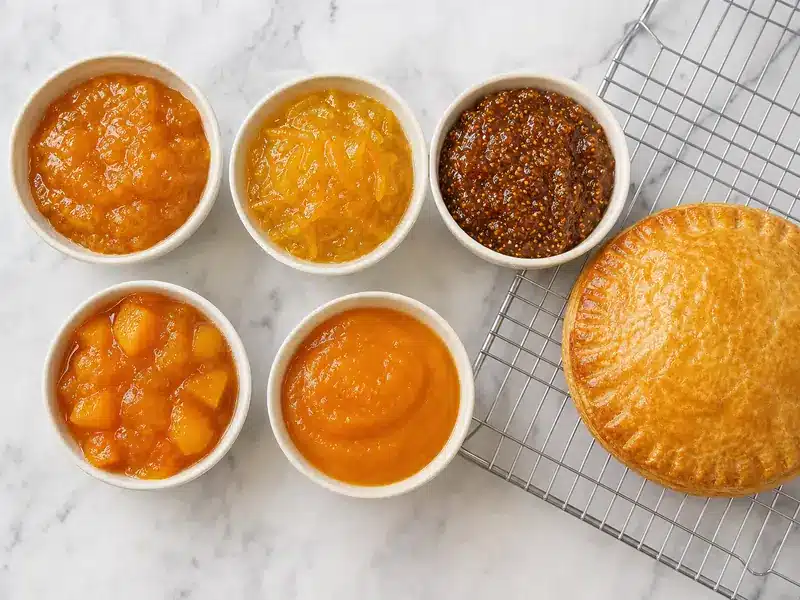
A brushed pastry glaze needs to melt, spread thinly, and set without chunks. A baked filling needs enough body to stay in place after cooling, while a savory sauce can accept a looser texture and a stronger bitter or acidic note.
Start with the table, then use the detailed section for the adjustment that keeps each option from failing.
| # | Substitute | Starting ratio | Best use | Main failure |
|---|---|---|---|---|
| 1 | Peach jam | 1:1 | Pastries, fillings, mild glazes | Sweeter and less tart |
| 2 | Orange marmalade | 1:1 | Meat glaze, pan sauce, bold pastry | Rind can taste bitter |
| 3 | Fig jam | 1:1 | Rich fillings, cheese, pork | Dark color and seeds |
| 4 | Apricot preserves | 1:1 | Closest flavor, filling, glaze | Large fruit pieces |
| 5 | Apricot purée | ¾ cup per cup | Sauce, coulis, warm glaze | Less sugar and no firm pectin set |
1. Peach Jam
Use one cup of peach jam for one cup of apricot jam. Peach and apricot are both stone fruits, so their cooked flesh gives a similar soft body and familiar fruit aroma.
Peach usually tastes rounder and sweeter. Apricot has a sharper floral acidity, which becomes more important in a simple glaze than in a spiced cake filling.
For pastry glaze, warm peach jam gently until it loosens, then push it through a fine strainer if the jar contains visible fruit. A teaspoon or two of water can help a very firm jam brush cleanly over a tart.
Let a test spoon cool before thinning it again. Warm jam always looks looser than the same jam after its pectin resets.
For filling and savory sauce, use peach jam straight from the measure in thumbprint cookies, cake layers, and baked pastry. Its extra sweetness is usually small enough that no change is needed.
In a ham or chicken glaze, taste before adding brown sugar or honey. Add lemon juice in small amounts when the sauce needs the brighter edge that apricot would have supplied.
Peach jam fails when the dish depends on a clearly tart apricot note. It can match the function while still making a delicate dessert taste more mellow.
2. Orange Marmalade
Start with one cup of orange marmalade for one cup of apricot jam. Its citrus acidity works well in savory glazes, but the cooked peel adds bitterness that apricot jam does not have.
Fine-cut marmalade blends into sauce more easily than a thick-cut product. Large rind strips can catch on pastry, make a filling stringy, or place all the bitterness in one bite.
| Use | Why marmalade works | Risk | Correction |
|---|---|---|---|
| Ham or chicken glaze | Acid and peel cut through fat | Can become bitter as it reduces | Add water before more sugar |
| Pan sauce | Citrus brightens browned flavors | Rind pieces feel coarse | Strain after warming |
| Pastry glaze | Melts to a glossy coating | Color and bitterness are stronger | Use fine-cut marmalade and taste first |
| Cold cake filling | Pectin holds the layer | Peel can dominate mild cream | Blend smooth or choose peach jam |
Do not assume heat removes bitterness. Reduction concentrates sugar, acid, and peel compounds together, so a bitter marmalade may become more intense in the pan.
Marmalade is a poor neutral replacement in vanilla frosting made with icing sugar, a pale mousse, or another mild dessert where orange will become the main flavor. It is strongest when the recipe welcomes citrus.
3. Fig Jam
Use fig jam at a one-to-one ratio. It brings a deeper honeyed fruit flavor, a darker color, and small seeds that make the result feel richer than apricot jam.
That shift suits pork glaze, cheese pairings, spice cakes, and fillings hidden inside dark pastry. It does not suit a clear golden glaze where appearance matters as much as flavor.
Fig earns the change with rich food. It works with walnuts, blue cheese, goat cheese, rosemary, warm spices, and roasted meat.
Its dense body stays in place between layers, and the seeds add a noticeable fruit texture.
A little lemon juice can lift a heavy filling, but acid will not turn fig into apricot. Use the adjustment to balance sweetness, not to erase the ingredient's identity.
Fig jam fails when color must stay light. It darkens pale frosting and turns a bright tart glaze brown or purple.
Straining removes seeds and chunks, but it cannot remove the color or deep flavor.
Choose peach jam or apricot preserves when the finished food must look amber and taste light. Fig is the better pick only when the richer direction helps the dish.
4. Apricot Preserves
Apricot preserves offer the closest possible fruit match because they use apricots. The practical difference is texture, since preserves often suspend larger fruit pieces in a softer gel.
Measure preserves one-to-one by volume. Decide what to do with the pieces after you know whether the recipe needs a filling, sauce, or smooth surface.

- For a filling, stir and use. Keep tender fruit pieces when they will stay inside pastry or between cake layers.
- For a rustic sauce, warm and whisk. Gentle heat loosens the gel and breaks soft pieces into the liquid.
- For a clear glaze, warm and strain. Push the liquid gel through a fine mesh while it is fluid.
- For a thick jar, test with water. Add one teaspoon at a time, then cool a spoonful to check the set.
Preserves may release extra water as fruit pieces break down. Simmer briefly when the warm glaze runs off the food, but remember that excessive reduction can make it rubbery after cooling.
The main failure is not flavor. It is using a chunky product where a smooth barrier or polished finish is required.
5. Apricot Purée
Apricot purée keeps the fruit identity but removes the sugar and pectin structure supplied by jam. It works best in sauces, coulis, warm glazes, and recipes that can tolerate a softer set.
Start with three-quarters cup of purée for each cup of jam. The smaller amount limits extra water, and you can add more after checking thickness and fruit strength.
Purée does not become jam just because it tastes like apricot. A cold filling may remain loose unless the recipe provides sugar, pectin, starch, or another structure.
Simmer purée gently in a wide pan so water leaves without scorching the fruit. Stir more often as it thickens, then cool a spoonful before deciding whether the consistency is ready.
Add sugar only after reduction. Removing water concentrates the fruit's natural sweetness, so early sugar can leave the final sauce sweeter than expected.
A pourable fruit sauce does not need a jam set. Purée can give a fresher, less sugary result over cheesecake, ice cream, yogurt, or a plated pastry.
Lemon juice can brighten a flat purée, while a small amount of honey or sugar can soften sharp fruit. Make one adjustment at a time and taste it cold as well as warm.
Purée can soak into cake, escape from sandwich cookies, or slide out of an unbaked tart. Choose another jam when the fruit layer must hold weight after cooling.
How Do You Fix a Substitute That Is Too Sweet, Thick, Bitter, or Loose?
Taste and texture should be corrected separately. A sauce can be sweet and thin at the same time, so adding more sugar or more liquid without naming the main problem can push it farther off balance.
| What you notice | Likely cause | First correction | Do not do yet |
|---|---|---|---|
| Too sweet | Sweet peach jam or added sugar | Add lemon juice a little at a time | Do not add water unless it is also thick |
| Too bitter | Marmalade rind or over-reduction | Dilute with unsalted liquid | Do not keep reducing |
| Too thick | Firm gel or excessive reduction | Add water one teaspoon at a time | Do not judge only while hot |
| Too loose | Purée or extra fruit water | Reduce gently and cool a test spoon | Do not add dry starch blindly |
| Too chunky | Preserves, rind, or seeds | Warm and strain | Do not blend a hot sealed container |
| Too dark | Fig jam or dark marmalade | Use it in a hidden layer | Do not expect acid to restore color |
Cool a small sample before making a second correction. Pectin firms as it cools, and warm fruit can hide how sweet the finished glaze will taste.
Change one variable, stir completely, and test again. That approach protects the recipe from a cycle of extra sugar, acid, and water.
When Does a Recipe Need Jam, Not Just Apricot Flavor?
Fruit flavor alone is not enough when the recipe uses jam as glue, a moisture barrier, or a layer that must hold its shape. These uses depend on sugar and pectin as well as apricot aroma, so a fresh apricot replacement cannot supply the missing body by itself.
- Cold tart glaze: Choose strained peach jam or apricot preserves so the finish sets with shine.
- Sandwich cookies: Use a jam with firm body to keep the filling from squeezing out.
- Cake barrier: A thin set layer helps stop frosting and fruit moisture from mixing.
- Warm pan sauce: Marmalade or purée can work because the sauce stays fluid at serving.
- Hidden baked filling: Fig jam can succeed when dark color and seeds do not affect the finish.
When structure matters, another smooth jam is safer than forcing purée to behave like gel. When the dish only needs fruit and acidity, the looser options give you more freedom.
The best replacement is the one that keeps the recipe's texture intact while making a flavor change you actually want.
Sources
Frequently Asked Questions
Can I replace apricot jam with peach jam in equal amounts?
Yes. Start one-to-one. Taste before adding other sugar because peach jam may be sweeter and less tart than the apricot product in the recipe.
Which substitute makes the clearest pastry glaze?
Warmed and strained peach jam or apricot preserves gives the closest clear amber finish. Fine-cut marmalade works when orange flavor is welcome.
Can I use applesauce instead of apricot jam?
Applesauce can add moisture and fruit to batter, but it lacks the clear pectin set needed for most glazes and sandwich fillings.
Does marmalade become less bitter when cooked?
Not always. Reduction can concentrate rind bitterness along with sugar, so dilute or strain a bitter marmalade instead of cooking it down further.
Can cornstarch make apricot purée work as jam?
Cornstarch can thicken a cooked sauce, but it creates a different opaque texture and may weep after freezing. It does not recreate a clear jam set.

Carrie is a food writer and editor with more than 15 years of experience. She has worked for some of the biggest names in the food industry, including Bon Appétit, Food & Wine, and Martha Stewart Living.
As the Editor in Chief of EpicureDelight, Carrie oversees all of the content on the site. She also manages the team of contributing writers and editors, who help to create delicious recipes, helpful tips, and informative articles that you’ll find on the site.
A native of the Chicago area, Carrie is passionate about all things food. She loves trying new restaurants and experimenting with new recipes in her kitchen. She’s also a graduate of the Culinary Institute of America, so she knows a thing or two about food!



