
That pink-and-white cross-section is half the reason watermelon radish shows up on so many plates. But when you actually bite in, the color is secondary.
What you're chasing is a crisp, watery snap with a mild peppery edge-and that's exactly what a good watermelon radish substitute has to replicate.
Most swaps fail because they go too spicy (mature daikon, hot cherry radish) or too starchy (turnip cut thick). The fix is almost always in how you slice and prep, not just which vegetable you grab.
Understanding this root's mild bite makes it much easier to choose well.
For most raw uses, daikon radish (sliced thin) or jicama are the strongest picks. Daikon mirrors the peppery bite; jicama nails the juicy sweetness. Red radish and young turnip work well in slaws. Cucumber is a last-resort crunch swap only-pair it with something peppery to compensate.
5 Best Watermelon Radish Substitutes, Ranked by Flavor Match
Before picking, decide two things: how much pepper heat does your dish need, and is crunch or color more important? Use the table below to match your use case, then read the detailed breakdown for each pick.
| # | Substitute | Best For | Ratio | Key Note |
|---|---|---|---|---|
| 1 | Daikon Radish | Both | 1:1 | Slice thin, soak if sharp |
| 2 | Jicama | Raw | 1:1 | Sweet, no pepper heat |
| 3 | Red Radish | Both | 1:1 | Soak 10 min if sharp |
| 4 | Turnip | Raw | 1:1 | Slice thin to avoid earthiness |
| 5 | Cucumber | Raw | 1:1 | Add salt to boost savory bite |
1. Daikon Radish
Young daikon is the closest structural match you'll find. It has the same watery, dense crunch and delivers a mild pepperiness that sits right in watermelon radish's range when you slice it thin-under 3mm works best.
If you're working with older daikon, the bite can edge sharp. Soak slices 5-10 minutes in cold water, then pat thoroughly dry before tossing with dressing.
For pickling, daikon absorbs brine beautifully-see how pickling daikon compares to what you'd expect from watermelon radish.
- Best for: Raw salads, slaws, and quick pickles where crisp, watery texture matters most
- Slice thickness: Under 3mm for salads; 4-5mm for pickles to hold their shape in brine
- Taming sharpness: Cold water soak for 5-10 minutes, then dry well before dressing
- Color note: Daikon is white throughout-no pink payoff, so skip it if appearance drives the dish
Daikon Radish
Works for: raw salads, slaws, quick pickles, and any use where mild crunch and light pepper matter
Skip if: your watermelon radish is the sweet, low-heat type and you want zero pepper-use jicama instead
2. Jicama
Jicama gets overlooked here, but it's arguably the best pick when the watermelon radish in your recipe is playing a sweet, juicy role rather than a spicy one. Peel it, cut it into thin matchsticks, and the texture is almost identical-cool, dense, and satisfyingly crisp.
The obvious tradeoff is zero heat. Jicama is mild to the point of being neutral.
If your bowl or slaw already has something peppery going on elsewhere, that gap fills itself. For ideas when jicama itself is unavailable, sweet root swaps are worth a look.
- Best for: Raw bowls, fresh slaws, and platter garnishes where the dish leans sweet
- Cut style: Julienne or thin matchsticks to mimic watermelon radish's sliced texture
- Pickling: Works in quick pickles, but needs a touch of vinegar to compensate for missing pepper
- Skip if: Radish bite is the backbone of the dish-jicama won't give you that edge at all
3. Red Radish
Red radishes are smaller, so you'll need more of them. But they bring something the other swaps don't: natural pink-red color that actually shows up in the bowl.
Flavor varies by variety and age-younger ones are milder, older ones can be sharp.
A 10-minute cold water soak removes most of the sharpness without sacrificing crunch. Dry them well-wet radish slices water down your dressing fast.
For dishes where you'd normally swap out mild daikon options, red radish performs similarly in thin slices.
- Best for: Salads and platters that need visual pop alongside light crunch
- Soaking: 10 minutes in cold water, then dry thoroughly before dressing
- Skip if: You're using thick slices-red radish tastes noticeably sharper in larger cuts
4. Turnip
Young turnips are underestimated here. The texture is firm and pleasantly dense, not mushy like roasted turnip, and the flavor is a bit sweeter than daikon with less of a peppery edge.
That makes them a natural middle ground.
Cut them thinner than you think is necessary. A thick turnip slice can taste earthy in a raw application.
At 2-3mm, the flavor reads clean and mild. The mild, firm bite of young turnips actually holds up well under light dressings without going soft.
- Best for: Raw salads and slaws where a slightly sweet crunch is welcome
- Slice thickness: 2-3mm maximum-thicker slices push earthy notes forward
- Skip if: Your dish needs a pure radish bite-turnip skews sweet and earthy, not peppery
5. Cucumber
Cucumber is the emergency swap-available everywhere, always crunchy, but missing the entire pepper dimension. Seed it first and chill it well before slicing.
That extra step keeps it from releasing water all over your dressing.
The fix for missing bite is simple. Add a small pinch of salt to the slices, or stir a half-teaspoon of grated regular radish into your dressing.
If cucumber is already central to your dish, swapping in similar crisp veg may actually open better options than forcing it here.
- Best for: Last-minute salads and fresh garnishes where crunch matters most
- Bite boost: Pinch of salt on slices, or pair with a radish-forward condiment in the dressing
- Soften risk: Cucumber wilts faster than radish once dressed-serve immediately
| Use | Ratio | Notes |
|---|---|---|
| Raw salad | 1:1 | Seed and chill first; dress at the last moment |
| Quick garnish | 1:1 | Thin rounds work fine; add a pinch of salt for edge |
| Quick pickle | Not recommended | Cucumber turns soft and watery in brine quickly |
Skip if: Your recipe depends on radish pepperiness as a flavor backbone-cucumber won't get you there.
Making Watermelon Radish Substitutes Work
The single biggest variable across all five swaps is slice thickness. Thin cuts keep crunch time similar and stop earthy or sharp notes from dominating.
Most substitutes that taste "off" in a raw application are simply cut too thick.
To understand how the original root behaves before you swap it out, check storing this firm root for peak freshness-fresher watermelon radish is always milder, which tells you how mild your substitute needs to be. If you're keeping daikon on hand, learning about keeping daikon fresh helps you have a backup ready when needed.
- Slice to match: Use the same thickness your recipe calls for-under 3mm for salads, 4-5mm for pickles
- Soak sharper swaps: Daikon and red radish respond well to a 5-10 minute cold water soak; dry thoroughly before dressing
- Restore sweetness: A small drizzle of honey or a few drops of rice vinegar brings back the gentle sweetness watermelon radish naturally carries
Frequently Asked Questions
Young daikon, sliced thin, is the closest match for raw salads. It delivers the same watery crunch and mild pepperiness without overpowering the bowl.
Yes, jicama pickles reasonably well. Add extra vinegar to compensate for the missing pepper bite, and keep the brine time short-under 30 minutes-to preserve its crunch.
Soak thin red radish slices in cold water for 10 minutes, then pat dry. This reduces sharpness noticeably without softening the crunch.
Daikon and jicama hold their crunch longest after dressing. Cucumber softens fastest, so dress it right before serving if that's your only option.
Red radish is your best bet for color-it won't match the pink interior pattern, but the red skin reads visually close. Thin rounds work best as a garnish stand-in.
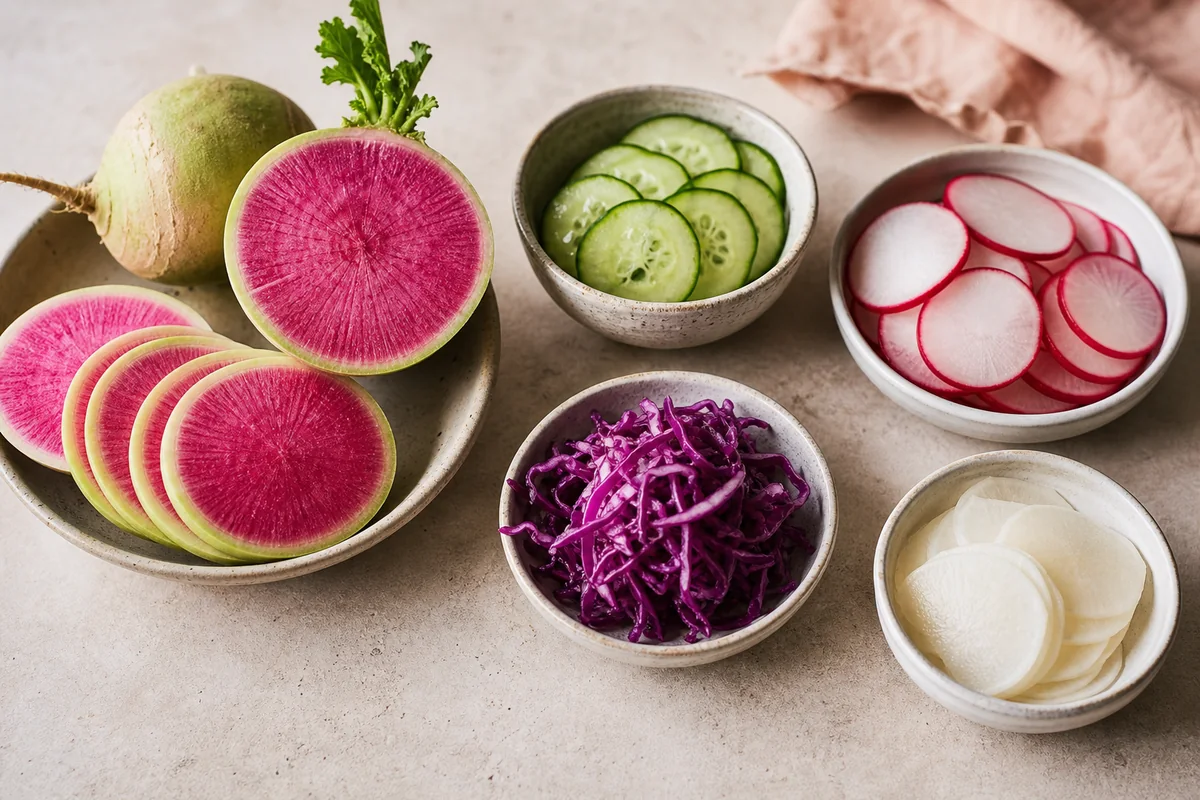
5 Best Watermelon Radish Substitutes (Flavor-Matched)
Ingredients
Equipment
Method
- Match the dish goal: for a radish-like bite, choose daikon or red radish; for sweet-juciy crunch, choose jicama.
- Slice to the same thickness your recipe uses (thin for salads/garnish; slightly thicker for pickles) to keep the bite comparable.
- If the substitute is sharper than watermelon radish, soak the slices in cold water for 5–10 minutes, then pat dry.
- Taste the first spoonful and adjust: add salt to bring out radish-like savoriness, or pair with a sweet element (e.g., honey or fruit) if you lost watermelon sweetness.
- Serve immediately for maximum crunch, especially if using cucumber or jicama (they soften faster than radish).
Notes
- For best results, use the substitute in the same preparation style (raw slicing vs quick pickle) to keep texture aligned.
- If your watermelon radish is extra sweet, prioritize jicama or cucumber and compensate pepper bite with a tiny pinch of salt.
Tried this recipe?
Let us know how it was!
Carrie is a food writer and editor with more than 15 years of experience. She has worked for some of the biggest names in the food industry, including Bon Appétit, Food & Wine, and Martha Stewart Living.
As the Editor in Chief of EpicureDelight, Carrie oversees all of the content on the site. She also manages the team of contributing writers and editors, who help to create delicious recipes, helpful tips, and informative articles that you’ll find on the site.
A native of the Chicago area, Carrie is passionate about all things food. She loves trying new restaurants and experimenting with new recipes in her kitchen. She’s also a graduate of the Culinary Institute of America, so she knows a thing or two about food!



