
That sharp, slightly bitter heat in a bowl of braised greens? That's mustard greens doing their thing.
When you're out of them, the right mustard green substitute keeps that character alive, even if nothing is a perfect copy.
The key is picking your swap based on what you actually need. Peppery bite, sturdy texture for long braises, or fast wilt for a weeknight sauté each call for a different leaf.
For peppery bite, reach for arugula or turnip greens. For braising texture, young collard greens or kale are your best options. Spinach works in a pinch but needs acid and black pepper added at the end to get anywhere close to mustard greens' flavor.
Mustard Green Substitutes for Cooking (Best Swap Options)
| # | Substitute | Best For | Ratio | Key Note |
|---|---|---|---|---|
| 1 | Collard Greens | Both | 1:1 | Use young, tender leaves |
| 2 | Kale | Both | 1:1 | Remove thick ribs first |
| 3 | Turnip Greens | Both | 1:1 | Similar peppery bitterness |
| 4 | Swiss Chard | Cooked | 1:1 | Add vinegar to sharpen |
| 5 | Arugula | Quick wilt | ¾:1 | Wilts very fast |
Each of these five substitutes behaves differently in the pan. Read through before you commit.
1. Collard Greens (Young Leaves)
Young collard greens are the closest structural match to mustard greens for braises and sautés. They have a mild earthiness rather than a sharp bite, but their wilt behavior and leaf weight are nearly identical.
To get closer to mustard greens' tang, squeeze lemon over the leaves in the last minute of cooking. If you're swapping braising greens regularly, young collards are almost always your first call.
Collard Greens (Young)
Works for: braises, long sautés, Southern-style greens, soups
Skip if: your collards are thick and mature, as they'll take much longer and won't match mustard's tender bite
- Prep: Strip the center rib from older leaves; leave it on young, thin leaves
- Ratio: Use 1:1 by volume
- Flavor fix: Add 1 teaspoon apple cider vinegar and a pinch of red pepper flakes at the end
- Cook time: Same as mustard greens; young leaves wilt in 5 to 8 minutes
2. Kale (Lacinato or Curly)
Kale is bitter by nature, and that bitterness comes close to mustard greens once it's cooked down. Lacinato (also called Tuscan kale) is the better pick here because it softens faster and has a flatter leaf that cooks more evenly.
Check fresh curly leaf storage tips if you're working from a bunch that's been in the fridge a few days.
- Remove ribs: Strip thick center ribs before cooking; they take twice as long as the leaves
- Massage trick: For raw or quick-wilt use, massage leaves with a pinch of salt and a drizzle of oil for 30 seconds to soften
- Acid finish: Add 1 teaspoon lemon juice or white wine vinegar at the end to mimic mustard's tang
- Skip if: You need delicate, quickly wilted greens; kale stays chewy unless you cook it 10 or more minutes
3. Turnip Greens
Turnip greens are the most flavor-accurate swap on this list. They share mustard greens' peppery bitterness almost note for note, especially when you use younger, smaller leaves.
For hearty green sides, they need almost no adjustment.
Chop them into roughly bite-size pieces so they wilt evenly. If the bitterness feels flat, a splash of vinegar mid-cook (not at the end) brings the sharpness forward without turning the dish sour.
Skip if your turnip greens are very large and mature; those need a longer simmer and can still taste more root-adjacent than peppery.
4. Swiss Chard (Stems Separated)
Swiss chard is milder and slightly sweet, which is the opposite of what mustard greens bring. That's fixable, but it takes a little more work than with the other options.
Read up on chard's flavor profile before you decide if it fits your dish.
Swiss Chard
Works for: pasta, grain bowls, stir-fries where you're adding your own seasoning
Skip if: you can't separate the stems, as mixed chopping leads to uneven texture and overcooked leaves
- Start with stems: Cook chard stems for 3 to 4 minutes before adding leaves; they're firmer and take longer
- Add leaves: Drop in the leaves and cook 2 to 3 more minutes until wilted but still bright
- Sharpen flavor: Finish with 1 teaspoon sherry vinegar or lemon juice plus a few cracks of black pepper
- Boost heat: A small pinch of mustard powder stirred in at the end adds back the bite chard naturally lacks
5. Arugula (Quick Wilt Only)
Arugula is the peppery pick for fast cooking. Its bite is actually closer to mustard greens' raw character than almost any other substitute.
If you're looking for that sharp, spicy green note in a sauté or warm salad, arugula delivers it quickly.
Add arugula in the last 60 to 90 seconds of cooking and reduce heat to medium-low. It wilts almost instantly and turns soft fast, so timing matters.
Skip if you need a green that holds up through a long braise; arugula will collapse into mush well before the flavor develops properly.
6. Spinach (Add Vinegar and Pepper)
Spinach is the mildest option here. It has almost none of mustard greens' bitterness on its own.
But it wilts quickly, matches the tender texture, and takes on seasoning well. For a quick sauté, choosing a sturdier leaf is usually better, but spinach works when it's all you have.
| Use | Ratio | Notes |
|---|---|---|
| Quick sauté | 1:1 | Spinach + ½ teaspoon lemon juice + black pepper at finish |
| Soup or stew | 1:1 | Add last 2 minutes; stir in vinegar before serving |
| Grain bowls | 1:1 | Wilt in pan, finish with mustard powder pinch |
- Acid timing: Add lemon juice or red wine vinegar after the spinach wilts, not during, to keep it balanced
- Pepper: Use freshly cracked black pepper generously; it mimics mustard greens' heat
- Mustard powder: A pinch (about ⅛ teaspoon per serving) stirred in at the end adds a faint bitter sharpness
- Skip if: You want genuine bitterness; spinach stays mild no matter how much seasoning you add
Making Mustard Green Substitutes Taste Right
The biggest mistake is treating these swaps as drop-in replacements without adjusting the seasoning. A sturdier leaf like kale or collards needs time to mellow, while a fast-wilting leaf like arugula or spinach needs flavor added at the end.
If you're building a braise, think about fresh peppery greens and how their bite softens with long cooking. For bitter root greens, start timing from when leaves hit the pan, not when you add the stems.
- Acid at the finish: Stir in 1 teaspoon of vinegar or lemon juice in the last 30 seconds of cooking; this restores the tangy edge without souring the whole dish
- Pepper and heat: Freshly cracked black pepper or a small pinch of red pepper flakes added at the end replaces the natural heat that milder greens lack
- Cook time matters: Bitter greens (kale, turnip greens) need longer cooking to match mustard greens' tenderness; mild greens (spinach, arugula) go in last and need very little time
Frequently Asked Questions
Turnip greens are the closest flavor match, sharing the same peppery bitterness. Arugula is the best quick-cook option if you need that sharp bite fast.
Yes, but spinach is much milder. Finish the dish with lemon juice, black pepper, and a small pinch of mustard powder to approximate mustard greens' bite.
Remove thick center ribs before cooking and give kale at least 8 to 10 minutes over medium heat. Massaging raw leaves with salt first also speeds softening.
Yes, they braise almost identically to mustard greens and need similar timing. Use younger leaves for the best flavor and tenderness.
Arugula wilts in under 90 seconds and spinach is nearly as fast. Both work well for quick sautés but add seasoning at the very end.
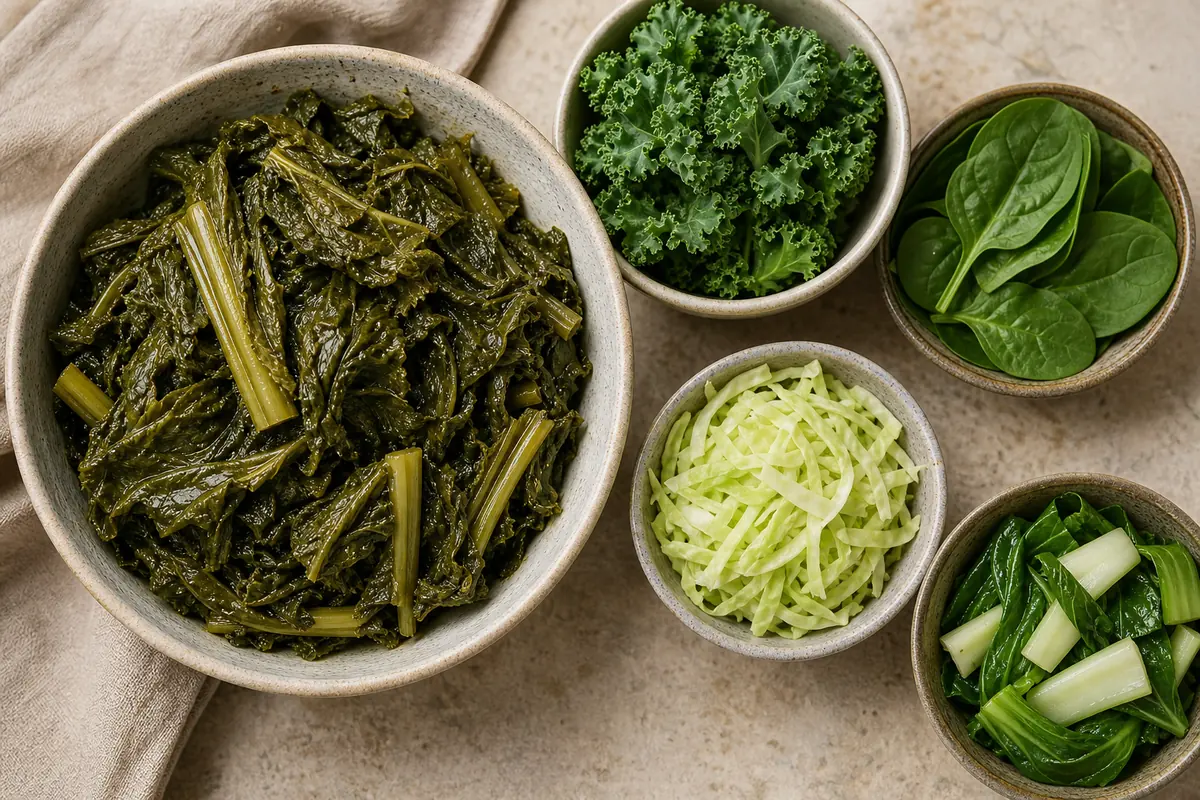
5 Best Mustard Green Substitutes (Quick Swaps)
Ingredients
Method
- Choose your goal: closest bite (collard/turnip greens) or fastest wilt (arugula/spinach) and match the texture to your dish (sauté vs braise).
- Prep greens for even cooking: remove thick stems when needed and chop mustard-like sizes (about bite-size) so they wilt on the same timeline.
- Cook using the mustard logic: start stems first (if any), then add leaves; stop when greens are tender but still bright.
- Add bite support: finish with lemon/vinegar and black pepper (or a small pinch of mustard powder) to mimic mustard’s tang and heat.
- Taste and adjust after wilting: if it’s flat, add acid; if it’s too sharp, balance with a touch of sweetness (like a small pinch of sugar).
Notes
- For wilted dishes, avoid overcooking quick-wilting substitutes like arugula.
- If your substitute lacks bitterness, use acid + pepper (or mustard powder) to recreate the flavor profile.
Tried this recipe?
Let us know how it was!
Carrie is a food writer and editor with more than 15 years of experience. She has worked for some of the biggest names in the food industry, including Bon Appétit, Food & Wine, and Martha Stewart Living.
As the Editor in Chief of EpicureDelight, Carrie oversees all of the content on the site. She also manages the team of contributing writers and editors, who help to create delicious recipes, helpful tips, and informative articles that you’ll find on the site.
A native of the Chicago area, Carrie is passionate about all things food. She loves trying new restaurants and experimenting with new recipes in her kitchen. She’s also a graduate of the Culinary Institute of America, so she knows a thing or two about food!



