Bouillon cubes keep best quality for about 1 year in the pantry, and many sealed cubes stay usable past the date when they remain dry and smell normal. Once a cube is dissolved into broth, the clock changes to 3 to 4 days in the refrigerator.
The dry cube and the mixed broth are different foods. A salty dry cube loses aroma slowly, while broth has enough water to spoil like any other cooked liquid.

Dry bouillon cubes usually last well past the printed date if they stay sealed, dry, and aromatic. Moisture is the real problem because damp cubes can clump, grow mold, or make weak, stale broth.
Why Does Prepared Bouillon Broth Spoil Faster Than Dry Cubes?
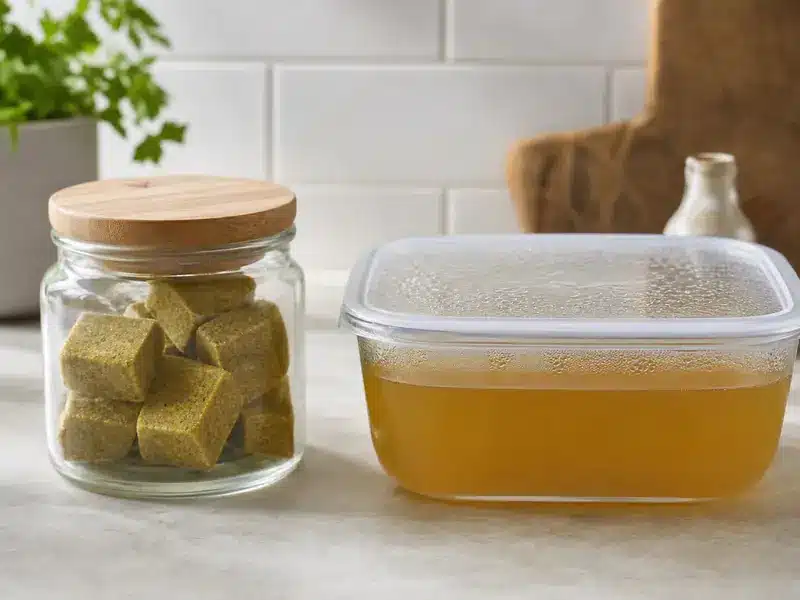
A bouillon cube is a concentrated seasoning block. Salt, drying, fat, and packaging help it survive pantry storage better than a bowl of broth.
Low water activity protects the dry cube
Microbes need available water. A firm, wrapped cube provides very little, so slow aroma loss is more common than sudden spoilage when storage stays dry.
Mixing the cube creates a perishable liquid
Once you add water, that protection changes. The liquid should be cooled, covered, and refrigerated like soup stock because it now has enough water for microbes to grow.
That dry-versus-wet split is similar to the difference between pantry condiments and opened wet foods. opened soy bottle still has salt and fermentation, while bouillon broth is mostly water after mixing.
How Long Do Bouillon Cubes Last?
| Form | Storage | Best Window |
|---|---|---|
| Unopened dry cubes | Cool pantry | About 1 year for best quality |
| Opened dry cubes | Airtight and dry | Use by package date, then check aroma |
| Reconstituted broth | Refrigerator | 3 to 4 days |
| Frozen broth | Freezer | 2 to 3 months for best quality |
Use the package date as the best flavor guide. USDA FoodKeeper data lists bouillon cubes at about 1 year for best quality.
Past that window, a cube may still dissolve and season food. The problem is that chicken, beef, or vegetable aroma can fade while the salt remains strong.
If the cube smells savory and dissolves cleanly, it can still work in rice, stew, or a pan sauce. If the dish depends on clear broth flavor, open a fresher package.
Vegetable cubes often show quality loss as weak herb aroma. Chicken and beef cubes are more likely to show stale fat notes because their flavor depends more on savory fats.
Powdered bouillon follows the same dry-storage logic, but it exposes more surface area after opening. Seal powder even more carefully because one damp spoon can ruin a larger amount.
Paste and jarred concentrate are different again. They usually need the label's refrigeration rules after opening because they contain more moisture than a dry cube.
Do not use dry cube timing for gel cups, refrigerated stock concentrate, or opened liquid bouillon. Those products have their own label clock.
Why Does Moisture Make Bouillon Cubes Spoil?
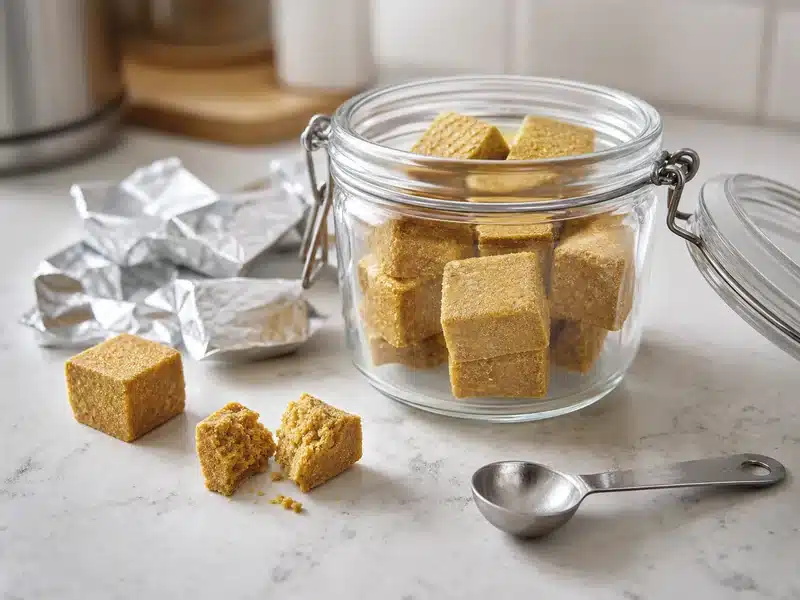
Steam from a pot, a wet spoon, or a humid cabinet can soften cubes. Once a cube becomes damp, it can clump, smear, or grow mold.
Do not store cubes above the stove. Heat and steam reach that spot every time a pot boils.
- Damp or sticky surface: Water entered the cube, so discard it instead of drying it again.
- Fuzzy growth: Mold can extend past the visible patch; throw away the exposed pack.
- Pest damage: Holes, webbing, or droppings make the package unusable.
Dry storage helps other pantry staples too. cream of tartar tin and brown sugar bag both show how moisture can ruin texture before the food looks dramatic.
If one cube in a pack is wet, check the wrappers around it. A leaking wrapper or damp box can mean the rest of the package was exposed to the same moisture.
Does Weak Aroma Mean a Bouillon Cube Is Rancid?
An old cube may produce broth that is salty but flat. The salt stays in place while herb, meat, onion, and spice aromas fade.
A weak but clean cube is a quality problem
Some bouillon cubes contain fat or fat-like flavor carriers. When those age badly, the cube can smell waxy, soapy, stale, or rancid.
Color fading alone is usually a quality clue, not a safety answer. Pair color with smell, texture, and storage history before you decide.
A waxy or paint-like odor means discard
Do not cover rancid flavor with another cube. More seasoning raises the salt level while the stale fat still follows the broth into the finished dish.
This is closer to a pantry fat issue than a fresh meat issue. A fat-focused guide such as coconut oil jar is useful for rancid smell, while bacon storage belongs to a cold meat clock.
How Should You Store Opened Bouillon Cubes?
Keep cubes in their foil wrappers until you use them. If the cardboard box is open, put the wrapped cubes in an airtight jar or bag.
Use dry hands or a dry spoon. A single wet cube can dampen the wrapper and make nearby cubes soften.
- Keep foil wrappers closed until use.
- Move opened cubes to an airtight jar or bag.
- Use dry hands, not a wet spoon.
- Store away from the stove, sink, and sunny windows.
- Keep a small working jar and store backup boxes in a cooler pantry.
If you use cubes for rice often, keep the jar near your dry seasonings rather than near the kettle. Rice dishes can hide weak aroma, but they cannot hide too much salt.
Do not refrigerate dry cubes unless the package specifically says to do it. A refrigerator can add condensation each time the jar opens, especially in a humid kitchen.
How Can You Test an Old Bouillon Cube?
Use one cup of hot water for the test. This keeps a weak or bitter cube out of the meal and makes its aroma easier to judge.
Inspect the wrapper and surface
The wrapper should be closed and dry. Stop immediately if the cube is soft, damp, moldy, pest-damaged, or stuck to a wet wrapper.
Break a corner and smell it
A normal cube should smell savory when a fresh edge is exposed. A mild aroma points to quality loss.
A waxy, paint-like, or rancid smell means discard.
Dissolve only a clean sample
Put a small piece in the hot water and stir. Taste only after the visual and odor checks pass, then judge whether the broth has enough body for the recipe.
Start with less salt when using older cubes. If the dish needs more savory depth, compare options like salty umami backups or soy sauce swaps instead of adding another full cube.
A small test cup also protects the main pot from bitterness. Some old cubes taste dusty or metallic even when they still look dry.
How Long Does Prepared Bouillon Broth Last?
| Broth state | Limit | Next action |
|---|---|---|
| At room temperature | Up to 2 hours | Refrigerate promptly or discard |
| Refrigerated | 3 to 4 days | Reheat only the portion needed |
| Frozen | 2 to 3 months for best quality | Thaw in the refrigerator or heat from frozen |
Broth made from cubes should be refrigerated within 2 hours. Use it within 3 to 4 days, the same way you would handle other cooked broth.
Freeze extra broth if you made more than you need. Ice cube trays work well because you can add small amounts to sauces later.
Do not leave mixed broth in a room-temperature pot for the next day. Once water enters the cube, the pantry shelf-life rule no longer applies.
Cool a large pot faster by moving broth into shallow containers. A deep pot stays warm too long in the center, even when the outside feels cool.
Label frozen broth cubes with the flavor. Chicken, beef, and vegetable broth look similar once frozen, but they can change the final dish in different ways.
When Should You Use Fresh Stock Instead of Bouillon Cubes?
Old cubes are fine for background seasoning when they pass the smell and moisture checks. They are weaker as the main base for a clear soup.
Use fresh stock, a new cube, or a stronger paste when the broth is the main flavor. A seasoning paste like white miso depth can bring body in some recipes, but it changes the taste and salt level.
Clear soups expose weak aroma
For starchy dishes, taste before adding more cube. Stored vegetables such as potatoes and bland noodles such as rice noodles can need savory help, but too much old bouillon makes them salty before it makes them rich.
Use fresh stock for clear noodle soup, sipping broth, or risotto-style dishes where the broth is tasted in every bite. Save older cubes for gravies, casseroles, and long-cooked stews that already have onion, garlic, and browned food for depth.
Sauces can use a clean cube as background seasoning
Gravy, casserole sauce, and braising liquid already gain aroma from browned food and vegetables. A clean but mild cube can support those flavors, but taste before adding salt or a second cube.
Sources
- USDA FoodKeeper data for bouillon cubes and reconstituted broth storage.
- FoodSafety.gov overview of the USDA FoodKeeper storage app.
- USDA FSIS shelf-stable food safety guidance.
Frequently Asked Questions
Can you use bouillon cubes after the expiration date?
Often yes, if they stayed dry, wrapped, and normal-smelling. Expect weaker flavor, and discard them if they are damp, moldy, or rancid.
Do bouillon cubes need refrigeration?
No. Dry bouillon cubes should stay in the pantry. Refrigeration can add moisture unless the cubes are sealed very well.
How long does broth made from a cube last?
Reconstituted broth lasts 3 to 4 days in the refrigerator. Freeze it if you need to keep it longer.
Why are my bouillon cubes sticky?
Sticky cubes usually absorbed moisture or were stored near heat. Discard them if they are damp, smell off, or show any mold.
Can old bouillon cubes make soup too salty?
Yes. Old cubes can lose aroma while the salt remains strong, so the broth may taste salty but weak.

Carrie is a food writer and editor with more than 15 years of experience. She has worked for some of the biggest names in the food industry, including Bon Appétit, Food & Wine, and Martha Stewart Living.
As the Editor in Chief of EpicureDelight, Carrie oversees all of the content on the site. She also manages the team of contributing writers and editors, who help to create delicious recipes, helpful tips, and informative articles that you’ll find on the site.
A native of the Chicago area, Carrie is passionate about all things food. She loves trying new restaurants and experimenting with new recipes in her kitchen. She’s also a graduate of the Culinary Institute of America, so she knows a thing or two about food!