Opened canned pumpkin puree lasts 3 to 4 days in a refrigerator at 40°F (4°C) or below. Homemade puree should follow the same short clock.
Freeze any amount you cannot use in that time.
An unopened commercial can can stay good well beyond its best-by date when the seal remains sound, but the printed date cannot overrule a leaking, swollen, rusty, or badly dented can. Inspect the package before you inspect the puree.

Refrigerate opened or homemade pumpkin puree for no more than 3 to 4 days, or freeze measured portions. Throw it away if you see mold, active bubbles, slime, a sour smell, or a damaged can.
How Long Does Pumpkin Puree Last After Opening?
A sealed commercial can protects low-acid pumpkin from the room. Opening it removes that protection and introduces air, utensils, and refrigerator microbes, so the pantry clock ends immediately.
| Puree Form | Where To Keep It | Working Time | Main Check |
|---|---|---|---|
| Unopened commercial can | Cool, dry pantry | Use label and package condition | No leaks, swelling, heavy rust, or seam dents |
| Opened canned puree | Covered refrigerator container | 3 to 4 days | Clean smell and surface |
| Homemade puree | Covered refrigerator container | 3 to 4 days | Prompt cooling and clean handling |
| Frozen puree | 0°F (-18°C) freezer | Quality declines over time | Good seal and little freezer burn |
Keep the refrigerator at or below 40°F. If the puree sat at room temperature for more than two hours, or more than one hour in heat above 90°F, discard it rather than restarting the clock in the fridge.
Pumpkin pie follows a different rule because eggs and dairy change the finished food. Check pumpkin pie storage after the puree becomes a pie.
How Can You Tell Whether Pumpkin Puree Has Gone Bad?
Check the puree before you stir it because the first mold or gas often appears on the exposed surface. A little darkening at the edge can be drying, but an odd smell or active change means the whole container should go.
- Discard for mold: Do not scrape the top and save the rest of a soft, moist puree.
- Discard for fermentation: Bubbles, foam, a yeasty smell, or pressure under the lid are not normal.
- Discard for texture: Slime or a ropy surface signals spoilage.
- Discard for odor: Sour, alcoholic, or rotten smells overrule the date.
Do not taste suspicious puree and do not hide it in a heavily spiced recipe. Pumpkin pie spice substitutes can repair flavor in fresh food, but they cannot make spoiled food safe.
Freezer burn is different from spoilage. Dry pale patches or extra ice can lower quality while the puree stays frozen.
Trim a badly dried edge or use the puree in soup where smooth texture matters less.
Can Unopened Pumpkin Puree Outlast Its Best-By Date?
The best-by date on commercial pumpkin describes expected quality, not a moment when a sound can suddenly becomes unsafe. Oregon State University Extension notes that an undamaged can may remain usable for years past that date.
Keep a clean, sound can
A can with flat ends, a clean seam, and no deep rust can stay in a cool pantry. Rotate older cans to the front and avoid storing them beside a hot oven, under a sink, or in a damp garage.
Inspect dents by location
A small dent on the flat side may be a quality issue.
A sharp dent on the top, bottom, or side seam can damage the seal, so discard that can. Do not buy a discounted can when you cannot tell whether the seam remains intact.
Discard leaks, swelling, or heavy rust
Do not open a can that bulges, leaks, sprays liquid, or has rust deep enough to make a hole. Do not taste the contents to test it.
A damaged low-acid canned food needs a firm discard decision.
If the pantry item is labeled canned pumpkin rather than puree, the product may still be the same smooth ingredient. Canned pumpkin storage explains the label and package distinction.
How Should You Store Opened Pumpkin Puree?
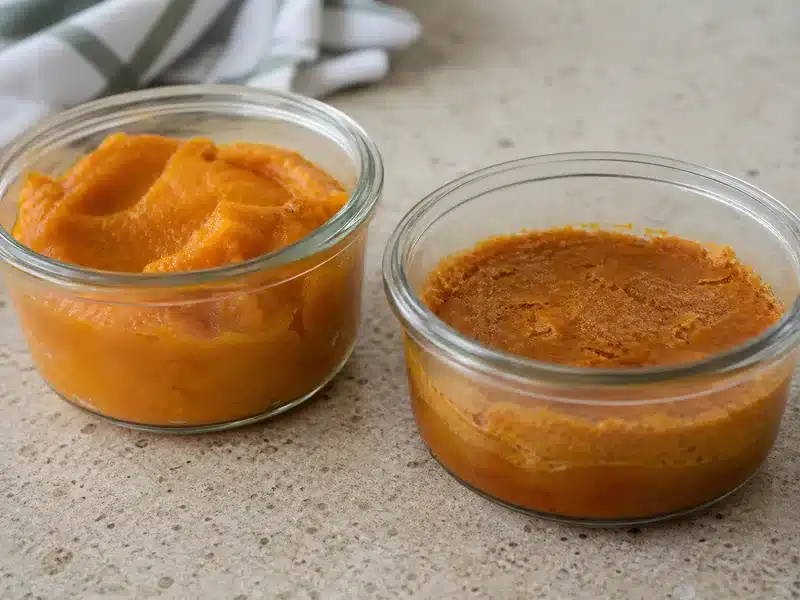
Spoon leftover puree into a clean glass or food-safe plastic container. A small container leaves less air above the food than a large bowl and protects it from drips or odors in the refrigerator.
- Cool promptly: Refrigerate within two hours of opening or cooking.
- Cover tightly: Use a fitted lid rather than a loose sheet of foil.
- Label the day: Count 3 to 4 days from opening or cooking, not from the best-by date.
- Use a clean spoon: Do not dip a batter-covered or tasted utensil back into the container.
Do not keep the leftover puree in the opened metal can.
The food may pick up a metallic flavor, and the uncovered shape makes spills and surface drying more likely. If the puree dries around the rim but the center remains within the safe clock, stir before measuring.
Plan the next use while you label the container.
A spoonful can support pumpkin-spice flavor, while a larger amount can replace part of the fat or fruit in some baking jobs. Compare applesauce baking swaps before changing a tested formula.
How Can You Use Leftover Pumpkin Puree?
Start with the amount left and the texture the next dish needs. Pumpkin puree adds moisture, body, mild sweetness, and orange color, so it can thicken a dish even when pumpkin is not the main flavor.
| Amount Left | Useful Job | Good Direction |
|---|---|---|
| 1 to 2 tablespoons | Thicken and add moisture | Oatmeal, smoothie, pan sauce |
| ¼ to ½ cup | Support batter or a creamy sauce | Muffins, pancakes, pasta sauce |
| About 1 cup | Build the main body | Soup, quick bread, larger bake |
| More than 1 cup | Freeze a measured reserve | Future pie, soup, or bread |
In baking, pumpkin can make a crumb soft but also heavy, so reduce another wet ingredient before adding it. A moist quick bread then needs its own clock after baking, as zucchini bread storage shows.
In a savory sauce, pumpkin can stand where a thick vegetable puree would sit, but it is sweeter and less acidic than tomato. Check tomato puree substitutes before making that change.
If none of these uses fits the next three days, freeze the portion now rather than writing a use plan you will not follow.
Can You Freeze Pumpkin Puree?
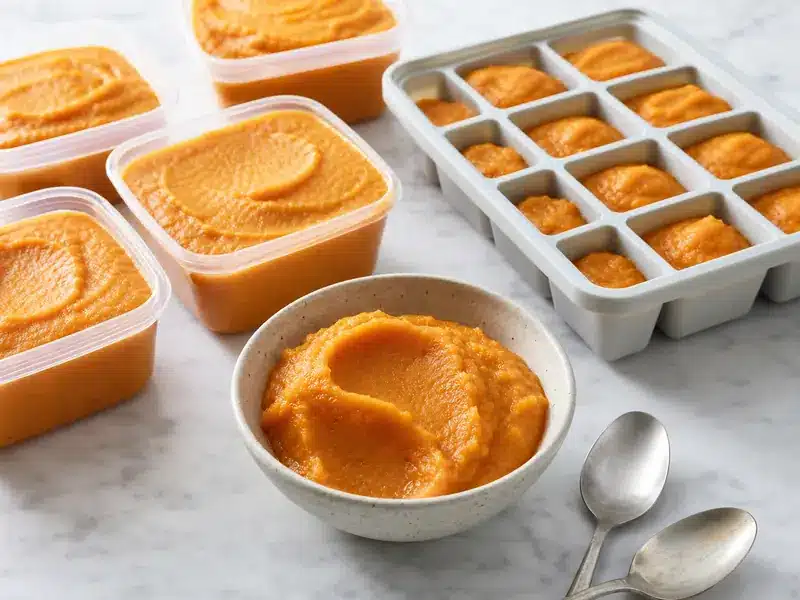
Freeze pumpkin puree when the refrigerator clock will end before your next recipe. Choose the portion by how you cook: tablespoons for oatmeal or sauce, half cups for muffins, and one-cup packs for soup or a large batter.
- Measure the puree into a freezer container, silicone tray, or freezer bag.
- Leave a little headspace in a rigid container because the puree expands.
- Press excess air from a bag and freeze it flat for fast thawing.
- Label the amount and date before the surface freezes.
Thaw a large portion overnight in the refrigerator. A tablespoon cube can go straight into hot oatmeal, soup, or sauce.
Thawed puree may release water, so stir it back together before measuring for a recipe.
Freezing preserves mashed pumpkin safely, but home-canning pumpkin puree is not recommended.
Its thickness varies too much for a reliable home-canning process. Freeze smooth puree, and use approved directions only when canning pumpkin cubes.
Texture after thawing works best in cooked food. If the recipe needs a different squash, compare butternut squash options with kabocha substitutes.
A sweet potato swap can supply similar body, but it may taste sweeter and less pumpkin-like.
Sources
- Oregon State University Extension: pumpkin storage and canned pumpkin guidance
- FoodSafety.gov cold food storage chart
- FoodSafety.gov refrigeration and two-hour guidance
- National Center for Home Food Preservation: freezing pumpkin
- National Center for Home Food Preservation: why pureed pumpkin should not be home-canned
Frequently Asked Questions
Do not plan on a full week. Official extension guidance gives opened canned pumpkin 3 to 4 days in the refrigerator.
No. Move it to a freezer-safe container or bag with room for expansion, then label the amount and date.
Discard a can that leaks, bulges, sprays liquid, has heavy rust, or has a sharp dent on a seam.
Not by itself. Some water can separate during storage or thawing, so stir it before checking for mold, slime, bubbles, and sour odor.
No approved home-canning process exists for mashed or pureed pumpkin. Freeze puree instead.

Carrie is a food writer and editor with more than 15 years of experience. She has worked for some of the biggest names in the food industry, including Bon Appétit, Food & Wine, and Martha Stewart Living.
As the Editor in Chief of EpicureDelight, Carrie oversees all of the content on the site. She also manages the team of contributing writers and editors, who help to create delicious recipes, helpful tips, and informative articles that you’ll find on the site.
A native of the Chicago area, Carrie is passionate about all things food. She loves trying new restaurants and experimenting with new recipes in her kitchen. She’s also a graduate of the Culinary Institute of America, so she knows a thing or two about food!