Wrapped candy canes can keep good quality for about 12 months when they stay cool, dry, and sealed. The date is a quality guide, so package condition matters more than the calendar alone.
Check the wrapper for holes, moisture, dirt, and pests before opening it. A dry cane with weaker mint flavor may still suit baking, but a wet, moldy, dirty, or badly exposed cane belongs in the trash.

Candy canes last longest when their wrappers stay intact inside a cool, dry container. Stickiness points to humidity, while weak peppermint aroma usually means quality has faded.
How Long Do Candy Canes Last?
A best-by date estimates peak flavor and texture, not the exact day a cane becomes unsafe. Start by identifying whether the candy is factory sealed, opened, displayed, or already crushed.
| Package state | Practical quality target | Best next use | What shortens it |
|---|---|---|---|
| Unopened retail box | Use the maker's date, often near 12 months | Serving or gifting | Heat, torn outer box, humid storage |
| Individually wrapped leftovers | Through the next holiday season if wrappers stay sound | Serving after inspection | Pinholes and loose seams |
| Opened bulk bag | Use sooner and move to an airtight box | Serving or baking | Repeated air exposure |
| Unwrapped display candy | Display only | Decoration, then discard | Dust, hands, room moisture |
| Clean crushed pieces | Use soon | Bark, cookies, or cocoa | Large exposed surface area |
One torn wrapper does not ruin every sealed cane in the box. Separate the damaged piece, inspect nearby wrappers, and move the sound candy into a clean container.
Hard candy keeps longer than soft candy because it contains little available water. That does not protect it from dirty handling, pests, or moisture that arrives after packaging.
Why Do Candy Canes Turn Sticky?
Hard candy pulls moisture from humid air. The surface begins to dissolve, which changes a glassy snap into a tacky or wet coating.

A dry cane may only be old
A cane that stays hard, dry, and clean may simply have weaker peppermint aroma. Taste a small piece if the wrapper was intact and no other warning sign appears.
Faded mint is a quality problem. The cane may still work in a recipe where chocolate or vanilla supplies most of the flavor.
A tacky cane needs its wrapper history
Light tackiness inside an intact, clean wrapper shows moisture damage, not automatic danger. Use it soon in a cooked dessert only if there is no odd odor, debris, mold, or unknown exposure.
Do not wash sticky candy because water dissolves more sugar. If the surface touched a dirty wrapper, shelf, or display jar, discard it.
A wet or weeping cane is finished
Visible liquid, cloudy growth, or candy that smears across the wrapper has moved beyond normal staleness. Throw it away rather than mixing it into batter.
How Can You Tell Whether a Wrapped Candy Cane Is Still Good?
Hold the wrapper under a bright light and check both twisted ends and the long seam. This keeps you from opening a questionable cane just to test it.
Sugar dust inside a sealed wrapper can come from a simple fracture. A pinhole near the dust matters more because it gives humidity and dirt a path inside.
Keep
The wrapper is tight, clean, and dry. The cane may be broken, but every piece remains enclosed.
Use soon
The wrapper is loose but not torn, and the cane remains dry. Move it to an airtight box and plan a recipe.
Discard
The seal has holes, dirt, pest damage, wet spots, or unknown display exposure. Do not taste through a packaging warning.
Broken candy creates sharp points even when it is clean. Do not hand shards to small children, and crush recipe pieces inside a strong sealed bag.
Where Should You Store Candy Canes?
Cold storage sounds protective, but moving candy between cold and warm air can create condensation. That added water causes the exact sticky surface you are trying to prevent.
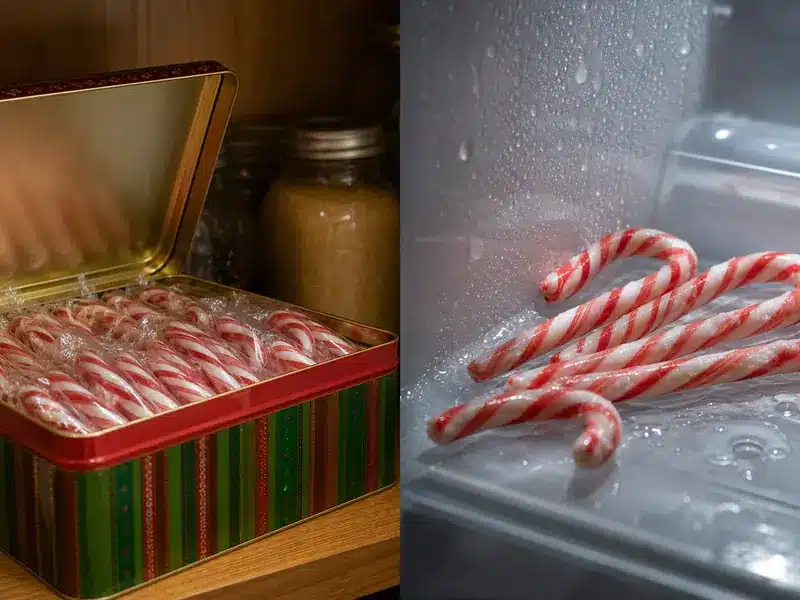
- Keep each wrapper on. It is the first barrier against moisture and odors.
- Add a clean airtight box. The second barrier protects loose seams and opened retail packages.
- Choose a dark shelf. Sunlight and stove heat can bend canes and weaken flavor.
- Avoid strong odors. Peppermint candy can pick up smells from spices, soap, or other pantry goods.
A plain holiday tin is useful only when its lid seals well. A decorative jar that opens every day protects appearance, but it does not provide stable long-term storage.
The same dry-storage idea helps other confections, although their clocks differ. Compare caramel shelf life and marshmallow shelf life before storing mixed candy together.
Chocolate coatings react to heat and fat as well as moisture. Check the separate chocolate chip storage clock before combining old pantry sweets.
Can You Eat Candy Canes Used as Decorations?
A jar of unwrapped candy canes on a counter records every hand, dust cloud, cooking odor, and humid day in the room. It should remain decoration even if the pieces still look bright.
Do not return display candy to a serving box for next year. Sugar does not erase unknown handling, and a clear jar does not seal out fine debris.
Wrapped canes placed in a clean party bowl have a better outcome. Return unopened pieces to a clean airtight container after the event if no drink spill, dirty hand, or torn wrapper reached them.
Separate decorative stock from edible stock before guests arrive. That simple choice prevents someone from serving canes that spent weeks exposed on a tree or table.
How Can You Use Old Candy Canes?
Test one dry cane inside its wrapper. A clean snap means you can route it by particle size, while a bend or sticky break means moisture has changed the candy.
| Particle size | Best use | What happens | Avoid |
|---|---|---|---|
| Fine dust | Hot cocoa or frosting | Dissolves quickly and spreads mint | Using so much that sweetness jumps |
| Small chips | Cookies or brownies | Distributes through dough | Wet pieces that clump |
| Coarse pieces | Chocolate bark | Keeps visible color and crunch | Large sharp shards |
| Mixed crumbs | Ice cream garnish | Adds quick crunch | Long storage after crushing |
Older canes may need more peppermint support, but taste the dessert base before adding extract. The guides to mint substitutes and creme de menthe substitutes help when a recipe calls for a separate mint flavor.
Almond extract points in a different flavor direction, so swap in an almond extract substitute only when the recipe calls for it. Do not use it to hide a stale peppermint aroma.
Dry peppermint pieces pair well with chocolate, including pantry sweets near their own quality limit. Check M&M's shelf life instead of assuming every candy lasts as long as a cane.
If the recipe uses coating instead of plain chocolate, choose a fresh match from the almond bark substitutes. A dry sugar swap from the rock sugar alternatives page will not behave like crushed peppermint.
When Should You Throw Candy Canes Away?
Low moisture slows many problems, but it cannot make contamination safe. Stop the inspection when one of these clear discard signs appears.
- Mold or cloudy growth: discard the cane and check nearby packages.
- Wetness or leaking syrup: do not dry it and reuse it.
- Pantry pests or webbing: seal the package before removing it from the pantry.
- Dirt or unknown handling: do not rely on scraping the surface.
- Chemical or stale pantry odor: peppermint has absorbed something it should not carry into food.
- Missing allergy information: do not serve loose mystery candy to guests with food allergies.
A clean but shattered cane can still be unsuitable for a young child because hard points create a choking and mouth-injury risk. Crush it for an adult dessert or discard it.
Sources
These sources support the dry-storage, humidity, and quality-date guidance used in this article.
- Kansas State University Extension: Making and storing holiday candy
- National Confectioners Association: Candy storage tips
- USDA FSIS: Food product dating
Frequently Asked Questions
Often yes, if the wrapper is intact and the candy stays dry, clean, and free from mold or pests. Expect weaker mint flavor or a less crisp snap as quality fades.
Humidity reached the sugar surface and began dissolving it. A torn wrapper, open jar, or cold-to-warm condensation can all cause this change.
Usually no. A cool dry pantry avoids the condensation risk that comes with moving cold candy into warm air.
Freezing is rarely useful for hard candy and can create surface moisture during thawing. If they were frozen, keep the airtight container closed until everything reaches room temperature.
Dry, clean pieces can flavor a dessert, but do not use wet or dirty candy. If the recipe itself needs a swap, see these marshmallow substitutes.

Carrie is a food writer and editor with more than 15 years of experience. She has worked for some of the biggest names in the food industry, including Bon Appétit, Food & Wine, and Martha Stewart Living.
As the Editor in Chief of EpicureDelight, Carrie oversees all of the content on the site. She also manages the team of contributing writers and editors, who help to create delicious recipes, helpful tips, and informative articles that you’ll find on the site.
A native of the Chicago area, Carrie is passionate about all things food. She loves trying new restaurants and experimenting with new recipes in her kitchen. She’s also a graduate of the Culinary Institute of America, so she knows a thing or two about food!