Red cabbage braised with tart apples, cider vinegar and a little maple syrup turns into a glossy magenta side dish that cuts through gravy, potatoes and pastry. It belongs next to the mains in our vegan Christmas dinner menu, and it needs one pot and about 80 minutes, 40 of them covered on low heat.
One small head of cabbage makes 8 servings of about ¾ cup, at 115 calories each. The braise reheats on the stove in 5 minutes, so on the day it takes no oven space at all.
A one-pot side of red cabbage and apples in a sweet-sour magenta glaze that cuts through rich holiday mains.
Save This Braised Red Cabbage
A vegan holiday side of red cabbage and apples in a cider vinegar glaze, made in one pot.
Why This Braised Red Cabbage Works
- The acid goes in with the cabbage. Red cabbage pigment is magenta in acid and turns dull blue-purple when the pot is neutral, so ⅓ cup cider vinegar stirred in at the start fixes the color for the whole braise.
- Apples cook from the first minute. They go into the onion pan with the peel on, and a firm tart variety such as Granny Smith stays in pieces through 40 minutes of braising.
- Just over 1 cup of liquid. The cabbage releases its own water as it wilts, so vinegar, cider and water only need to cover the bottom of the pot.
- A short uncovered finish. Five minutes without the lid cooks the liquid down to a glaze that clings to the shreds instead of pooling on the plate.
- One pot on the stove. Nothing here needs the oven, which matters when a mushroom main and roasted potatoes already fill it.
Granny Smith apples are the right choice: their tartness balances the maple syrup, and the pieces stay firm instead of melting into the cabbage.
Sweet-sour cabbage is built to sit beside rich, dense mains. It lightens a slice of mushroom Wellington and balances the maple glaze on a lentil walnut loaf better than another sweet side would.
What You Need
Buy one small, heavy head of red cabbage of about 2 pounds. It slices into roughly 10 cups, which cook down to about 6. If the grocery store has none, our guide to red cabbage alternatives covers what to use in its place.
- 1 small head red cabbage (about 2 pounds), quartered, cored and thinly sliced
- 2 medium Granny Smith apples, cored and cut into ½-inch pieces, peel left on
- 1 large yellow onion, thinly sliced
- 3 cloves garlic, minced
- ⅓ cup apple cider vinegar
- ½ cup apple cider or unsweetened apple juice
- ¼ cup water
- 2 tablespoons maple syrup
- 2 tablespoons olive oil
- 2 bay leaves
- ¼ teaspoon ground cloves
- ¾ teaspoon fine salt, plus more to taste
- ¼ teaspoon ground black pepper
Ingredient Details
- Red cabbageSlice the leaves ¼ inch thick: wider strips stay chewy after 40 minutes, and thinner ones turn soft before the apples do.
- ApplesCut the pieces larger than the cabbage shreds so they survive the braise. The peel stays on for color and for fiber.
- Apple cider vinegarThis is the acid that sets the color and the sharpness. Measure it exactly; a heavy pour turns the dish sour.
- Apple ciderFresh pressed cider or plain apple juice both work, as long as the label shows no added sugar.
- Red wineLeft out on purpose. Many wines are clarified with animal-derived fining agents, and the vinegar and cider already supply the acid.
Ingredient Swaps
Four gaps come up most often: no Granny Smith apples, no cider vinegar, no maple syrup or no cloves. Each swap keeps the amount in the recipe, so the glaze and the timing stay the same.
- Other apples: use Braeburn or Pink Lady, cut to the same size. Softer varieties such as Red Delicious dissolve into the cabbage.
- Vinegar: use ⅓ cup red wine vinegar. Our list of cider vinegar swaps ranks more options.
- Sweetener: use 2 tablespoons packed light brown sugar. Pick a brand labeled vegan or organic, because some cane sugar is processed with bone char.
- Cloves: use ¼ teaspoon ground allspice, as described in our clove swap guide.
Covered on the stovetop
Frees the oven and lets you check the liquid level at every stir.
Needs a stir every 10 minutes and a pot with a tight lid.
Covered in a 325°F oven
Heats the pot from all sides, so the bottom layer is less likely to scorch.
Takes oven space and the lid comes off for the final 5 minutes of reducing.
On a holiday afternoon the stovetop version is the easier choice. It leaves the oven open for crisp hasselback potatoes and whatever else needs the heat.
How to Make Braised Red Cabbage with Apples
Use a 5- to 6-quart Dutch oven or a wide pot with a tight lid. The cabbage fills the pot to the rim at first, then shrinks to about half its height within 5 minutes of stirring.
- Slice the cabbage. Quarter 1 small head red cabbage, cut out the core and slice the leaves ¼ inch thick, about 10 cups.
- Cut the apples and onion. Cut 2 Granny Smith apples into ½-inch pieces with the peel on. Slice 1 large yellow onion thinly.
- Soften the onion and apples. Warm 2 tablespoons olive oil in the pot over medium heat. Cook the onion 5 minutes, until soft and translucent, then add the apples and garlic and cook 3 minutes more.
- Wilt the cabbage. Add the cabbage in 3 handfuls, stirring after each so it shrinks and makes room for the next. This takes about 5 minutes.
- Add the liquid. Pour in ⅓ cup apple cider vinegar, ½ cup apple cider and ¼ cup water. The shreds turn from purple to bright magenta within a minute.
- Season the pot. Add 2 tablespoons maple syrup, ¾ teaspoon salt, ¼ teaspoon cloves, the pepper and 2 bay leaves.
- Braise covered. Bring to a simmer, cover, reduce the heat to low and cook 40 minutes, stirring every 10 minutes. The cabbage should be tender with a slight bite.
- Reduce the glaze. Take off the lid, raise the heat to medium and cook 5 minutes, stirring often, until only a few spoonfuls of syrupy glaze remain.
- Taste and finish. Remove the bay leaves. Add a pinch of salt or 1 teaspoon more vinegar if it needs it.
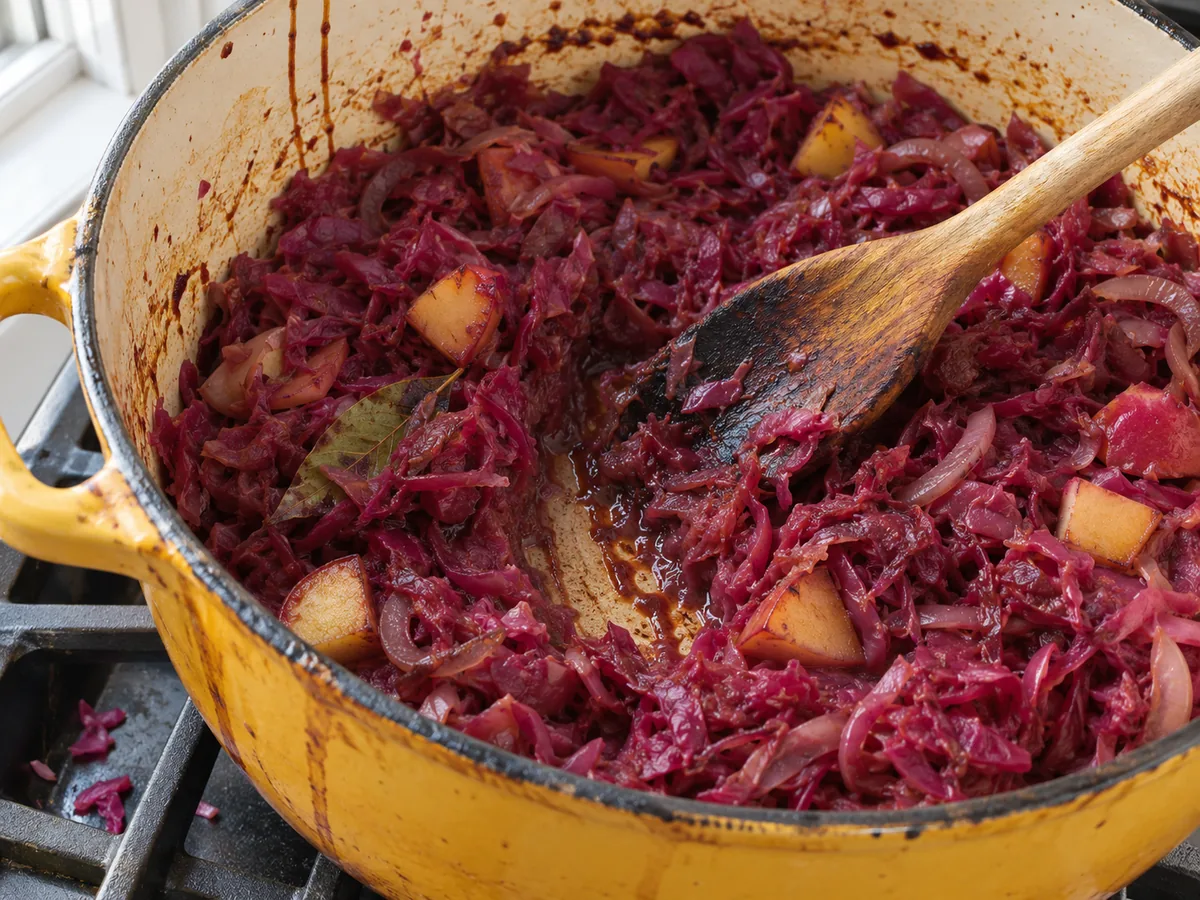
Look for deep magenta shreds with a thin, sticky glaze and no standing liquid. If the pot is still wet at the 5-minute mark, keep the lid off in 2-minute steps rather than raising the heat, because the sugars in the glaze scorch quickly.
Keep the heat low while the lid is on. With only about 1 cup of liquid, a high flame scorches the bottom layer before the top shreds soften. Add 2 tablespoons of water if the pot looks dry.
What to Serve With It
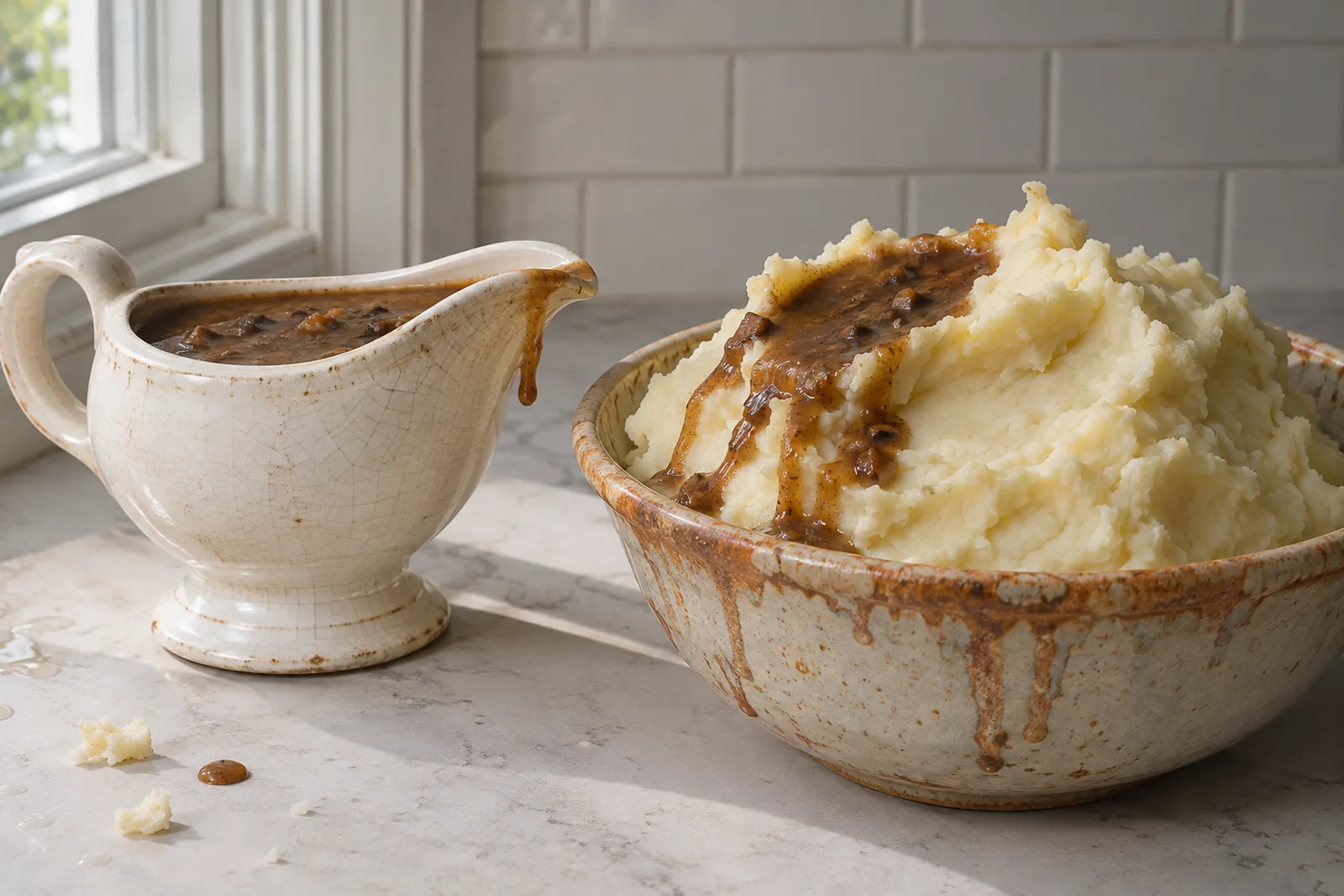
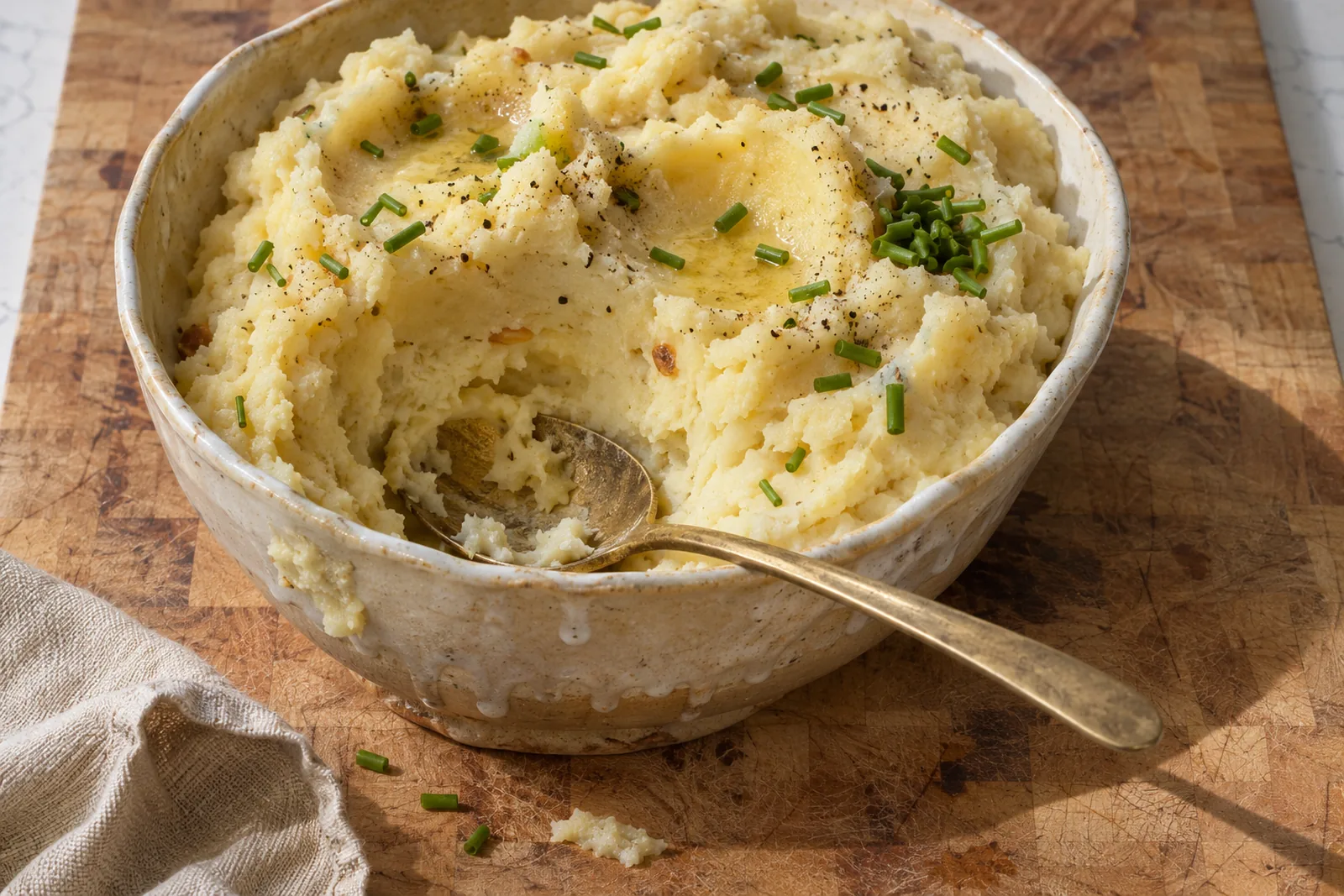
A plate with this cabbage works best with one rich main and one soft starch. Spoon it next to roasted-garlic mashed potatoes and a ladle of mushroom gravy, and the sharpness of the cabbage balances both.
| Pair With | Why It Works | How to Serve |
|---|---|---|
| Mashed potatoes | Soft, mild starch against sharp cabbage | Spoon beside, not on top |
| Mushroom Wellington | Acid cuts the earthy, rich pastry | About ⅓ cup per slice |
| Lentil walnut loaf | Tangy cabbage lightens dense slices | Plate beside; gravy on loaf only |
| Hasselback potatoes | Crisp edges against a soft braise | Hot potatoes, warm cabbage |
Keep the cabbage beside the potatoes, not on top, so its juice does not turn them pink. A table that already has a bowl of cranberry sauce with orange needs only one tart fruit side, so choose the cabbage or the cranberries per plate. A lentil shepherd's pie is the exception: its mild mashed top takes the cabbage well.
Pair the cabbage with a creamy, mild dish such as mashed potatoes: the starch softens the vinegar and the cabbage wakes up the plate.
Store and Reheat
Cool the cabbage in a shallow container and refrigerate within 2 hours of cooking. Cooked cabbage keeps 3 to 4 days in the fridge and 1 to 2 months in the freezer, based on USDA FoodKeeper storage times for cooked vegetables.
| Method | Time | Best For |
|---|---|---|
| Stovetop | 5 min, medium-low, covered | Full batch |
| Microwave | 1 ½-2 min per serving | Single portion |
| Oven | 20 min at 350°F, covered | Sharing the oven |
On the stove, add 1 tablespoon water to the pot; in the microwave, stir halfway through.
- Store in an airtight container, so the vinegar smell stays out of the rest of the fridge.
- Freeze flat in a zip-top bag; the apple pieces soften a little after thawing.
- Thaw frozen cabbage overnight in the fridge, not on the counter.
- Reheat until steaming hot all the way through, 165°F in the center.
Looking for more dishes that wait happily in the fridge before the holiday? Our collection of vegan side dishes has plenty more that cook ahead.
Sources
Frequently Asked Questions
The pigment in red cabbage turns blue-purple when the pot is not acidic enough. Stir the cider vinegar in right after the cabbage wilts, not at the end, and cook it in an enameled or stainless steel pot.
Yes. Cook it up to 3 days ahead, cool it, and refrigerate within 2 hours of cooking. Rewarm it covered on the stove for about 5 minutes with 1 tablespoon of water, until steaming hot.
Yes. Freeze it flat in a zip-top bag for 1 to 2 months and thaw it overnight in the fridge. The apple pieces come out a little softer after thawing.
Yes. Soften the onion and apples in a skillet first, then put everything in the slow cooker and cook on low for about 6 hours, until the cabbage is tender. Stir in 1 teaspoon more vinegar at the end, and thicken the glaze in a skillet for 5 minutes if it is thin.
Yes. It uses olive oil, cider vinegar and maple syrup, and no animal product. Many traditional versions start with rendered duck or goose fat or finish with a spoonful of dairy butter, and this recipe leaves them out.
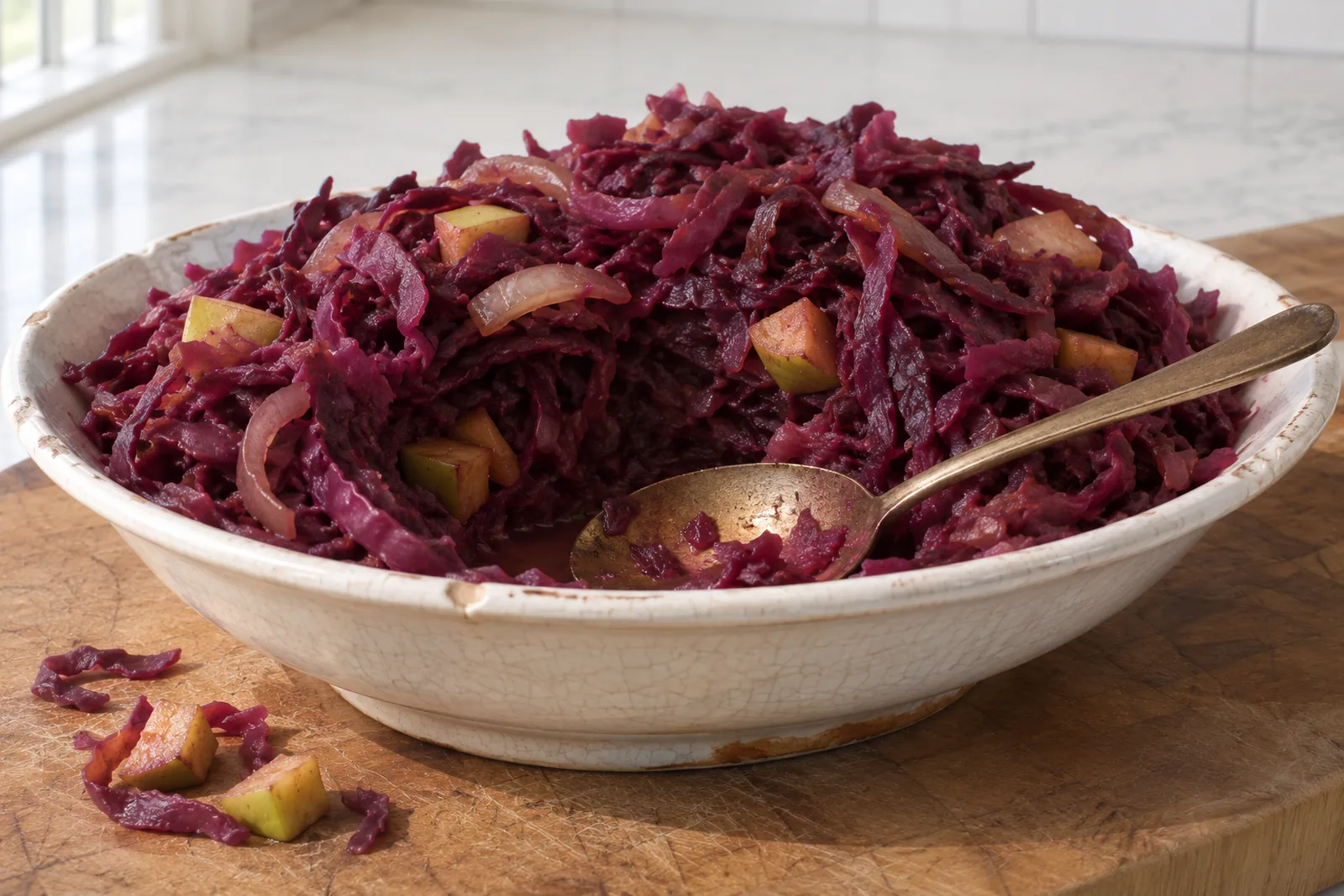
Braised Red Cabbage with Apples
Ingredients
Equipment
Method
- Slice the cabbage. Quarter 1 small head red cabbage, cut out the core and slice the leaves ¼ inch thick, about 10 cups.
- Cut the apples and onion. Cut 2 Granny Smith apples into ½-inch pieces with the peel on. Slice 1 large yellow onion thinly.
- Soften the onion and apples. Warm 2 tablespoons olive oil in the pot over medium heat. Cook the onion 5 minutes, until soft and translucent, then add the apples and garlic and cook 3 minutes more.
- Wilt the cabbage. Add the cabbage in 3 handfuls, stirring after each so it shrinks and makes room for the next. This takes about 5 minutes.
- Add the liquid. Pour in ⅓ cup apple cider vinegar, ½ cup apple cider and ¼ cup water. The shreds turn from purple to bright magenta within a minute.
- Season the pot. Add 2 tablespoons maple syrup, ¾ teaspoon salt, ¼ teaspoon cloves, the pepper and 2 bay leaves.
- Braise covered. Bring to a simmer, cover, reduce the heat to low and cook 40 minutes, stirring every 10 minutes. The cabbage should be tender with a slight bite.
- Reduce the glaze. Take off the lid, raise the heat to medium and cook 5 minutes, stirring often, until only a few spoonfuls of syrupy glaze remain.
- Taste and finish. Remove the bay leaves. Add a pinch of salt or 1 teaspoon more vinegar if it needs it.
Nutrition
Notes
- Add the vinegar with the cabbage to keep the color magenta.
- Keep the heat low while covered; the glaze scorches easily.
- Cook up to 3 days ahead; rewarm 5 minutes on the stove.
- Freeze flat in a bag up to 2 months.
Tried this recipe?
Let us know how it was!
Carrie is a food writer and editor with more than 15 years of experience. She has worked for some of the biggest names in the food industry, including Bon Appétit, Food & Wine, and Martha Stewart Living.
As the Editor in Chief of EpicureDelight, Carrie oversees all of the content on the site. She also manages the team of contributing writers and editors, who help to create delicious recipes, helpful tips, and informative articles that you’ll find on the site.
A native of the Chicago area, Carrie is passionate about all things food. She loves trying new restaurants and experimenting with new recipes in her kitchen. She’s also a graduate of the Culinary Institute of America, so she knows a thing or two about food!