
That sharp, floral-citrus lift in a Thai curry or a Southeast Asian soup? It usually comes from a single leaf doing a lot of work.
When you're out of it, the right kaffir lime leaf substitute can get you most of the way there, as long as you know what you're replacing: aromatic top notes, a faint floral bitterness, and sometimes a physical leaf body in the broth.
The core issue is aroma vs. leafiness. Zest blends recreate the scent almost perfectly.
Leaf-based swaps (bay, curry leaves) give you that "something simmering in the pot" quality but need lime zest alongside them for citrus lift.
The best kaffir lime leaf substitute depends on your dish. Lime zest + lime juice is the closest aroma match for most recipes. Dried kaffir lime leaf works when you can find it. Bay leaf + lime zest or curry leaves + lime zest suit long-simmered dishes best.
5 Best Kaffir Lime Leaf Substitutes (Pick by Flavor Goal)
The five swaps below are ranked by how closely they reproduce the original aroma. Each row shows the substitute form and the ratio to use, so you can scan and choose before you start cooking.
| # | Substitute | Best For | Ratio | Key Note |
|---|---|---|---|---|
| 1 | Lime Zest + Lime Juice | Both | 1:1 | Add zest late for brightness |
| 2 | Dried Kaffir Lime Leaf | Both | ½:1 | Rehydrate before using |
| 3 | Bay Leaf + Lime Zest | Both | ½:1 | Remove leaf after simmering |
| 4 | Curry Leaves + Lime Zest | Both | ¾:1 | Sauté leaves first, zest last |
| 5 | Lime Zest Only | Both | 1:1 | Best for fast or baked dishes |
1. Lime Zest + Lime Juice Blend
This is the most flavor-faithful swap you'll find outside of an Asian grocer. Lime zest carries the floral, aromatic lift that defines kaffir lime leaf, and juice pulls the acidity into focus without letting the blend turn flat.
The timing matters more than the quantity here. Zest added at the start of a long simmer goes dull.
Add it in the final 2-5 minutes for the clearest aroma. You can also explore bright zest-forward options if you run short on limes entirely.
- Per leaf ratio: ½ teaspoon zest plus ¼ teaspoon juice replaces one fresh leaf
- Timing: Add zest in the last 2-5 minutes of cooking, juice slightly earlier
- Soups and curries: Stir zest directly into the pot off the heat for clearest aroma
- Baking: Fold zest into batters at the end of mixing to preserve the volatile oils
- Balance: If the lime tastes sharp, add a small pinch of sugar to round it out
Skip if: Your recipe simmers for more than 30 minutes and you can't add zest in the final stage.
2. Dried Kaffir Lime Leaf
Dried kaffir lime leaf is the most obvious pantry substitute, but it behaves differently than fresh. The drying process concentrates the oils, so the flavor is stronger per leaf, but the floral top notes are muted. You need simmering time to coax out the aroma.
If you're curious about storing fresh leaves longer before they need replacing, that's worth knowing too.
- Ratio: Use 1 dried leaf for every 2 fresh leaves the recipe calls for
- Rehydration: Soak in warm water for 5 minutes before adding to quick-cook dishes
- Simmer time: Allow at least 10 minutes in the pot for dried leaf to release its oils
- No soaking needed: For long-simmered curries over 20 minutes, add dry directly
- Remove before serving: Dried leaves stay tough; always pull them out before plating
Skip if: Your dish cooks in under 10 minutes and you have no time to rehydrate.
3. Bay Leaf + Lime Zest
Bay leaf alone won't fool anyone hunting for kaffir's citrus note. But bay does something useful: it adds a quiet, herbal leafiness that holds the broth together the way a kaffir lime leaf does in a long-simmered curry or soup.
Bay Leaf Only
Works for: Long-simmered dishes needing body and herb depth
Skip if: You need any citrus aroma at all - it won't deliver
Bay Leaf + Lime Zest
Works for: Curries, soups, and braised dishes needing the full leaf-plus-citrus profile
Skip if: You can't add zest late, or the dish is already acidic
The key is not over-leaning on bay. One medium leaf per 2 kaffir lime leaves is plenty.
You can learn more about leafy herb swaps if bay also isn't on hand.
- Ratio: 1 bay leaf plus ½ teaspoon lime zest per 2 kaffir lime leaves
- Add bay early: Drop it in with your first aromatics so it has time to mellow
- Add zest late: Stir zest in during the last 3 minutes so it stays bright
- Remove both: Pull bay leaf and any zest strips out before serving
Skip if: You need citrus aroma but can't add lime zest - bay alone is not a kaffir substitute.
4. Curry Leaves + Lime Zest
Curry leaves have a grassy, slightly citrus-herbal character that sits closer to kaffir lime leaf than bay does. They're best used in stir-fries and savory curries, where the initial sauté blooms their oils into the fat. Choosing curry leaves well makes a difference, so consider picking the best herbal swap before committing.
- Ratio: 6-8 curry leaves plus ½ teaspoon lime zest per 2 kaffir lime leaves
- Sauté first: Add curry leaves to hot oil at the very start, before onions or garlic
- Listen for the pop: Leaves are ready when they crackle in the oil, about 30 seconds
- Add zest last: Stir in zest in the final 2 minutes to keep citrus aroma fresh
- Don't double up: Skip if your dish already has strong herbs like lemongrass or galangal
Skip if: The recipe already has 3 or more assertive aromatics competing for the same space.
5. Lime Zest Only
When you need something fast and have nothing but a fresh lime, zest alone is a surprisingly effective fix. It won't give you the leaf body or the faint floral bitterness, but it delivers the signature citrus aroma that makes kaffir lime leaf so recognizable.
For baking especially, use slightly more zest than you think you need. Ovens drive off volatile oils quickly, and a dish baked with too little zest tastes vague rather than citrusy.
- Ratio: 1 teaspoon zest per 2 fresh kaffir lime leaves, added at the end of cooking
- For baking: Increase to 1.5 teaspoon and fold in at the end of mixing
- Flavor gap: Add a small pinch of salt to round the edge if lime tastes sharp alone
- No juice here: Juice without zest gives acidity but not the aromatic lift you need
Skip if: You need a leaf that simmers in a broth - zest dissolves and can't replicate that.
Making Kaffir Lime Leaf Substitutes Work
The difference between a flat dish and a bright one usually comes down to when you add the substitute, not how much. Zest blends lose their volatile oils quickly under heat, so they belong at the end.
Leaf-based swaps (bay, curry leaves) need time in the pot to release character, but they turn bitter if left in too long. Dried kaffir lime leaf sits in the middle: it needs at least 10 minutes of simmering but should still be pulled before serving.
For curries, knowing how the flavor in zest changes with heat helps you decide whether to add it during or after cooking. If you also run low on lime juice, swapping in citrus juice at the right stage keeps the acidity balanced.
- Dried leaf: Use half the amount of fresh leaves called for, and simmer at least 10 minutes
- Zest blends: Stir in off the heat or within the last 2 minutes for maximum aroma retention
- Leaf substitutes: Always remove bay or curry leaves before plating to prevent bitterness
For stir-fries, if you're working with Thai basil instead of curry leaves, swapping in fresh basil follows a similar late-addition rule. And if you're storing zest ahead of time, note that this bright citrus peel holds well frozen for up to 3 months.
Frequently Asked Questions
Lime zest plus a small amount of lime juice is the closest match for curries and soups. Add zest in the final 2-5 minutes so the aroma stays bright and doesn't cook off.
Use 1 dried leaf for every 2 fresh leaves. Dried leaves are more concentrated, so using a 1:1 swap will likely overpower the dish.
Yes, zest alone works well for aroma-forward dishes and baking. It won't replicate the leaf texture or the faint floral bitterness, but the citrus lift is there.
Lime zest is ideal for baking: use 1.5 teaspoon per 2 leaves and fold it in at the end of mixing. More zest compensates for volatile oil loss during oven heat.
Zest blends always go in late, within the last 2-5 minutes. Leaf substitutes like bay or curry leaves go in early and should be removed before serving.
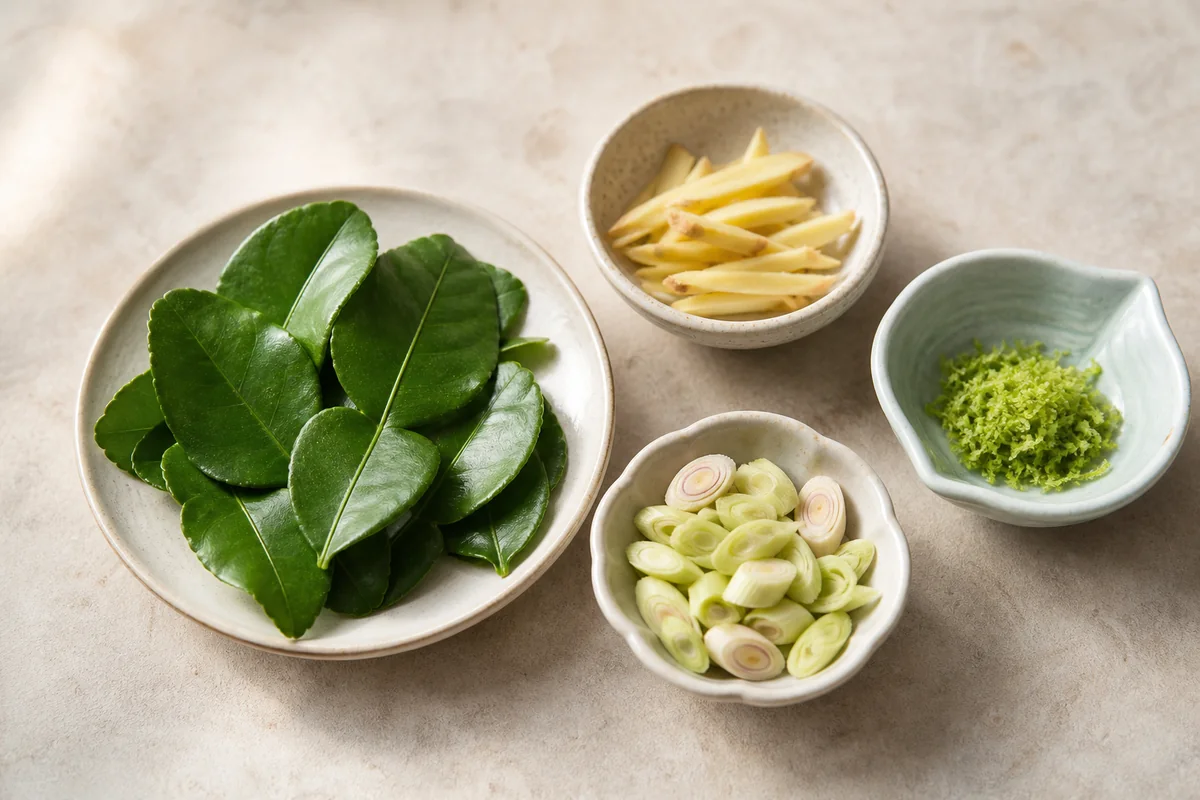
5 Best Kaffir Lime Leaf Substitutes (Flavor-Matched)
Ingredients
Equipment
Method
- Identify how your dish uses kaffir lime leaf: simmered “leaf in the pot” vs. aroma boost at the end vs. baked flavor.
- Choose the closest substitute from the ingredient list and apply the given ratio (use the lower amount for dried leaf; use zest/juice blends when you need brightness).
- Add aroma late when possible: zest blends at the last 2–5 minutes; dried leaf during the simmer for at least 10 minutes.
- Taste and adjust: if the flavor is too sharp, add a small pinch of sugar; if muted, add more zest rather than more juice.
- Remove leaf-based options (bay/curry leaves) after simmering so they don’t turn bitter.
Notes
- Flavor varies by brand and freshness; zest intensity matters most.
- Leaf-in-the-pot substitutes are best for soups and curries where you can remove them after simmering.
Tried this recipe?
Let us know how it was!
Carrie is a food writer and editor with more than 15 years of experience. She has worked for some of the biggest names in the food industry, including Bon Appétit, Food & Wine, and Martha Stewart Living.
As the Editor in Chief of EpicureDelight, Carrie oversees all of the content on the site. She also manages the team of contributing writers and editors, who help to create delicious recipes, helpful tips, and informative articles that you’ll find on the site.
A native of the Chicago area, Carrie is passionate about all things food. She loves trying new restaurants and experimenting with new recipes in her kitchen. She’s also a graduate of the Culinary Institute of America, so she knows a thing or two about food!



