
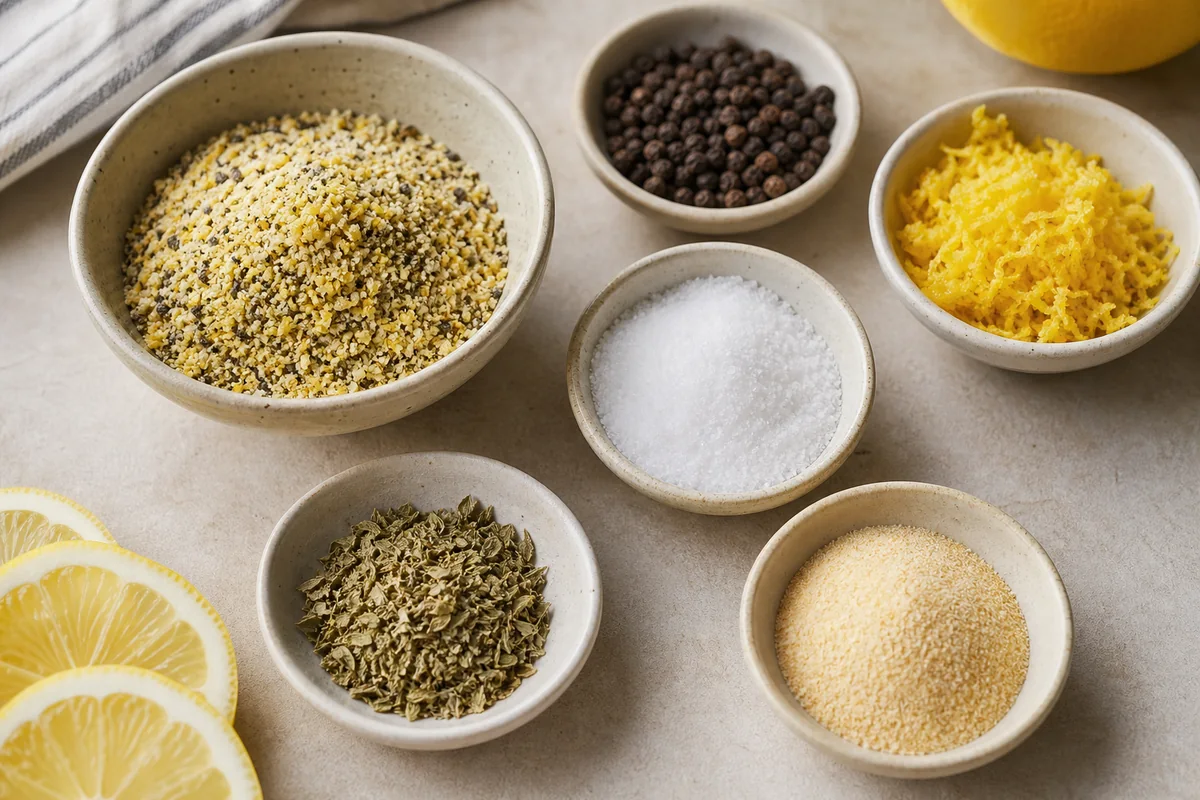
That sharp citrus-pepper punch is deceptively hard to fake. Lemon pepper seasoning is basically dried lemon zest plus cracked black pepper, often with salt mixed in, and when it's gone, your dish notices immediately.
The good news is you almost certainly have something in your kitchen that gets close. The substitutes below cover dry rubs, marinades, and baking, so you can pick what fits your recipe format.
The best lemon pepper substitute for most savory dishes is lemon zest plus freshly cracked black pepper, mixed 1:1. For baking, a DIY blend with a small salt pinch keeps seasoning balanced. Za'atar, garlic-lemon blends, and lime zest work well when you want something slightly different.
Best Lemon Pepper Substitute Picks (With Mixing Ratios)
For dry rubs and baked recipes, stick to a zest-based substitute so texture stays intact. Liquid options like lemon juice are better for marinades only.
| # | Substitute | Best For | Ratio | Key Note |
|---|---|---|---|---|
| 1 | Lemon Zest + Black Pepper | Both | 1:1 | No salt included |
| 2 | DIY Lemon Pepper (+ salt) | Both | 1:1 | Controls salt level |
| 3 | Za'atar | Savory | 1:1 | Herbal and tangy |
| 4 | Garlic Powder + Lemon Zest | Savory | 1:1 | Deeper, punchier |
| 5 | Lime Zest + Black Pepper | Both | 1:1 | Sharper citrus note |
1. Lemon Zest + Black Pepper
This is the closest you can get without buying a new jar. Fresh lemon zest carries the aromatic oil that dried lemon pepper tries to replicate, and cracked black pepper adds the bite.
Mix equal parts zest and pepper by volume. If your recipe calls for 1 teaspoon of lemon pepper, use ½ teaspoon zest and ½ teaspoon black pepper.
For recipes where bright citrus swaps matter, this pairing also holds up well against lemongrass-forward dishes.
- Ratio: ½ teaspoon lemon zest + ½ teaspoon black pepper per 1 teaspoon lemon pepper called for
- Dry rubs: Combine first, then press firmly into protein before cooking
- Baking: Add to dry ingredients; zest stays aromatic when baked at moderate heat
- Savory finishing: Sprinkle over roasted vegetables right out of the oven
Skip if: your recipe needs a saltier seasoning blend and you'd rather not add salt separately.
2. DIY Lemon Pepper with Salt
The difference between option 1 and this one is just a small salt pinch, but that pinch changes everything in a seasoning blend. Most commercial lemon pepper includes salt, so adding it here makes the substitute behave more like the original jar.
If you need a softer lemon choice for a gentler flavor, Meyer lemon zest works here too instead of regular lemon.
- Base mix: ½ teaspoon lemon zest + ½ teaspoon cracked black pepper + ⅛ teaspoon kosher salt per 1 teaspoon lemon pepper
- Dry rub use: Mix and apply to chicken or fish 15 minutes before cooking
- Marinade use: Stir into olive oil before adding protein
- Baking use: Add to savory muffin or cracker dough with the other dry ingredients
Skip if: your recipe already has plenty of salt and keeping sodium low is important.
3. Za'atar
Za'atar brings a lemony tang from sumac plus dried thyme and sesame, so it's herbier than lemon pepper but shares that citrus-peppery edge. It works well on chicken thighs, white fish, and roasted cauliflower.
The flavor shift is real. You get more herb and earthiness, less straight pepper bite.
If the zesty citrus bite is central to your recipe, za'atar softens it. Use it when you want a Mediterranean angle on the dish.
Za'atar
Works for: chicken, roasted vegetables, flatbreads, dipping with olive oil
Skip if: you need a clean citrus-plus-black-pepper flavor with no herbal or sumac notes
4. Garlic Powder + Lemon Zest
This blend is punchier than straight lemon pepper. Garlic powder adds depth and a savory undertone that amplifies the citrus rather than stepping aside for it.
It works especially well on chicken, salmon, and roasted potatoes.
Use ¼ teaspoon garlic powder, ¼ teaspoon lemon zest, and ½ teaspoon black pepper in place of 1 teaspoon lemon pepper. The aromatic dried zest is the backbone here, so use it fresh from the zester if you can.
- Chicken and fish: Pat protein dry, then press the blend directly onto the surface before roasting
- Potatoes: Toss with olive oil and the blend before roasting at 425°F
- Seasoning amount: Start with ¾ of what the recipe calls for; taste and add the remaining ¼ if needed
- Baking note: Skip this blend for sweet or delicate baked goods; garlic is not subtle
Skip if: the dish is already heavily garlicky and you want to keep the flavor clean.
5. Lime Zest + Black Pepper
Lime zest is sharper and slightly cooler in flavor than lemon zest, but it carries the same aromatic punch from citrus oils. When you're out of lemon and need that zest-forward brightness, lime is the most logical swap.
Before picking this citrus direction, consider whether the recipe relies on lemon's specific floral note. Lime skews more tart and grassy, which is great on fish tacos or grilled shrimp but can clash in recipes where lemon is the clear star.
- Ratio: ½ teaspoon lime zest + ½ teaspoon black pepper per 1 teaspoon lemon pepper
- Best uses: Grilled seafood, avocado-based dishes, rice, and light vinaigrettes
- Avoid over-brightening: Don't add lime juice on top of lime zest; the acidity will overpower the dish
- Baking: Works in savory scones or cheese crackers where citrus brightness is welcome
Lime Zest + Black Pepper
Works for: seafood, rice dishes, savory baking, grilled vegetables
Skip if: lemon zest is the star of the recipe and you need that specific floral, softer note
Making Lemon Pepper Substitutes Work (Without Flavor Drift)
Getting the right substitute is step one. Using it correctly is step two, and that's where most cooks lose the plot.
The biggest variable is format: dry substitutes and liquid substitutes behave differently in every application.
When tart citrus flavors are involved, timing also matters. Adding zest early in a braise mellows it; adding it at the end keeps it sharp and bright.
Choose based on the flavor intensity you want in the finished dish.
- Match the format: Use zest-and-pepper for dry rubs, breading, and baking; use lemon juice blends only for marinades or sauces where extra moisture is acceptable
- Adjust salt and pepper separately: If your substitute has no salt, add it in a separate small pinch rather than increasing the whole blend; this keeps the citrus-to-pepper ratio intact
- Time the addition right: For the sharpest citrus aroma, add dry substitutes in the last 5 minutes of cooking or after; for deeper infusion into meats, apply at least 20 minutes before heat
Frequently Asked Questions
Fresh lemon zest mixed with cracked black pepper is the closest match. Use ½ teaspoon of each per 1 teaspoon lemon pepper called for, and add a small salt pinch if the original blend was salted.
Only in very small amounts. Lemon juice adds liquid that disrupts baked textures, so lemon zest plus black pepper is a far safer swap for baking applications.
Add ⅛ teaspoon kosher salt per teaspoon of the blend you're making. Taste the finished dish before serving and add more only if needed.
No. Za'atar is herbier and earthier because of thyme and sumac. It shares the tangy-peppery angle but adds clear herb notes that lemon pepper does not have.
Add it after cooking or in the last 5 minutes for the sharpest citrus aroma. Earlier additions mellow the brightness but allow deeper flavor absorption into the protein.
5 Best Lemon Pepper Substitutes for Better Results
Ingredients
Equipment
Method
- Identify your use case (dry rub, marinade, or baking) and choose the substitute that matches your format (dry vs. liquid).
- Match the flavor balance: aim for citrus brightness (zest or citrus concentrate) plus black pepper bite.
- Measure using the table ratio; if your substitute is saltier than lemon pepper, reduce to avoid over-seasoning.
- For liquid swaps (lemon juice), let the surface sit 2–3 minutes and then pat off excess moisture before finishing or baking.
- Taste and adjust: add more pepper for heat, more citrus for brightness, or a pinch of salt if the flavor feels flat.
Notes
- If your lemon pepper seasoning was salt-forward, reduce added salt when using zest-and-pepper blends.
- For baked goods, favor dry zest/pepper swaps over lemon juice to prevent gumminess.
Tried this recipe?
Let us know how it was!
Carrie is a food writer and editor with more than 15 years of experience. She has worked for some of the biggest names in the food industry, including Bon Appétit, Food & Wine, and Martha Stewart Living.
As the Editor in Chief of EpicureDelight, Carrie oversees all of the content on the site. She also manages the team of contributing writers and editors, who help to create delicious recipes, helpful tips, and informative articles that you’ll find on the site.
A native of the Chicago area, Carrie is passionate about all things food. She loves trying new restaurants and experimenting with new recipes in her kitchen. She’s also a graduate of the Culinary Institute of America, so she knows a thing or two about food!



