
Few spices disappear from kitchen shelves as quietly as long pepper. It looks like a tiny pine cone, tastes like black pepper's warmer, more aromatic cousin, and shows up in everything from Moroccan spice blends to slow-braised Indian curries.
Its flavor is woody and faintly floral, with a heat that builds slowly instead of hitting sharp. That combination is what makes finding a good long pepper substitute tricky.
A straight chili swap replaces heat but loses the aroma. A warm-spice blend adds roundness but can drift sweet.
The picks below are ranked by how closely they match both dimensions. Most work at or near 1:1, with a few needing a lighter hand.
Black pepper and white pepper are the closest everyday swaps, matching long pepper's peppery warmth at 1:1. Allspice and ginger cover the aromatic-warmth angle well in braises. Cayenne or chili powder is a heat-only backup. Reduce blends and sweet spices below 1:1.
5 Best Long Pepper Substitutes Worth Trying
These five options cover the range from pepper-exact swaps to warm-spice alternatives. The table below is a quick ratio reference.
Each H3 section goes deeper on when to use it and when to skip it.
| # | Substitute | Best For | Ratio | Key Note |
|---|---|---|---|---|
| 1 | Black Pepper (freshly ground) | Both | 1:1 | Grind fresh for aroma |
| 2 | White Pepper | Both | 1:1 | Color-neutral warmth |
| 3 | Jamaican Allspice (ground) | Cooked | ¾:1 | Can run sweet |
| 4 | Ground Ginger | Cooked | 1:1 | Add early in cooking |
| 5 | Cayenne or Chili Powder | Heat only | ¼:1 | Heat only, not aroma |
1. Black Pepper
Black pepper is the most accessible long pepper alternative on this list, and it earns the top spot for good reason. The flavor is sharper and less floral, but freshly ground black pepper still carries enough aromatic brightness to slot in without a major flavor shift.
Use the same amount as the long pepper called for. Grinding it fresh matters here.
Pre-ground black pepper sits flat and loses the volatile top notes that bring it closest to long pepper's character.
- Cooked dishes: Add toward the end of simmering to keep the aroma intact.
- Finishing use: Works well on roasted meats or grain dishes where long pepper would be a table seasoning.
- Grinding tip: Use a medium-coarse grind, not a fine powder, for more texture and a closer match to long pepper's body.
If you find yourself reaching for peppercorn-free options in general, there's a wider range of swaps worth knowing about. Skip black pepper if your recipe specifically needs that woody, almost piney top note.
It will taste peppery and correct, but the floral depth won't be there.
2. White Pepper
White pepper is softer and more earthy than black pepper, which puts it slightly closer to long pepper's muted, integrated heat style. It disappears into light sauces without adding dark specks, which is its biggest practical advantage.
For mild pepper-warmth swaps in cream-based or pale-broth dishes, white pepper is often better than black.
- Ratio: Use 1:1 to start, then add a small pinch more if the dish needs lift.
- Best applications: Cream sauces, white fish braises, pale soups, and potato dishes.
- Timing: Add mid-cook rather than at the end. White pepper integrates better with heat than it does as a raw finish.
- Texture note: It is finer than many peppercorn grinds, so measure by weight if precision matters.
Skip white pepper if you want visible pepper texture or a more fragrant, slightly piney top note. It is warmer and quieter, not brighter.
3. Jamaican Allspice
Allspice is the most interesting option on this list because it shares long pepper's floral-woody character more closely than any straight pepper substitute does. The catch is that allspice also carries cinnamon and clove warmth, so it can read sweet if you use too much.
Long Pepper vs. Allspice
Works for: slow braises, spiced stews, Moroccan-style dishes, lamb, or any recipe where warm aromatic depth is the goal
Skip if: your dish needs a clear peppery bite at the finish, or the recipe can't absorb cinnamon/clove warmth
Start at ¾ of the long pepper amount. If choosing between allspice options for a recipe, whole berries ground fresh are more floral and less sweet than pre-ground.
- Add early: Allspice integrates best when it cooks with fat or liquid for at least 15 minutes.
- Balance trick: Add a small grind of black pepper alongside allspice to restore some of the sharper pepper edge.
- Best uses: Jamaican jerk marinades, Persian stews, spiced lentils, and lamb braises.
4. Ground Ginger
Ground ginger is not a pepper, but it covers the warm-spice dimension of long pepper better than most people expect. It brings forward heat, a slight sharpness, and earthy warmth that works especially well in curries and slow-cooked dishes.
The key is to add it early. Ginger that goes in at the start of a braise or curry blends into the background warmth of a dish.
Added late, it can taste sharp and raw in a way that long pepper never does.
- Ratio: Use 1:1 as a starting point, then pull back if the ginger flavor starts to dominate.
- Best dishes: Spiced lentils, meat braises, curry bases, and anything with coconut milk.
- What it lacks: Ginger has no real pepper bite, so pair it with a small amount of black pepper if the recipe needs that edge.
- Form matters: Ground ginger is more concentrated and dry than fresh. If you're curious about how the forms compare, the paste vs. powder breakdown is worth checking before you measure.
Skip ground ginger if the recipe needs a clean peppery finish. It leans warm-spicy rather than peppery, and that distinction shows in lighter dishes.
5. Cayenne or Chili Powder
Cayenne and chili powder are last on this list because they replace only one dimension of long pepper: the heat. The woody, floral warmth is gone.
What's left is a faster, more aggressive burn that can overpower a dish if you're not careful.
When picking a chili-forward backup for spice, chili powder is gentler than cayenne and easier to control in blended dishes.
- Ratio: Use ¼ of the long pepper quantity for cayenne; chili powder can go slightly higher at ⅓.
- Add a warm note: Drop in a pinch of allspice or cumin alongside the chili to recover some aromatic roundness.
- Best use case: Emergency heat in stews or marinades where the dish already has other warm spices in it.
- Chili powder note: Many commercial chili powders include cumin and garlic, which adds some complexity back into the swap.
Skip cayenne or chili powder entirely if the recipe depends on aromatic pepper character. These substitutes restore spiciness, not the full long pepper profile.
Making Long Pepper Substitutes Work
The right substitute depends less on what's in your pantry and more on what role long pepper is playing in the recipe. Pepper-forward dishes need black or white pepper.
Warm, slow-cooked dishes tolerate allspice or ginger much better. Knowing your dish type before you measure saves you from overcorrecting.
- Match the timing: Pepper-type swaps (black, white) work best added in the last 5-10 minutes. Warm spice swaps (allspice, ginger) need early heat to integrate fully.
- Start low with blends: If your substitute is a multi-spice blend or a sweeter spice, use less than the recipe calls for and build from there.
- Taste as you go: Long pepper has moderate heat and subtle floral depth. If your swap tastes flat, add a pinch more pepper for lift. If it tastes sharp, add a small amount of allspice to round it out.
For dishes that use a lot of black pepper already, knowing how to manage this ground spice's freshness makes a real difference in how close the swap lands.
Frequently Asked Questions
Freshly ground black pepper is the easiest match at 1:1. For more aromatic depth in slow-cooked curries, use ¾ the amount of ground allspice added early in cooking.
Yes, 1:1 works well. Black pepper is slightly sharper, so grind it fresh and add it a little later in cooking to keep the aroma closer to long pepper's character.
White pepper adds a softer, more earthy warmth than black pepper. The heat profile is similar but the flavor is quieter, so it works cleanly in pale or cream-based sauces.
Start with ¾ of the long pepper amount. Allspice can add noticeable sweetness, so go low first and adjust after tasting.
Cayenne at ¼ the long pepper amount is the most direct heat-only backup. Add a pinch of cumin or allspice alongside it to recover some aromatic warmth.
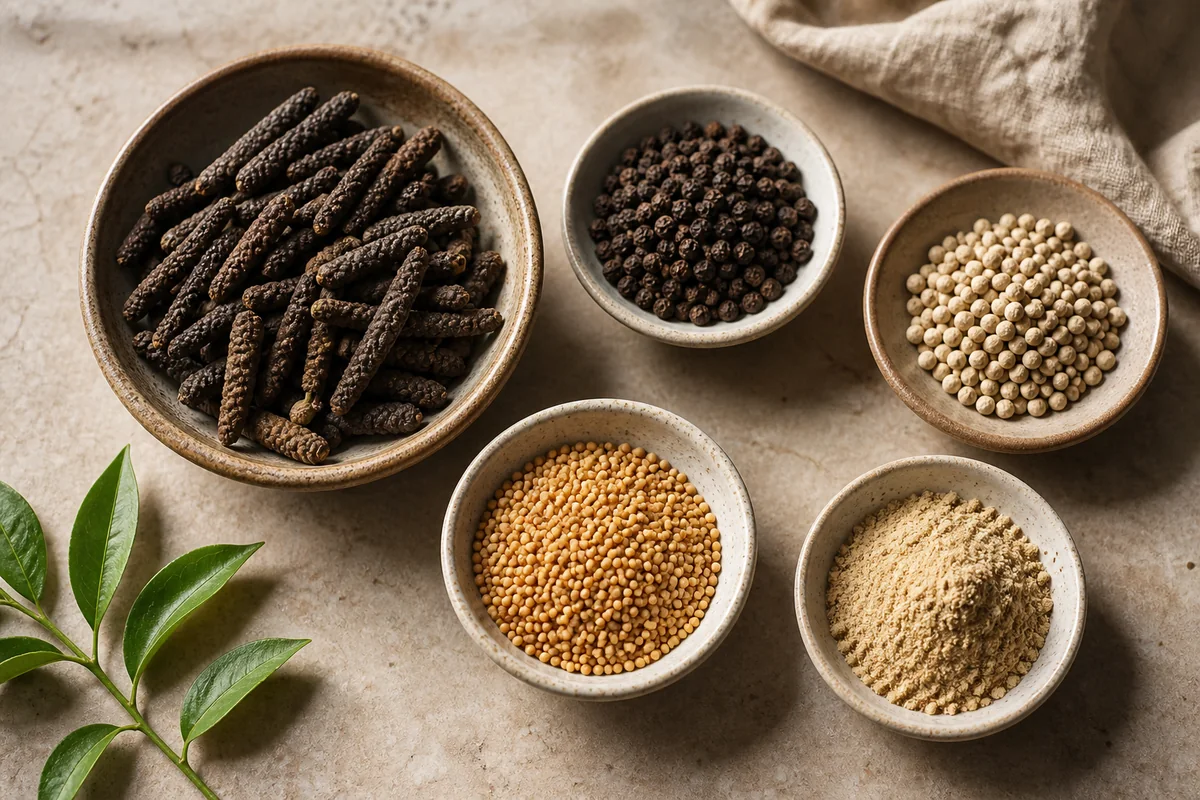
5 Best Long Pepper Substitutes Worth Trying
Ingredients
Equipment
Method
- Identify your dish type: curry/braise (tolerates warmer substitutes) vs. sauce/finishing (needs fresher “pepper” notes).
- Choose the closest match from the table (aim for 1:1 for pepper-for-pepper swaps).
- If your substitute is hotter/sweeter than long pepper, reduce the amount first (allspice/ginger/chili need downward adjustment).
- Add early for cooked flavors (ginger/allspice) or add at the end for pepper-like brightness (black/white pepper).
- Taste and fine-tune: add a pinch more pepper for lift, or add a pinch of a warm spice for roundness.
Notes
- Long pepper is valued for warm, woody, aromatic pepper depth—not just raw heat—so match both intensity and aroma.
- For best results, grind pepper-based substitutes immediately before adding.
Tried this recipe?
Let us know how it was!
Carrie is a food writer and editor with more than 15 years of experience. She has worked for some of the biggest names in the food industry, including Bon Appétit, Food & Wine, and Martha Stewart Living.
As the Editor in Chief of EpicureDelight, Carrie oversees all of the content on the site. She also manages the team of contributing writers and editors, who help to create delicious recipes, helpful tips, and informative articles that you’ll find on the site.
A native of the Chicago area, Carrie is passionate about all things food. She loves trying new restaurants and experimenting with new recipes in her kitchen. She’s also a graduate of the Culinary Institute of America, so she knows a thing or two about food!



