A cut-out sugar cookie has one job at a holiday table: keep the shape of the cutter. These vegan cookies use block-style vegan butter, no egg and only ½ teaspoon of baking powder, so stars, trees and rounds come out of the oven with the same sharp edges they went in with.
They are part of our vegan Christmas menu, and the dough needs a 1-hour chill before it is rolled.
One batch makes 24 cookies with 3-inch cutters. Each glazed cookie is about 193 calories with 2 grams of protein. The dough can sit in the fridge for 2 days or in the freezer for 2 months, so the baking can happen well before the dinner.
Cut-out vegan sugar cookies that hold their shape, thanks to a 1-hour dough chill before rolling.
Save These Vegan Sugar Cookies
Cut-out sugar cookies without egg or dairy, rolled ¼ inch thick, glazed and ready for 24 cookie plates.
Why These Vegan Sugar Cookies Work
- Cool block vegan butter. A firm stick holds less water than a tub spread, so the dough stays stiff enough to cut and the edges stay sharp in the oven.
- Almost no lift. With no egg and just ½ teaspoon of baking powder, the dough bakes up flat instead of puffing and rounding off the corners of a star.
- Two chills. The discs rest 1 hour before rolling and the cut shapes rest 15 minutes on the sheet, so the vegan butter is still firm when the heat hits.
- Rolling between parchment. No extra flour goes into the dough, which keeps the cookies tender and the cut edges clean.
- A small splash of almond extract. Just ½ teaspoon gives the plain dough a bakery-case flavor next to the vanilla.
Roll the dough a full ¼ inch thick: thinner cutouts darken at the edges before the centers are set.
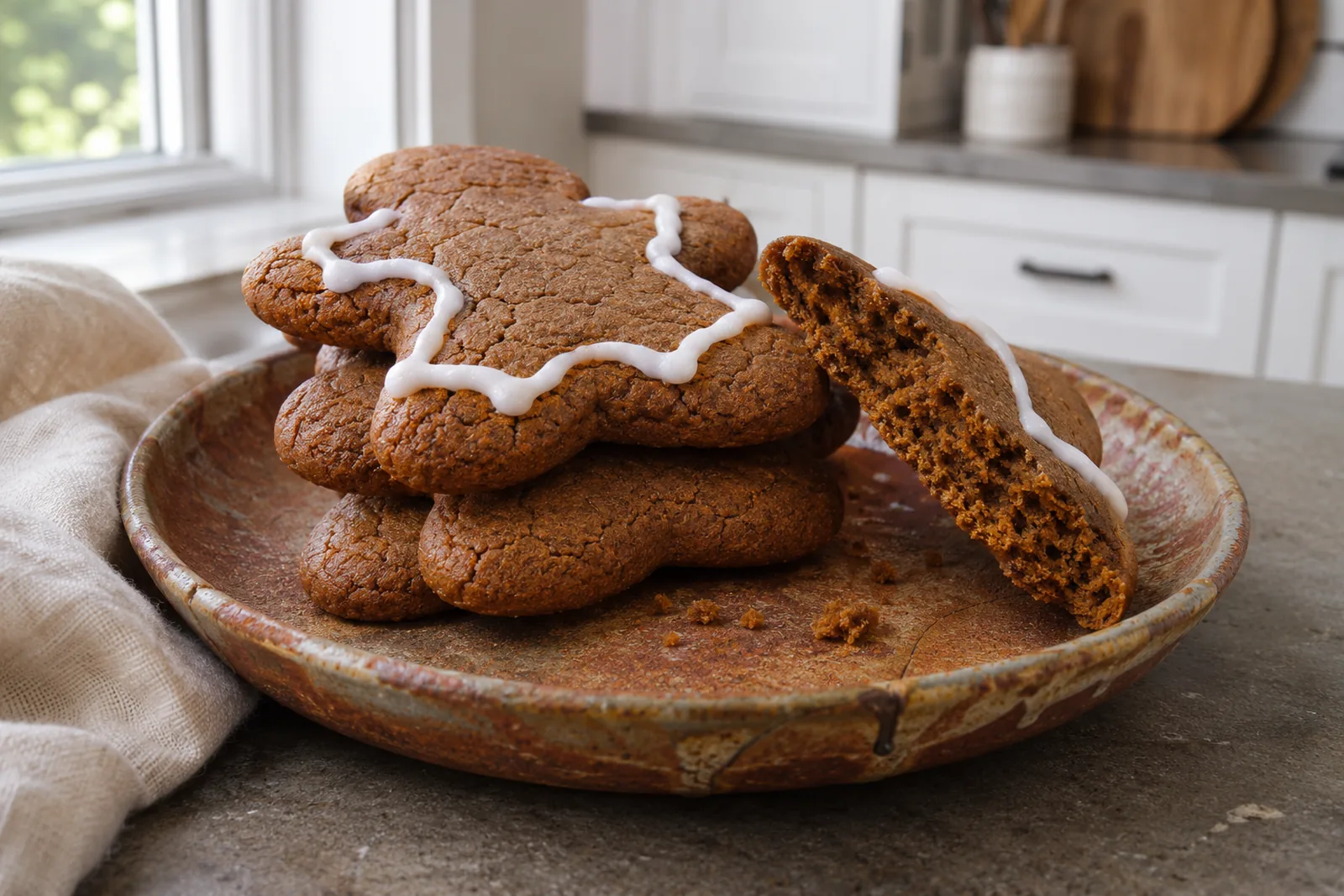
A cookie plate looks better with two colors, so pair the pale glazed cookie with a dark, spiced one. A spiced gingerbread batch fills that spot, and a chocolate chip option gives guests a third flavor next to the cut-out shapes.
What You Need
Use block-style vegan butter, sold in sticks, rather than a tub spread. The dough needs 1 cup, which is 2 sticks, at cool room temperature: firm enough to hold a thumbprint without sinking in.
- 3 cups (375 g) all-purpose flour, spooned into the cup and leveled
- ½ teaspoon baking powder
- ½ teaspoon fine salt
- 1 cup (227 g) block-style vegan butter, cool but not soft
- ¾ cup (150 g) granulated sugar
- 3 tablespoons unsweetened plant milk
- 2 teaspoons vanilla extract
- ½ teaspoon almond extract
- 2 cups (240 g) powdered sugar
- 3 tablespoons unsweetened plant milk
- ½ teaspoon vanilla extract
- 2 tablespoons sprinkles
Ingredient Details
- FlourSpoon it into the cup and level it off. Scooping straight from the bag packs in extra flour and makes a dry, crumbly dough.
- Vegan butterSticks vary by brand, so look for one sold in a block. Cut it into cubes and let it sit 20 to 30 minutes before mixing.
- SugarSome US cane sugar is filtered through bone char. Sugar labeled organic or vegan, or beet sugar, avoids it.
- Plant milkAny unsweetened soy, oat or almond milk works, and a plain one keeps the glaze white.
- SprinklesSome sprinkles contain confectioner's glaze (shellac) or carmine, a red dye made from insects. Check the label for both.
Ingredient Swaps
Four gaps come up most often: no almond extract, no powdered sugar, no cutter set, and royal icing wanted instead of glaze. The first two swaps leave every other amount unchanged, so the dough and glaze are made as written.
- No almond extract: use ½ teaspoon more vanilla. The cookies taste plainer, and our list of almond extract alternatives covers stronger options.
- No powdered sugar: blend 1 ¼ cups (240 g) granulated sugar with 1 tablespoon cornstarch in a blender for 1 minute, until powder-fine. The icing sugar swaps guide has the other options.
- No cutters: cut squares or diamonds with a knife and a ruler, or use the rim of a 3-inch glass.
- Royal icing: store-bought meringue powder is made from egg whites, so it is not vegan. The page on meringue powder replacements lists egg-free ways to get a hard icing.
Block or stick vegan butter
Usually holds less water, so the dough stays stiff and keeps its shape.
Cold sticks are hard to cream; cut them into cubes and wait 20 minutes first.
Tub vegan spread
Soft straight from the fridge, so it mixes in under a minute.
Usually holds more water, so the shapes spread and round off in the oven.
Nothing in this dough calls for an egg replacer, because the plant milk is the only liquid. For bakes that do depend on eggs, the guide to vegan egg replacers compares six options.
How to Make Vegan Sugar Cookies
Set one rack in the middle of the oven and line two rimmed baking sheets with parchment. Keep a second roll of parchment ready for rolling, because the dough is rolled between two sheets and not on a floured counter.
- Mix the dry ingredients. Whisk 3 cups flour, ½ teaspoon baking powder and ½ teaspoon salt in a bowl.
- Cream the butter. Beat 1 cup vegan butter and ¾ cup granulated sugar on medium speed for 2 minutes, until pale and creamy. Beat in 3 tablespoons plant milk, 2 teaspoons vanilla and ½ teaspoon almond extract.
- Add the flour. Add the flour mixture on low speed until the dough holds together when pinched. If it stays crumbly, add 1 more teaspoon of plant milk at a time.
- Chill the discs. Divide the dough in half and pat each half into a disc about ¾ inch thick. Wrap both and refrigerate 1 hour, until firm. The discs keep up to 2 days.
- Roll and cut. Heat the oven to 350°F. Roll one disc between two sheets of parchment to ¼ inch thick, leaving the other in the fridge. Cut 3-inch shapes.
- Fill the sheet. Lift the shapes with a thin spatula onto the sheet 1 inch apart, and roll the scraps once more. Slide each filled sheet into the fridge or freezer for 15 minutes while the oven heats.
- Bake and cool. Bake one sheet at a time on the middle rack 10 to 12 minutes, until the edges are pale gold and the tops look matte. Cool on the sheet 5 minutes, then on a wire rack about 30 minutes.
- Repeat. Roll, cut and bake the second disc the same way.
- Glaze and set. Whisk 2 cups powdered sugar, 3 tablespoons plant milk and ½ teaspoon vanilla until smooth. Spread about 1 tablespoon on each cookie, add sprinkles right away and leave on the rack 1 hour, until dry to the touch.
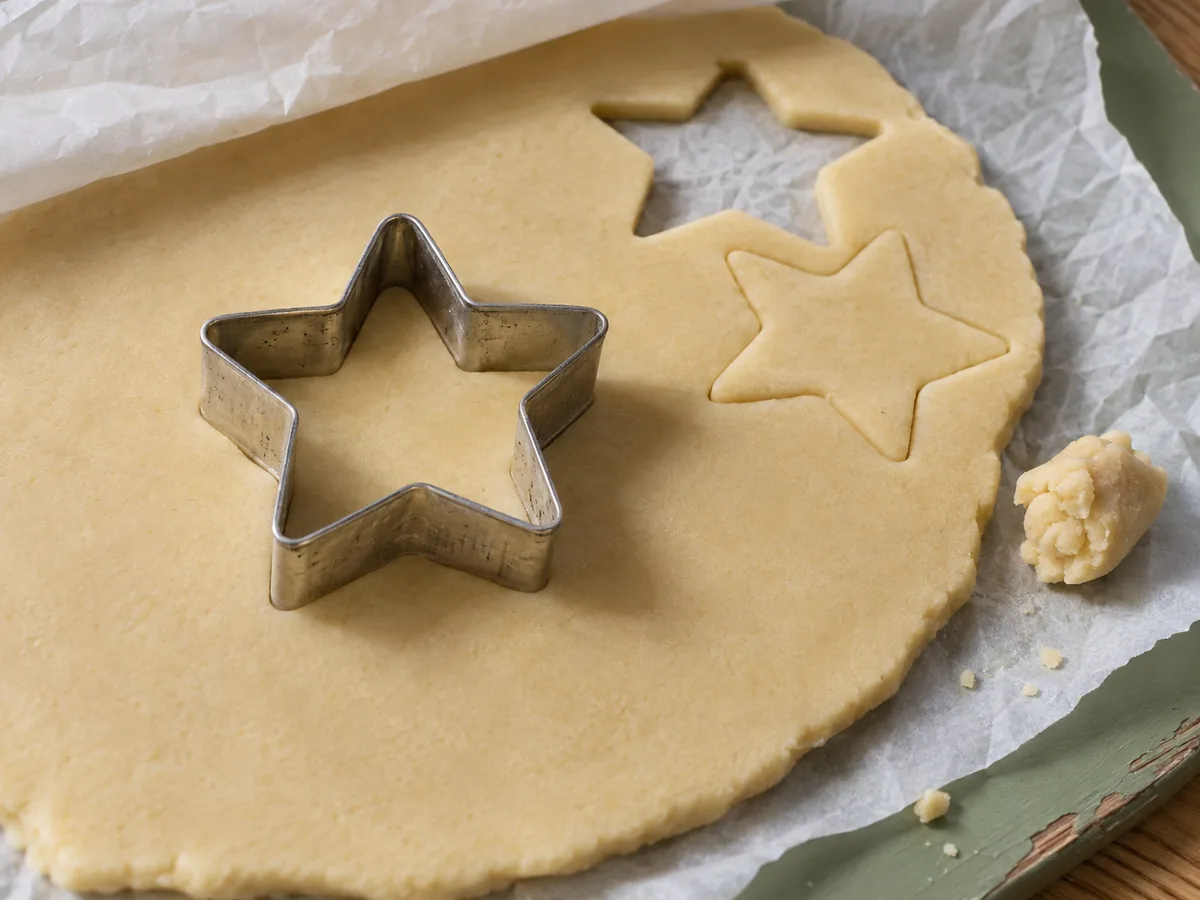
The rolled dough should look smooth, even and slightly matte, with no cracks at the edges and no sheen of melted fat. A dough that cracks as it is rolled is too cold, so let it sit 5 minutes and roll again.
A dough that smears and sticks to the parchment is too warm and goes back into the fridge for 15 minutes.
Browned edges mean the cookies are overbaked and will turn hard once cool. Pull them while the tops still look pale.
What to Serve With It
A cookie plate needs one creamy drink, one bitter drink and one fresh fruit to balance the sugar. Spiced vegan eggnog is the creamy pick for dunking, and a Christmas party table also wants something savory, such as stuffed mushrooms.
| Pairing | Prep | Why It Works |
|---|---|---|
| Vegan eggnog | Easy | Creamy, spiced drink softens the crisp edge |
| Black coffee | Easy | Bitterness cuts through the sweet glaze |
| Clementine segments | Easy | Tart juice resets the palate between cookies |
| Gingerbread cookies | Medium | Dark, spiced cookie contrasts the pale glaze |
Pour ¾ cup of eggnog per guest in a small glass, and serve the coffee hot with plant milk on the side. Peel and arrange 2 clementine segments beside each cookie, and alternate the gingerbread and sugar cookies on one plate.
A cookie plate also works as a break between courses. Serve a few next to a hot spinach artichoke dip at a party, or put them out after dinner when the plates are cleared.
Set out the cookies with eggnog and clementines together: the drink is creamy, the fruit is tart, and neither competes with the glaze.
Store and Reheat
Glazed cookies keep 5 days in an airtight tin at room temperature, once the glaze is fully dry. The raw dough freezes for up to 2 months, based on USDA FoodKeeper storage times.
| Method | Time | Best For |
|---|---|---|
| Frozen dough disc | Thaw overnight in the fridge, then roll | Making the dough early |
| Frozen cut shapes | Bake from frozen: 12 to 14 min, 350°F | Fresh cookies on short notice |
| Frozen baked, unglazed | Thaw 30 min on the counter, then glaze | Baking before the holiday week |
| Unglazed cookies gone soft | 3 to 4 min at 300°F, on a sheet | Bringing back the snap |
- Put parchment between layers in the tin, and only after the glaze is dry to the touch.
- Freeze unglazed cookies in a sealed container, and glaze them after thawing.
- Keep soft cookies and crisp cookies in separate tins, or the crisp ones go soft.
- Wash hands, bowls and counters after handling raw dough, and never taste it.
The oven is busy on dinner day, so the cookies are best baked 2 or 3 days ahead. That leaves it free for a mushroom Wellington or a lentil shepherd's pie.
Sources
Frequently Asked Questions
The vegan butter was too warm or too watery. Use block-style vegan butter, chill the dough discs for the full hour, and chill the cut shapes on the sheet for 15 minutes before they go in the oven.
Yes. Wrap the discs tightly and keep them in the fridge for up to 2 days, or freeze them for up to 2 months. Thaw frozen discs overnight in the fridge, then roll.
No. This dough has no egg to replace. The vegan butter carries the fat, and 3 tablespoons of plant milk brings the dough together.
No. The dough has no egg, but raw flour can carry harmful bacteria, and the FDA advises against eating raw flour, dough or batter. Bake the cookies before anyone tastes them.
Bake for 10 minutes instead of 12, until the tops just look matte, and cool them on the sheet for 5 minutes. Store them in an airtight tin once the glaze is dry. The cookies firm up slightly as they cool.

Vegan Cut-Out Sugar Cookies
Ingredients
Equipment
Method
- Mix the dry ingredients. Whisk 3 cups flour, ½ teaspoon baking powder and ½ teaspoon salt in a bowl.
- Cream the butter. Beat 1 cup vegan butter and ¾ cup granulated sugar on medium speed for 2 minutes, until pale and creamy. Beat in 3 tablespoons plant milk, 2 teaspoons vanilla and ½ teaspoon almond extract.
- Add the flour. Add the flour mixture on low speed until the dough holds together when pinched. If it stays crumbly, add 1 more teaspoon of plant milk at a time.
- Chill the discs. Divide the dough in half and pat each half into a disc about ¾ inch thick. Wrap both and refrigerate 1 hour, until firm. The discs keep up to 2 days.
- Roll and cut. Heat the oven to 350°F. Roll one disc between two sheets of parchment to ¼ inch thick, leaving the other in the fridge. Cut 3-inch shapes.
- Fill the sheet. Lift the shapes with a thin spatula onto the sheet 1 inch apart, and roll the scraps once more. Slide each filled sheet into the fridge or freezer for 15 minutes while the oven heats.
- Bake and cool. Bake one sheet at a time on the middle rack 10 to 12 minutes, until the edges are pale gold and the tops look matte. Cool on the sheet 5 minutes, then on a wire rack about 30 minutes.
- Repeat. Roll, cut and bake the second disc the same way.
- Glaze and set. Whisk 2 cups powdered sugar, 3 tablespoons plant milk and ½ teaspoon vanilla until smooth. Spread about 1 tablespoon on each cookie, add sprinkles right away and leave on the rack 1 hour, until dry to the touch.
Nutrition
Notes
- Chill dough discs 1 hour; they keep 2 days in the fridge.
- Freeze dough discs up to 2 months; thaw overnight in the fridge.
- Block-style vegan butter keeps shapes sharp; tub spread spreads.
- Roll ¼ inch thick; thinner cutouts brown at the edges first.
Tried this recipe?
Let us know how it was!
Carrie is a food writer and editor with more than 15 years of experience. She has worked for some of the biggest names in the food industry, including Bon Appétit, Food & Wine, and Martha Stewart Living.
As the Editor in Chief of EpicureDelight, Carrie oversees all of the content on the site. She also manages the team of contributing writers and editors, who help to create delicious recipes, helpful tips, and informative articles that you’ll find on the site.
A native of the Chicago area, Carrie is passionate about all things food. She loves trying new restaurants and experimenting with new recipes in her kitchen. She’s also a graduate of the Culinary Institute of America, so she knows a thing or two about food!